
Best Time to Visit Nepal: Weather, Seasons, and Month-by-Month Guide
October to November and March to April are the best time to visit Nepal for clear mountain views and trekking,…
 Himalayan Gateway Trek - On
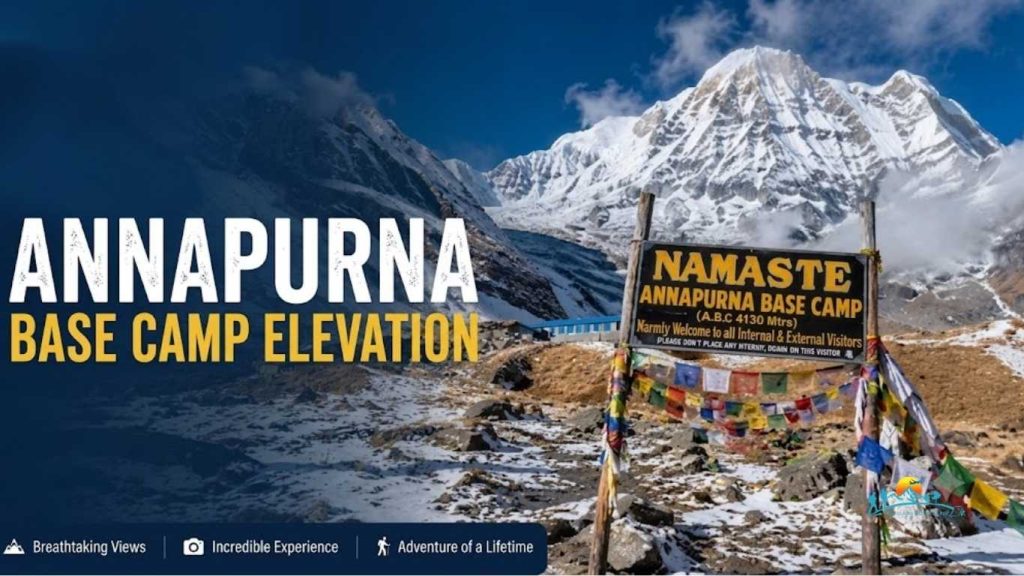
 The Annapurna Base Camp Elevation is 4130m (13550ft), which makes it one of the most popular high-altitude trekking destinations in Nepal. It is situated in the centre of the Annapurna Sanctuary, at the base of some of the highest mountains in the world, giving trekkers the chance to witness dramatic changes in scenery and climate as they climb and descend in altitude throughout the trip.
While many trekkers focus solely on the Annapurna Base Camp trek, it is also important to know the trek’s elevation. This is because the altitude impacts the speed at which you walk, your energy levels, your breathing, your sleep quality and your overall trekking experience. Although Annapurna Base Camp is lower than Everest Base Camp, the trail has a number of climbs and descents that can be challenging for both novices and seasoned trekkers.
The way follows through terraced fields of agriculture, rhododendron forests, traditional Gurung villages, deep river valleys and alpine landscapes till the base camp. On this trek, climbers climb several thousand metres and pass through various climatic zones.
This guide will cover all of the details regarding the exact elevation, altitude gain, daily elevation changes and why this trek is so rewarding as well as challenging.
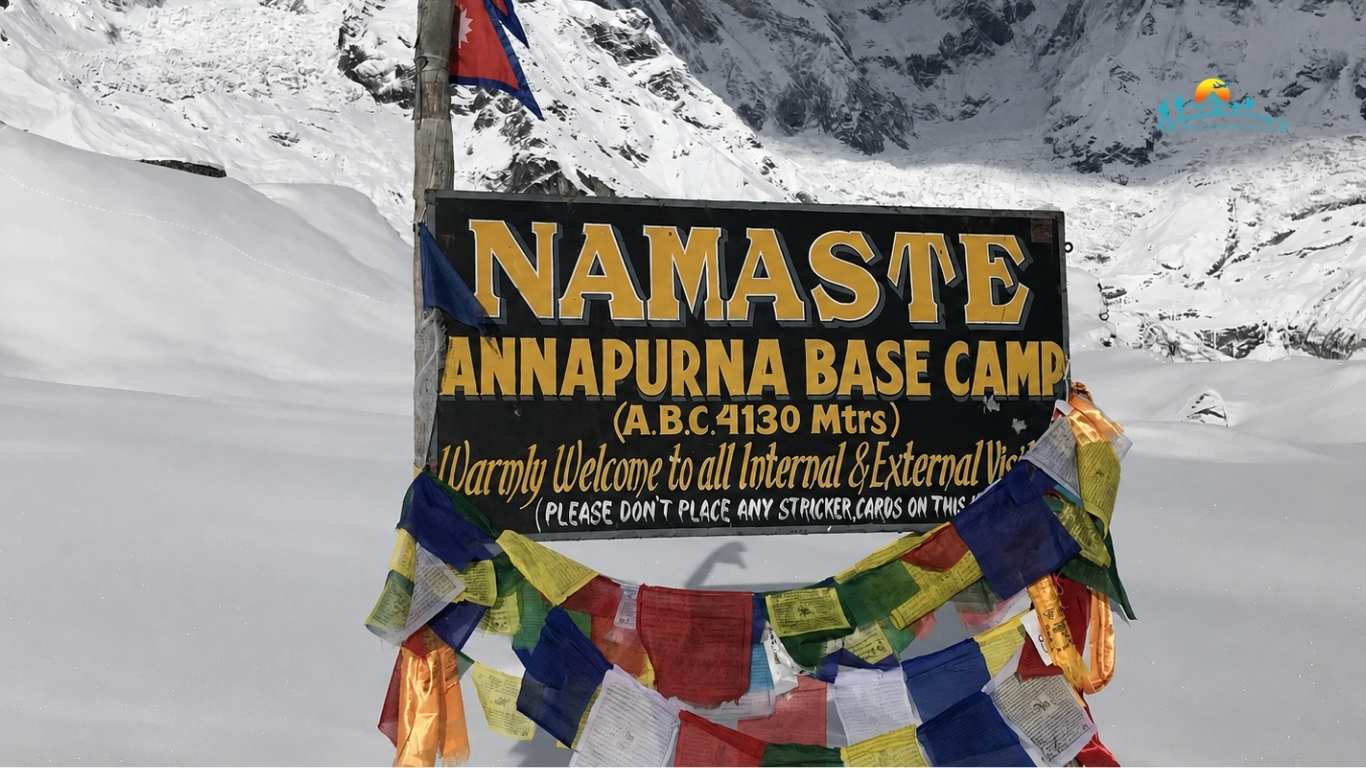
The base camp of Annapurna is (4130 m) 13550 feet above sea level. Located in the Annapurna Conservation Area of north-central Nepal, it is the main base camp for those wishing to climb the world’s tenth-highest peak, Annapurna I.
While most viewpoints in the Himalayas are located on ridges, Annapurna Base Camp is surrounded by steep peaks on almost all sides. This natural amphitheater is called Annapurna Sanctuary.
Annapurna Base Camp stands at:
4,130 meters above sea level
The air is much less oxygen-rich than at sea level at this altitude. At the end of the trek, trekkers are likely to notice that they are walking at a slower pace and breathing more quickly.
For trekkers more familiar with imperial measurements:
4,130 meters = 13,550 feet
Many international visitors use feet when comparing trekking destinations, making this conversion helpful when planning an adventure in Nepal.
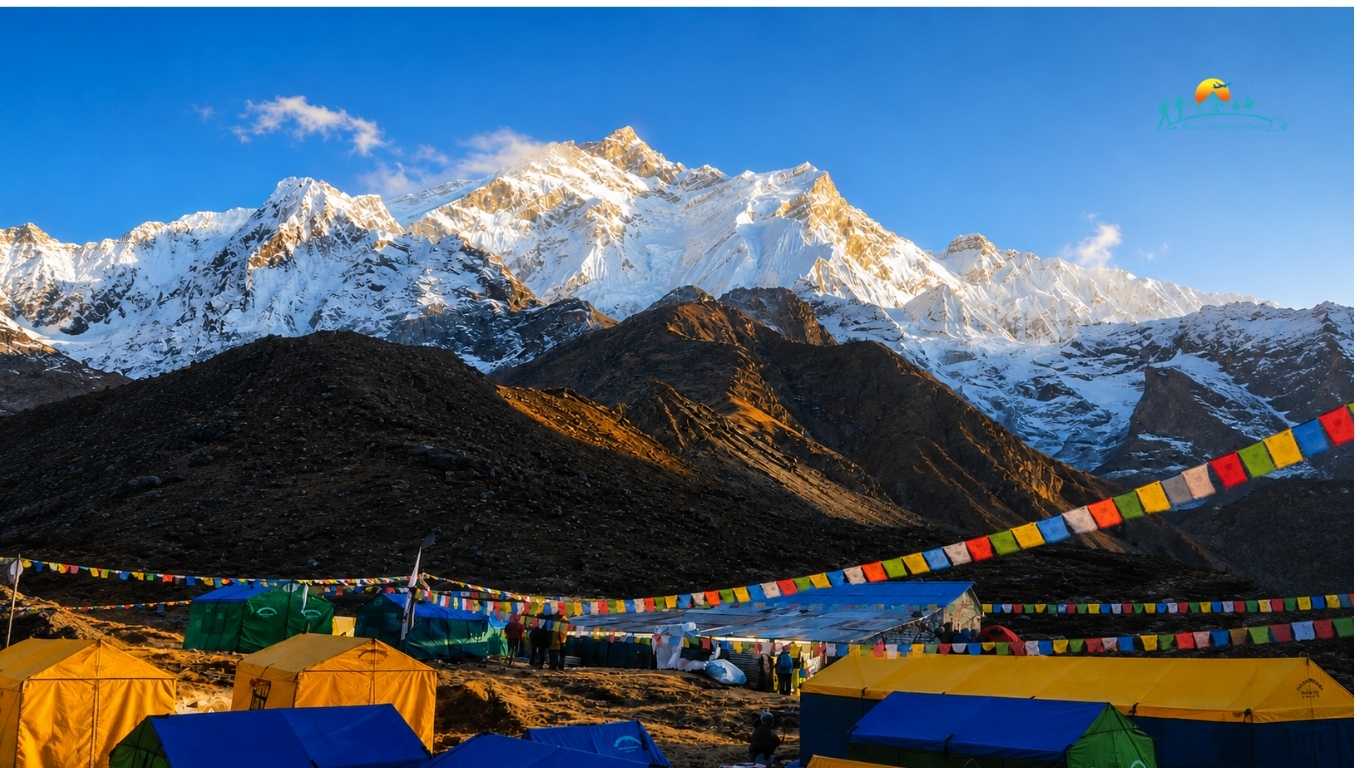
The Annapurna Base Camp is situated in the Annapurna Sanctuary, a high glacial plateau which is surrounded by a number of the highest mountains in Nepal. The base camp is located at 4130m (13 550ft) in the Annapurna region of north central Nepal, just below the south face of Annapurna I (8091m), the 10th highest peak in the world.
The sanctuary is surrounded by a circle of snow-covered peaks, forming a natural amphitheater with stunning views all around. From the base camp, one can enjoy the sight of prominent mountains like Annapurna South (7,219 m), Machhapuchhre (6,993 m), Hiunchuli (6,441 m) and Gangapurna (7,455 m). This is a special place for visitors to experience a feeling of being in the heart of the Himalayas, with its peaks towering over the valley like mountains.
The striking landscape and proximity to these iconic mountains make Annapurna Base Camp one of the most rewarding trekking in Nepal.
Being at the altitude of Annapurna Base Camp offers a perfect blend of approachability and a true high mountain trek. The base camp is located at an altitude of 4,130 meters, which is high enough for the trekkers to feel the effects of the high altitude, yet still not too difficult for the majority of people who are reasonably fit and well prepared.
The trek to Annapurna Base Camp is a route into the Himalayas in contrast to the many lower altitude treks that pass by here. Snow-covered peaks, glaciers and alpine areas are a part of the daily scene.
Several factors make this elevation notable:
Annapurna Base Camp is more of a rewarding trek for many trekkers because it is not too high and offers great views of the mountains.
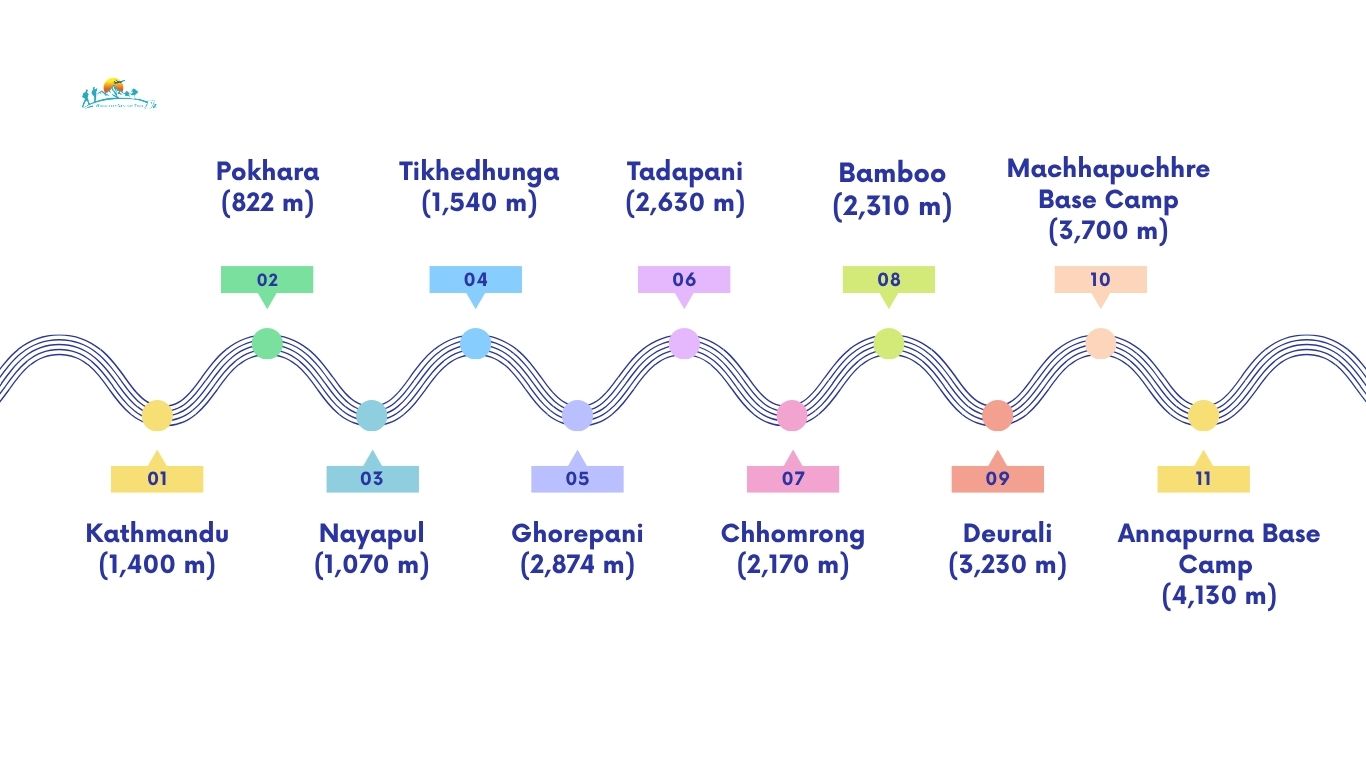
The Annapurna Base Camp trek usually begins with preparations in Kathmandu Valley. Nepal’s capital city is at a height of 1400m, which helps trekkers get accustomed to a little bit of elevation before entering into a trek. They are usually here for one or two nights, making arrangements for permits, equipment, and transportation.
The city also has several cultural and historical sites, so it’s a good place to explore before the journey. Kathmandu is not a part of the trek itself, but it has an important role in preparing the trekkers for the journey ahead.
The major entry point to the Annapurna region is Pokhara Valley, which is also the starting point for the trek. The city is situated next to the Phewa Lake, with a beautiful view of the Annapurna range and Machhapuchhre during clear weather. Most trekkers just spend a night here before heading to the trailhead.
The atmosphere in Pokhara is laid back and the facilities for trekking are good, including equipment shops, hotels and transport. It is the last big town before the mountain villages of the Annapurna region.
Nayapul is one of the starting points for the Annapurna Base Camp trek. This is where the trek starts as it heads for the foothills of the Annapurna region. The path goes through small villages, terraced fields, and river valleys.
The first part of the route is rather mild, and you get a comfortable walking pace in the first few miles. The scenery is typical of that of the area and gives some idea of village life.
Tikhedhunga is usually the first night’s resting place on the trek. This path begins to ascend, flowing along rivers and stone-paved paths through rural communities. As it gets steeper, the trekker can see the physical requirements of walking uphill.
The village is surrounded by green hills and farmland it is a pleasant setting for the first night in the mountains. It is good to spend a few days here before going up the steeper mountains in the next few days.
Ghorepani is one of the most popular villages of the trekking route in Annapurna. Access to this settlement involves the steep stone stairs, many hikers say is one of the most difficult spots on the early hike in Ulleri. The village has a magnificent overview of the mountains and is the starting point for Poon Hill.
It is also a considerable change in temperature and environment with its elevation. In spring, the adjacent forests are full of flowering rhododendrons, providing an extra splash of color on the trek.
The trail is in the midst of the dense forests of rhododendron and oak trees, providing a serene experience at Tadapani. From Ghorepani, the elevation drops a bit, but the trek is still quite hilly and bumpy. In fine weather, visitors can enjoy great views of Annapurna South and Machhapuchhre.
It is a place of tranquility and abundant biodiversity. This area is a popular part of the trail for many as it offers stunning views of the mountains as well as a lovely forest.
Chhomrong is the biggest Gurung village on the Annapurna Base Camp trek and a main stop before reaching out to the Annapurna Sanctuary. The village is located on the slope of a mountain overlooking the deep valleys and snow-covered mountains. Several hikers stay here to take in the view and get ready for the rest of the trip to higher ground.
In the village itself, there are many teahouses, shops, and basic services to stay the night, making it one of the most comfortable places to spend the night during the trek. It also offers some of the best vistas of Annapurna South and Machhapuchhre.
The thick forests of bamboo encircle it and form the course of the river Modi Khola. The road from Chhomrong to Bamboo follows a grassy trail and has some shade along the way, but this is a contrast to the open ridges seen previously. This section is fairly easy since there is a gradual increase in elevation.
The forest scenes are a contrast to the open landscapes of the mountains, and are very different from the peaceful scenes. Meanwhile, trekkers will see waterfalls, streams and occasional wildlife as they go through this area.
Deurali marks a major transition into higher-altitude terrain. Vegetation becomes less dense, temperatures drop, and the surrounding landscape takes on a more alpine appearance. Many trekkers begin to feel the effects of thinner air after crossing the 3,000-meter mark.
The point is significant for assessment of the response of the body at higher altitudes. From this point on, water, rest, and a gradual speed up are crucial.
Machhapuchhre Base Camp, also referred to as MBC for short, is the last significant one before Annapurna Base Camp. The trail is opened into a wide glacial valley with the high peaks of the Himalayas. As the altitude increases, trekkers will notice cooler weather, faster winds and slower walking times.
At this point in the hike, views of the mountain are now dramatic. A lot of people spend some time here admiring the views and getting ready for the last leg of their trip to Annapurna Base Camp.
The final point of the trek is Annapurna Base Camp. It is situated in the middle of the Annapurna Sanctuary, which provides 360-degree views of one of the highest mountains in Nepal. At 4130 m, the hikers get a memorable experience in the Himalayas with the presence of giant snow-covered peaks.
When they reach base camp, there is a feeling of achievement comparable to the amazing scenery. The range around the peaks shimmer under the sun, and this is a very pleasant experience when the sun rises or sets, especially when it is one of the most picturesque views of a mountain range in the Himalayas.
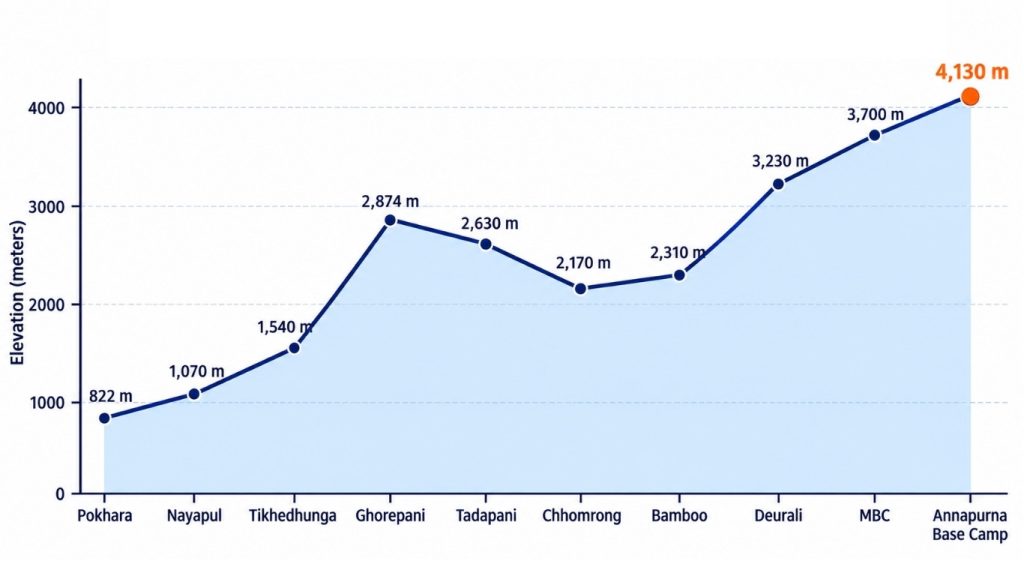
There are actually more than one ways to measure the Annapurna Base Camp Elevation Gain:
One reason this trek can be harder than expected is the constant climbing and descending. The trail has steep sections and many long stone steps. You often lose some height, only to climb again later. As you get higher, the air also becomes thinner, making the climbs more tiring.
Here is a breakdown of the elevation changes at each stage:
| From → To | Start | End | Net Change |
|---|---|---|---|
| Pokhara → Nayapul | 822 m | 1,070 m | +248 m |
| Nayapul → Tikhedhunga | 1,070 m | 1,540 m | +470 m |
| Tikhedhunga → Ghorepani | 1,540 m | 2,874 m | +1,334 m |
| Ghorepani → Tadapani | 2,874 m | 2,630 m | −244 m |
| Tadapani → Chhomrong | 2,630 m | 2,170 m | −460 m |
| Chhomrong → Bamboo | 2,170 m | 2,310 m | +140 m |
| Bamboo → Deurali | 2,310 m | 3,230 m | +920 m |
| Deurali → Machhapuchhre Base Camp | 3,230 m | 3,700 m | +470 m |
| Machhapuchhre Base Camp → Annapurna Base Camp | 3,700 m | 4,130 m | +430 m |
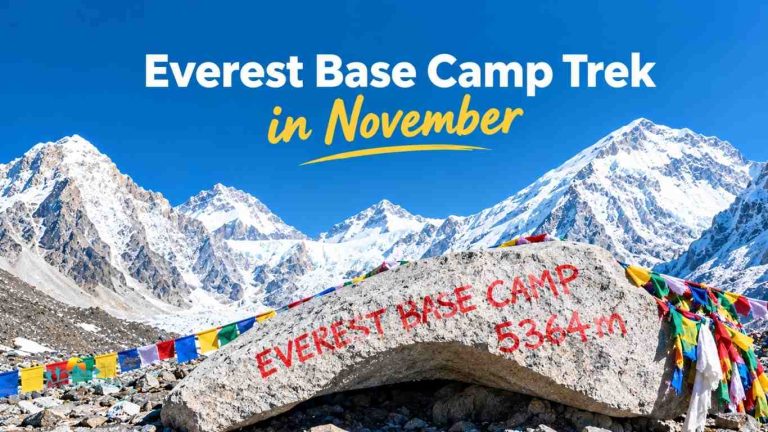
The highest point on the trek is at Annapurna Base Camp at 4,130 m, at which point noticeably thinner air awaits. Although 4,130m is quite a bit lower than the altitude of Everest Base Camp (5,364 m), the trekking experience may be more difficult due to the reduced density of the air at high altitudes.
The body is getting much less oxygen on each breath at Annapurna Base Camp than at sea level. This decrease can make going uphill more difficult and can make one more tired, particularly on the final climb to base camp.
The more you climb, the more oxygen the body requires. Breathing quickens, heart beats faster and work appears to be harder. This is normal and is a way to adapt to higher altitudes.
Upon assuming higher elevations, many trekkers notice a slight decrease in respiration, a drop in energy, and some light sleep disturbances. Some may also have mild headaches or a diminished appetite. These effects tend to pass if the trekker maintains a consistent pace, is well hydrated and has adequate time to acclimatize.
Differences between ABC Elevation and EBC Elevation are as follows:
| Feature | Annapurna Base Camp (ABC) | Everest Base Camp (EBC) |
|---|---|---|
| Elevation | 4,130 m | 5,364 m |
| Elevation in Feet | 13,550 ft | 17,598 ft |
| Time Spent Above 4,000 m | 1-2 Days | Several Days |
| Maximum Trek Altitude | 4,130 m | 5,364 m (Base Camp) |
| Oxygen Availability | Around 60% of sea level | Around 50% of sea level |
| Risk of Altitude Sickness | Moderate | High |
| Acclimatization Requirement | Important | Essential |
The Annapurna Base Camp trek is traversed through various altitude zones, which each have their own characteristics. These zones allow trekkers to realize what they’re likely to feel as they climb higher.
Most of the early trekking days fall within this range.
Characteristics include:
In this range the body starts to detect altitude changes.
Characteristics include:
The last stretch of the trail is high elevation.
Characteristics include:
One of the big issues for trekkers to Annapurna Base Camp is altitude sickness, particularly beyond 3000m. The journey doesn’t take you to the highest of the highs but nevertheless there is a risk for Acute Mountain Sickness (AMS).
Headache, dizziness, nausea, fatigue, lack of appetite, poor sleep and shortness of breath are common symptoms. These symptoms can appear over a long period of time and can’t be disregarded.
Risk of altitude sickness is heightened by rising too quickly, not drinking enough fluids, drinking alcohol or continuing to climb when symptoms of altitude sickness occur. AMS risk may also be higher if there are previous AMS experiences.
Altitude sickness is not caused by a lack of physical fitness, so anyone, regardless of experience, can develop it. More severe symptoms include a very bad headache, vomiting, confusion, trouble walking, trouble breathing while sleeping, or difficulty walking. The following are warning signs and call for immediate descent and medical attention.
Comparing Annapurna Base Camp with other trekking routes helps travelers understand the altitude challenge more clearly.
| Trek | Highest Elevation |
| Annapurna Base Camp | 4,130 m |
| Mardi Himal Trek | 4,500 m |
| Everest Base Camp | 5,364 m |
| Langtang Valley Trek | 4,984 m |
| Annapurna Circuit (Thorong La) | 5,416 m |
| Manaslu Circuit | 5,106 m |
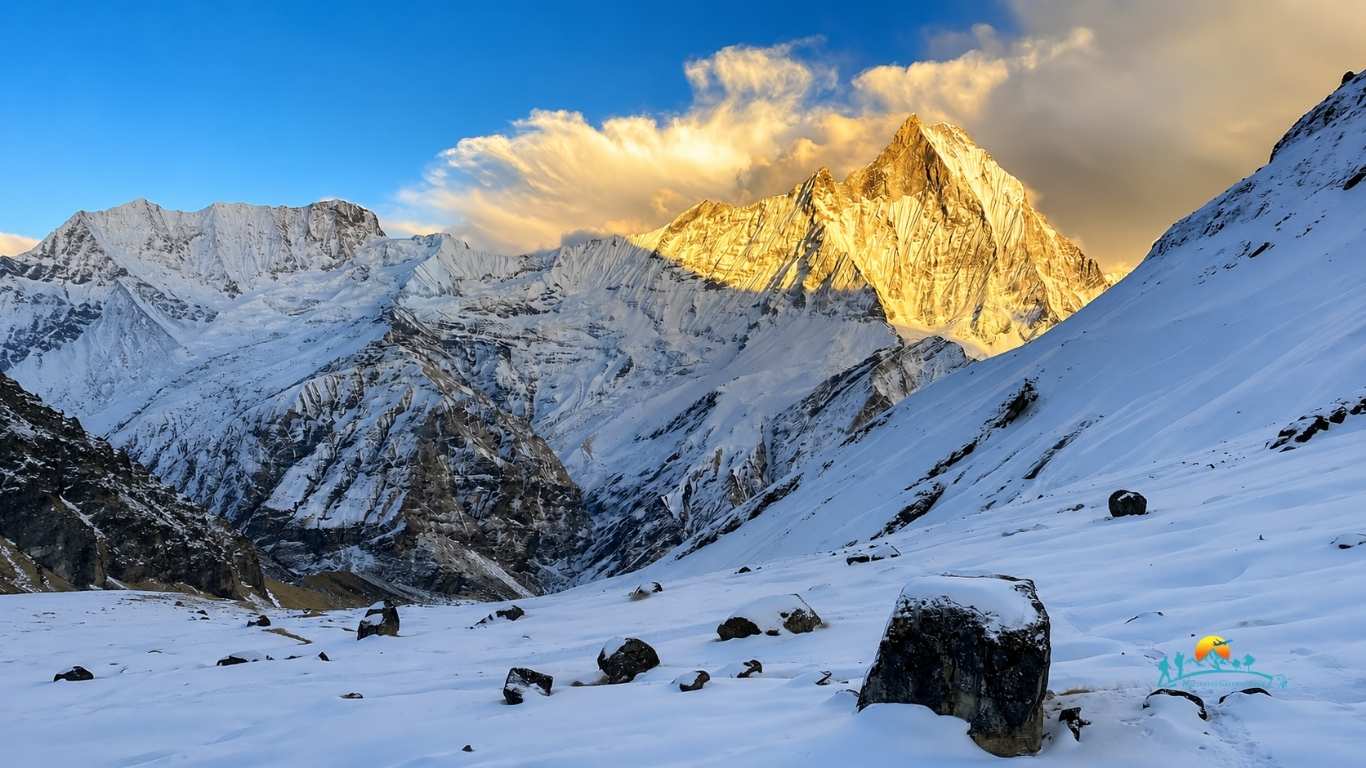
The spring season is pleasant with gentle temperatures and weather and the trail is graced with rhododendrons in colour. It is one of the best times of the year to visit Annapurna Base Camp because of the clear mountain sky and favourable trekking weather conditions.
Autumn’s weather is characterized by clear skies, dry trails, and outstanding visibility. This is the best time of year to trek to Annapurna Base Camp because of the stable weather and comfortable daytime temperatures.
At higher elevations, the winter season is characterized by colder temperatures, snowfall and icy trail conditions. It can be more difficult because of the cold, but the trails are quieter, and you can experience a stunning snowy scene.
During the monsoon season, trails are often muddy, mountain vistas are cloudy and rain is common. Trekking can be harder but it’s a very natural environment as the forests get lush and green.
The best season for trekking at Annapurna Base Camp is generally spring and autumn as the weather is stable, the mountain views are clear and trekking conditions are comfortable.
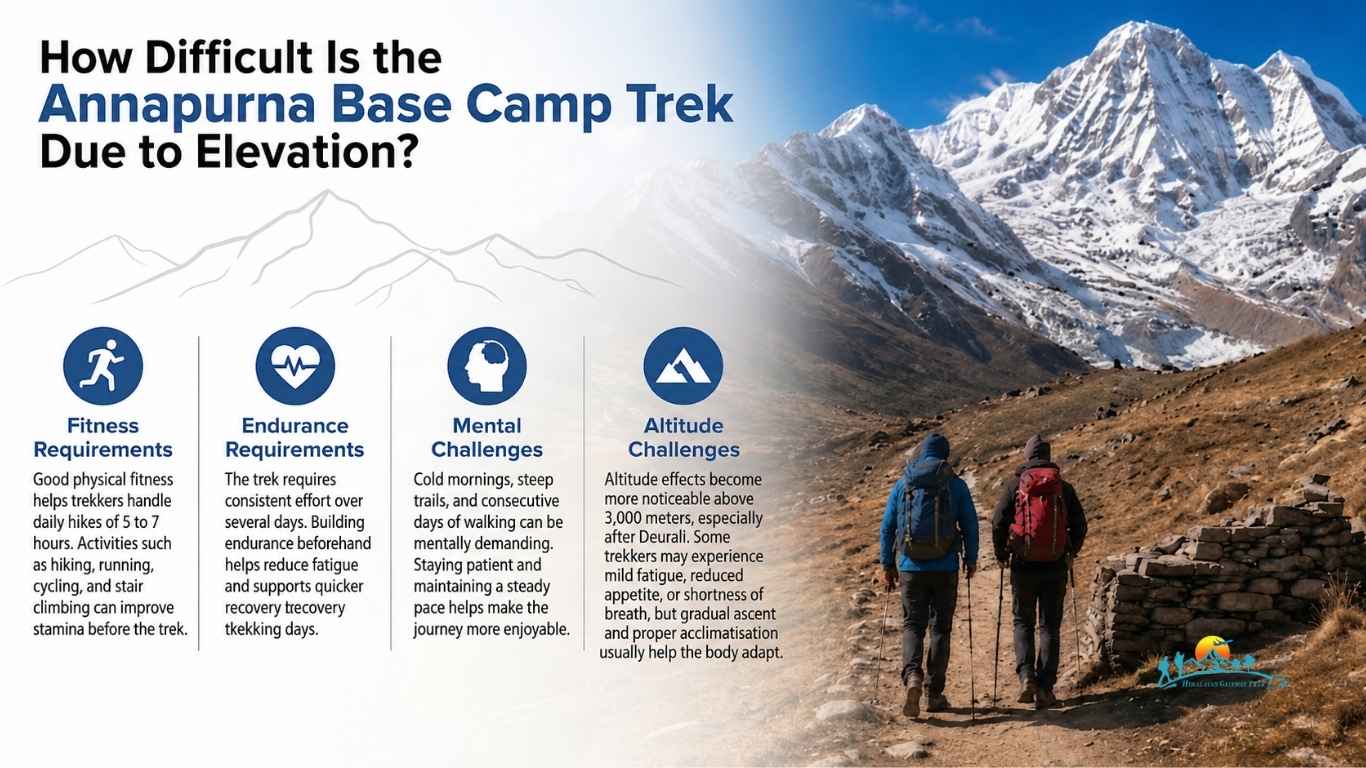
The Annapurna Base Camp Trek is considered moderately challenging, mainly because of its altitude gain, long walking hours, and continuous ascents and descents, but it is less difficult than the Everest Base Camp. While the highest point reaches 4,130 meters, most trekkers can complete the trek successfully with reasonable fitness and a well-paced itinerary.
Good physical fitness helps trekkers handle daily hikes of 5 to 7 hours. Activities such as hiking, running, cycling, and stair climbing can improve stamina before the trek.
The trek requires consistent effort over several days. Building endurance beforehand helps reduce fatigue and supports quicker recovery between trekking days.
Cold mornings, steep trails, and consecutive days of walking can be mentally demanding. Staying patient and maintaining a steady pace helps make the journey more enjoyable.
Altitude effects become more noticeable above 3,000 meters, especially after Deurali. Some trekkers may experience mild fatigue, reduced appetite, or shortness of breath, but gradual ascent and proper acclimatization usually help the body adapt.
Annapurna Base Camp elevation reaches 4,130 meters (13,550 feet), making it one of Nepal’s most popular high-altitude trekking destinations. The trek takes you from subtropical forests and traditional mountain villages to the heart of the Annapurna Sanctuary, where some of the highest peaks in the Himalayas surround you. Understanding the elevation profile, altitude gain, and potential effects of higher altitude helps trekkers prepare for a safer and more enjoyable journey.
With proper fitness, gradual ascent, and adequate hydration, most trekkers can comfortably reach Annapurna Base Camp. The combination of dramatic mountain views, changing terrain, and the sense of achievement at 4,130 meters makes this trek a memorable experience for both first-time and experienced hikers visiting Nepal.
Yes, beginners can absolutely complete the ABC trek with proper physical preparation and a slow pace. The well-marked trails require no technical climbing skills, though first-timers must train for thousands of steep stone stairs and consecutive walking days.
Annapurna Base Camp stands at an impressive maximum elevation of 4,130 meters (13,550 feet) above sea level. This high-altitude sanctuary places you in a stunning bowl surrounded by massive, snow-covered Himalayan peaks like Annapurna I and Machhapuchhre.
The trek is generally classified as moderate. While it requires no technical mountaineering skills, the route demands solid physical endurance to navigate thousands of steep stone stairs, rocky paths, and consistent daily elevation changes over roughly 115 kilometers.
Absolutely not. Climbing Mount Annapurna I is exceptionally dangerous and strictly for elite mountaineers. It is notoriously one of the world’s deadliest 8,000-meter peaks, demanding years of extreme high-altitude experience to brave massive avalanche risks and severe technical ice walls.
Yes, the risk of altitude sickness begins once you ascend past 2,500 meters, typically after crossing Bamboo. It is essential to monitor yourself for early symptoms like headaches, dizziness, nausea, loss of appetite, and sudden shortness of breath.
The ideal trekking seasons are spring, from March to May, and autumn, from September to November. These months provide stable weather, crisp clear skies for mountain viewing, and comfortable daytime temperatures, avoiding summer monsoons and freezing winter blizzards.
Trekker accommodations consist primarily of rustic, locally operated teahouses. These mountain lodges offer basic twin-sharing rooms, communal dining areas warmed by stoves, simple hot showers for an extra fee, and a classic variety of hearty, local and international meals.
While experienced hikers completed it solo in the past, Nepal’s recent safety regulations now mandate hiring a licensed guide. A guide ensures safe navigation, manages logistics, prevents altitude issues, and provides deep insight into the rich local culture.
You need two primary permits: the Annapurna Conservation Area Project (ACAP) permit and the Trekker’s Information Management System (TIMS) card. These must be secured in Kathmandu or Pokhara before entering the trail checkpoints.
Focus on cardiovascular exercises like running, cycling, or swimming at least six weeks before your trip. Additionally, practice hiking on inclined surfaces and build lower-body strength to prepare your legs for the thousands of steep stone stairs.