

Best Time to Visit Nepal: Weather, Seasons, and Month-by-Month Guide
October to November and March to April are the best time to visit Nepal for clear mountain views and trekking,…
 Himalayan Gateway Trek - On
 The human body can be impacted by high altitude much sooner than most trekkers realise. AMS is a condition that occurs when the body cannot adapt to the decreased oxygen at higher altitudes. It can happen to novices, seasoned hikers, athletes and even the very fit. Symptoms can occur at higher elevations even though a person feels perfectly healthy at lower elevations.
Acute mountain sickness is common during trekking in Nepal, especially on routes such as the Everest Base Camp Trek, Annapurna Circuit Trek, Manaslu Circuit Trek, and Langtang Valley Trek. Many travellers focus heavily on fitness and packing gear but forget that acclimatization matters just as much as physical preparation.
Mild symptoms may disappear with proper rest, hydration, and slower ascent. Severe symptoms can become dangerous and require immediate descent. Understanding how altitude affects the body helps trekkers stay safe and enjoy the journey without unnecessary risk.
Acute Mountain Sickness is an illness caused by a lack of oxygen at high altitudes. Oxygen can get into the lungs at sea level because the pressure in the air is still higher than in the lungs. The higher the altitude, the less air pressure and the less oxygen will reach the body with each breath.
This is a lack of oxygen, which causes the body to become stressed and causes symptoms associated with altitude sickness. The condition often starts within 6 to 24 hours after rising to a higher elevation. Others feel a little bit bad, others feel really bad, really quickly.
There are several different kinds of altitude sicknesses, and acute mountain sickness is one of them:
| Condition | Severity | Main Area Affected |
|---|---|---|
| Acute Mountain Sickness (AMS) | Mild to Moderate | Brain and body |
| High Altitude Cerebral Edema (HACE) | Severe | Brain |
| High Altitude Pulmonary Edema (HAPE) | Severe | Lungs |
Most trekkers experience mild AMS symptoms first. Ignoring those signs can increase the chance of developing more dangerous altitude illnesses.
Reduced oxygen at higher elevations causes acute mountain sickness. The body needs time to adapt to thinner air, and rapid ascent prevents proper adjustment.
Several factors increase the risk of developing AMS.
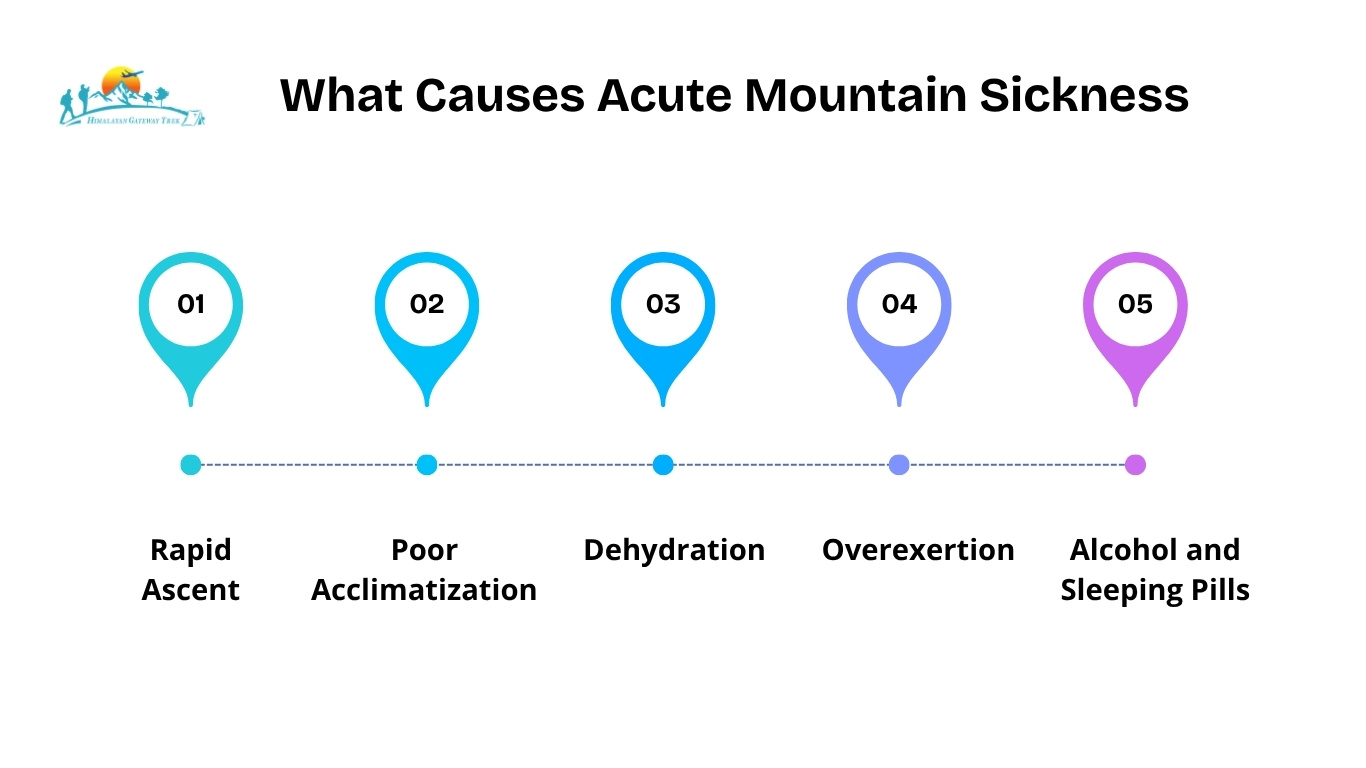
Rapid altitude gain remains the major cause of altitude sickness. Many trekkers fly directly from low-altitude cities to high mountain regions and continue climbing without enough rest days. The body cannot adjust to altitude gain immediately. Oxygen level drops at high altitude, breathing pattern changes, and AMS symptoms begin to appear.
People who gain altitude too rapidly typically get headaches and fatigue within 24 hours. This becomes even more significant at higher altitudes (above 3,000m), where oxygen levels drop significantly. If you are taking small steps, you are allowing your body to get used to the elevation rise slowly.
Acclimatization helps the body to adapt to high altitude slowly. Trekkers should not skip acclimatization days, as doing so places extra pressure on the body. Sleeping at significantly higher elevations each night also raises the risk.
There needs to be time for the body to become more efficient at breathing and supply oxygen. Acclimatization will minimise physical stress and the risk of serious Altitude Sickness. Many experienced trekking guides include a scheduled rest day as it is an important part of safe ascent.
The dry mountain air causes loss of fluid due to breathing and sweating. Headaches, fatigue, dizziness and nausea may be aggravated due to dehydration. Lots of trekkers don’t realize just how much water is necessary at altitude.
Very cold weather may also decrease thirst, which will make people drink less water than they need. The combination of long trekking hours and exposure to the sun adds to fluid loss. Regular drinking of water throughout the day keeps energy up and aids acclimatisation.
Symptoms of AMS increase more quickly due to heavy physical activity during the first days at high altitude. Fast walking, carrying heavy loads, and rushing uphill increase oxygen demand. Many trekkers attempt to walk at a normal pace and are unaware of the effect that altitude has on performance.
Exercising too much can lead to greater fatigue and make breathing harder. This means when you go up, it is done slowly and gradually so that your body can adapt better
Alcohol hurts breathing and sleep. Some medicines for sleep (also known as hypnotics) also slow breathing rhythms. These can lead to a decrease in oxygen intake and can exacerbate symptoms when trekking. Alcohol also contributes to dehydration, adding to the body’s stress levels at high altitude.
Sleeping pills could mask early signs of AMS and delay appropriate treatment of deteriorating conditions. Without alcohol and unnecessary medications, the oxygen levels and sleeping quality will be kept at a safer level during trekking.
In general, acute mountain sickness develops at altitudes above 2500m, but some may develop at a lower altitude. Some signs usually start to appear after a rapid ascent to the mountain areas with an insufficient acclimatization period. Oxygen concentration decreases with height, and the body is unable to function as it does at sea level.
The sleeping altitude is also important, as symptoms may worsen at night at higher elevations.
| Altitude Range | Risk Level |
|---|---|
| Below 2,500 meters | Low |
| 2,500 to 3,500 meters | Moderate |
| 3,500 to 5,500 meters | High |
| Above 5,500 meters | Very High |
Symptoms of acute mountain sickness often resemble dehydration, exhaustion, or the flu during the early stages. Recognizing the warning signs early helps prevent serious complications.
Most trekkers first notice a headache. The pain may feel worse while walking uphill, bending down, or carrying heavy bags.
Common early symptoms include:
These symptoms usually appear within the first day after reaching higher altitude.
Moderate AMS affects daily activity and physical movement more clearly.
Trekkers should avoid ascending further if moderate symptoms appear.
Severe altitude sickness becomes a medical emergency. Immediate descent is necessary.
Differences between AMS, HACE, and HAPE are as follows:
| Condition | Main Symptoms | Severity | Immediate Action |
|---|---|---|---|
| AMS | Headache, nausea, fatigue | Mild to Moderate | Rest and monitor |
| HACE | Confusion, poor balance, severe headache | Severe | Immediate descent |
| HAPE | Breathlessness, chest congestion, cough | Severe | Immediate descent |
Anyone can develop altitude sickness regardless of age or fitness level. Several groups face a higher risk.
Early symptoms are often not recognized by people who are not experienced with high altitude. Some of the symptoms of AMS are confused with common symptoms after a long hike. May overlook headache, nausea, or dizziness and keep going up without taking a proper rest. Inadequate experience with conditions in the mountains can make symptoms more likely to become severe.
Racing up the mountain puts additional strain on the body. Flying fast doesn’t allow the body much time to acclimate itself to the limited oxygen available. This is a frequent occurrence when tourists have a very confined route or are in a hurry to get to the higher camps. Sudden elevation changes may heighten the risk during a helicopter flight, especially to high elevations.
If someone has had AMS once, he or she can have it again on subsequent hikes. If someone has experienced altitude sickness in the past, it may mean that they are more sensitive to high altitudes. If the traveller repeats the pattern of rapid ascent or if they again skip acclimatisation days, symptoms may recur. These trekkers will need to plan carefully and ascend more slowly.
Some illnesses may decrease the amount of oxygen in the body and the number of problems that occur at altitude. The bodies of people with heart and lung diseases may not be as tolerant of the reduced oxygen levels in the mountains. Asthma, lung or heart disease may make it more difficult to breathe when trekking. It is highly recommended that these individuals seek medical advice before traveling at high altitudes.
Warning signs are ignored, and young trekkers continue to climb when they feel pressured into doing so. A lot of younger travellers do not report on early signs and symptoms and push through. They may not be able to make rational judgments under group pressure, excitement, or overconfidence. If you delay rest or descent, you may be at higher risk for developing severe altitude illness. Fitness alone does NOT mean protection from acute mountain sickness. Symptoms can occur in even experienced athletes and strong hikers if they hike up too fast or do not acclimatize properly.
The best way to cope with altitude sickness is to prevent it. With the right approach to travelling at high altitudes, including suitable acclimatization, adequate hydration, and careful activity, the risk of acute mountain sickness can be significantly minimized.
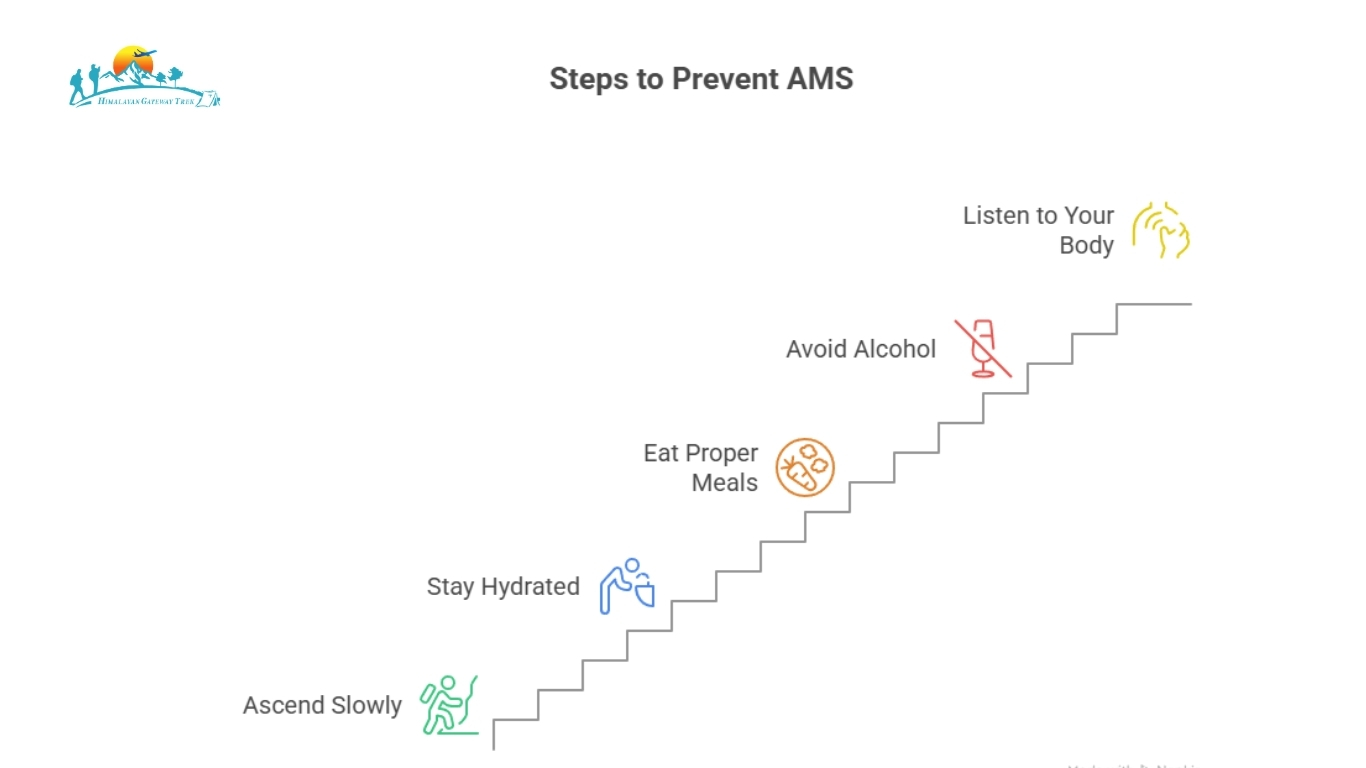
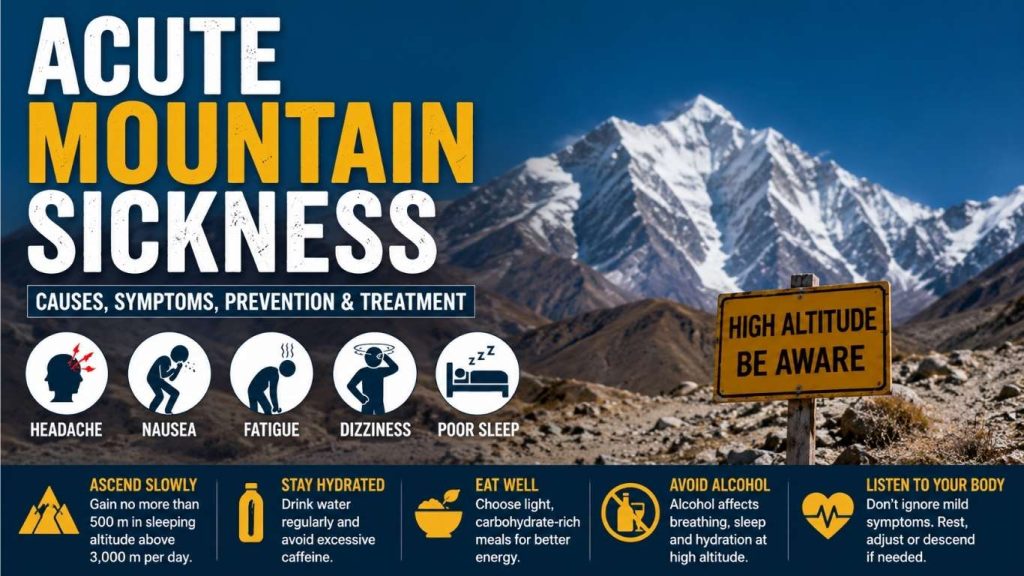
Slow rise allows the body to acclimate to lower oxygen levels at higher elevations. Fast ascent is the risk of developing headaches, nausea, dizziness, and fatigue. The general guideline of most trekking experts is to stay below 3,000 mts and not to climb more than 500 mts each day after reaching 3,000 mts. In addition to acclimatization days, trekkers should also take an easy pace rather than a fast uphill pace.
Ensuring adequate hydration to acclimatise to altitude and minimise symptoms of altitude sickness, like headache and fatigue. Trekkers should drink water every few hours during the day, as the dry mountain air will lead to greater loss of water in the body due to breathing and sweating. The colour of the urine is clear or light yellow, which indicates adequate hydration. Avoid over-caffeinating as it can cause dehydration in some individuals.
On treks, it is essential to have regular meals as the high altitude requires more energy. Carbohydrates, like rice, potatoes, soup, pasta, oatmeal and fruits, are easier to digest and are rich in energy at altitude. Not eating enough can make the symptoms at altitude worse and weaken the body.
Avoiding alcohol helps the body acclimate more effectively at high elevations. Alcohol affects breathing, increases dehydration, and interferes with sleep quality. Many trekking guides advise avoiding alcohol completely during high-altitude treks to lower the risk of acute mountain sickness.
Paying attention to early symptoms can prevent serious altitude illness. A mild headache, dizziness, nausea, or unusual fatigue after ascent may indicate the beginning of AMS. Trekkers should never ignore symptoms or continue climbing if their condition worsens.
Early treatment can stop mild AMS from becoming dangerous.
Trekkers with mild symptoms should stop ascending and rest. Symptoms often improve within 24 hours if the body adapts successfully.
Hydration helps reduce fatigue and headaches caused by altitude stress.
Simple pain medications may help reduce headache discomfort.
Descent remains the most effective treatment for worsening altitude sickness. Even descending 500 to 1,000 meters can improve symptoms quickly.
Supplemental oxygen may help people with severe symptoms during emergencies. Remote trekking areas sometimes use portable oxygen systems or hyperbaric bags.
Acetazolamide, popularly known as Diamox, is a frequently prescribed drug for the prevention and mitigation of acute mountain sickness while trekking in high altitudes. It is commonly used by many trekkers on popular trekking routes in Nepal, including the Everest Base Camp and Annapurna Circuit, as it facilitates the body’s acclimatization to lower oxygen levels. Diamox helps to stimulate breathing and increase uptake of oxygen, particularly during sleep, to help acclimatize and may help to decrease headache, dizziness and fatigue.
Diamox may be beneficial as a part of the treatment plan for high altitude travel, but cannot be used as a substitute for appropriate acclimatisation and safe trekking practices. Mild side effects that some trekkers may experience include tingling in fingers or toes, urination, mild nausea, and an odd taste in carbonated drinks. If you have medical conditions, allergies, or you’re unsure, talk to a medical professional before taking Diamox.
Many AMS cases happen because trekkers ignore simple safety measures.
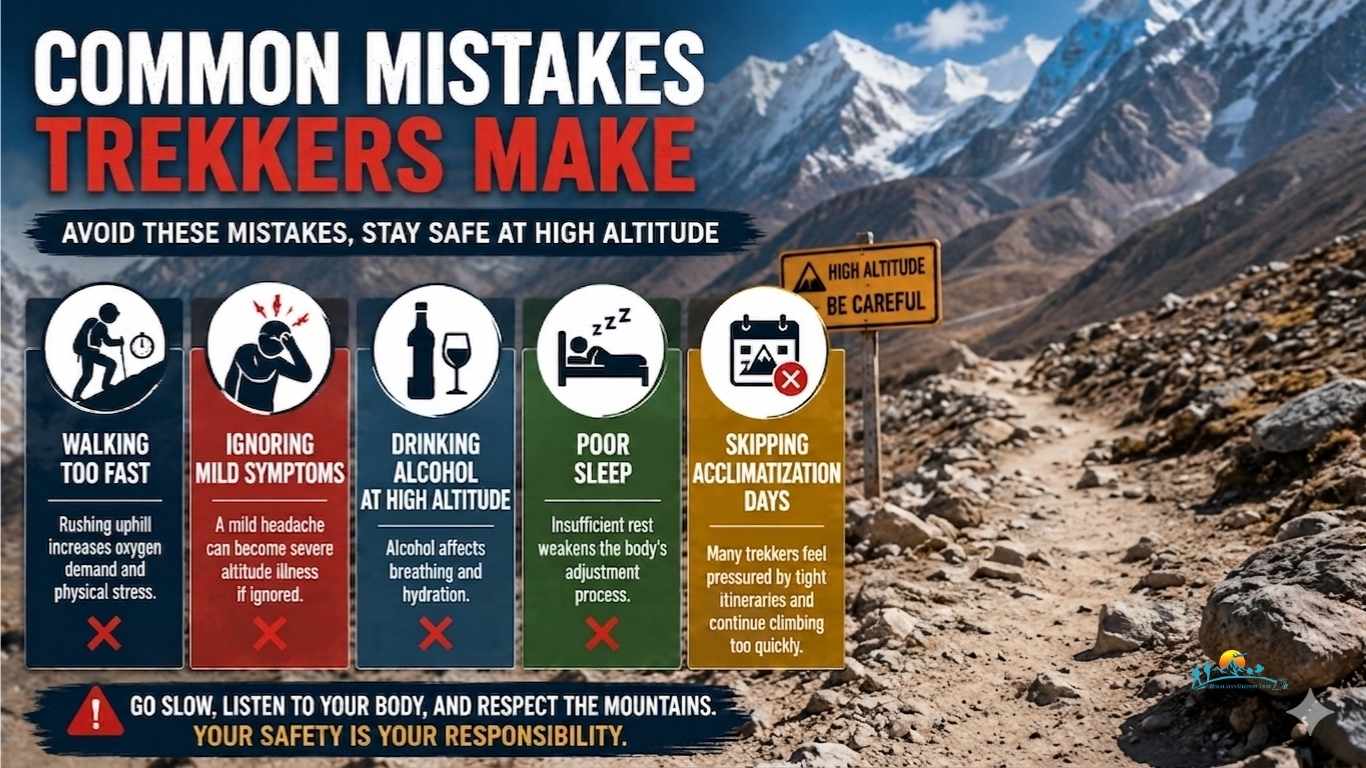
Rushing uphill increases oxygen demand and physical stress.
A mild headache can become severe altitude illness if ignored.
Alcohol affects breathing and hydration.
Insufficient rest weakens the body’s adjustment process.
Many trekkers feel pressured by tight itineraries and continue climbing too quickly.
Mild acute mountain sickness usually resolves within 24-48 hours with rest at the same elevation and the avoidance of further ascent. It’s not until the body adjusts to lower oxygen levels with proper acclimatization that many trekkers feel better. Symptoms of headache, dizziness, nausea and fatigue can also improve sooner when returning to lower altitudes, particularly if symptoms were caught early. Severe altitude illness leaves them with a long recovery period and may require a descent, oxygen and/or medical assistance.
Others may still experience lingering weakness or fatigue for a few days after they reach lower altitudes. It may take a few hours to days, depending on several factors such as the severity of symptoms, altitude attained, personal physical condition, and the onset of treatment or descent.
Known for some of the world’s most popular trekking routes, many are steeply inclined in Nepal, making their way to high altitudes. These hikes tend to be steep and steep, making it more likely to develop altitude sickness if the hikers are not acclimated. When one understands the impact of each of the major trekking routes, it becomes easier for trekkers to be better prepared and even decrease health risks while trekking.
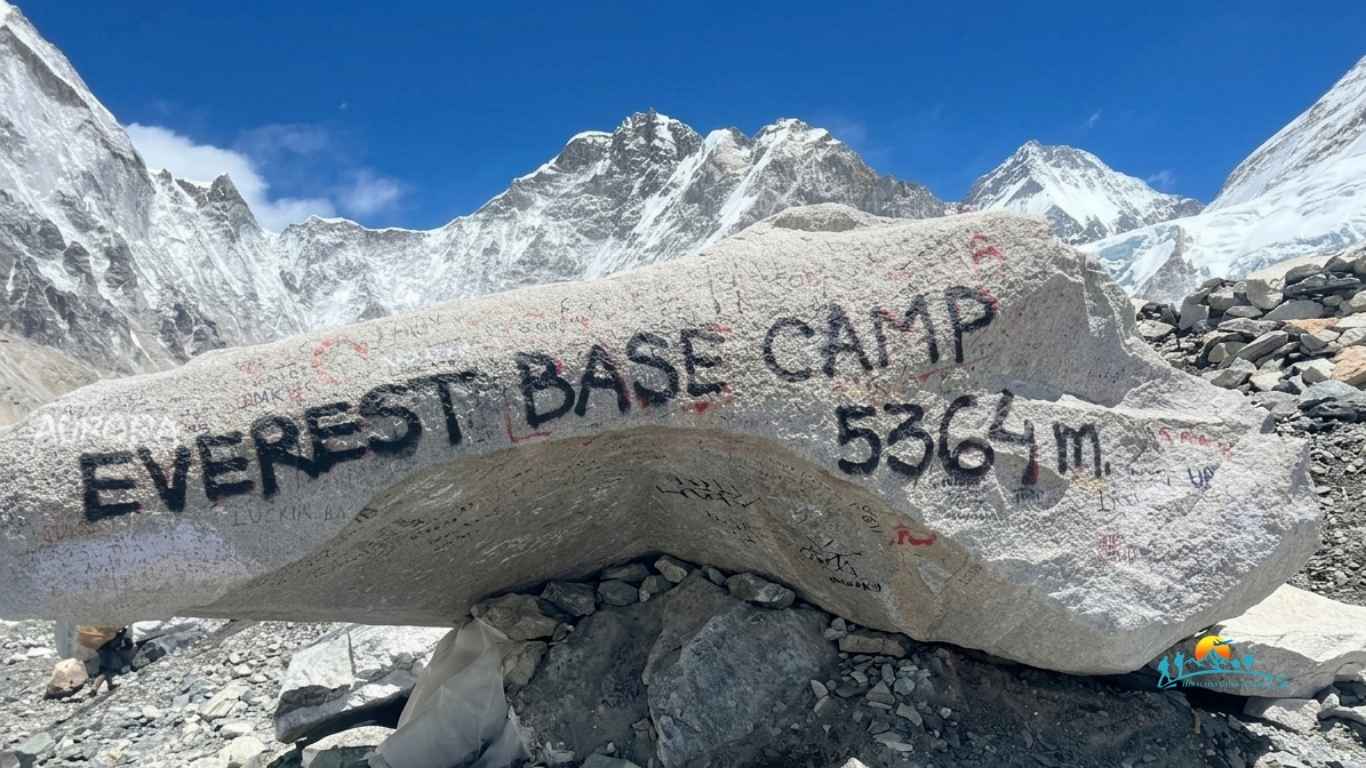
The Everest region has a high risk of acute mountain sickness due to the trekkers’ speedy ascend from lower villages to the higher altitudes above 5000m. This rapid ascent in elevation decreases the amount of oxygen available, which causes the body to have to work extra hard to adapt. The symptoms vary from headache, fatigue, to nausea for many trekkers at some of the major stops like Namche Bazaar, Tengboche, Dingboche or Lobuche. These are important acclimatisation stages where rest days allow the body to acclimatise and minimise the risk of developing severe altitude sickness.

One of the highest trekking passes in the world is Thorong La Pass (5,400m) in the Annapurna Circuit Trek. This means managing altitude is critical in the trip. Symptoms of AMS can occur before a trekking pass is reached as a result of a continuous ascent in altitude and a decrease in oxygen level. This is one of the important aspects of proper pacing, rest days, and slow ascent to make it a safe trek for trekkers.
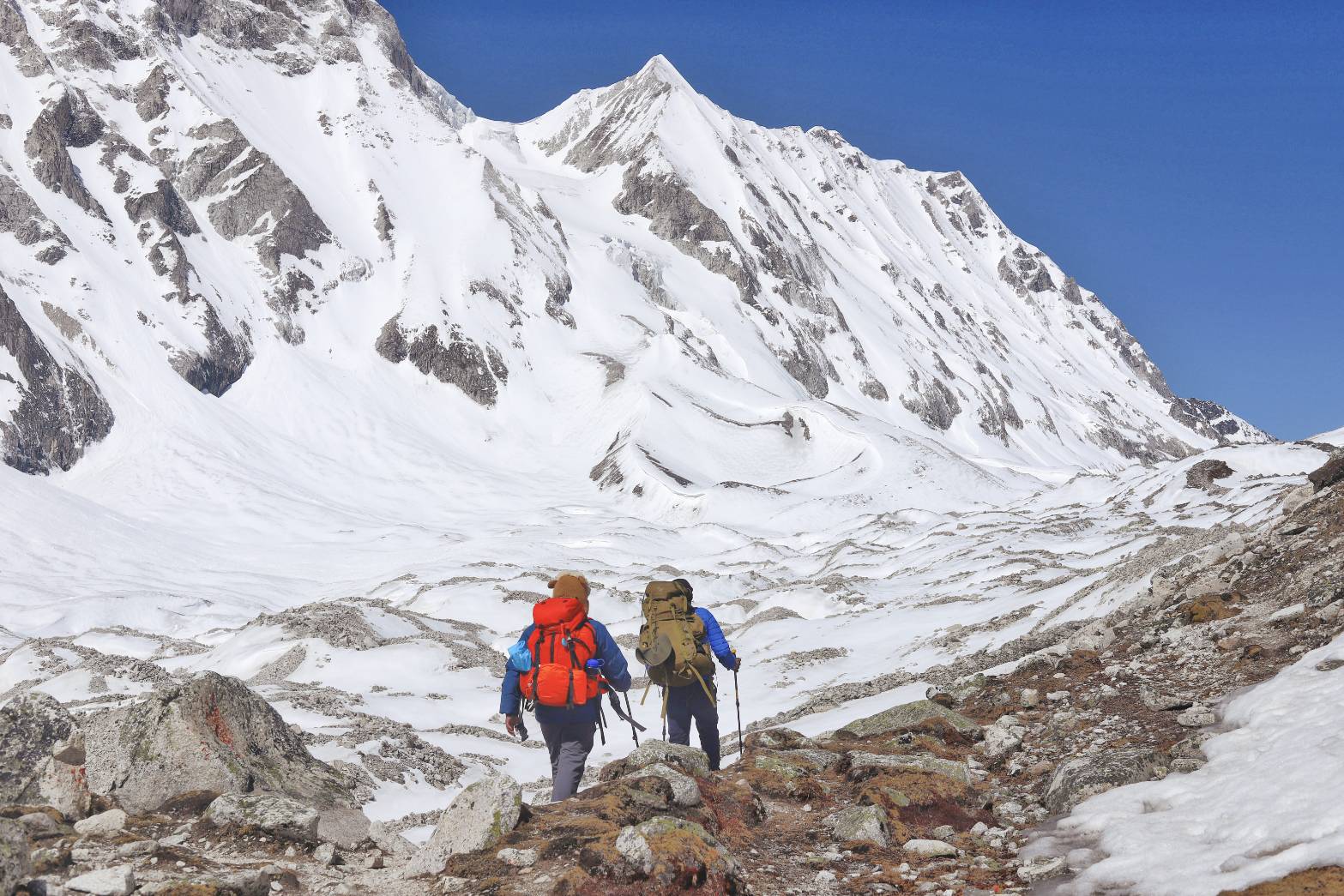
The Manaslu Circuit Trek is in the remote, less developed areas of the Himalayas, making prevention of Acute Mountain Sickness even more crucial. Access to medical facilities and emergency services is limited in this area, so trekkers should be more careful in acclimatization and ascent speed. The trail gradually ascends to high elevations, and symptoms can present themselves rapidly when trekkers choose to overlook them or rush to higher camps.
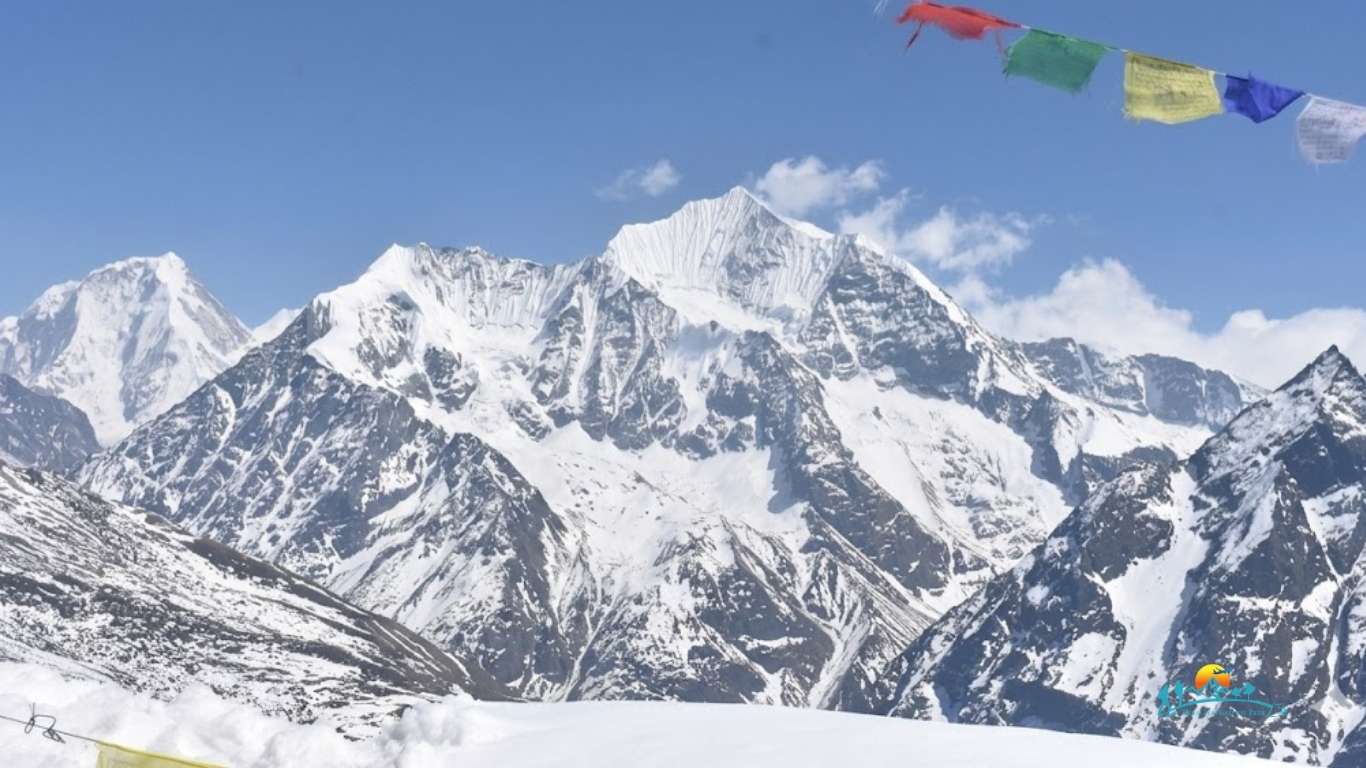
The Langtang Valley Trek is not as extensive as the other major treks in the Himalayas, but still has the potential for experiencing acute mountain sickness. The trekkers leave the lower valleys and go up to the villages within a couple of days, which may cause symptoms if the body is not allowed sufficient adaptation period. Although the trek is not as crowded or as demanding as that of the Everest or Annapurna routes, it’s important to acclimatize and maintain a steady walking pace to have a safe trek.
Proper food and fluid intake help the body maintain energy and adjust better to high altitude conditions. Trekking at higher elevations increases calorie demand because the body works harder to breathe and move with lower oxygen levels. Many trekkers also lose their appetite at altitude, which makes it important to choose foods that are light, warm, and easy to digest.
Carbohydrate-rich meals usually work best during high-altitude trekking because they provide steady energy without putting extra stress on digestion. Warm foods and fluids can also help the body stay comfortable in cold mountain environments. Helpful foods include:
Nepal contains many trekking routes above 4,000 meters where oxygen levels drop significantly. Trekkers often focus on scenery, photography, and reaching destinations while forgetting that altitude affects every person differently.
Mountain weather, cold temperatures, exhaustion, and dehydration can worsen symptoms quickly. Respecting altitude remains one of the most important parts of safe trekking in Nepal.
Acute mountain sickness remains one of the most important health concerns during high-altitude trekking. Early symptoms may appear mild, but ignoring them can lead to serious complications. Trekkers who respect altitude, ascend slowly, stay hydrated, and acclimatize properly usually enjoy safer and more comfortable journeys.
The mountains of Nepal offer unforgettable experiences, but safety should always come before reaching a destination. Listening to the body, recognising warning signs, and descending when necessary can prevent dangerous situations and protect lives at high altitude.
Acute Mountain Sickness (AMS) is a negative health condition caused by rapid exposure to low oxygen levels and decreased air pressure at high elevations. It occurs when your body fails to adapt to thin mountain air.
In Nepal, altitude sickness typically starts manifesting at elevations above 2,400 to 2,500 meters (around 8,000 feet). While some individuals experience symptoms earlier, risk increases drastically the higher and faster you ascend.
The primary cause of AMS is hypobaric hypoxia, where falling atmospheric pressure reduces oxygen availability. Ascending to high altitudes too rapidly prevents the body from naturally adjusting to these thin, low-oxygen conditions.
Early symptoms mimic an alcohol hangover. Trekkers commonly experience a throbbing headache accompanied by at least one secondary sign, such as nausea, dizziness, fatigue, loss of appetite, and difficulty sleeping.
If mild AMS is ignored, it can progress into two life-threatening conditions: High Altitude Pulmonary Edema (HAPE), which affects the lungs, and High Altitude Cerebral Edema (HACE), which causes swelling in the brain.
HAPE is a life-threatening condition where fluid accumulates in the lungs due to hypoxia-induced high vascular pressure. Symptoms include shortness of breath at rest, a persistent dry cough, elevated heart rates, and extreme fatigue.
HACE occurs when severe oxygen deprivation causes fluid leakages, leading to swelling of the brain. Critical warning signs include progressive neurological deterioration, severe headaches, confusion, hallucinations, and ataxia—a total loss of physical coordination.
Mild symptoms of AMS usually resolve within 24 to 48 hours once ascent stops, allowing the body time to acclimate. Descending to lower elevations speeds up recovery, often relieving symptoms in just a few hours.
Mild Acute Mountain Sickness itself is generally not fatal. However, if symptoms are ignored and the trekker continues ascending, it can rapidly progress into deadly complications like HACE or HAPE, which require immediate intervention.
Prevent AMS by ascending slowly, keeping daily sleeping elevation gains below 300–500 meters above 2,500 meters. Incorporate regular acclimatization rest days, eat a carbohydrate-rich diet, stay properly hydrated, and strictly avoid overexertion.
Trekkers should drink between three to five liters of water daily. Rapid breathing in thin, dry mountain air accelerates fluid loss and causes dehydration, which mimics and dangerously exacerbates the early symptoms of AMS.
It is best to avoid alcohol and caffeine during high-altitude treks. Both substances act as diuretics that cause severe dehydration, while alcohol can depress your respiratory drive, heavily impairing the body’s natural acclimatization process.
No, high physical fitness does not prevent AMS. Altitude sickness is a physiological reaction to low oxygen pressure that can affect elite athletes and beginners equally; ascending too fast remains the primary risk factor.
Common, harmless side effects of Diamox include a frequent tingling sensation in the fingers and toes, increased urination due to its diuretic nature, slight alterations in the taste of carbonated beverages, and occasional mild dizziness.
Medical professionals use tools like the Lake Louise Questionnaire Score (LLQS). Diagnosis requires a recent altitude gain, a persistent headache, and a combined score of three or higher across metrics like dizziness, fatigue, and nausea.
A trekker must descend immediately if mild symptoms worsen after 24 hours of rest, or at the very first sign of severe illness, such as a loss of physical balance (ataxia) or resting breathlessness.