Dashain Festival of Nepal: Dates, 15 Days, Traditions and History
The Dashain Festival of Nepal is the country's biggest annual festival for many Nepali families, bringing together religious worship, family…
 Himalayan Gateway Trek - On
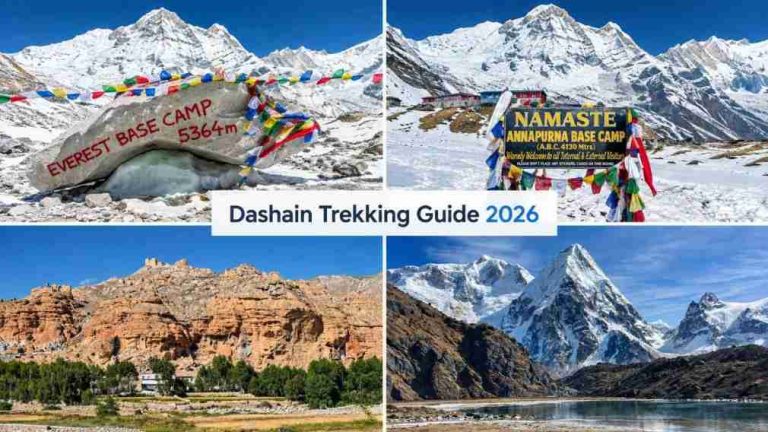
 Choosing between the everest base camp vs annapurna base camp trek requires a clear understanding of altitude, difficulty, scenery, culture, cost, and safety. Both treks are iconic Himalayan journeys in Nepal, yet they offer very different experiences on the trail. One takes you to the foot of Mount Everest inside Sagarmatha National Park. The other leads you into a natural amphitheatre beneath Annapurna I within Annapurna Conservation Area.
This guide compares every critical factor so you can decide which trek suits your fitness, expectations, budget, and time.
A side by side comparison helps clarify the major differences immediately.
| Feature | Everest Base Camp Trek | Annapurna Base Camp Trek |
|---|---|---|
| Maximum altitude | 5,364 m at EBC, 5,545 m at Kala Patthar | 4,130 m at ABC |
| Trek duration | 12 to 14 days standard | 7 to 12 days standard |
| Approximate distance | 130 km round trip | 110 km depending on route |
| Difficulty level | Moderate to challenging | Moderate |
| Altitude sickness risk | High above 4,500 m | Moderate but lower |
| Accommodation quality | Basic to standard teahouses | Slightly better average comfort |
| Cost range | USD 1,300 to 1,800 | USD 900 to 1,400 |
| Best season | March to May, September to November | March to May, September to November |
| Cultural experience | Sherpa villages and monasteries | Gurung and Magar villages |
| Scenery type | High alpine, glaciers, massive peaks | Forests, waterfalls, alpine basin |
| Accessibility | Flight to Lukla required | Drive or flight to Pokhara |
| Ideal for beginners | Fit beginners with preparation | More suitable for beginners |

Both treks sit in the Himalayas of Nepal and rank among the most popular trekking routes in the world. The Everest route begins with a flight to Lukla and climbs through Sherpa settlements toward Everest Base Camp at 5,364 meters. The Annapurna route usually starts near Pokhara and enters the Annapurna Sanctuary, finishing at 4,130 meters.
Travelers searching for everest base camp vs annapurna base camp trek usually want clarity on three things:
The answer depends on your priorities. Some want the highest possible altitude and the name Everest. Others prefer variety, lower altitude, and easier logistics.
Altitude is the most important difference between these two treks.
Everest Base Camp stands at 5,364 meters. Most trekkers also hike to Kala Patthar at 5,545 meters for sunrise views of Everest. Annapurna Base Camp sits significantly lower at 4,130 meters.
The oxygen level difference between 4,130 m and 5,364 m is substantial. At 5,364 meters, the body receives roughly 50 percent of the oxygen available at sea level. At 4,130 meters, oxygen availability is closer to 60 percent. That 10 percent difference feels dramatic during uphill climbs.
EBC itineraries include at least two acclimatization days, usually in Namche Bazaar and Dingboche. ABC treks rarely require scheduled acclimatization days because the ascent profile is more gradual and the altitude is lower.
Trekkers often report sleep disturbances above 4,500 meters. Many experience shallow breathing at night during the EBC trek. At ABC altitude, sleep is generally more comfortable.
Chart idea for content team: Include a graph comparing altitude gain per day for both treks to visually show how EBC climbs higher and stays at higher elevations longer.
Difficulty involves more than altitude alone.
Everest Base Camp demands longer days at higher elevations. Several sections include steady uphill climbs of 500 to 800 meters in elevation gain. Annapurna Base Camp also has steep stone staircases, especially around Chhomrong, but the lower altitude makes recovery easier.
Both treks require 5 to 7 hours of walking per day.
Cardio effort increases significantly above 4,500 meters. On EBC, even short climbs feel demanding. On ABC, your heart rate rises on stair sections but stabilizes more quickly.
Trekkers who train with hiking, stair climbing, and moderate cardio adjust well to either route.
Neither trek requires technical mountaineering skills. You do not need ropes or climbing gear for the standard routes. The trail to Everest Base Camp crosses rocky moraines and glacial paths, while ABC follows well marked stone steps and forest trails.
EBC tests mental resilience due to cold temperatures, thinner air, and basic living conditions at higher elevations. ABC still challenges the mind, yet warmer conditions and greener surroundings make it feel less harsh.
Everest Base Camp follows an out and back route from Lukla to base camp and returns along the same trail. Annapurna Base Camp allows more flexibility. Many trekkers combine ABC with Poon Hill, creating a loop that adds sunrise views over the Annapurna range.
Flight cancellations to Lukla can extend your itinerary by one or two days. ABC logistics are generally more stable.
Annapurna Base Camp begins at lower altitude and passes through rice fields, rhododendron forests, bamboo groves, and alpine meadows. The vegetation changes clearly as you climb.
Everest Base Camp starts higher, so forest sections are shorter. Pine and juniper dominate lower sections, and vegetation becomes sparse above Dingboche.
EBC features the Khumbu Glacier and dramatic moraine landscapes. The scale of ice and rock feels massive. ABC also includes alpine terrain, yet the glacier presence is less dominant.

In the Everest region, trekkers often see yaks grazing near villages. Annapurna trails may reveal langur monkeys and colorful pheasants in forest sections.
Both treks follow river valleys. EBC traces the Dudh Koshi River, crossing high suspension bridges. ABC follows the Modi Khola through narrow gorges and waterfalls.
The broader vegetation transition on ABC occurs because the trek begins at a lower altitude than EBC.

EBC offers constant exposure to some of the highest peaks on Earth. Trekkers see:
The view from Kala Patthar provides a clear look at Everest’s summit ridge. The Khumbu Icefall below base camp shows towering ice blocks and deep crevasses.
The scenery feels vast, rugged, and dramatic.

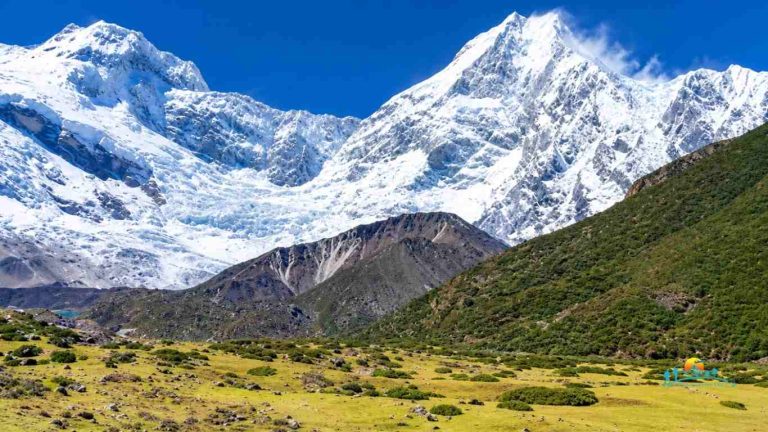
ABC delivers close range views of:
Inside the Annapurna Sanctuary, peaks surround you in a circular formation. Sunrise lights up the snow walls in every direction. The enclosed basin creates a powerful visual effect.
As you reach base camp, you stand at the center of a natural mountain bowl where every turn offers a direct, uninterrupted view of towering ice faces. The mountains feel closer and more dominant because there is no wide valley separating you from them. This proximity gives Annapurna Base Camp a quiet intensity that many trekkers find deeply moving.
EBC feels open and expansive. ABC feels enclosed and intimate.
Culture adds depth to both treks.
The Everest region is home to the Sherpa community. Villages such as Namche Bazaar and Tengboche display Buddhist monasteries, prayer wheels, and mani walls. Tengboche Monastery remains a spiritual center for the region.
Trekkers often witness early morning prayers and spinning prayer wheels along the trail.

The Annapurna region features strong presence of Gurung and Magar communities. Villages like Ghandruk show stone houses, terraced fields, and traditional farming life.
EBC focuses more on Buddhist heritage. ABC presents more agricultural daily life. Many trekkers enjoy interacting with farmers tending crops along the lower sections of ABC.
ABC offers more visible day to day village activities due to its lower altitude settlements.
Cost depends on group size, services, and season.
Kathmandu to Lukla return flights cost around USD 200 to 220 each way. Prices fluctuate depending on season.
Kathmandu to Pokhara flights cost about USD 100 one way. Bus options are cheaper.
Teahouse rooms cost USD 5 to 10 per night at lower altitudes. Prices increase above 4,000 meters on EBC. ABC lodges often provide slightly better facilities due to easier supply routes.
Meals range from USD 6 to 12 in lower sections. At higher EBC elevations, meals may cost USD 12 to 18 due to transportation challenges.
Overall:

Both treks perform best during stable seasons.
March to May offers blooming rhododendrons in ABC and clear skies in both regions. Temperatures are moderate, though EBC nights remain cold.
September to November provides the clearest mountain views. Trails are busy but weather remains stable.
ABC remains possible in winter with proper gear. Snowfall can occur, yet lodges often stay open. EBC winter temperatures can drop below minus 20 degrees Celsius at night. Fewer trekkers attempt EBC in winter.
Heavy rain affects lower sections of ABC from June to August. EBC lies in a rain shadow but still experiences cloud cover and slippery trails.
Altitude sickness risk increases sharply above 4,500 meters, making EBC more vulnerable to AMS cases.
On EBC, symptoms appear more frequently due to higher sleeping altitudes. ABC trekkers report fewer serious cases.
Helicopter evacuation operates in both regions. Lukla flights and helicopter access in Everest may take longer due to weather conditions. Annapurna helicopter evacuations often operate from lower altitudes, which allows quicker dispatch in stable weather.
Response times vary based on visibility and wind conditions.
EBC provides strong sense of achievement due to altitude and global recognition.
ABC offers balanced adventure with fewer altitude risks.
Yes, strong and well prepared trekkers can complete both treks in a single extended Nepal visit. You should allow at least 28 to 32 days including travel, acclimatization, and rest. Most travelers prefer spacing them across two separate trips to avoid fatigue.
A practical plan usually starts with the Annapurna Base Camp trek, since it helps your body adjust to higher elevations gradually before attempting the Everest Base Camp trek. After finishing ABC, you should schedule at least three to four rest days in Kathmandu or Pokhara before flying to Lukla for EBC. This break allows muscle recovery and reduces the risk of exhaustion.
You must also consider weather windows, especially for Lukla flights, which can face delays. Adding buffer days at the end of your itinerary prevents missed international departures. While completing both treks in one journey is possible, it requires strong fitness, careful planning, and flexibility in travel dates.
When comparing everest base camp vs annapurna base camp trek, altitude remains the defining factor. EBC delivers extreme altitude, iconic status, and dramatic glacial scenery. ABC provides diversity, cultural depth, and lower physical strain.
Your fitness, budget, time, and tolerance for altitude will determine the right choice. Both treks offer life changing Himalayan experiences when approached with preparation and respect for the mountains.
Generally, no. EBC is considered more challenging because it reaches much higher altitudes (5,364m vs. 4,130m) and involves a harsher, colder environment. However, ABC’s steep stone steps still provide a significant and tiring physical leg workout.
“Better” depends on your goals. EBC offers the prestige of seeing the world’s highest peak and dramatic glacial scenery. ABC offers superior landscape variety, lush forests, a massive mountain amphitheatre, and the vibrant lakeside city of Pokhara.
EBC reaches 5,364m, with many hiking to Kala Patthar at 5,555m for views. ABC peaks at 4,130m. This difference of over 1,000m makes altitude sickness a significantly higher risk on the Everest trek compared to Annapurna
The standard EBC trek typically takes 12 to 16 days to allow for vital acclimatization. ABC is more flexible and can be completed in 7 to 12 days, making it a better option for those with limited time.
EBC usually starts with a flight to Lukla, which is weather-dependent and thrilling. ABC is accessed via Pokhara by a 6-hour drive or a short flight, making it more reliable and easier to reach by land from Kathmandu
ABC features diverse ethnic groups, including Gurung, Magar, and Thakali villages. EBC is primarily focused on Sherpa culture and Buddhist traditions, offering a more singular but deeply immersive experience within high-altitude settlements and remote, historic monasteries.
Yes, ABC is generally cheaper. The logistics of the Annapurna region are easier, and food prices are lower. EBC costs more due to the Lukla flight, higher permit fees, and increased prices for supplies in remote zones.
EBC provides a rugged, high-alpine landscape with massive glaciers and “the biggest mountains.” ABC offers a more varied journey, transitioning from subtropical forests and terraced fields to a spectacular snow-capped mountain amphitheatre at the base camp.
ABC is generally more beginner-friendly. Its lower altitude reduces the risk of serious altitude sickness, and the shorter duration is less taxing. However, both require good physical fitness to handle several hours of daily trekking and climbing.
Both use “tea houses” (lodges). Annapurna lodges often offer slightly higher quality and more amenities due to better road access. Everest lodges become very basic and cold at higher elevations, requiring a more robust mindset from most trekkers.
Spring (March–May) and Autumn (September–November) are optimal for both. However, ABC is more viable in winter because of its lower elevation, whereas EBC becomes extremely cold and many high-altitude lodges may close during the winter months.
No. You can see Everest clearly from several points on the EBC trek, particularly Kala Patthar. On the ABC trek, you are in a completely different mountain range and will see peaks like Annapurna South and Machapuchare