The trek to Gokyo Lakes and Renjo La Pass passes through the peaceful valleys of the Everest region. Hikers who prefer to see the big mountains without the main, crowded hiking trails will find it an excellent option. The route heads through the villages of the Sherpas, cold rivers, and green forests and then up to the high hills.
The green trees vanish as you climb up, and you become caught up in a land of rock and ice. The prominent features here are calm, transparent blue glacial lakes below mammoth peaks. You will be able to see some of the tallest mountains in the world, such as Mount Everest, Lhotse and Cho Oyu, from different sides than most tourists.
The high Renjo La pass at more than 5,300m is a difficult and spectacular section of the trek. It takes some work to walk, but the views of the slopes and long glaciers below are visible from the top of the walk. It provides a whole picture of the raw beauty of the high Himalayas.
The Blue Green Colour Lakes of Gokyo
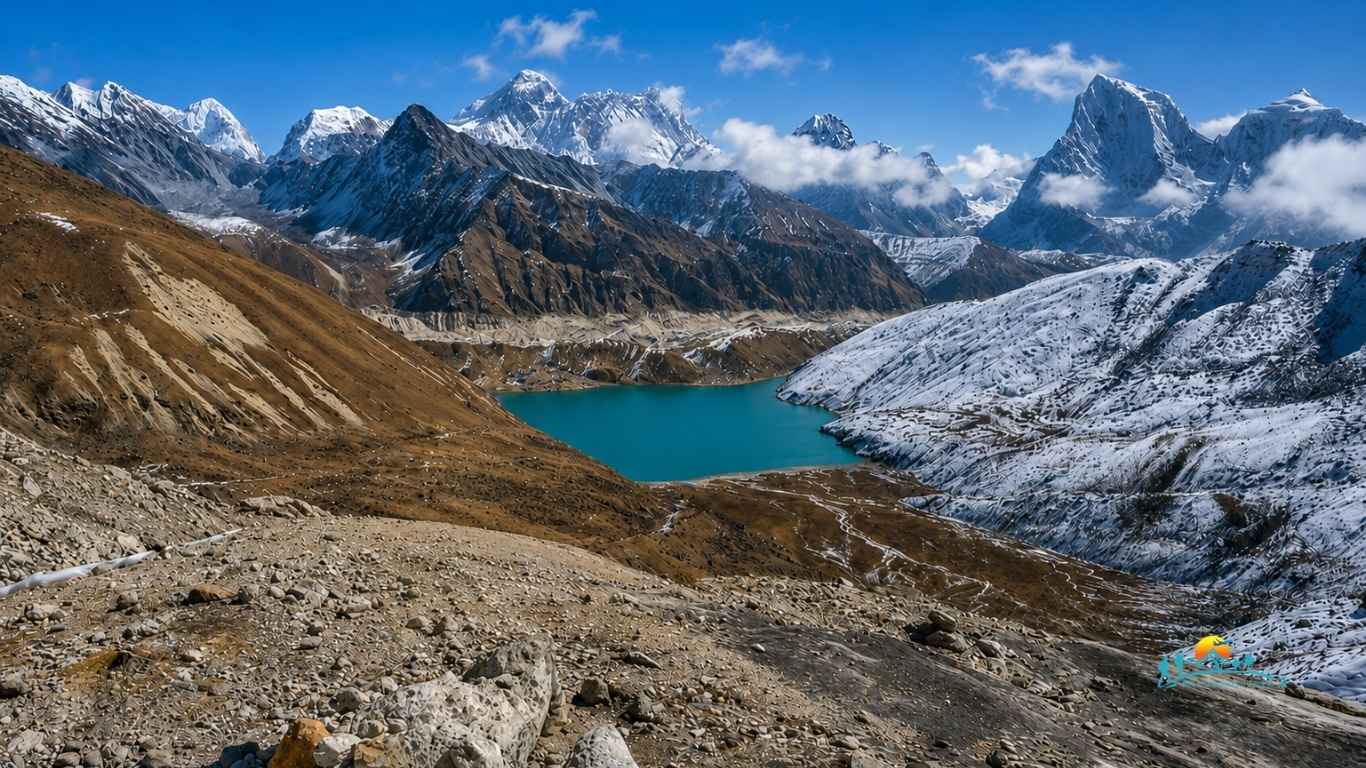
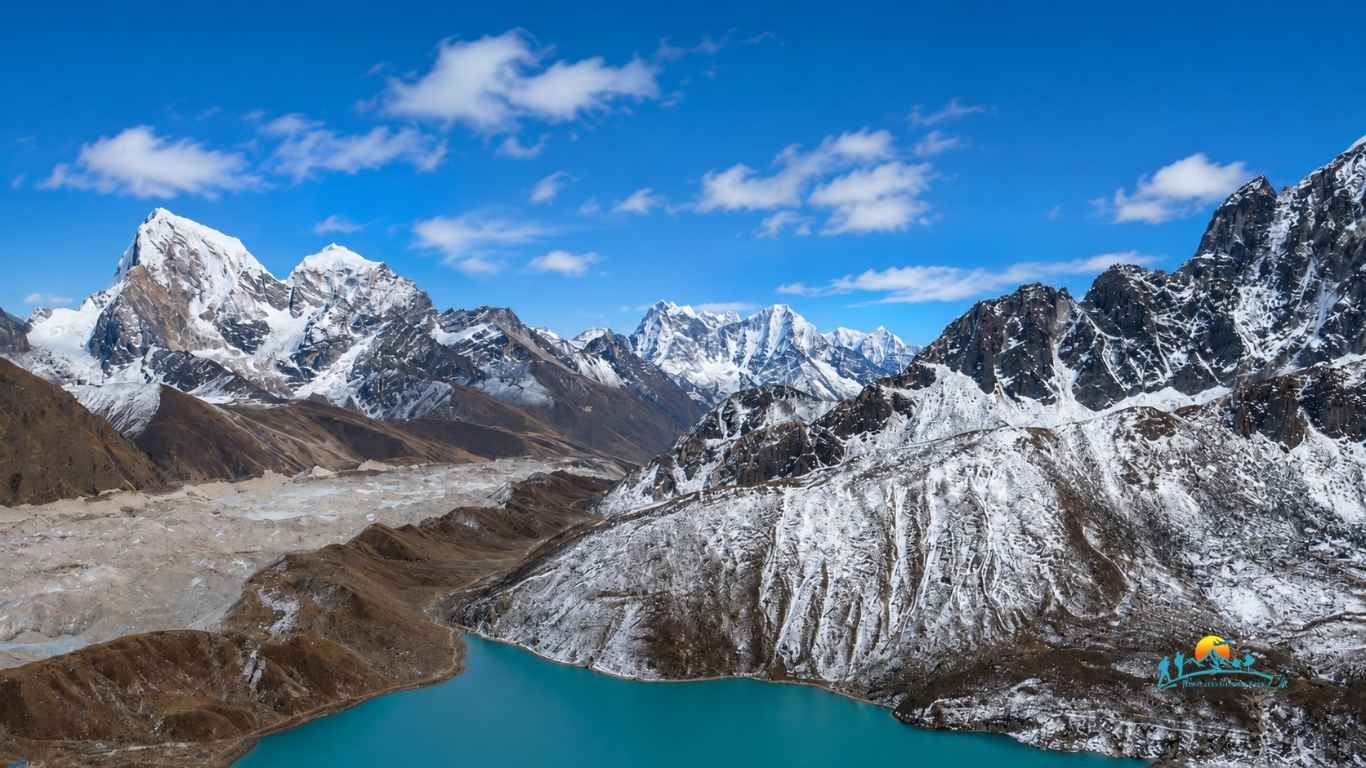
This walk is based around a series of high-altitude lakes. Altogether, there are six main lakes, nourished by the meltwaters of the very large Ngozumpa Glacier in Nepal, the nation’s longest glacier. The water is a very bright, blue-green colour, caused by a fine rock dust that is being brought down by the glacial ice. The tiny village of Gokyo is located on the edge of the third lake at about 4800m. The seashore of these serene waters is different from the Khumbu and brings a calmness unlike any other.
Climbing Gokyo Ri for Mountain Views
Just adjacent to the village is a steep hill known as Gokyo Ri. This hike requires 2 – 3 hours of fairly steep walking up a dirt trail. At the top (5,357 m), you can see four mountains over 8,000 m. Everest, Lhotse, Makalu and Cho Oyu can be seen in formation. When looking straight down, you can also see the small houses of the village and the greenish-blue water of the lake adjacent to the grey ice of the glacier. It is this particular view that many say is better than one from Kala Patthar near Everest Base Camp.
The Challenge of Renjo La Pass
Crossing this high pass is the most physically demanding day of the trek. The trail starts early in the morning from Gokyo lake and climbs up a steep, rocky slope. Depending on the season, you might walk across patches of crisp snow or loose stones. Reaching the top at 5,360 meters requires careful pacing and regular breaks because the air is very thin. The reward at the top is a wide viewpoint showing the Gokyo valley on one side and the remote western valley leading toward Lungden on the other side. The descent down the back of the pass uses stone steps that drop into a quiet valley where few tourists go.
Local Sherpa Culture and Villages
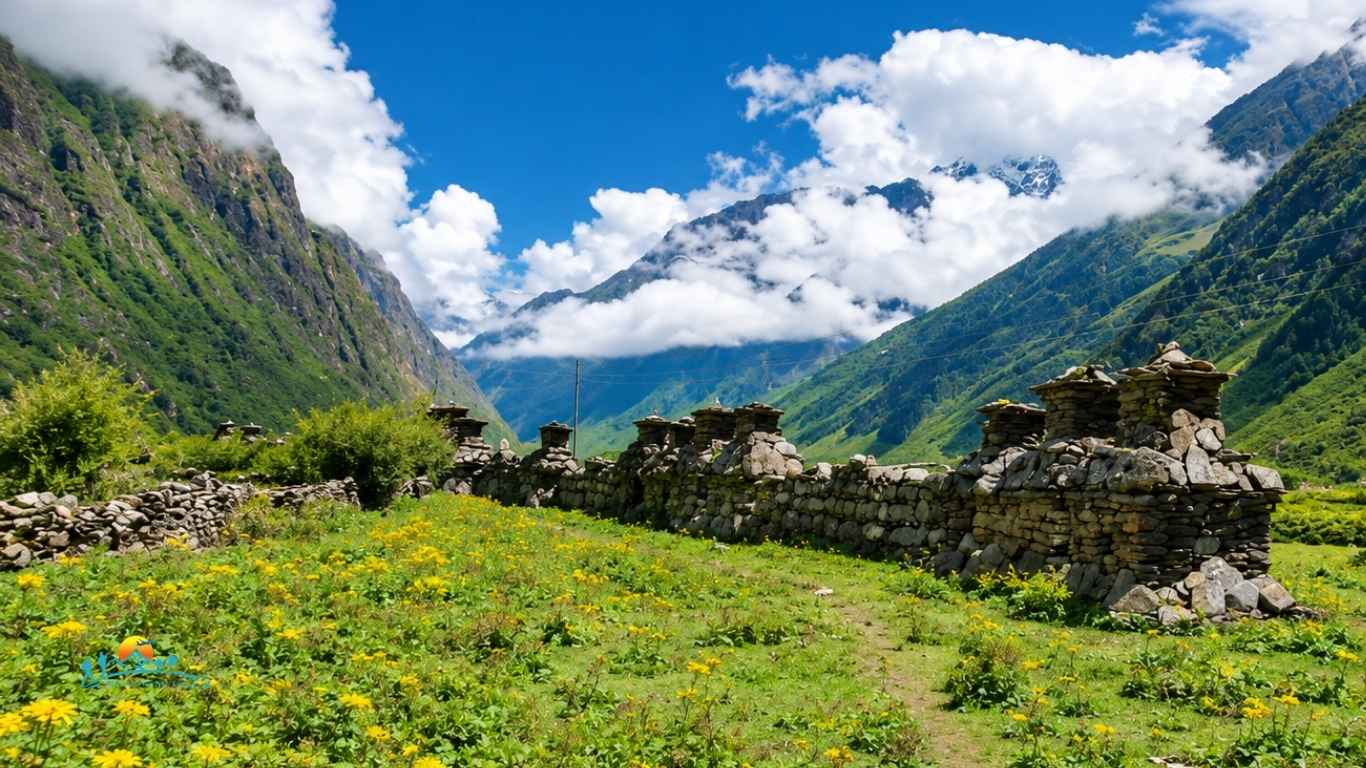
While the natural scenery is grand, the human side of the trek is just as memorable. You walk through famous stops like Namche Bazar, the busy market town built into a mountain bowl. Higher up, you visit quieter villages like Dole and Machhermo where locals farm potatoes and raise yaks. The houses are made of stone with brightly painted roofs, and you will see many stone walls carved with old prayers. Staying in these small villages gives you a chance to eat local food, sit by warm stoves at night, and see how people live in the high mountains.
Major Highlights of the Journey
- Scenic high-altitude flight from Kathmandu to the mountain airstrip at Lukla.
- Six pristine turquoise glacial lakes of the Gokyo Valley sitting above 4700 meters.
- Panoramic view of Mount Everest, Lhotse, Makalu, and Cho Oyu from the top of Gokyo Ri.
- Challenging crossing of the high Renjo La Pass at an altitude of 5360 meters.
- Trekking past the Ngozumpa Glacier, the longest glacier in the entire Himalaya range.
- Authentic cultural experience staying in remote Sherpa villages like Dole, Machhermo, and Lungden.
Why Choose Himalayan Gateway Trek
- Experienced local Sherpa guides who know the trail safety protocols and regional history.
- Carefully planned 14-day itinerary with dedicated rest days in Namche and Gokyo for proper altitude adjustment.
- All ground transportation and domestic flight bookings handled by our team.
- Selection of clean and reliable local tea houses with standard mountain hospitality.
- Complete assistance with required national park permits and local entry paperwork.
- Small group sizes that ensure individual attention and flexible walking paces.
Gokyo Lake and Renjo La Pass Trek Overview
Gokyo Lakes and Renjo La Pass Trek is a tranquil trek through the Khumbu region, bypassing the popular trails. Walk through the Namche Bazaar and then head into the tranquil Gokyo Valley, home to small farming villages and rhododendron forests, after flying into Lukla.
The best part of this trail is the six lakes in the vicinity of the Gokyo village at high elevation. The waters are clear and lie beside the largest glacier of the Nepal Himalayas, the Ngozumpa Glacier, which turns green to blue in the sun of the mountain.
You will climb Gokyo Ri at 5357 meters to see four giant peaks, including Mount Everest. Afterward, the trail crosses the tough Renjo La Pass at 5360 meters, which offers clear views across the valley before dropping into the remote village of Lungden.
During the 14-day trip, you will stay in traditional Sherpa family tea houses, experiencing local food and mountain hospitality away from big crowds. The loop finishes by heading back through Namche Bazaar to Lukla for your flight to Kathmandu.
If you travel with Himalayan Gateway Trek, you don’t need to worry about your safety and comfort because your local guides take care of it. We arrange your flights to Lukla, park permits and lodge bookings to let you concentrate on enjoying the high Himalayas.
Himalayan Gateway Trek Itinerary
Day 01: Arrive in Kathmandu and transfer to Hotel
You will land at the international airport in Kathmandu. A representative from our team will meet you outside the arrival gate holding a sign with your name. They will help you with your luggage and take you straight to your hotel in the city.
After checking into your room, you can take a rest to recover from your flight. In the evening, you will meet your trekking guide for a short briefing about the upcoming mountain trip. You can spend the rest of the night buying any last-minute gear or resting at the hotel.
Day 02: Fly to Lukla (2804m), and trek to Phakding (2610m)
Your day starts early with a transfer to the domestic terminal for your flight to Lukla. The flight takes about 40 minutes and passes over green hills and small mountain villages before landing at the high airstrip. Once you land, you will meet your porters and organize your bags for the trail.
The walk begins by heading downhill toward the Dudh Koshi River. You will follow a wide path that passes by small stone houses, crop fields, and prayer walls. After a steady two to three hours of walking, you will reach the village of Phakding to spend your first night on the trail.
Day 03: Trek to Namche Bazaar (3,440 m)
The trail follows the bank of the river, crossing several high suspension bridges decorated with colorful prayer flags. You will enter the Sagarmatha National Park at Monjo, where your guide will register your permits. From there, the path drops down to the river bed before starting a long climb.
The final part of the walk is a steep uphill climb through pine forests. This section is physically demanding as the air begins to feel thinner. You will eventually arrive at the large crescent-shaped mountain town of Namche Bazaar, where you will check into your tea house.
Day 04: Rest day at Namche Bazar (3,440 m)
This day is set aside to let your body adjust to the higher altitude. Instead of staying still, it is best to take a short walk up to a higher point and then come back down to sleep. You can walk up to the museum or head higher to a viewpoint to see your first clear views of Mount Everest.
After the morning walk, you will return to Namche Bazaar for lunch. You can spend the afternoon walking around the local streets, visiting bakeries, or checking the mountain gear shops. This town is the final place to buy any items you might have forgotten before heading into the quieter valleys.
Day 05: Trek to Dole (4,200m)
The path starts with a scenic walk along the side of the mountain before splitting away from the main Everest trail. You will turn left and climb up toward the Mong La pass, which offers views of Ama Dablam. The trail then drops down through a rhododendron forest to the river at Phortse Tenga.
From the river, you will begin a steady climb through mossy forests and bamboo groves. The trail ascends steadily out of the trees and opens up into alpine fields. You will reach the small settlement of Dole in the afternoon, where the temperatures drop significantly as you cross the 4000-meter mark.
Day 06: Trek to Machhermo (4,700M)
The trek continues upward along the side of the valley, high above the river below. The trees disappear completely today, replaced by low shrubs and dry grasses typical of high-altitude areas. The trail passes through several small summer grazing areas used by local yak herders.
You will maintain a slow and steady pace to avoid getting altitude sickness. The path climbs over a ridge and drops slightly into a small valley to reach Machhermo. In the afternoon, you can attend a safety lecture about altitude illness at the local rescue post.
Day 07: Trek to Gokyo (4,800 m)
Today you will climb up a steep rocky path next to the edge of the large Ngozumpa Glacier. The trail flattens out as you reach the first small glacial lake. Continuing forward, you will walk past the second lake before arriving at the third lake, known as Dudh Pokhari.
The small village of Gokyo sits right on the edge of this third lake, beneath the peak of Gokyo Ri. After checking into your lodge, you can walk to the edge of the water or look at the glacier. The afternoon is spent resting and drinking hot liquids to stay hydrated.
Day 08: Acclimatize day at Gokyo / Explore Gokyo Ri (5,357 m)
You will wake up before dawn to begin the steep climb up Gokyo Ri. The path is entirely uphill on a sandy, rocky slope that requires careful footsteps. It takes about three hours to reach the top, where prayer flags fly in the cold wind.
From the top, you can see a panoramic view of Mount Everest, Lhotse, Makalu, and Cho Oyu. You also get a bird’s eye view of the turquoise lakes and the glacier below. After taking time to look at the view, you will head back down to the village for a warm meal and a rest.
Day 09: Trek to Lungden (4,380 m) via Renjo La pass (5,360 m)
This is the longest and hardest day of the entire trek. You will start walking in the dark, heading around the edge of the lake before climbing up a steep ridge. The path to the top of Renjo La Pass uses stone steps that can be covered in ice or snow.
Reaching the pass gives you a final wide view of the Everest range and the Gokyo lakes behind you. The trail down the other side is steep and rocky, requiring a lot of focus to avoid slipping. You will eventually leave the rocky terrain and enter a grassy valley to reach the quiet village of Lungden.
Day 10: Trek down to Namche Bazar (3,440 m)
The trail drops down through the traditional Bhote Koshi valley, which was an ancient trade route between Nepal and Tibet. You will pass through small villages like Thame, which features a historic monastery on the hillside. The walking is much easier today as you move into lower altitudes with more oxygen.
You will cross several streams and walk through forests as you near the end of the day’s walk. The path joins back with the main trail network just before entering Namche Bazaar. You will spend the night in a familiar village, enjoying a hot shower and internet access.
Day 11: Trek to Lukla (2,860 m)
You will leave Namche Bazaar and make the long, steep descent down to the suspension bridges over the river. The path passes back through the national park exit at Monjo. You will retrace your steps through Phakding and other small farming settlements along the trail.
The final section of the trek requires a gentle uphill walk to get back to Lukla. Reaching Lukla marks the official end of your mountain walking days. In the evening, you can celebrate finishing the trek with your guide and porters.
Day 12: Fly back to Kathmandu
You will head to the Lukla airport early in the morning to catch your return flight to Kathmandu. The flight depends heavily on clear weather, so timings can change. Once the plane arrives, you will board for the quick 40-minute journey back over the hills.
A vehicle will meet you at the domestic airport in Kathmandu to drive you back to your hotel. The rest of the day is completely yours to rest, wash your clothes, or walk around the city. You can enjoy a peaceful evening sleeping in a standard hotel room.
Day 13: Rest day in Kathmandu
This day serves as a buffer in case your flight from Lukla was delayed due to bad weather. If you arrived back on time the day before, you can use this day to see the historical places around Kathmandu. You can visit ancient squares, temples, or local markets to buy souvenirs.
In the evening, our team will host a farewell dinner at a local restaurant to celebrate your completion of the loop. You can share stories from the trail and say goodbye to your guide. You will return to your hotel for your final night in Nepal.
Day 14: Departure to your home
Your mountain journey comes to an official end today. You will pack your bags and check out of your room by noon. Our driver will pick you up from the hotel lobby three hours before your international flight is scheduled to leave.
They will drop you off at Tribhuvan International Airport so you can check in for your flight home. As you board your plane, you will leave behind the high passes and lakes with memories of your time in the mountains.
What is Included in the Tour Package
- Airport pickup and drop by private vehicle.
- 3 nights Hotel in Kathmandu with breakfast.
- Domestic flights (Kathmandu- Lukla -Kathmandu)
- Full board meal during the trek: Breakfast, Lunch and Dinner with tea/coffee.
- Tea house accomodation during the trek.
- An English speaking, government licensed trekking guide and porter (1 porter for 2 trekker’s ).
- Khumbu Pashang Lhamu Rural Municipality fees.
- Food, salary, insurance, accommodation of Nepali staff.
- All government, local taxes, and other official expenses.
- Sleeping bag & Duffel bag to each trekker’s (to be returned after the trek ).
- Farewell dinner at typical Nepali restaurant.
- Travel & rescue arrangement (Helicopter evacuation available if required, at clients cost based on clients insurance policy).
- Trekking Certificate.
- First Air Kit
What is Not Included in the Tour Package
- International airfare to and from Kathmandu.
- Nepal entry visa fee, which you can purchase at the Kathmandu airport upon your arrival.
- Lunch and dinner meals during your stay in Kathmandu.
- Personal trekking gear and clothing, such as a sleeping bag, trekking poles, or a down jacket.
- Travel and medical insurance that covers high-altitude emergency helicopter evacuation.
- Personal expenses at the lodges, including hot showers, Wi-Fi access, and device battery charging fees.
- Cold drinks, alcoholic beverages, bottled water, specialty coffees, and snacks along the trail.
- Tips or gratuities for your trekking guide and porters at the end of the journey.
- Any additional costs caused by flight delays, bad mountain weather, or unexpected changes to the itinerary.
Gokyo Lake & Renjola Pass Trek Map
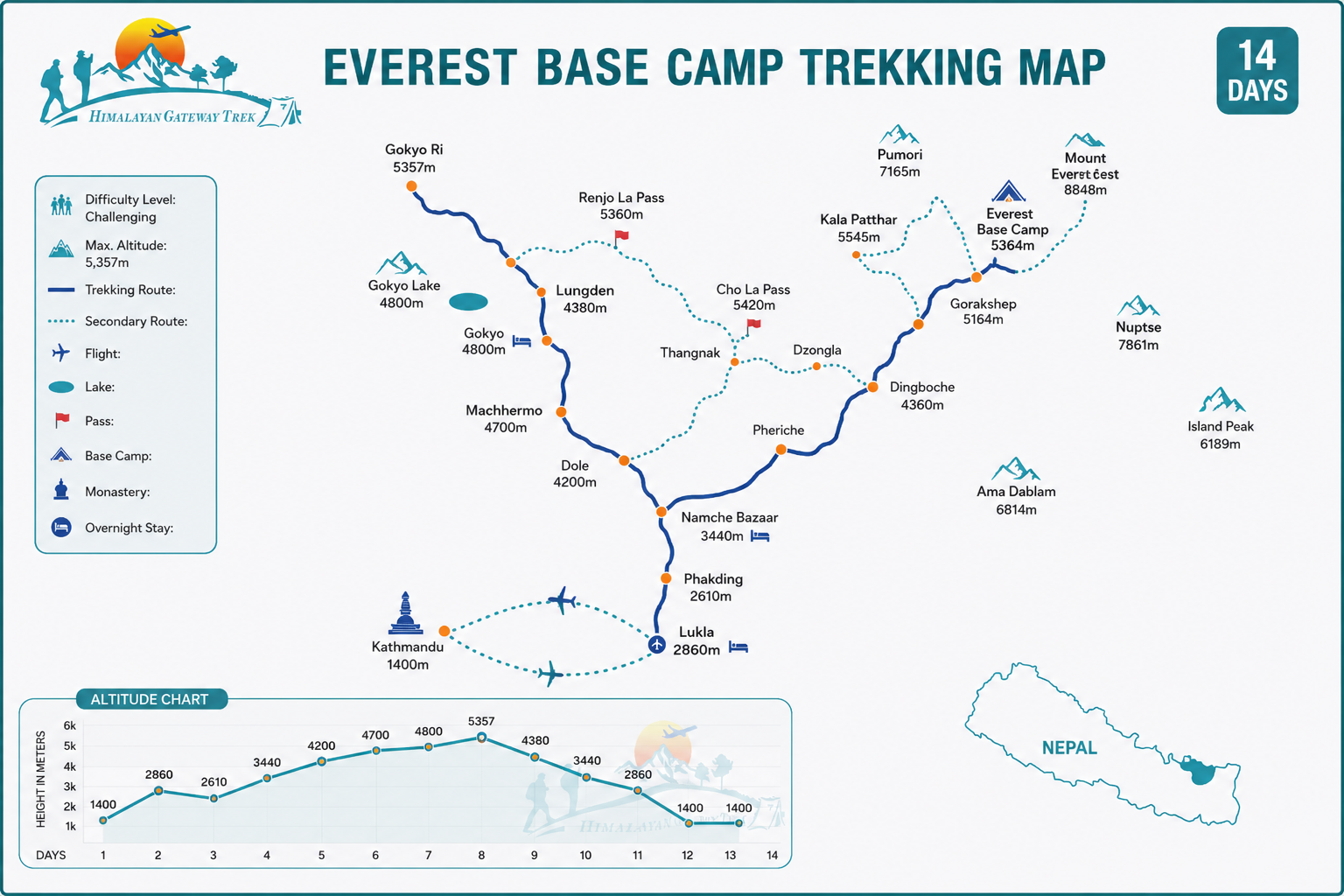


Packing the correct gear is important for a safe and comfortable trip through the high passes of the Everest region. Because you will walk through changing weather conditions, from warm green valleys to freezing mountain passes above 5000 meters, layering your clothes is essential.
Your main luggage bag will be carried by local porters, while you carry a smaller daypack for your daily personal items like water, rain gear, and a camera.
Good quality hiking boots that are broken in before the trip will prevent blisters on the long daily walks. You will need windproof and waterproof outer jackets to protect against sudden mountain weather changes, alongside a thick down jacket for the cold evenings inside the unheated tea houses.
While specialized items like sleeping bags and down jackets can be rented easily in Kathmandu or Namche Bazaar, personal items should be brought from home.
Make sure to pack extra batteries or portable power banks, as cold temperatures drain electronic devices quickly and charging fees apply at the lodges. Having the proper gear ensures you stay warm, dry, and ready for each daily walk.
- Moisture-wicking thermal base layers.
- Warm fleece jackets or insulating mid-layers.
- Waterproof and windproof outer jacket and trousers.
- Lightweight, quick-drying trekking trousers and shorts.
- Lightweight inner gloves and thick, windproof outer gloves.
- Sturdy, waterproof hiking boots.
- Lightweight running shoes or sandals to wear inside the lodges.
- Pair of adjustable trekking poles.
- Daypack with a waterproof rain cover.
- High UV-protection sunglasses to prevent snow blindness.
- Two reusable water bottles or a water bladder.
- High-factor sun cream, moisturizing lip balm, and body wet wipes.
- High-capacity portable power bank to charge phones and camera batteries.
- Personal medical kit containing altitude medication, blister pads, and painkillers.
This package details everything travelers need to know before booking their journey with Himalayan Gateway Trek. The cost covers essential mountain services to ensure a safe trip through the high trails of the Khumbu. By laying out clear guidelines on permits, high altitude health, local flights, and gear preparation, we aim to clear up any questions before your arrival in Kathmandu.
Walking through high mountain terrain requires good mental and physical preparation. Our team handles the administrative details so that you can focus on your daily walks and enjoy the natural beauty of the region. Reading through the information below will help you prepare your bags and understand the conditions of mountain travel.
Best Season for Trekking
The ideal times to visit the Gokyo Lakes and cross the Renjo La Pass are during the spring months of March to May and the autumn months of September to November. Spring brings milder daytime temperatures and beautiful blooming flowers along the lower parts of the trail. Autumn offers exceptionally clear blue skies and stable mountain conditions, providing sharp views of Mount Everest and mirror-like lake reflections.
Altitude Safety and Health
Traveling above 4000 meters requires a careful approach to safety. Our itineraries include built-in rest days in Namche Bazaar and Gokyo village to let your body adjust naturally to the thin air. Guides carry basic medical kits and check group health daily, making sure everyone moves at a safe, slow pace to avoid sickness.
Booking and Cancellation Rules
To confirm your spot on the trek, a deposit is required at the time of booking. This deposit allows us to secure your domestic flight tickets to Lukla and book early lodge rooms during the busy mountain season. The remaining balance can be paid upon your arrival in Kathmandu before the trek begins.
Mountain Flight Contingencies
Weather in the Himalayas changes rapidly, which can lead to flight delays or cancellations at the Lukla airstrip. We build buffer days into the 14-day schedule to account for these potential flight changes without affecting your international travel plans. In case of long delays, alternative options can be organized by our city staff.
Guide and Porter Support
Every group travels with a licensed local guide who knows the specific terrain and villages of the Gokyo valley. Porters are hired locally to carry your main duffel bags, which reduces your physical burden and lets you walk with a light daypack. We follow strict local guidelines to ensure fair pay and proper clothing for all field staff.
Terms & Policies
Thank you for choosing Himalayan Gateway Trek. Our goal is to provide a safe, enjoyable, and memorable travel experience. Please review the following terms and policies before confirming your booking.
📍Booking & Payment
- 👉 A 20% deposit is required to confirm your booking.
- 👉 The remaining balance must be paid on your arrival day in Nepal
- 👉 Your booking is confirmed once we receive your deposit and send a confirmation.
📍Cancellation & Refunds
- 👉 If you cancel your trip 45 days or more before departure, 50% of the deposit amount will be refunded.
- 👉 No refunds are available for cancellations made within 45 days of departure.
- 👉 Any non-refundable costs already incurred, including permits, flights, accommodation, transportation, or other third-party services, will be deducted from the refund amount.
Note: Eligible refunds will be processed within 14 business days of receiving the cancellation request.
📍 Travel Insurance
- 👉 Travel insurance is mandatory for all trekking and adventure trips.
- 👉 Your insurance should cover emergency medical treatment, helicopter evacuation, trip cancellation, and personal accidents.
- 👉 Himalayan Gateway Trek is not responsible for expenses arising from inadequate insurance coverage.
📍 Trip Changes
- 👉 Weather conditions, flight delays, road conditions, government regulations, or other unforeseen circumstances may require changes to the itinerary.
- 👉 Any changes will be made with the safety and well-being of our guests as the highest priority.
📍 Responsibility
- 👉 Himalayan Gateway Trek is not responsible for flight delays, cancellations, injuries, loss of personal belongings, natural disasters, political unrest, or other events beyond our control.
- 👉 By booking a trip with us, you acknowledge and accept the inherent risks associated with trekking and adventure travel.
FAQs
Is Gokyo Lake trek difficult?
The Gokyo Lake trek is classified as moderately difficult. It avoids strenuous high-altitude pass crossings but requires ascending to 5,357 meters at Gokyo Ri. Trekkers need solid cardiovascular fitness to endure steep, rocky trails and thin mountain air.
How long is the Gokyo Lake trek?
The standard Gokyo Lake trek takes 11 to 13 days from Kathmandu, including Lukla flights. The actual walking distance covers roughly 92 kilometers (57 miles) round-trip, featuring essential acclimatization days to ensure safe high-altitude progression.
What is the toughest trek in Nepal?
The Dhaulagiri Circuit and the Sherpani Col Trek are widely considered Nepal’s toughest routes. They demand navigating trackless glaciers, technical ice climbing, sustained camping above 5,000 meters, and crossing dangerous, high-altitude passes under volatile weather conditions.
How much does the Gokyo Lake trek cost?
The Gokyo Lake trek typically costs between $1,200 and $1,800 USD per person. This estimate includes mandatory trekking permits, domestic Lukla flights, licensed guide fees, basic teahouse accommodation, and three daily meals along the route.
How difficult is the Gokyo Lakes and Renjo La Pass Trek?
It is classified as a strenuous trek. While the Gokyo valleys are moderately steep, crossing the Renjo La Pass (5,360m) requires navigating sharp, icy, and loose rocky switchbacks, demanding excellent physical endurance and mental stamina.
What is the highest altitude reached on this trek?
The highest point is the summit of Renjo La Pass at 5,360 meters (17,585 feet). Additionally, hiking up Gokyo Ri offers an optional but highly rewarding viewpoint at 5,357 meters for panoramic Everest views.
When is the best season to complete the trek?
The premier windows are spring (March to May) and autumn (September to November). These months offer crisp, clear blue skies, stable weather, comfortable trail conditions, and the most spectacular, unobstructed views of Mount Everest and Cho Oyu.
What permits are required for the Gokyo Renjo La route?
You require two primary permits: the Sagarmatha National Park Entry Permit and the Khumbu Pasang Lhamo Rural Municipality Local Permit. If trekking via Jiri or Salleri, an additional permit for the Gaurishankar Conservation Area is required.
How can I prevent Acute Mountain Sickness (AMS) on the trail?
Ascending above 3,000 meters carries AMS risks. Avoid it by maintaining a slow, steady pace, staying thoroughly hydrated with four liters of water daily, taking designated acclimatization days, and using preventative Diamox if required.
Can beginners complete the Gokyo Lakes and Renjo La Pass Trek?
While possible for highly fit beginners, it is not recommended as a first Himalayan trek. The high altitude, rugged terrain, and steep crossing of Renjo La Pass require prior cardiovascular training and multi-day hiking experience.
What kind of accommodation and meals are available?
You will stay in local teahouses offering twin-sharing rooms with basic amenities. Meals are surprisingly diverse, featuring carbohydrate-rich traditional Dal Bhat, pasta, eggs, and pancakes, all cooked to provide sustainable energy for demanding days.
Is electricity charging and Wi-Fi internet available on the trail?
Yes, teahouses offer device charging and Wi-Fi services for a fee that increases with altitude. To optimize costs, carry a high-capacity power bank and purchase a local Ncell or Nepal Telecom SIM for cellular data access.
Do I need to hire a guide and a porter for this trek?
Hiring a licensed guide is highly recommended for navigation, safety over the pass, and altitude monitoring. Porters reduce physical strain by carrying your heavy gear, allowing you to focus completely on trekking and acclimatizing safely.
How long does the Gokyo Lakes and Renjo La Pass Trek take?
The standard itinerary spans 11 to 14 days, starting and ending with flights to Lukla. This timeframe ensures adequate, built-in acclimatization days in Namche Bazaar and Gokyo Village before tackling the demanding Renjo La Pass crossing.
Is travel insurance mandatory for the Gokyo Renjo La Trek?
Yes, comprehensive travel insurance is mandatory. Your policy must explicitly cover high-altitude trekking up to 6,000 meters and include emergency helicopter evacuation, as medical complications at this altitude require rapid airlift to Kathmandu.
What should I do if my Lukla flight is delayed or canceled?
Weather frequently disrupts Lukla flights. Always build two to three buffer days into your itinerary. If delays persist, options include waiting for clear weather windows, rebooking onto subsequent flights, or chartering a shared helicopter.