Lobuche Peak Climbing is an exhilarating 15-day expedition in Nepal’s Khumbu region, offering an unforgettable experience for both trekkers and climbers. The journey begins with a scenic flight from Kathmandu to Lukla, followed by a trek through picturesque Sherpa villages like Namche Bazaar and Dingboche. Acclimatization days are built into the itinerary to help climbers adjust to the high altitude, ensuring a safer and more successful ascent. The trek to Lobuche Base Camp is accompanied by stunning views of the surrounding peaks, including Mount Everest, Lhotse, and Nuptse, creating an awe-inspiring atmosphere.
The summit day is the highlight of the trip, where climbers ascend the steep ridge to reach Lobuche’s peak at 6,119 meters. The climb involves a combination of rock scrambling, ice climbing, and fixed ropes, making it a challenging yet rewarding experience. After reaching the summit, climbers descend back to Base Camp and retrace their steps to Lukla, completing the expedition. Along the way, trekkers get to experience the unique Sherpa culture and enjoy breathtaking views of the Himalayas, creating memories that will last a lifetime.
Lobuche Peak Climbing Highlights
- Stunning views of Everest, Lhotse, and other peaks.
- Visit villages like Namche and Tengboche, learning about Sherpa traditions.
- Key rest days to ensure safe altitude adjustment.
- Panoramic vistas from the top of Lobuche Peak (6,119m).
- Use of crampons, ice axes, and ropes for a thrilling climb.
- Led by experienced guides and Sherpas for safety and support.
- A challenging climb with unforgettable adventure.
Benefits of trekking with Himalayan Gateway Trek
- Friendly and knowledgeable guides for a safe and enjoyable trek.
- Flexible trekking plans based on your needs and fitness level.
- Responsible tourism that supports local people and nature.
- Organized food, lodging, and transport for a smooth trip.
- Quick help in emergencies and guidance to prevent altitude sickness.
- Personalized experience with small group sizes for better service.
- Stay in local teahouses and interact with the community.
- Fair and transparent pricing with no hidden costs.
Comprehensive Lobuche Peak Climbing Guide
The Lobuche Peak Climbing expedition offers a thrilling adventure for climbers looking to experience high-altitude mountaineering in the heart of the Everest region. Situated at an elevation of 6,119 meters (20,075 feet), Lobuche Peak is one of Nepal’s most popular trekking peaks, offering both challenging ascents and breathtaking views. The climb typically takes about 15 days, starting with a scenic flight from Kathmandu to Lukla. From there, climbers trek through the Solu-Khumbu region, passing through Sherpa villages and well-known trekking hubs such as Namche Bazaar and Tengboche, providing excellent opportunities for acclimatization and cultural immersion.
Acclimatization is a key aspect of this expedition, with rest days scheduled at strategic points along the trail to ensure climbers are properly prepared for the ascent. These rest days also allow trekkers to explore the local area and take in stunning vistas of iconic peaks like Mount Everest, Lhotse, and Makalu. The actual climb to the summit of Lobuche Peak is a demanding undertaking that requires technical climbing skills. Climbers must navigate steep snow and ice slopes, using crampons and ice axes, as well as fixed ropes for added safety. Under the supervision of professional guides and Sherpas, climbers will be led through these challenging sections with expert care.
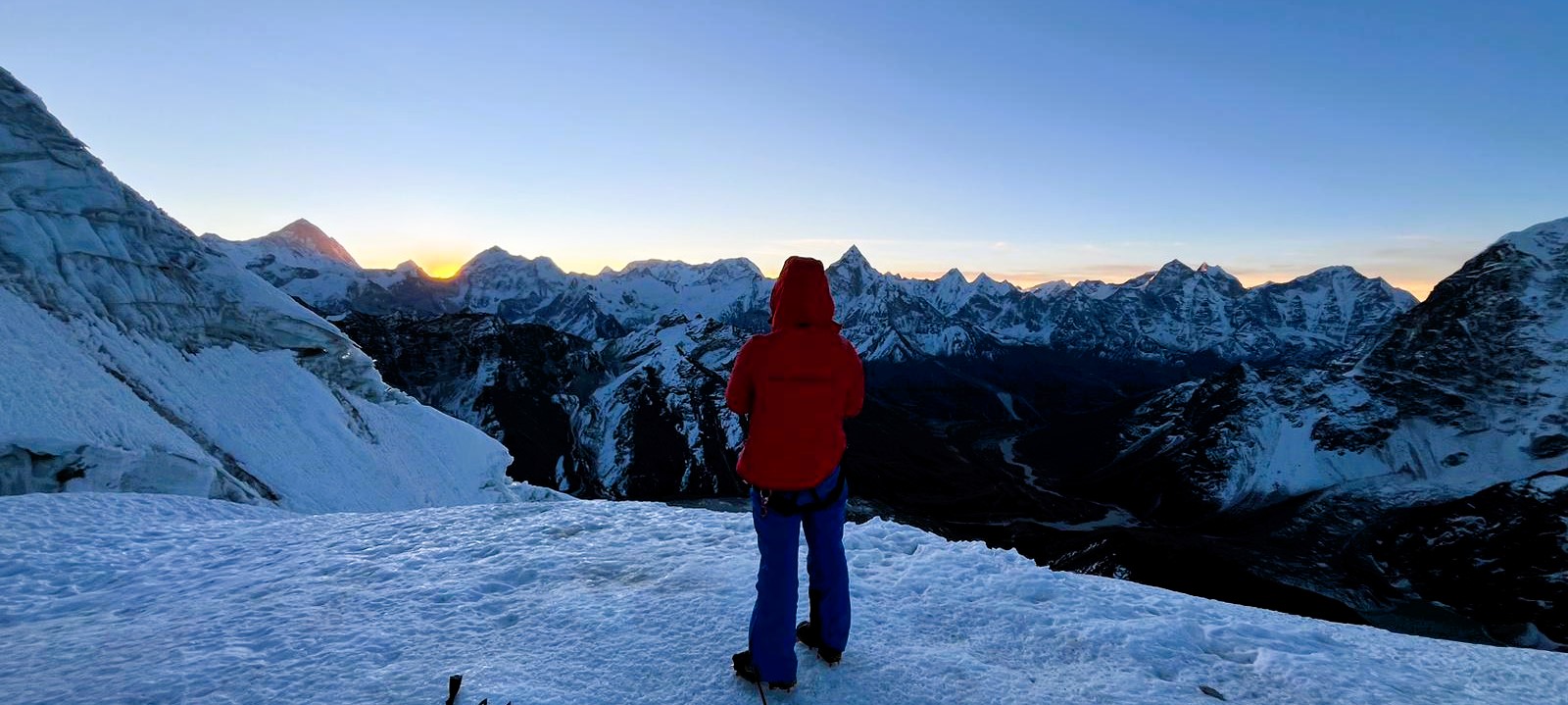
The summit of Lobuche Peak offers unparalleled panoramic views of the Everest region, with Mount Everest itself dominating the skyline. Reaching the summit is a significant achievement and provides an unforgettable sense of accomplishment. After summiting, climbers descend to Lobuche Base Camp and retrace their steps back down to Lukla, where they catch a flight back to Kathmandu. The entire expedition, guided by experienced professionals, ensures a safe and rewarding experience for those looking to summit one of the most iconic peaks in the world.
Lobuche Peak Climbing Itinerary
Day 1: Arrival at Kathmandu (1,350m), transfer to hotel.
Upon your arrival at Tribhuvan International Airport in Kathmandu, you’ll be warmly greeted by your experienced guide. Following the welcome, a comfortable transfer will take you directly to your pre-booked hotel. After the long hours of your international flight, this time is yours to relax, settle in, and begin to adjust to the vibrant and unique environment of Kathmandu.
Day 2: Official briefing/Preparation Day
This day will be spent attending an official briefing, obtaining permits, and preparing for the climb. You will also have time to buy any last-minute gear in Kathmandu. Rest and relax before the adventure begins.
Day 3: Flight to Lukla (2,850m). Flight time: Approx. 40 mins. Trek to Phakding (2,650m). Trek time: Approx. 3 hrs.
You’ll take a scenic flight to Lukla, known as the gateway to the Everest region. After landing, you’ll start your trek towards Phakding, a peaceful village located beside the Dudh Kosi River. Enjoy the natural beauty as you hike through forests and cross several suspension bridges.
Day 4: Trek from Phakding to Namche Bazaar (3,440m). Trek time: Approx. 6 hrs.
Today, you will trek through dense forests of rhododendron and pine, crossing multiple suspension bridges. The path gradually climbs towards Namche Bazaar, the main trading hub of the region. You’ll have stunning views of the surrounding peaks, including Everest.
Day 5: Rest Day to Relax and Acclimatize at Namche Bazaar
This is an important acclimatization day, allowing your body to adjust to the higher altitude. You can explore Namche Bazaar, visit the local monasteries, or take a short hike to the Everest View Hotel for panoramic views of Everest and surrounding peaks.
Day 6: Trek from Namche Bazaar to Tengboche (3,855m). Trek time: Approx. 5 hrs.
The trek takes you through forests of pine and rhododendron, with occasional glimpses of Everest, Lhotse, and Ama Dablam. You will reach Tengboche, home to a famous Buddhist monastery. Spend the evening exploring the monastery and enjoying the tranquil atmosphere.
Day 7: Trek from Tengboche to Dingboche (4,360m). Trek time: Approx. 5 hrs.
Today’s trek takes you through scenic valleys and past impressive mountain views. Dingboche, located in the Imja Valley, offers a great vantage point to view the towering peaks of Lhotse, Nuptse, and the incredible Ama Dablam.
Day 8: Rest day and acclimatization at Dingboche
Another crucial rest day is scheduled to facilitate your body’s continued acclimatization to the high altitude. This day offers a choice: you can embark on a short, invigorating hike to further explore the surrounding terrain, gaining a deeper appreciation for the unique environment. Alternatively, you can choose to relax and simply immerse yourself in the magnificent, panoramic views that surround Dingboche, allowing the tranquility of the Himalayas to rejuvenate your spirit.
Day 9: Trek from Dingboche to Thukla (4,620m). Trek time: Approx. 3 hrs.
This short day of trekking leads you up to Thukla, located near the bottom of the Khumbu Glacier. The trek provides stunning views of surrounding peaks, including the mighty Cholatse, and you’ll also pass by memorials of mountaineers who perished on Everest expeditions.
Day 10: Trek from Thukla to Lobuche High Camp (5,400m). Trek time: Approx. 4-5 hrs.
As you ascend towards Lobuche High Camp, you will cross rocky terrain and moraines. The views of the Khumbu Icefall and other majestic peaks will inspire you as you make your way to the high camp, preparing for the summit bid tomorrow.
Day 11: Lobuche High Camp to Summit (6,119m) and back to Thukla (4,620m). Trek time: Approx. 8-10 hrs.
Today is the big day! You will start early to summit Lobuche Peak (6,119m). The summit offers breathtaking views of Everest, Lhotse, Makalu, and other towering peaks. After reaching the summit, you will descend back to Thukla for the night.
Day 12: Contingency/reserve day
This day is strategically reserved to accommodate any unforeseen circumstances that may arise, such as unexpected shifts in weather patterns. It also serves as a valuable buffer, providing essential time to rest and recover, particularly after the demanding physical exertion of the summit push.
Day 13: Trek from Thukla to Namche (3,440m). Trek time: Approx. 6-7 hrs.
Following the triumphant summit, the descent commences, marking the beginning of your return journey. You’ll trek back along the familiar trail towards the vibrant hub of Namche Bazaar, retracing your steps through the breathtaking valleys and serene, forested paths that you traversed on your ascent. The landscape, now viewed from a different perspective, offers a renewed appreciation for its beauty.
Day 14: Trek from Namche to Lukla (2,850m). Trek time: Approx. 6-7 hrs.
The final day of trekking. You’ll retrace your steps back to Lukla, take this moment to reflect on your journey so far. As you exit the Sagarmatha National Park, have gratitude for this amazing place for providing an experience that is sure to last you a lifetime. You’ll make your way back to Lukla where you’ll spend the night in preparation for the return flight to Kathmandu.
Day 15: Fly from Lukla to Kathmandu (1,350m). Flight time: Approx. 40 minutes.
After breakfast, you’ll fly back to Kathmandu, marking the end of your Lobuche Peak Climbing adventure. Upon arrival, you’ll be transferred to your hotel where you can rest and reflect on your incredible journey.
Day 16:Departure from Kathmandu
On the final day of your journey, you will be transferred to Kathmandu’s Tribhuvan International Airport for your departure. Depending on your flight schedule, you may have some free time to do some last-minute shopping or explore the city.
What is included in this trek package?
- Airport Pick up & drop by private car.
- 2 Nights hotel in kathmandu with breakfast (3* catagory )
- Domestic Flight (Kathmandu - Lukla - Kathmandu )
- Twin sharing Teahouse / Tented accomodaion during the trek /climb.
- All standard full-board (main course) meals during the trek and climb
- Snacks (cookies) and seasonal fresh fruits every day
- A government-licensed English-speaking trekking /climbing guide & Porter.
- Porter Service ( 1:2 Trekkers ), max weight is 25 Kg (12.5 Kg per trekker )
- Group Climbing Gears (Harness, Crampons,Ice axe,Ascender,Karabiners,Climbing helmet, Climbing Boots)
- Lobuche Peak Climbing Permit
- Sagarmatha National Park & other permits.
- Food,salary, meals, insurance, lodging, transportation, flights, and other necessary equipment for guides and porters.
- Farewell dinner
- Sleeping bag & duffel b ag to each treklkers (to be returned after the trip)
- Rescue arrangements incase of emergency (based on clients insurance poicy)
What is excluded in this trek package?
- International flight costs
- Nepal Entry Visa Fees for multiple entries on arrival at Tribhuvan International Airport- (15 days - $30, 30 days- $50 and 90 days- $125)
- Extra night accommodation in Kathmandu due to early arrival or late departure, or early return from the trek.
- All accommodations in Kathmandu, before and after the journey
- Tips to guide & porters.
- Pesonal expences
Lobuche Peak Climbing Route Map

Climbing Lobuche Peak, located in the Everest region, requires specific gear and equipment to handle the unpredictable weather and challenging terrain. Since this is a high-altitude climb, preparation with the right clothing and climbing tools is essential for your safety and comfort throughout the journey. The weather can range from sunny and warm during the trek to freezing temperatures at higher elevations. It’s important to be prepared with the right clothing and gear to protect yourself from these varying conditions. Additionally, you’ll need specialized mountaineering equipment for the summit attempt, including tools like crampons, an ice axe, and climbing ropes.
For your climbing experience, it’s essential to bring the right clothing layers, from base layers to thermal down jackets. Proper footwear is crucial, with sturdy hiking boots for trekking and mountaineering boots for the summit. Having the proper camping gear, such as a quality sleeping bag, sleeping pad, and tent, ensures rest during the journey. You’ll also need climbing-specific equipment such as crampons, a harness, and ropes for technical sections of the climb. Other important items include personal care items, hydration systems, and important documentation like permits and insurance. Below is a detailed list of the key items you’ll need for your Lobuche Peak adventure.
- Clothing
- Base layers (moisture-wicking), insulating layers (fleece/down jacket), waterproof jacket/pants, down jacket, and thermal gloves.
- Footwear
- Sturdy hiking boots for trekking, summit boots for climbing, and camp shoes for comfort.
- Climbing Gear
- Crampons, ice axe, harness, ropes, carabiners, helmet, and trekking poles.
- Camping Gear
- Sleeping bag (-20°C rating), sleeping pad, tent, stove, fuel, headlamp, and personal utensils.
- Personal Items:
- Water bottles/hydration system, sunglasses, sunblock, first aid kit, camera, and toiletries.
- Documents
- Passport, travel insurance, climbing permit, and TIMS card.
Guided Lobuche Peak Climbing is a carefully organized and supported expedition for climbers who seek to summit one of the most popular trekking peaks in the Everest region. The climb, typically lasting 15 days, includes all necessary arrangements for your comfort and safety, including experienced local guides, porters, and support staff who know the region well. The journey begins with a scenic flight from Kathmandu to Lukla, followed by a trek through Sherpa villages, where climbers can acclimatize properly. These acclimatization days are crucial, allowing climbers to adjust to higher altitudes before the summit push.
Your professional guide will provide expert instructions on high-altitude trekking and climbing techniques, ensuring that you are prepared for the technical aspects of Lobuche Peak. The ascent to the summit is challenging and involves the use of ice axes, crampons, and fixed ropes, which your guide will assist with every step of the way. At the summit of Lobuche Peak (6,119 meters), climbers are rewarded with panoramic views of towering Himalayan giants, including Mount Everest, Lhotse, Makalu, and Cho Oyu. The descent is typically as rewarding as the ascent, and your guides will ensure that all safety precautions are followed to make your experience unforgettable. The trip also includes all necessary permits and accommodations along the way, ensuring a smooth and hassle-free adventure.
Note to Travelers :
We organize private treks for groups of at least two people and do not add anyone in your group. Contact us via Call/WhatsApp/Viber at +977 - 9861197727 or email himalayangatewaytrek@gmail.com You can also use our Free Trip Planner.
Group Discount Price
Terms & Policies
Thank you for choosing Himalayan Gateway Trek. Our goal is to provide a safe, enjoyable, and memorable travel experience. Please review the following terms and policies before confirming your booking.
📍Booking & Payment
- 👉 A 20% deposit is required to confirm your booking.
- 👉 The remaining balance must be paid on your arrival day in Nepal
- 👉 Your booking is confirmed once we receive your deposit and send a confirmation.
📍Cancellation & Refunds
- 👉 If you cancel your trip 45 days or more before departure, 50% of the deposit amount will be refunded.
- 👉 No refunds are available for cancellations made within 45 days of departure.
- 👉 Any non-refundable costs already incurred, including permits, flights, accommodation, transportation, or other third-party services, will be deducted from the refund amount.
Note: Eligible refunds will be processed within 14 business days of receiving the cancellation request.
📍 Travel Insurance
- 👉 Travel insurance is mandatory for all trekking and adventure trips.
- 👉 Your insurance should cover emergency medical treatment, helicopter evacuation, trip cancellation, and personal accidents.
- 👉 Himalayan Gateway Trek is not responsible for expenses arising from inadequate insurance coverage.
📍 Trip Changes
- 👉 Weather conditions, flight delays, road conditions, government regulations, or other unforeseen circumstances may require changes to the itinerary.
- 👉 Any changes will be made with the safety and well-being of our guests as the highest priority.
📍 Responsibility
- 👉 Himalayan Gateway Trek is not responsible for flight delays, cancellations, injuries, loss of personal belongings, natural disasters, political unrest, or other events beyond our control.
- 👉 By booking a trip with us, you acknowledge and accept the inherent risks associated with trekking and adventure travel.
FAQs
How long does it take to climb Lobuche Peak?
A standard Lobuche Peak expedition typically takes between 18 and 19 days from your arrival in Kathmandu. This timeframe is crucial because it includes a 10-12 day trek to Everest Base Camp and Kala Patthar for vital high-altitude acclimatization. The actual climbing phase from Lobuche village to the High Camp and the summit—usually takes about 2 to 3 days, depending on weather conditions and the team’s physical state.
Is Lobuche Peak easy to climb?
While often labeled a “trekking peak,” Lobuche is not easy; it is graded as PD+ (Peu Difficile+) on the Alpine Grading System. It is more technical than its neighbor, Mera Peak. Climbers must navigate steep snow slopes, exposed ridgelines, and use fixed ropes with a Jumar (ascender). While manageable for fit beginners with basic mountaineering training, it requires significant physical stamina and mental resilience to handle the 45-to-50-degree inclines near the summit.
How much does it cost to climb Lobuche Peak?
The cost generally ranges from $2,200 to $4,500 USD per person. This price variation depends on the size of the group, the quality of equipment provided, and the level of service (standard vs. luxury). The fee usually covers the Nepal Mountaineering Association (NMA) permit fees, climbing guides, porters, food, accommodation, and domestic flights. However, personal gear, international insurance, and climbing tips for the staff are typically extra.
Which Nepal mountain is easiest to climb?
Mera Peak (6,476m) is widely considered the easiest 6,000m mountain in Nepal because it is primarily a “walk-up” peak with very little technical difficulty. Unlike Lobuche, which requires rope work on steep ice, Mera Peak is mostly a high-altitude trek on a glacier. Island Peak (6,189m) is also popular, though it features a technical headwall that makes it slightly more challenging than Mera but generally more straightforward than the final ridge of Lobuche.
What is the difference between Lobuche East and Lobuche West?
Lobuche consists of two distinct peaks. Lobuche East (6,119m) is the popular “trekking peak” frequented by most commercial expeditions. Lobuche West (6,145m) is classified as an expedition peak and is significantly more technical, requiring a different permit and more advanced mountaineering skills. Most trekkers aim for the “False Summit” of Lobuche East, as the true summit involves a very exposed and dangerous knife-edge ridge.
Do I need previous mountaineering experience?
While you don’t need to be a professional climber, previous high-altitude trekking experience (such as reaching Everest Base Camp or Kilimanjaro) is highly recommended. You should be familiar with hiking in thin air. If you haven’t used crampons, an ice axe, or a harness before, your guides will typically provide a “pre-climb training” session at High Camp to teach you the specific skills needed for the summit push.
What kind of physical fitness is required?
You need excellent cardiovascular endurance and leg strength. Training should begin 3-4 months before the trip, focusing on long-distance hiking with a weighted pack, stair climbing, and strength training. Since you will be climbing for 8–10 hours on summit day at altitudes where oxygen levels are 50% lower than at sea level, your heart and lungs must be conditioned for sustained aerobic effort.
What is the best time of year to climb Lobuche?
The prime climbing windows are Spring (late March to May) and Autumn (October to November). Spring offers warmer temperatures and beautiful rhododendron blooms during the approach trek, while Autumn is famous for its crystal-clear skies and stable weather, providing the best photographic views of Everest, Lhotse, and Ama Dablam. Winter is too cold and snowy, and Summer (Monsoon) brings heavy rain and hidden crevasses.
What technical gear is required for the climb?
Beyond standard trekking gear, you will need technical mountaineering equipment. This includes plastic or double climbing boots, crampons, a climbing harness, a long ice axe, a Jumar (ascender), a figure-eight or ATC belay device, and carabiners. Most reputable agencies include the rental of this heavy gear in their package, but you must bring your own well-broken-in trekking boots and high-quality four-season clothing.
How high is the success rate for Lobuche Peak?
The success rate is generally high, around 80-90%, provided climbers have allowed enough time for acclimatization. Most failures are not due to technical difficulty but rather Acute Mountain Sickness (AMS) or poor weather windows. Following an itinerary that includes the Everest Base Camp trek beforehand significantly increases your chances of standing on the summit.
What kind of insurance do I need?
Standard travel insurance is insufficient. You must purchase a policy that specifically covers mountaineering/climbing up to 6,500 meters and includes emergency helicopter evacuation. In the event of severe altitude sickness or injury, a helicopter rescue is the only way out of the Khumbu region, and costs can exceed $5,000–$10,000 if not covered by insurance.
Is there a minimum age for climbing Lobuche?
The Nepal Mountaineering Association (NMA) requires climbers to be at least 16 years old. While there is no strict upper age limit, older climbers should undergo a thorough medical check-up. The physical toll of high altitude is significant, and anyone under 18 or over 60 should have prior experience at altitudes above 5,000 meters before attempting Lobuche.
What is the accommodation like during the expedition?
During the trek, you will stay in tea houses (local lodges), which offer basic twin-sharing rooms and communal dining areas. Once you reach Lobuche High Camp (5,400m), you will switch to tented camping for one or two nights. Professional expeditions provide high-quality mountain tents, foam mattresses, and a kitchen crew to prepare hot, high-energy meals to keep your strength up for the summit.
Can I climb Lobuche Peak solo?
No, the Nepal government has banned solo climbing and trekking in most regions, including the Khumbu. For Lobuche Peak, you are legally required to have a licensed climbing guide and a permit issued through a registered trekking agency. This is for safety reasons, as the technical sections and glacier crossings pose significant risks that require a professional to manage.
How do guides handle Altitude Sickness (AMS)?
Guides monitor your oxygen saturation levels daily using a pulse oximeter. They are trained to recognize early symptoms of AMS, such as persistent headaches or loss of appetite. If symptoms progress to HAPE or HACE (fluid in lungs or brain), the standard protocol is immediate descent. Guides carry medical kits and, in many cases, supplemental oxygen for emergency use only during the descent.
Is there Wi-Fi and electricity on the trail?
Yes, most tea houses along the Everest Base Camp trail offer Wi-Fi (via AirLink or Everest Link cards) and solar charging for a fee ($3–$7 per charge). However, once you move to the Lobuche Base Camp and High Camp, there is no electricity or internet. It is highly recommended to bring a high-capacity power bank and solar charger to keep your camera and phone alive for the summit.
What is the food like during the climb?
The diet is carbohydrate-heavy to provide energy. In tea houses, you’ll eat Dal Bhat (lentils and rice), pasta, potatoes, and soups. At High Camp, the kitchen staff prepares specialized climbing food like porridge, canned meats, and energy-dense snacks. It is vital to drink 4-5 liters of water daily at high altitude to aid acclimatization and prevent thickening of the blood.
Do I need a permit for Lobuche Peak?
Yes, you need three specific documents: the NMA Climbing Permit, the Sagarmatha National Park Entry Permit, and the Khumbu Pasang Lhamu Rural Municipality Permit. Your trekking agency usually handles these, but you will need to provide passport copies and photos. The climbing permit fee varies by season, being most expensive in the Spring ($250) and cheaper in the Autumn ($125).