

Indra Jatra 2026: Dates, History, Rituals and Where to Watch in Kathmandu
Indra Jatra is an eight-day Newar festival in Kathmandu known for chariot processions, masked dances, religious rituals and the public…
 Himalayan Gateway Trek - On
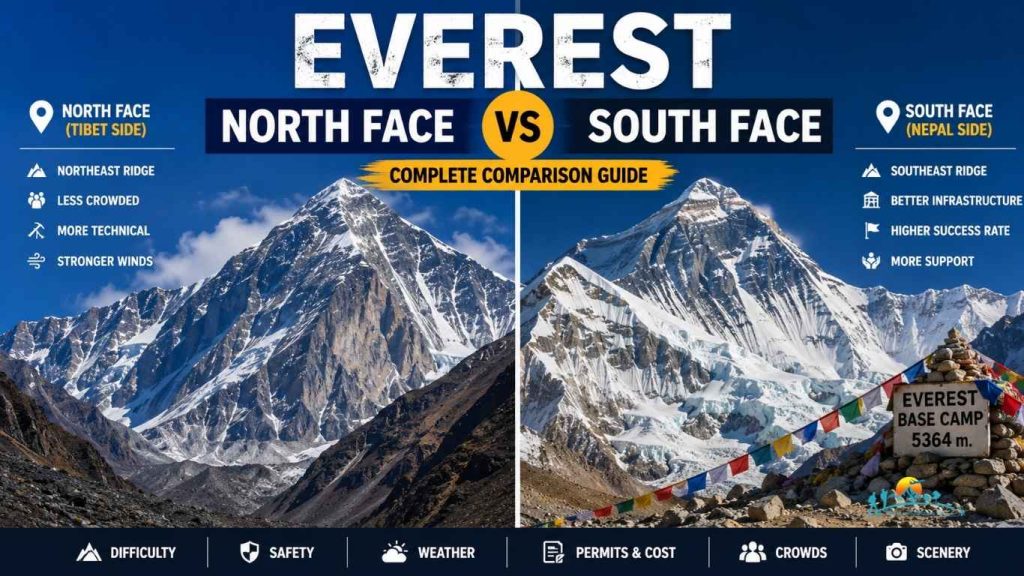
 Even though everybody dreams of climbing Mount Everest, many are unaware that there are two routes to the world’s highest peak. For decades, the Everest North Face versus South Face debate has raged, as both routes offer very different experiences, challenges, and risks.
The South Face route is from Nepal and the Southeast Ridge. It is the most climbed route on Everest and has recorded the most successful ascents. The North Face route is from Tibet and runs up the Northeast Ridge. It is less populated, exposed to the wind and in general more technical in a few parts.
The differences between the Everest North Face and South Face are explained in detail, enabling climbers, trekkers, and adventure travelers to decide which side is the right one for them.
On the border between Nepal and Tibet is Mount Everest. Both countries share the mountain, thus offering two climbing routes.
On the Nepal side, to the south, leads the climbers into the Khumbu region. This path is highly endorsed, has a good number of Sherpa teams and infrastructure that is established, which is why most commercial expeditions are held here.
The Tibetan side is to the north and leads to Everest through the Tibetan Plateau. Climbers start at a higher elevation before they start the climb. Higher winds and longer stretches of exposed ground.
When comparing the Everest North Face vs South Face, it is important to remember that both routes eventually reach the same summit at 8,848.86 meters. The journey to get there is what differs.
The most popular route to climb Everest is the South Face (Southeast Ridge route) taken by Sir Edmund Hillary and Tenzing Norgay in 1953. It begins at Everest Base Camp, in Nepal and goes through Camp I, Camp II, Camp III, and Camp IV at the South Col before the final push to the summit.
The Khumbu Icefall, Western Cwm, Lhotse Face and South Col are all key landmarks. The Khumbu Icefall is the most hazardous part due to its flowing ice and deep crevasse fields.
North Face is from Tibet, less crowded and the Northeast Ridge. Climbers will end up at Advanced Base Camp, then through the North Col and up to higher camps to the summit. Some of the main features are the North Col, Yellow Band, First Step, Second Step, Chinese Ladder and Third Step.
This route is not through the Khumbu Icefall, but climbers must face higher winds, colder temperatures and more technical high altitude terrain.

One of the most searched topics on the Everest North Face vs South Face is about the difficulties encountered.
The North Face is usually said to be the tougher of the two. There are steep climbs, exposed traverses and the infamous Second Step, a high-risk, high-altitude move.
The South Face is in a different category. The Khumbu Icefall is crossed several times, although this is not as challenging as it is in the upper areas. This glacier, which is always moving, is constantly changing and has unpredictable hazards.
Many climbers find the psychological pressure of the Icefall more difficult than the technical climbing itself.
The North route demands greater self-sufficiency because support systems are generally less extensive than those found on the Nepal side.
The North Face is considered by most experienced climbers to be a much more technically difficult climb. The Northeast Ridge is considered to be more challenging than the South Face, which has objective dangers.
The North Face is popular with climbers with previous experience on 7,000m or 8,000m peaks who are looking for a more advanced challenge.
Every Everest route contains serious risks. These dangers explain the ongoing debate within the Everest community about the Everest North Face vs. the South Face.
Hazards on the South Face include the Khumbu Icefall, avalanches, crevasses and summit season heavy traffic. Of these, the Khumbu Icefall is the most dangerous as the ice towers shift regularly and deep fissures can also change within hours, making crossings of the icefall unpredictable.
The North Face presents climbers with high winds, extreme cold and lengthy climbs in terrain over 8,000m. There are also parts of the path that are technically challenging and require careful navigation, as a fall could have significant consequences. The northern side is exposed and the conditions are more severe with greater jet stream winds than climbing from Nepal.
As per the type of danger at hand, the answer is different.
Many guides say that the Khumbu Icefall is still the biggest objective hazard on either path.
Climbers often decide on their first trip to the Everest when it comes to safety. Better emergency support and rescue capability on the south face is normally provided.
This is one of the reasons why it’s so popular.
Nepal’s Everest route benefits from decades of development.
Advantages include:
Helicopter evacuation is often available quickly if an individual develops altitude sickness below a certain Elevation.
The North Face has fewer rescue options.
Challenges include:
Rescue is usually necessary on the North Face and will involve ground transport and support from the expedition team.
Most commercial operators consider the South Face safer for first-time Everest climbers.
This does not mean the South route is easy. Everest remains one of the most dangerous mountains in the world. However, stronger rescue systems, experienced Sherpa support, and established logistics provide additional security compared to the North Face.
For many climbers evaluating the Everest North Face vs South Face, safety becomes the strongest argument in favor of the Nepal route.
Success rate is one of the strongest factors when comparing Everest North Face vs South Face because reaching the summit depends on far more than physical fitness. Weather, route conditions, team support, experience, and decision-making all influence the outcome.
South is more successful than the North on the summits. With strong Sherpa support, the solid infrastructure of the expedition, improved rescue options and decades of commercial guiding experience, the chances of reaching the summit increase. It is these benefits that make the route to Nepal the preferred route for many first-time Everest climbers.
The North Face has also seen many successful ascents, but success rates are often slightly lower due to stronger winds, greater exposure, and more technical terrain. Climbers spend longer periods in harsh conditions above 8,000 meters, which can increase physical and mental fatigue during the summit push.
When comparing the Everest North Face vs South Face, the South Face generally has a slightly higher success rate. Better logistical support, easier rescue access, and a more established guiding system contribute to its stronger summit statistics, although conditions can vary from season to season.
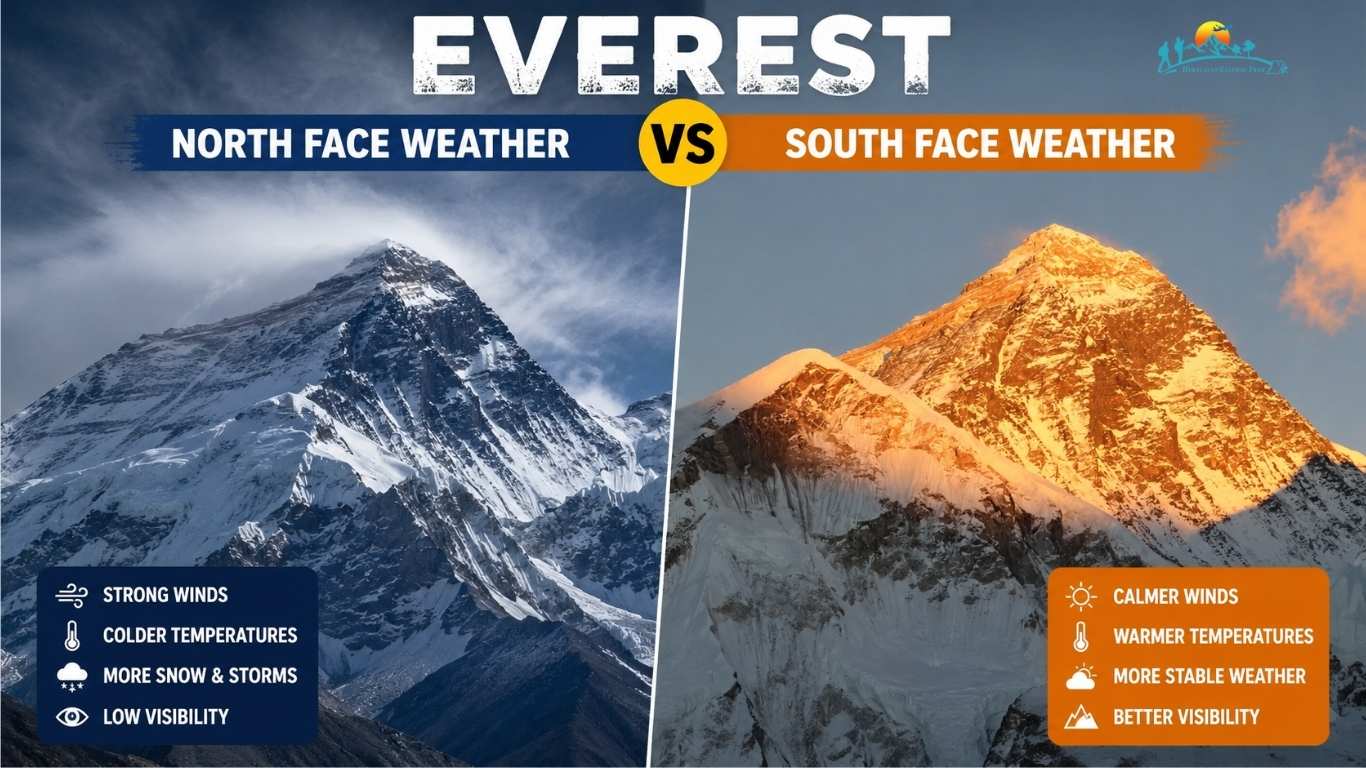
Weather directly affects safety, summit success, and expedition planning.
Although both routes reach the same summit, they experience different conditions during the climb.
The South Face generally experiences more favorable climbing conditions due to some protection from the surrounding Himalayan peaks. Climbers often encounter lower wind speeds, slightly warmer temperatures, and more stable weather during the main summit season, making the route attractive for commercial expeditions.
The North Face is more exposed because it rises from the open Tibetan Plateau. Climbers regularly face stronger winds, colder temperatures, and harsher wind chill effects. These conditions can make climbing more demanding, particularly during the final push to the summit.
The South Face generally experiences more favorable climbing conditions.
The North Face often receives stronger winds, which can increase fatigue and create additional challenges during summit attempts.
Cost varies significantly depending on expedition quality, support level, and operator reputation.
Many climbers assume the North Face is dramatically cheaper, but the difference is often smaller than expected.
| Expense Category | South Face (Nepal) | North Face (Tibet) |
|---|---|---|
| Permit Fees | Higher | Often slightly lower |
| Sherpa Support | Extensive | Limited |
| Transportation | Trek required | Vehicle access |
| Rescue Infrastructure | Better | Limited |
| Expedition Cost | High | Similar to slightly lower |
Every Everest climber must obtain permits through the appropriate authorities.
Everest climbers from Nepal must have an Everest climbing permit as well as national park and local area permits. They must have documentation for their expedition approved by the appropriate authorities. These are relatively simple to deal with as most expedition firms have them under control for their clients.
For climbers who head to the North Face, they will need to obtain a Chinese climbing permit, travel permits to Tibet, and expedition approval from the authorities. There are usually extra administrative procedures to follow and independent climbing is generally not allowed. Therefore, it can be a more restricted process than climbing from Nepal.
From the point of international climbers, the Nepal side is considered easy because of its well-established permit system and flexibility. The majority of commercial companies carry out all of the paperwork, which means the climbers concentrate on trip preparation.
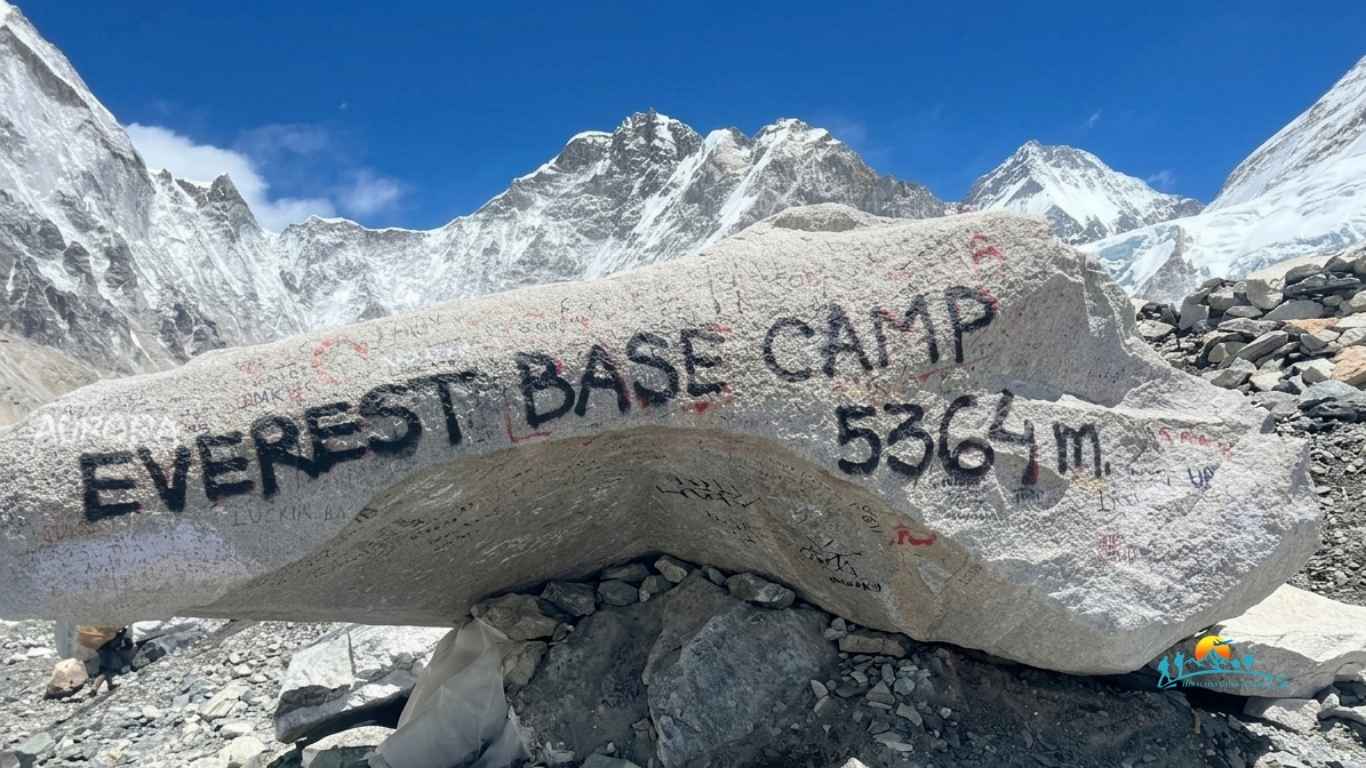
The journey to Base Camp differs greatly between the two routes.
Everest Base Camp on the Nepal side offers a classic Himalayan experience. Climbers and trekkers pass through Sherpa villages, ancient Buddhist monasteries, and mountain lodges while trekking through the Khumbu region. The journey to Base Camp takes several days and is often considered one of the most memorable parts of an Everest expedition.
The North Side Base Camp in Tibet provides a very different experience. Travelers can reach the area by vehicle, avoiding the long trek required on the Nepal side. The route offers wide views of the Tibetan Plateau and impressive panoramas of Everest, often with fewer crowds than the South Side.
The better option depends on what you are looking for. The South Side appeals to those who enjoy trekking and cultural experiences, while the North Side suits travelers who prefer easier access and direct views of Everest’s northern face.
The experience surrounding Everest extends beyond the climb itself.
The South Face offers a rich blend of natural beauty and local culture. The journey passes through traditional Sherpa villages, ancient Buddhist monasteries, suspension bridges, and forested valleys of the Khumbu region. For many visitors, these cultural and scenic experiences become just as memorable as the climb itself.
The North Face presents a more remote and dramatic mountain environment. Travelers cross the vast Tibetan Plateau and enjoy expansive views of the Himalayas, along with direct views of Everest’s northern wall. The route also provides an opportunity to experience Tibetan culture in a quieter setting.
The answer depends on personal preference. The South Face stands out for its cultural richness and trekking experience, while the North Face is known for its open mountain vistas and impressive views of Everest. Both routes offer unforgettable scenery in very different ways.
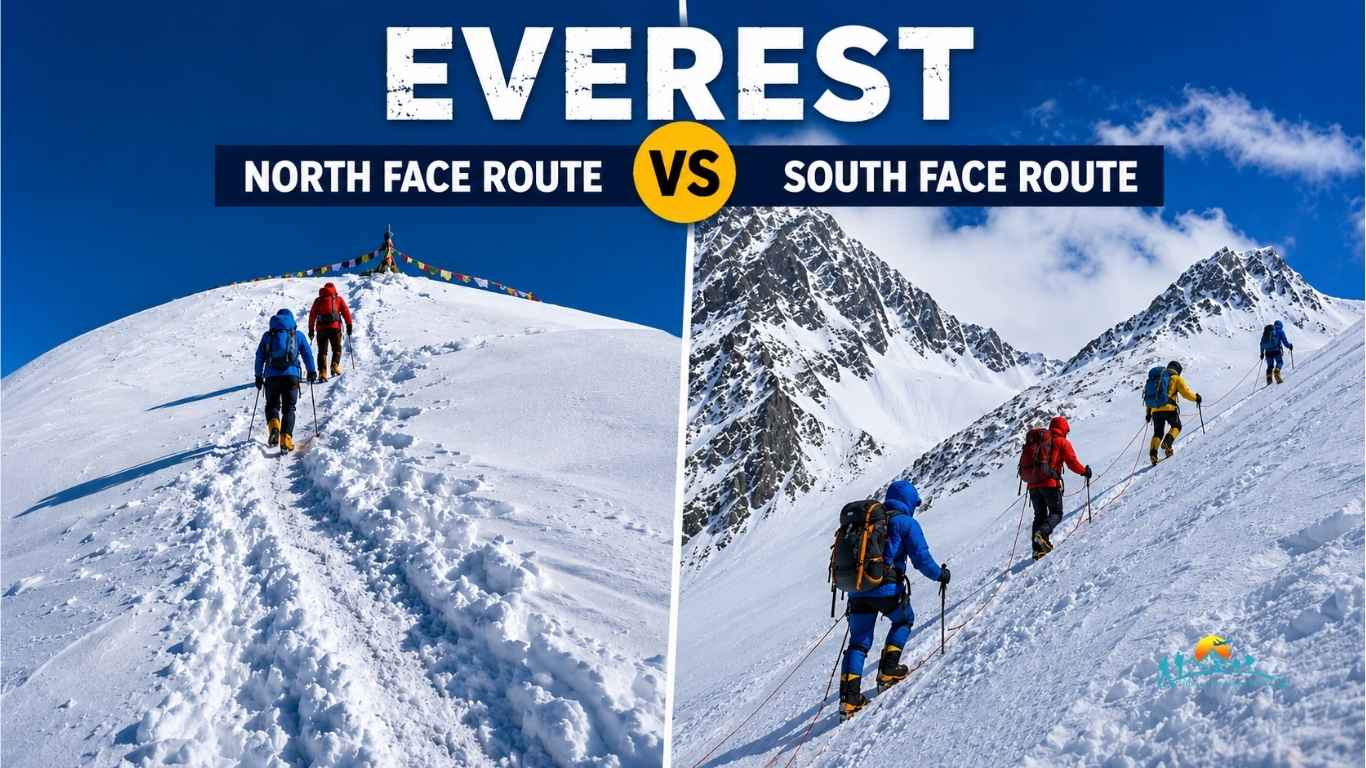
Crowding has become one of the most discussed issues in modern Everest climbing.
The South Face is the main route for Everest climbers due to its greater Sherpa support, rescue facilities, and higher climbing success rate. It is also popular among commercial expedition operators, which can result in high traffic levels, especially when the weather is ideal for summits.
In the North Face, fewer climbers are entering this season in general. This means reduced traffic on the trail, quieter camps, and a more remote climbing adventure. Several veteran climbers opt for the Tibet side to escape the hustle and bustle of the South Face.
The North Face generally is not as crowded as the South Face. The Northeast Ridge route is favored by climbers who would like a quieter climb and are looking to avoid some of the most constricting sections when attempting the summit.
Routes are best for the individual according to experience and the purpose of climbing. The South Face is a popular choice for climbers looking for more rescue opportunities, better Sherpa support, a more gradual acclimatization, and improved odds for success. It boasts the best infrastructure, which is why many first-time Everest climbers choose to do so on this route.
A more technical route with fewer crowds and views of the northern side of Everest is more suited for the North Face. It is more challenging due to its exposure to wind and terrain, but is quieter and more challenging to climb.
This is the decision guide for which face you Should choose for different conditions:
| Priority | Recommended Route |
| First Everest Attempt | South Face |
| Better Rescue Access | South Face |
| Higher Success Potential | South Face |
| Less Crowding | North Face |
| Technical Challenge | North Face |
| Strong Cultural Experience | South Face |
| Direct Everest Views | North Face |
| Experienced Mountaineers | North Face |
There is no right or wrong between the Everest North Face vs South Face. The South Face from Nepal has more experienced Sherpa guides, better rescue support, a slow acclimatisation process, and slightly higher success rates. The North Face from Tibet offers climbers a more remote, more technical, and more peaceful climbing experience. Every route is unique in terms of challenges, risks and rewards. Which one is ideal for you will depend on your experience and desired outcome, as well as your comfort level in high elevations.
While the South Face has developed the safety net for many first-time climbers to the Everest, experienced mountaineers may like to try the North Face, which is a much more challenging route. The distinction between the Everest North Face vs South Face can help climbers choose the right route for their needs and expectations when tackling the world’s highest peak.
The North Face is technically harder due to sustained rock climbing on steps like the Second Step, extreme winds, and colder temperatures. Conversely, the South Face is physically demanding and features the hazardous, unpredictable terrain of the Khumbu Icefall.
Mount Everest remains the most challenging of the Seven Summits due to its extreme altitude, severe weather conditions, and psychological toll. However, Alaska’s Denali is frequently considered structurally harder due to its massive vertical relief and severe arctic storms.
The South Face in Nepal is generally more expensive overall due to high demand, extensive Sherpa support, and multi-layered logistics. While Tibet’s North Face permit fees are higher, fewer mandatory services sometimes lower total expedition costs.
The North Col connects Everest to Changtse via a sharp, icy ridge at 7,020 meters. The South Col is a windswept, high-altitude saddle at 7,906 meters connecting Everest to Lhotse, serving as the final launching point for summits.
The primary hazards on the South Face are unpredictable serac collapses and sudden avalanches, particularly within the shifting Khumbu Icefall. Additionally, the Western Cwm creates intense thermal heat inversions that drain climbers’ physical energy during the day.
The North Face features extreme, unrelenting wind exposure and bone-chilling cold that significantly elevate frostbite risks. The lacks of helicopter rescue options above base camp means any medical evacuation must be handled entirely by ground teams.
The South Base Camp in Nepal sits at an elevation of 5,364 meters and requires a multi-day trek to reach. The North Base Camp in Tibet sits slightly lower at 5,150 meters and is directly accessible by vehicles.
The South Face route from Nepal experiences significantly higher crowd density and traffic bottlenecks, especially at the Hillary Step. The North Face route in Tibet is highly regulated by authorities, resulting in far fewer climbers.
Summit day from the South Face typically takes 12 to 14 hours across snow and ice slopes. The North Face summit push takes longer, lasting between 14 to 18 hours due to complex navigation through exposed rocky steps.
The technical crux of the South Face involves navigating the steep, shifting ladders of the Khumbu Icefall early on. Climbers must also ascend the sustained 40 to 50-degree blue ice of the daunting 1,500-meter Lhotse Face.
The technical crux of the North Face involves conquering three notorious rocky features on the upper northeast ridge. The infamous Second Step requires navigating an exposed, near-vertical rock section equipped with a permanently fixed aluminum ladder at 8,610 meters.
Helicopter rescues are regularly conducted up to Camp II on the South Face in Nepal, weather permitting. On the Tibetan North Face, helicopter evacuations are strictly forbidden by regulations, making all high-altitude rescues heavily reliant on ground teams.
The South Face features the Yellow Band, a prominent layer of metamorphic limestone and schist crossing at 7,400 meters. The North Face features highly exposed, downward-sloping rock slabs that make finding secure footholds difficult during the final ascent.