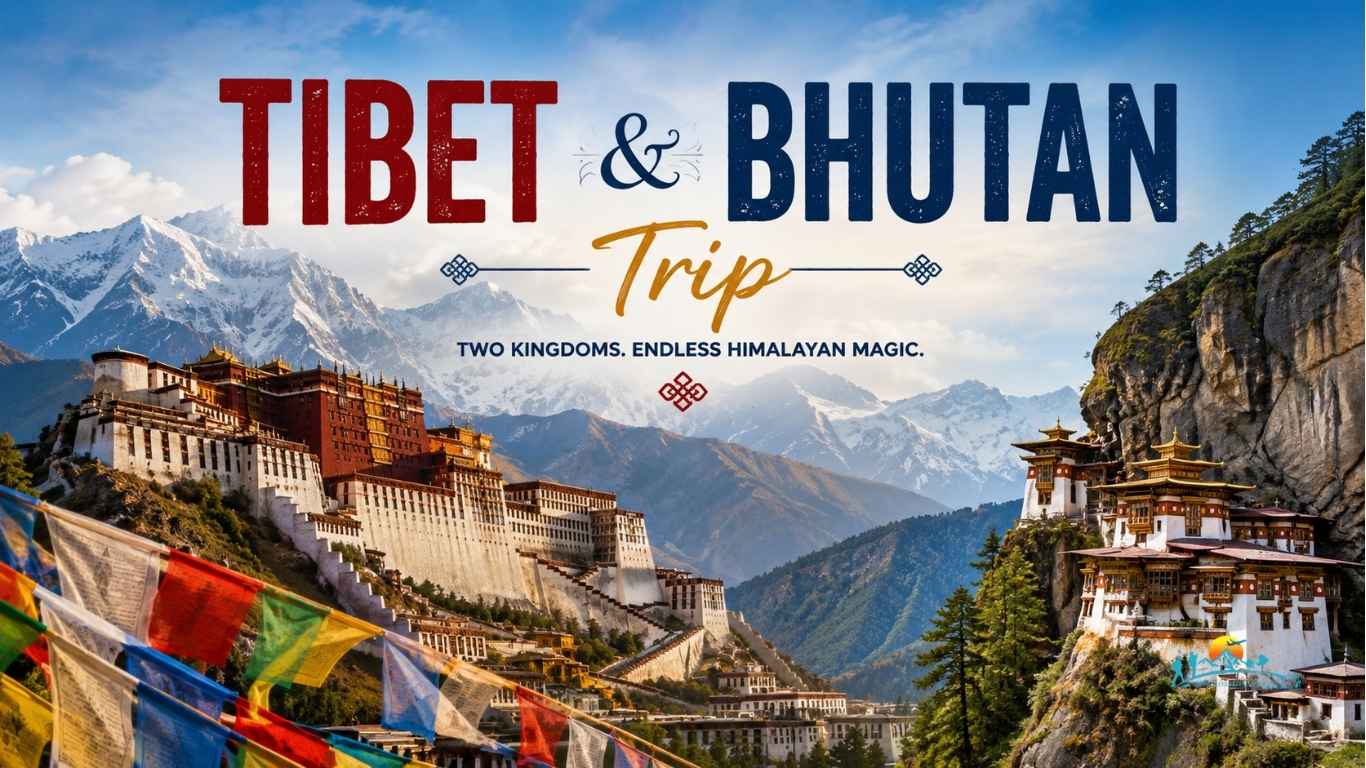
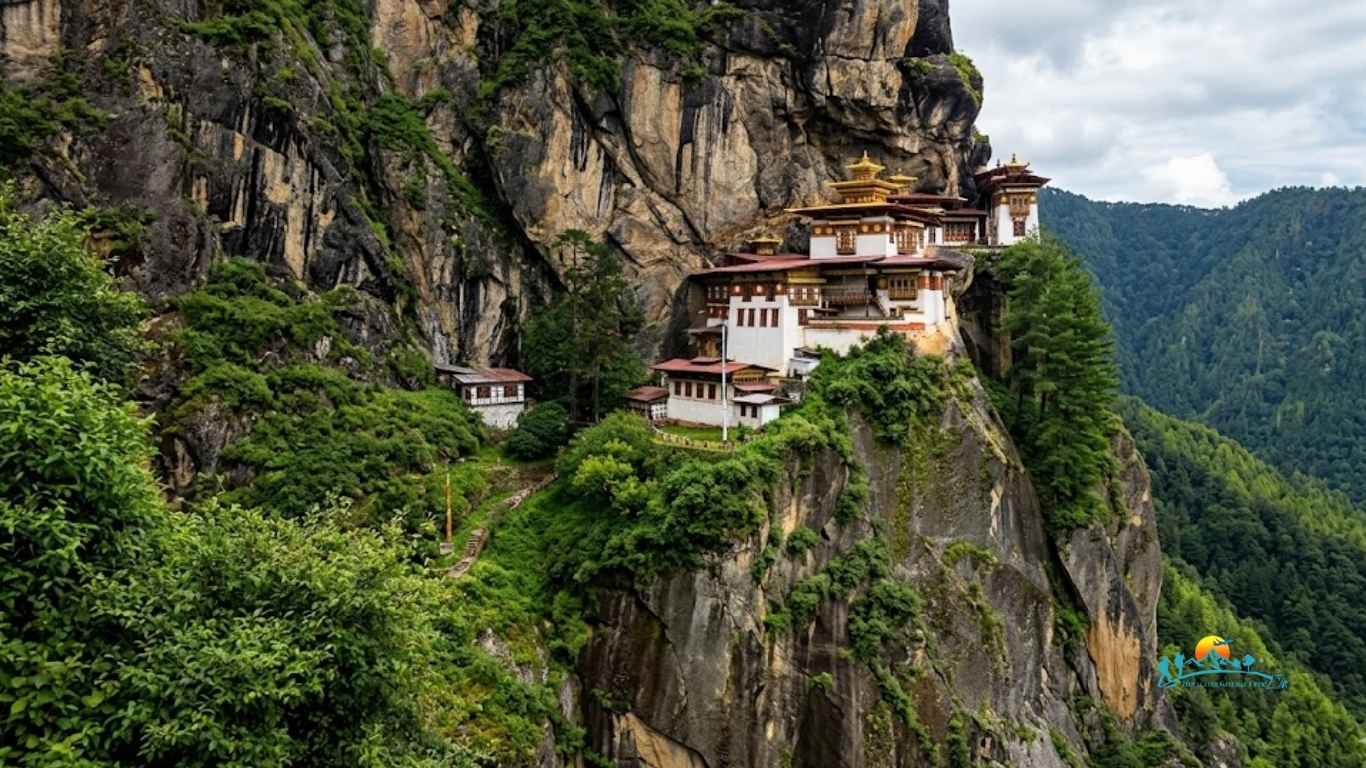
The high-altitude valleys and the great plateaus of Tibet and Bhutan, in the middle of the world’s highest mountains, were cut off from the outside world for centuries. Because of this isolation, the ancient Buddhist traditions, cliffside monasteries and the pure way of life of the local people were preserved. The Tiger’s Nest monastery itself sits on a cliff at an altitude of 3,120 meters. Bhutan and Tibet are in this mountain region where sacred sites sit at high elevations, and the area is renowned for its untouched spiritual heritage.
Everything gets a whole different look as you travel across these changing lands. The path crosses out of the lush green hills and thick forests of Bhutan and into the dry, flat plains of Tibet. Here, open grasslands, deep rocky gorges and huge snow mountains dominate the view. Strong winds and cold mountain air shape this high-altitude terrain, creating a striking setting for travelers.
Nature of the Journey
This journey of the Tibet and Bhutan Trip avoids easy holiday travel. Instead, it combines a remote, high-altitude mountain drive with demanding hill walks to ancient shrines. The route demands sharp concentration, patience, and physical stamina.
Easy roads pass through the main towns, mostly paved. Drivers then face winding, narrow roads leading up mountain passes, through which fast rivers flow. The trail has sharp turns, loose rock, sudden weather changes, and narrow paths set in the side of a cliff. The drive across the border areas is challenging and requires careful and balanced vehicle control.
The driving comes to a pause at the valley base. You are able to get your vehicle parked safely at a lot and begin the walking part of your trip. The footpath to the Tiger’s Nest and up to the high monasteries involves going across steep stone steps in thin air. This is a combination of long mountain driving and steep hiking, which will make for a big physical challenge.
Tibet and Bhutan Trip Highlights
- See the ancient heritage sites of Kathmandu, Patan, and Bhaktapur in Nepal.
- Fly across the highest peaks of the Himalayas to reach Lhasa in Tibet.
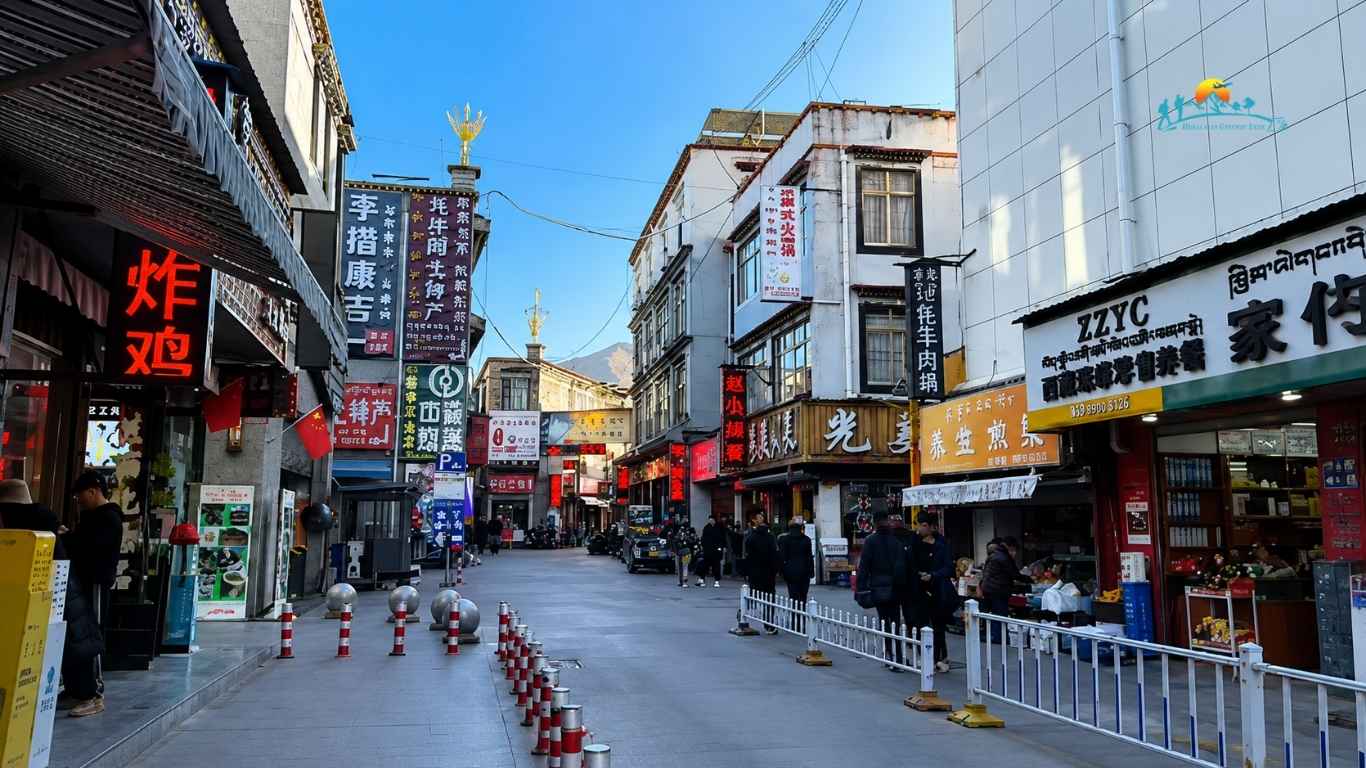
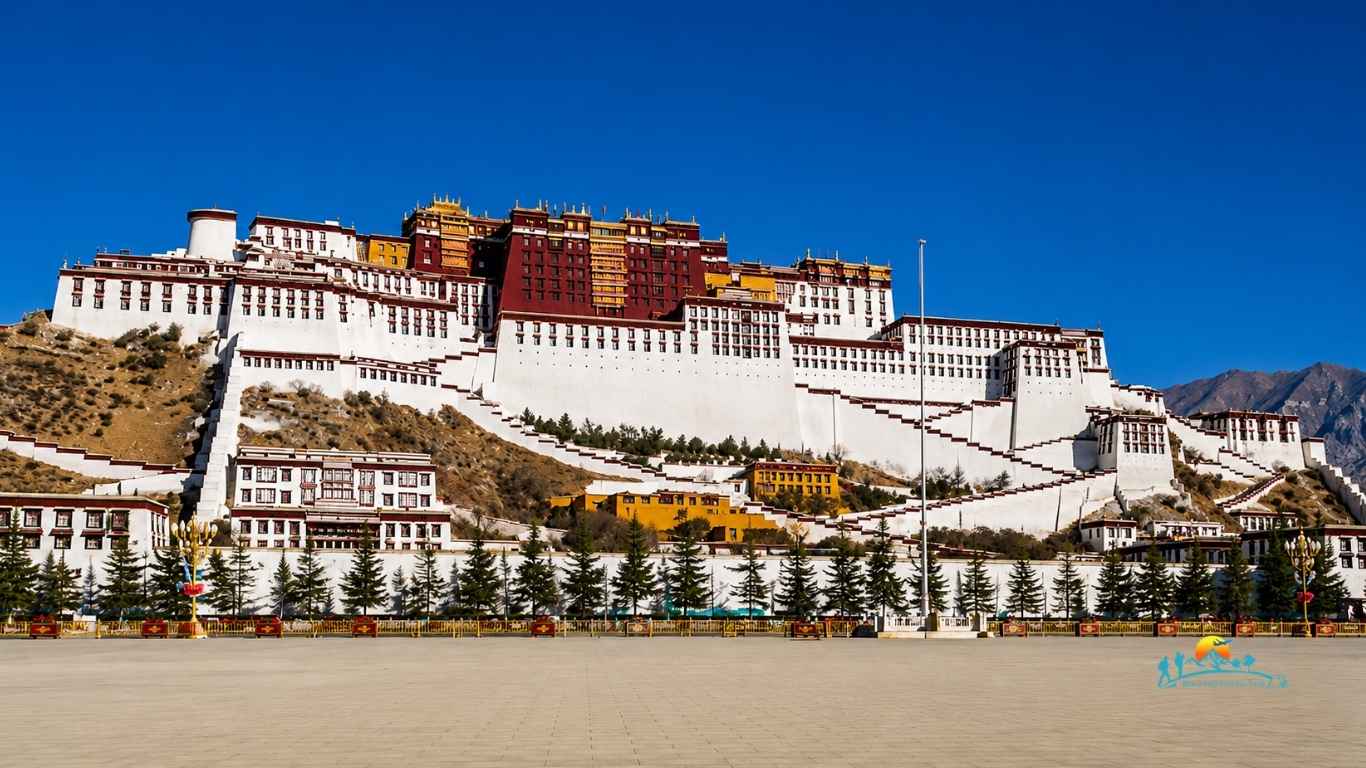
- Visit the grand Potala Palace and walk with pilgrims on Barkhor Street.
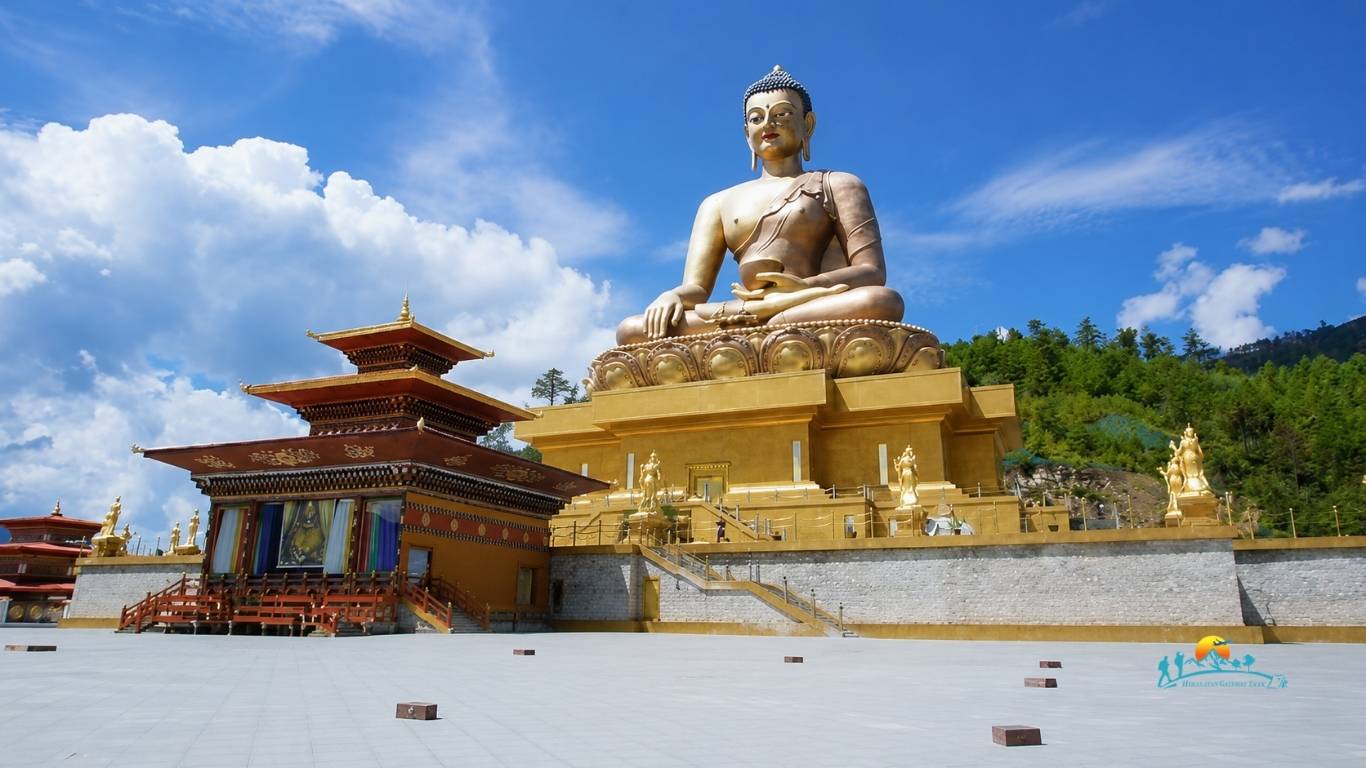
- Drive through the high-altitude mountain valleys of Thimphu and Punakha.
- Hike up the steep mountain path to the famous Tiger's Nest Monastery in Paro.
- Experience genuine Tibetan and Bhutanese Buddhist traditions first-hand.
Benefits with Himalayan Gateway Trek
- All multi-country entry visas and special permits managed before arrival.
- Experienced local guides in Nepal, Tibet, and Bhutan to explain the history.
- Fixed group departures ensuring steady and safe pacing.
- Carefully chosen local hotels and guest houses for clean stays.
- Private ground vehicles used for all local airport transfers and road travel.
Tibet and Bhutan Trip
11 Days Tibet and Bhutan Trip is not a standard sightseeing holiday. This is a high-altitude mountain journey across the two most well-preserved Buddhist regions on earth.
Travel across the high plateaus of Tibet and the deep green valleys of Bhutan, where the surroundings are raw and villages still follow centuries-old ways of life. The high altitude requires patience, the travel involves multiple mountain flights, and the reward is complete immersion into places untouched by modern western trends.
The Route
The journey begins in Kathmandu, the capital of Nepal, where you see ancient heritage sites in Patan and Bhaktapur. From Kathmandu, you take a mountain flight across the Himalayas to Lhasa, the historic heart of Tibet. Here, you spend days visiting massive holy structures like the Potala Palace and walking along Barkhor Street with local pilgrims.
After Tibet, you return to Kathmandu before flying to Paro, Bhutan. The drive leads to the capital city of Thimphu, moving past fast-flowing rivers and traditional wooden bridges. The journey then continues across mountain passes to Punakha and Wangdue, passing great fortresses and local farming communities.
The Cultural Focus
The trip focuses on deep cultural history, not modern city life. Ancient Tibetan monasteries, huge Bhutanese dzongs, prayer wheels, and traditional stone homes fill the valleys. Daily life here has changed very little over generations.
The Hike to Tiger’s Nest
A dedicated walking day in Paro leads to the famous Taktsang Monastery, also known as the Tiger’s Nest. The path goes up steep mountain paths through pine forests to a cliffside shrine hanging above a deep valley. This walk requires good physical stamina but offers a quiet space for reflection after days of travel.
Why This Journey Is Different
-
True cultural travel across two isolated mountain regions
-
High-altitude locations with traditional ways of life
-
Ancient Buddhist shrines and well-preserved heritage
-
Multi-country flights and permits handled completely in advance
-
Balanced travel plan that allows time to experience each location without rushing
11 Days Tibet and Bhutan Trip Itinerary
Day 01: Arrival at Tribhuwan International Airport (Kathmandu)
You arrive at the international airport in Kathmandu. Our representative meets you outside the arrival gate with a welcome sign and transfers you to your hotel by private vehicle. After check-in, you have free time to rest after your long flight or walk around the local streets.
In the evening, attend a group meeting where your guide talks about the upcoming travel plans for Tibet and Bhutan trip, followed by a traditional welcome dinner.
At Himalayan Gateway Trek, we are excited to begin this journey with you and ensure a memorable experience throughout your stay in Nepal.
Day 02: Kathmandu, Patan, and Bhaktapur Cultural & Heritage Sightseeing Tour
Today you take a guided tour of the three historic cities within the valley: Kathmandu, Patan, and Bhaktapur. You walk through ancient public squares made of red brick and stone. Your guide shows you medieval palaces, detailed wood carvings on windows, and old stone shrines.
You see local woodworkers and artists practicing their crafts just as their families have done for centuries. The tour gives you a clear look into the history of the region before you fly to the higher mountains.
Day 03: Transfer to airport and fly to Lhasa
After your breakfast you drive to the airport early in the morning for your flight to Lhasa. This flight takes you directly over the main Himalayan mountain range, offering views of high snow peaks from your window seat. Upon landing at the high-altitude airport in Tibet, your local Tibetan guide greets you with a traditional white silk scarf.
A private vehicle drives you to your hotel in Lhasa city. You must spend the rest of the day resting inside your room, moving slowly, and drinking plenty of water to help your body adapt safely to the thin air at 3,650 meters.
Day 04: Full day Lhasa sightseeing tour (Monasteries in Lhasa)
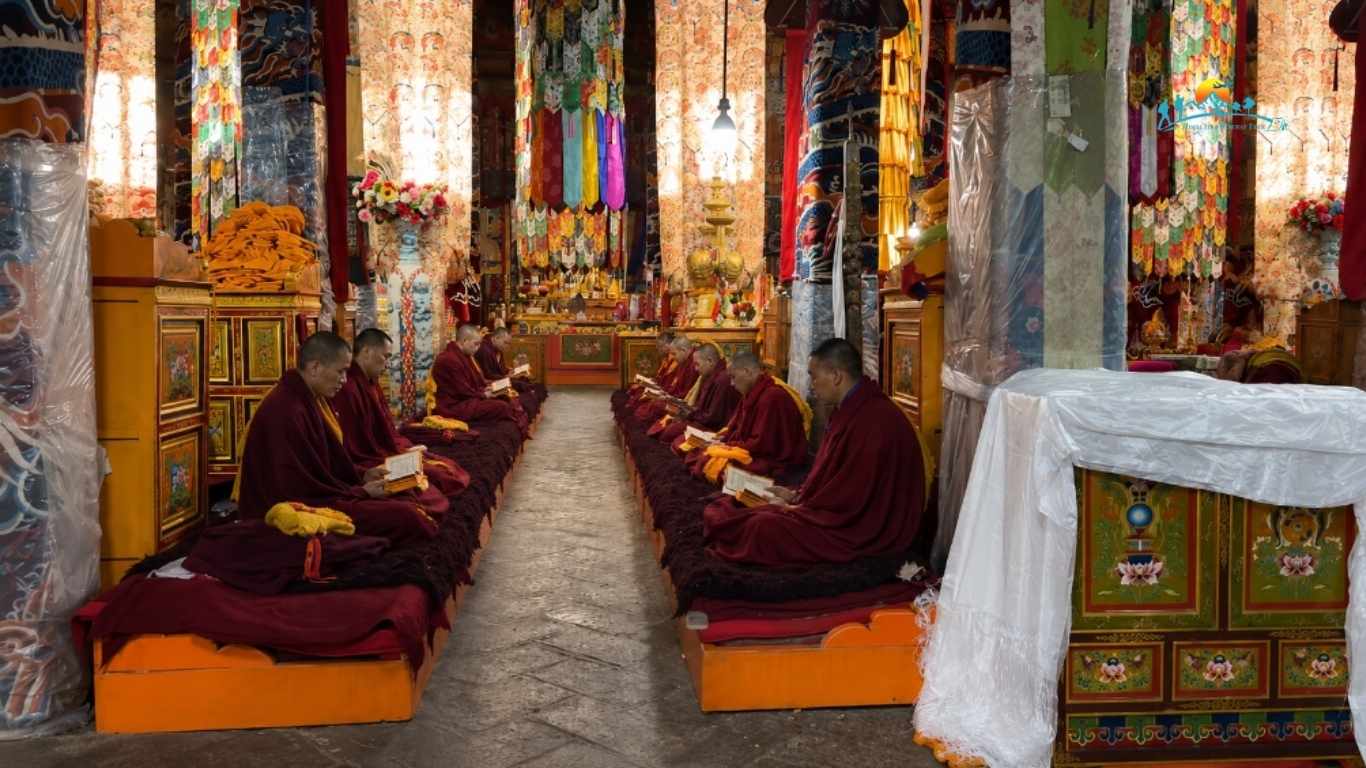
Your guide takes you on a slow walk to visit the historic monasteries surrounding Lhasa city, such as Sera and Drepung. Inside these grand stone complexes, you walk through ancient prayer halls filled with the smell of traditional butter lamps. In the afternoon, you sit in the courtyard to watch the monks hold their daily debating sessions, where they use loud hand claps and gestures to discuss philosophy.
This day helps you learn about the local monastic lifestyle while keeping physical effort low.
Day 5: Sight Seeing in Lhasa (Potala Palace, Jokhang Temple, Barkhor Street)
Today you visit the grand Potala Palace, the historic winter home of the Dalai Lama that dominates the city skyline. You walk up the wide stone steps to see the old living quarters, gold burial shrines, and historical treasure rooms. Later, you walk to the Jokhang Temple, which is the most sacred site for local Buddhists.
Outside the temple, you join hundreds of local pilgrims as they make their daily walking circles along Barkhor Street, spinning prayer wheels and buying traditional items from local market stalls.
Day 06: Drive to airport and fly back to Kathmandu
After breakfast, you take the private vehicle back to the airport for your return flight to Kathmandu. Once again, you fly over the high snow-capped mountains. Our team meets you at the Kathmandu airport and takes you back to your hotel.
You have the afternoon free to rest, clean your clothes, or walk around the local markets to buy any personal supplies you need for the upcoming trip to Bhutan.
Day 07: Fly to Paro and Drive to Thimphu
You transfer back to the airport for a morning flight to Paro, Bhutan. If the weather is clear, you can see Mount Everest and other high peaks along the way. At Paro airport, your Bhutanese guide meets you and drives you along the scenic valley road to the capital city of Thimphu.
The drive follows the path of fast mountain rivers. In the evening, you check into your hotel and enjoy your first taste of local Bhutanese food, including dishes made with local cheese and chili.
Day 08: Drive from Thimphu to Punakha
You travel by car from Thimphu toward the warmer valley of Punakha. The mountain road climbs up to Dochula Pass at 3,100 meters, where you stop to view the 108 stone chortens built as a memorial. On a clear day, you can see the main peaks of the eastern Himalayas from this spot.
The road then drops down through green pine forests into the agricultural valley of Punakha, where you can see local farmers working in the terraced rice fields. You will spend your night in Punakha and have your dinner there.
Day 09: Drive from Punakha to Wangdue and onward to Paro
This morning you visit the majestic Punakha Dzong, a massive fortress built in the seventeenth century at the point where two mountain rivers meet. You walk across a traditional wooden bridge to see the large courtyards and painted prayer halls inside.
Afterward, you drive through the nearby mountain town of Wangdue Phodrang to see the traditional layout of the local houses before making the return drive back to the Paro valley for the night.
Day 10: Hike to Tiger’s Nest Monastery
This is the main walking day of the trip. You hike up a steep dirt path through pine forests where Spanish moss hangs from the branches. You stop halfway up at a small wooden cafeteria for hot tea while looking up at the famous Taktsang Monastery, or Tiger’s Nest, which hangs on a sheer rock cliff 900 meters above the valley. You walk up the stone steps to visit the sacred shrines inside the cliffside complex.
Afterward, you walk back down and visit an old local farm house to see rural Bhutanese life.
Day 11: Departure from Paro
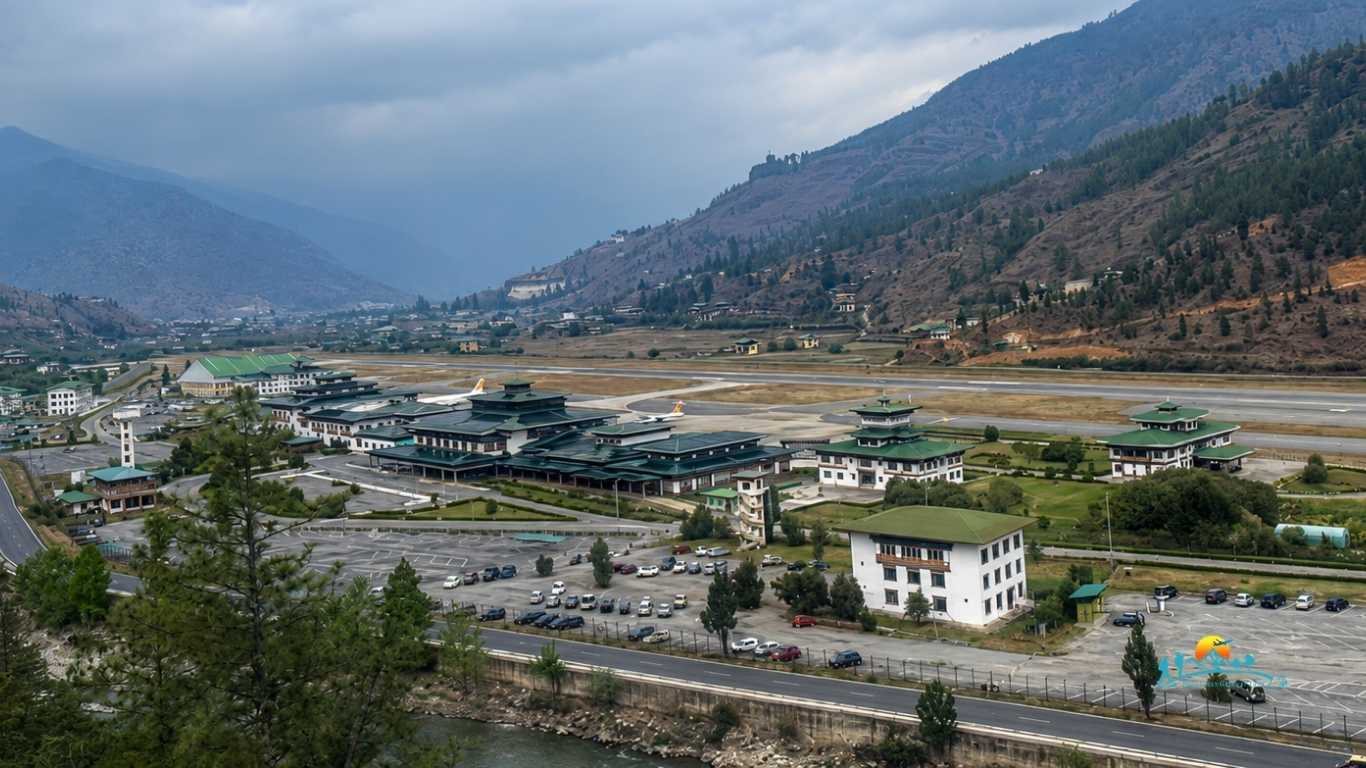
Enjoy your final morning breakfast at the hotel in Paro. Your guide takes you by private vehicle to the Paro International Airport.
The team helps you check in for your departure flight back home or to your next destination, bringing your multi-country mountain journey to an end.
What is Included in the Tibet and Bhutan Trip Cost
- Airport pickup and drop services in Kathmandu, Lhasa, and Paro by private vehicles.
- Standard hotel accommodation in Kathmandu, Lhasa, Thimphu, Punakha, and Paro.
- All daily meals including breakfast, lunch, and dinner throughout the 11 days.
- Flight tickets from Kathmandu to Lhasa, Lhasa to Kathmandu, and Kathmandu to Paro.
- Tibet entry permit and Bhutan tourist visa clearance paperwork.
- All monument entry tickets and monastery admission fees mentioned in the travel plan.
- Experienced local English speaking guides in Nepal, Tibet, and Bhutan.
- Government taxes, local authority fees, and official service charges.
What is Excluded from the Tour Cost
- International flight tickets to Kathmandu and departure from Paro to your home country.
- Nepal entry visa fee which you can get upon arrival at the Kathmandu airport.
- Personal travel insurance policy covering medical emergencies and high altitude evacuation.
- Personal expenses such as laundry, phone calls, bar bills, and hot showers.
- Tips for local tour guides, drivers, and hotel staff.
- Any extra costs caused by flight delays, bad weather, or sudden political changes.

Preparing the right gear is essential for a comfortable journey across different elevations and climates. Because this tour covers diverse destinations, layering your clothing is key to managing temperature changes between daytime sightseeing and cooler evenings.
Please remember that modest dress is required when visiting religious sites, monasteries, and fortresses, meaning shoulders and knees must be covered at all times
- Sturdy, well-broken-in hiking boots or comfortable walking shoes with good grip.
- Lightweight, breathable daypack (20 to 30 liters) with a waterproof rain cover.
- High-SPF sunscreen, protective lip balm, and UV-blocking sunglasses.
- Warm insulation layers including a fleece jacket, woolen pullover, and a quality down jacket.
- Waterproof and windproof outer jacket and matching long trousers.
- Moisture-wicking base layers, long thermal underwear, and quick-dry travel shirts.
- Multiple pairs of warm trekking socks and breathable underwear.
- Wide-brimmed sun hat, a warm fleece beanie, and lightweight insulated gloves.
- Reusable personal water bottle or durable hydration bladder.
- Multi-plug universal power adapter, a reliable power bank, and a compact headlamp with extra batteries.
- Personal medical kit
- Travel toiletries including hand sanitizer, wet wipes, and a small quick-dry microfiber towel.
Best Time to go to Tibet and Bhutan Trip
The high-altitude plateaus of Tibet and the mountain valleys of Bhutan have distinct weather seasons. Planning your travel dates carefully ensures clear mountain views and smooth flights across the Himalayas range.
-
Best Travel Season: March to May and September to November During these months, the skies are generally clear with excellent visibility for flights and hiking. Temperatures are comfortable during the day, though nights remain cold, especially in Lhasa.
-
Monsoon Considerations: June to August Summer brings rain to Nepal and Bhutan, which can cause flight delays or cancellations. Tibet remains relatively dry during this time, but traveling there through Kathmandu can face logistical changes due to weather.
-
Winter Season: December to February Winter brings extreme cold and heavy snow to high mountain passes. Many local shops and sites reduce their hours, and temperatures drop far below freezing at night in Lhasa.
Visa and Permit Requirements
Traveling to Tibet and Bhutan requires strict government permits and special visas managed well in advance of your arrival.
-
Tibet Travel Permit: Foreign travelers need a Chinese Visa and an official Tibet Travel Permit. These must be processed through a registered travel agency before you can board the flight to Lhasa.
-
Bhutan Tourist Visa: Bhutan limits entry through a daily tourist visa system. Your visa clearance must be approved before you board your flight to Paro.
-
Passport Validity: You must carry your original passport at all times during the 11 days, as paperwork checks happen at multiple airports and highway checkpoints.
Accommodation Reality
Accommodations are selected for cleanliness and local character, but standards differ across borders.
-
Kathmandu, Thimphu, and Paro: You stay in comfortable hotels with regular electricity, private bathrooms, and hot showers.
-
Lhasa and Punakha: Stays are clean and functional, but amenities can be simpler. Hot water availability might depend on solar heating, and heating inside rooms can be limited during cold nights.
Altitude, Oxygen Levels, and Physical Demands
This tour involves a fast change in elevation, moving from Kathmandu at 1,400 meters to Lhasa at 3,650 meters.
-
Adapting to Thin Air: Oxygen levels are lower on the Tibetan plateau, making simple movements feel heavier. The travel plan includes dedicated rest time on arrival to let your body adjust. Travelers must drink plenty of water, eat regular meals, and avoid alcohol at high altitudes.
-
Hiking Stamina: The day walk to Tiger’s Nest in Bhutan at 3,120 meters involves steep stone steps and requires steady physical stamina.
Food Availability and Diet Limitations
Daily meals include breakfast, lunch, and dinner throughout the 11 days. Food choices change with each region.
-
Nepal: Standard choices of local, Indian, and western food.
-
Tibet: Simple traditional meals like barley bread, noodle soups, and yak meat dishes alongside regular Chinese options.
-
Bhutan: Local dishes feature red rice, stews, and vegetables cooked with local cheese and hot green chilies.
-
Dietary Needs: If you have strict dietary choices, tell our team beforehand so options can be coordinated with local kitchens.
Respect and Local Conduct
Both Tibet and Bhutan are deeply spiritual societies with strict traditional codes.
-
Dress Modestly: Necks, shoulders, and knees must be covered completely when entering any temple, monastery, or fortress dzong.
-
Religious Shrines: Always walk around Buddhist shrines, stupas, and prayer walls in a clockwise direction. Remove hats and shoes where posted.
-
Photography: Ask for clear permission before taking photos of local people, monks, or inside holy prayer halls where photography is often banned.
Support Team and Travel Safety
This multi-country trip is handled by a network of local professionals. You will have a dedicated guide and private vehicle driver in each separate country. The teams look after local rules, border handovers, and flight schedules so you can travel safely without handling the daily paperwork yourself.
Terms & Policies
Thank you for choosing Himalayan Gateway Trek. Our goal is to provide a safe, enjoyable, and memorable travel experience. Please review the following terms and policies before confirming your booking.
📍Booking & Payment
- 👉 A 20% deposit is required to confirm your booking.
- 👉 The remaining balance must be paid on your arrival day in Nepal
- 👉 Your booking is confirmed once we receive your deposit and send a confirmation.
📍Cancellation & Refunds
- 👉 If you cancel your trip 45 days or more before departure, 50% of the deposit amount will be refunded.
- 👉 No refunds are available for cancellations made within 45 days of departure.
- 👉 Any non-refundable costs already incurred, including permits, flights, accommodation, transportation, or other third-party services, will be deducted from the refund amount.
Note: Eligible refunds will be processed within 14 business days of receiving the cancellation request.
📍 Travel Insurance
- 👉 Travel insurance is mandatory for all trekking and adventure trips.
- 👉 Your insurance should cover emergency medical treatment, helicopter evacuation, trip cancellation, and personal accidents.
- 👉 Himalayan Gateway Trek is not responsible for expenses arising from inadequate insurance coverage.
📍 Trip Changes
- 👉 Weather conditions, flight delays, road conditions, government regulations, or other unforeseen circumstances may require changes to the itinerary.
- 👉 Any changes will be made with the safety and well-being of our guests as the highest priority.
📍 Responsibility
- 👉 Himalayan Gateway Trek is not responsible for flight delays, cancellations, injuries, loss of personal belongings, natural disasters, political unrest, or other events beyond our control.
- 👉 By booking a trip with us, you acknowledge and accept the inherent risks associated with trekking and adventure travel.
FAQs
What is the best time to go on a Tibet, and Bhutan tour?
The best time to visit is during the spring (March to May) and autumn (September to November) seasons. These months offer clear Himalayan skies, stable weather conditions, and ideal temperatures for sightseeing and high-altitude travel across all three countries.
How do I obtain the visas and permits for this multi-country tour?
Your chosen travel agency will handle the bulk of the paperwork. You will need a regular visa for Nepal, a Chinese Visa and Tibet Travel Permit for Tibet, and a pre-cleared tourist visa for Bhutan, all arranged well before departure.
How is altitude sickness managed during the tour?
The itinerary includes a gradual ascent and dedicated rest days upon arriving in Lhasa to help your body adapt. Local guides carry oxygen cylinders, and travelers are advised to stay hydrated, avoid overexertion, and refrain from alcohol initially.
What type of accommodation can I expect on this tour?
You will stay in comfortable 3-star or boutique hotels in major cities like Kathmandu, Thimphu, and Paro. In Lhasa, accommodations are clean, comfortable, and locally operated, though amenities can be slightly simpler due to the remote, high-altitude setting.
Is internet and mobile connectivity widely available?
Wi-Fi is widely available in hotels across Kathmandu, Bhutan, and Lhasa. However, connection speeds can be slow in remote mountainous areas, and certain international websites or apps may be blocked in Tibet without a reliable, pre-downloaded VPN service.
What is the currency used in Tibet and Bhutan?
Tibet uses the Chinese Yuan (RMB), while Bhutan uses the Bhutanese Ngultrum (BTN), which is pegged to the Indian Rupee. Credit cards have limited acceptance in remote areas, so carrying sufficient local cash for personal expenses is highly recommended.
Do Nepali need a visa for Tibet?
Yes, citizens of Nepal require a valid passport, a specific Chinese Visa, and an official Tibet Travel Permit to enter Tibet. These required documents must be arranged in advance through a registered travel agency before departing Kathmandu.
How much does a Tibet trip cost?
A Tibet trip generally costs between $1,200 and $2,500 per person, depending on the tour duration, group size, and accommodation class. This cost typically covers mandatory entry permits, private transport, local tour guides, and daily monument admission fees.
Should I visit Tibet or Bhutan?
Choose Tibet for dramatic high-altitude plateaus, massive historic monasteries, and deep Tibetan Buddhist heritage. Opt for Bhutan if you prefer lush alpine valleys, exclusive low-volume carbon-negative tourism, and well-preserved, vibrant traditional architecture alongside towering fortress dzongs.
Why is Tibet so expensive?
Tibet is expensive due to strict government regulations requiring all foreign travelers to book pre-arranged, fully guided package tours. Independent travel is strictly prohibited, meaning travelers must pay for mandatory private vehicles, local guides, and specialized regional entry permits.