Dashain Festival of Nepal: Dates, 15 Days, Traditions and History
The Dashain Festival of Nepal is the country's biggest annual festival for many Nepali families, bringing together religious worship, family…
 Himalayan Gateway Trek - On
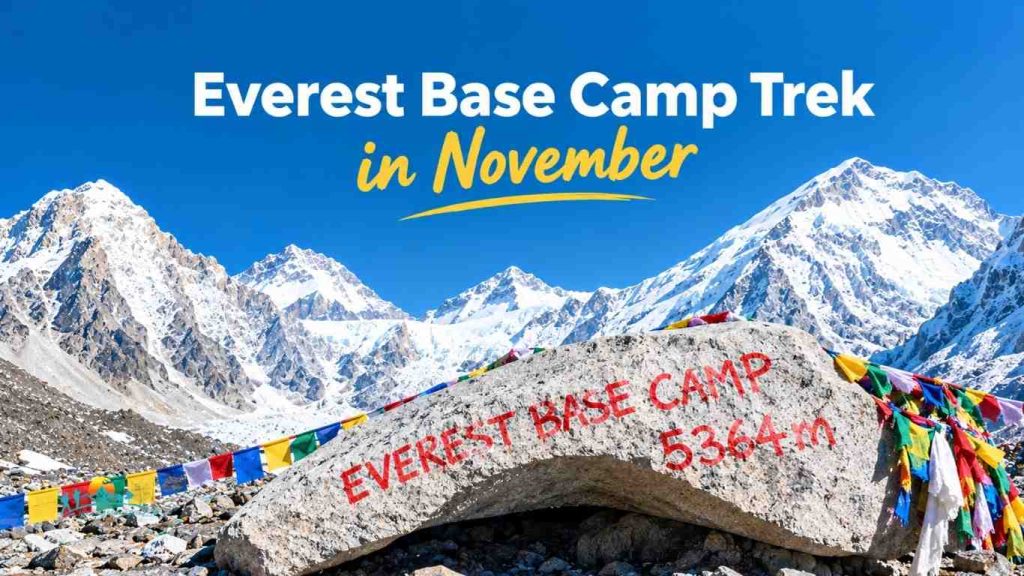
 The November trek to Everest Base Camp promises to give you a clearer view of the mountains, mostly dry trails and a less hectic trekking season as the busy autumn season winds down. But as the month goes on, the temperatures drop further down, particularly at Dingboche, Lobuche and Gorak Shep. Warm clothing, adequate acclimatization, and time for potential delays are all essential for trekkers.
With careful planning and preparation, November can be a great time to visit the Everest region. This guide contains information about the weather, temperatures, best times to visit, daily itinerary, costs, packing list, permits, and safety precautions to help you determine if visiting Everest Base Camp Trek in November is a good time.
The Everest Base Camp hike is a good time to go in November, as the trails are generally dry, the sky is clear, and you’ll have great views of the surrounding peaks. The big problem is the cold, especially during the early morning and night hours above 4,000m.
October and November are considered to be the best time of the year to visit Sagarmatha National Park by the Nepal Tourism Board. But favorable conditions for the season do not mean there will be no delays or no clouds at all each day. The weather in the mountains can change rapidly.
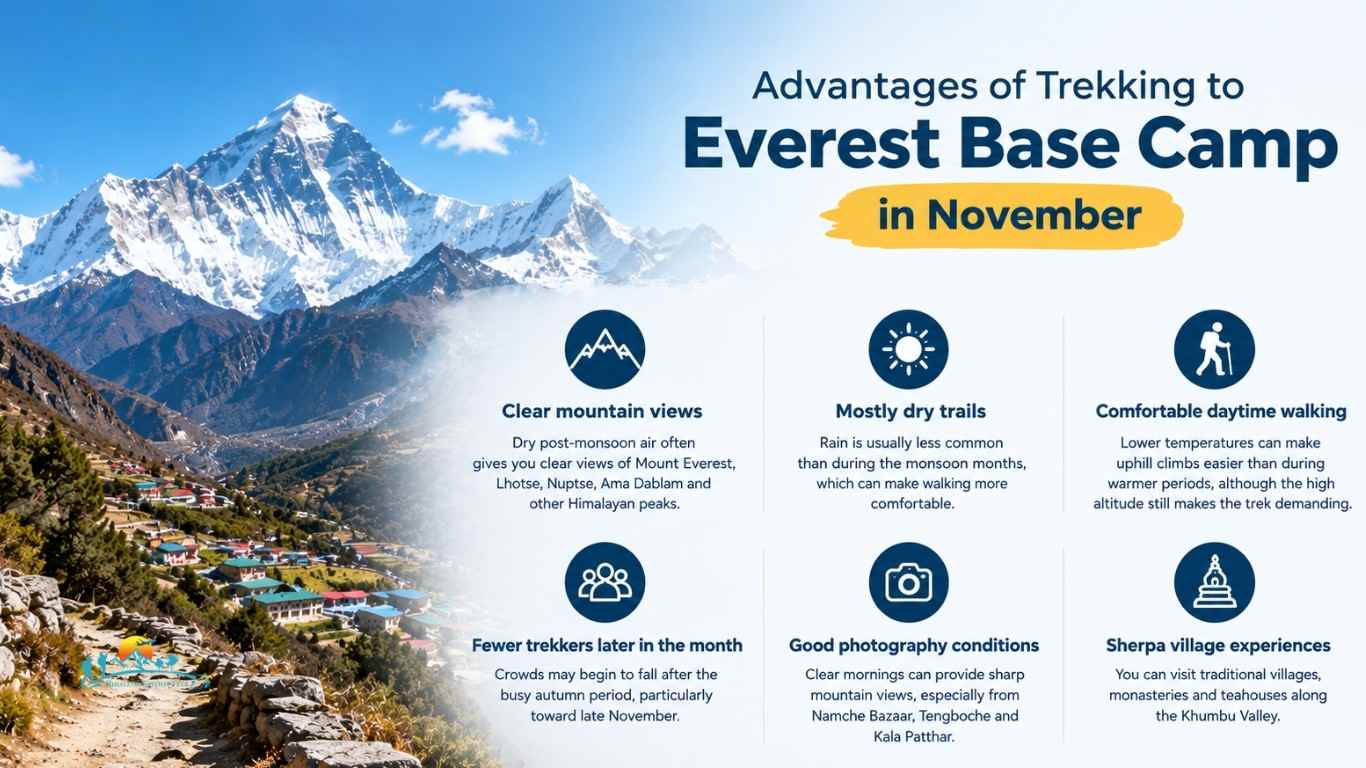
November has several benefits for trekkers who want mountain views and cooler walking conditions.
These benefits depend on the weather and the timing of your departure. Early November can still be busy, while late November usually brings colder nights and a greater need for winter gear.
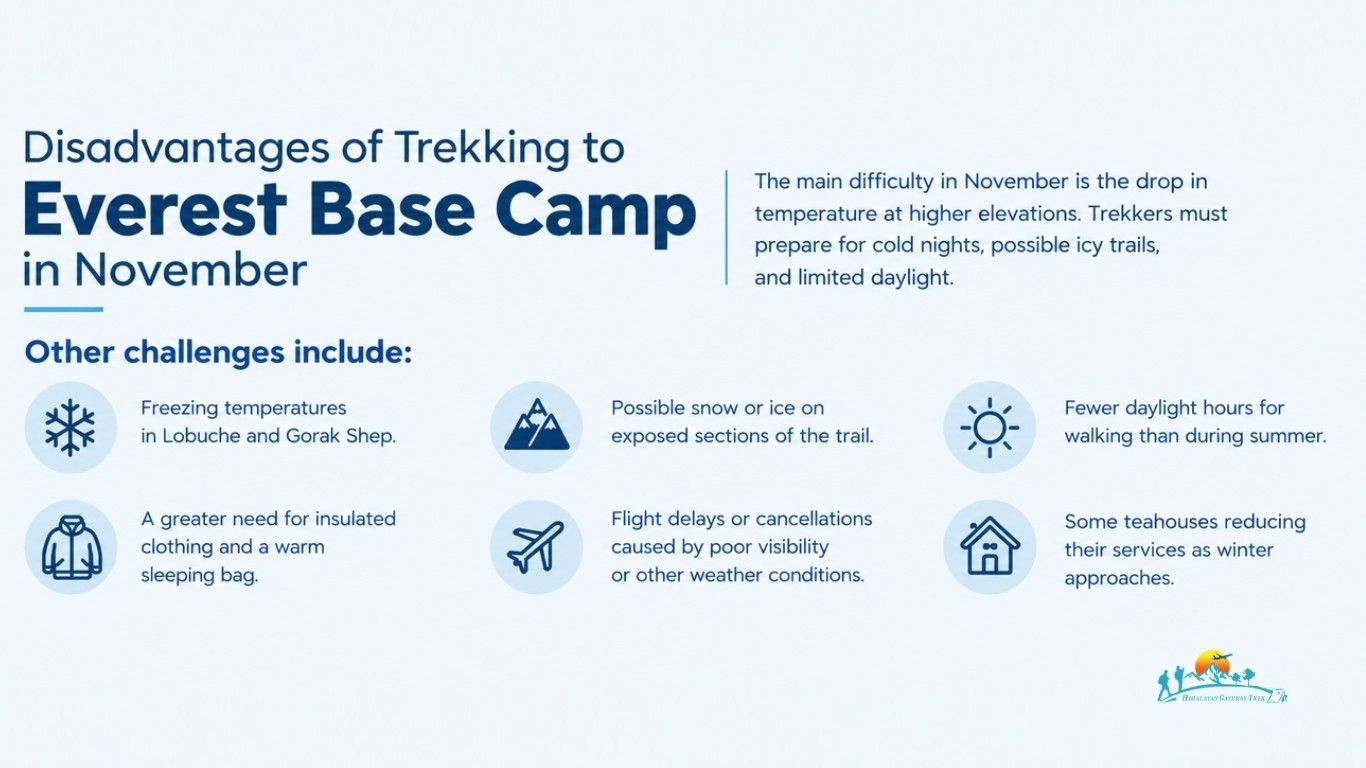
The main difficulty in November is the drop in temperature at higher elevations. Trekkers must prepare for cold nights, possible icy trails, and limited daylight.
Other challenges include:
You should not choose November only because it is a popular trekking month. Consider your cold tolerance, available travel days, fitness, and experience with long walks at altitude.
November suits trekkers who value mountain views, prefer relatively dry conditions, and can prepare for cold nights. It can also suit first-time high-altitude trekkers who follow a sensible itinerary and seek help from an experienced guide.
The month may be less suitable for people who dislike cold weather, have very limited travel time, or expect warm sleeping conditions at high elevations.
| Type of trekker | Is November suitable? | What to consider |
|---|---|---|
| Mountain photography enthusiasts | Yes | Clear mornings are possible, but clouds can still form. |
| First-time trekkers | Yes, with preparation | Allow time for acclimatization and choose a sensible pace. |
| Trekkers who dislike cold | It may be difficult | Early November is generally less cold than late November. |
| Budget-conscious travelers | Possibly | Compare package inclusions and personal expenses before booking. |
| Families with children | Requires careful planning | Consider age, health, cold tolerance, and the demands of high altitude. |
| Trekkers with limited vacation days | Less ideal | Flight delays can affect the schedule, so allow extra time. |
Want to trek to Everest Base Camp in November? Explore our Everest Base Camp Trek Package.
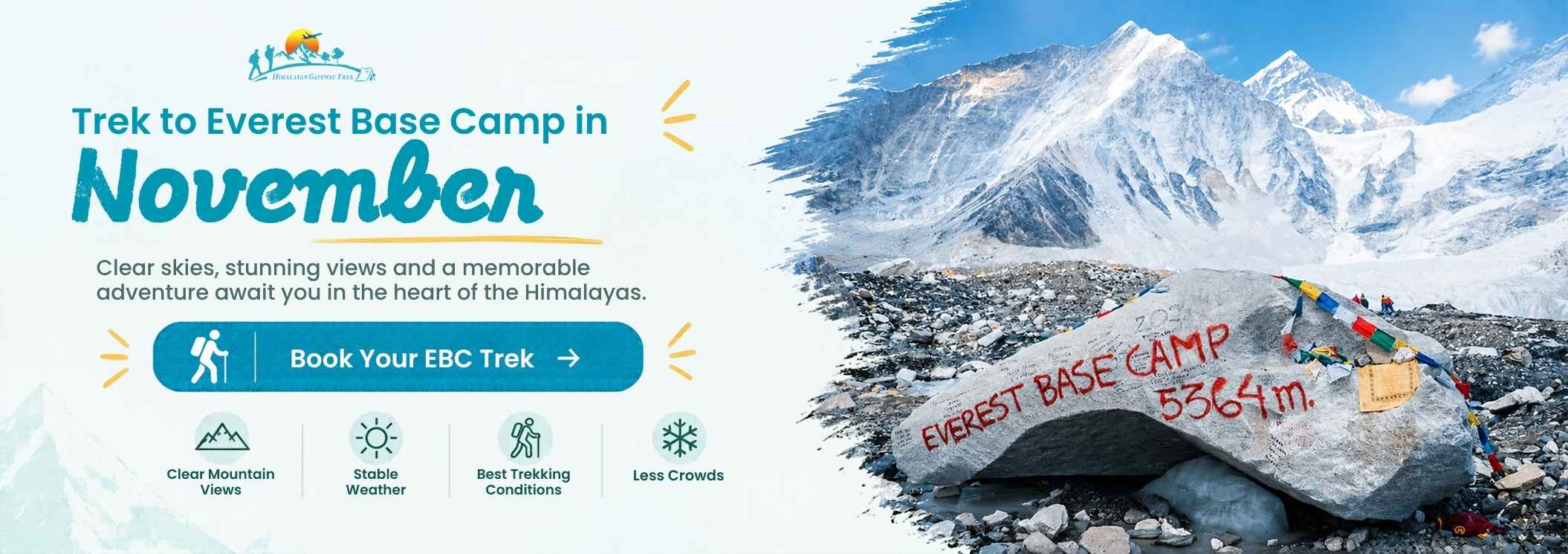
November weather at Everest Base Camp is typically cold, dry and sunny, though it gets even colder at higher elevations. It can be a pleasant walk during the day or a much colder walk in shaded areas or at night.
Weather also varies from month to month. Although the individual days can vary from the general trend, early November is typically milder than late November.
Temperature depends mainly on elevation, wind, sunlight, and the time of day. Lower villages such as Lukla and Phakding tend to be warmer than Lobuche and Gorak Shep.
The following table gives approximate planning ranges for typical November conditions. These are broad guides, not official daily forecasts. Actual readings can fall outside them, particularly during cold spells or strong winds.
| Location | Approximate elevation | Typical daytime range | Typical nighttime range |
|---|---|---|---|
| Lukla | 2,860 m | 8°C to 14°C | 0°C to 4°C |
| Namche Bazaar | 3,440 m | 5°C to 10°C | -4°C to 0°C |
| Tengboche | 3,860 m | 3°C to 8°C | -7°C to -2°C |
| Dingboche | 4,410 m | 0°C to 6°C | -11°C to -5°C |
| Lobuche | 4,940 m | -4°C to 2°C | -16°C to -9°C |
| Gorak Shep | 5,164 m | -5°C to 1°C | -18°C to -12°C |
These ranges give an idea of the general temperature difference along the route. These should not be used as a substitute for an existing forecast or guidance from your guide.
Everest Base Camp is located at approximately 5,364m. It is normally visited by trekkers during the day and slept in at Gorak Shep, located at a lower altitude. The early morning assault on Kala Patthar (5644 m) can be even colder due to the wind and absence of direct sunlight.
What these temperatures mean for your trek: Wear layers rather than relying on one thick jacket. A base layer, fleece, insulated jacket, windproof outer layer, warm gloves, and a hat help you adjust as conditions change.
Early November often provides a good balance between clear mountain views and less severe cold than later in the month.
On the lower parts of the path, it is comfortable to walk during the day when it is sunny. Mornings and evenings are still cold at higher elevations, however.
The teahouses won’t be empty, as November is part of the main trekking season for the autumn months. If you have definite travel dates, you should book your trip early.
Having fewer people on the trails and colder weather with good visibility can be a benefit during mid-November. It can appeal to those who would like to see the views without having to travel during peak season in October.
Overnight frosts are still continuing through to fall and are particularly heavy above Dingboche. Before you leave, pack appropriate winter gear, in case the conditions are benign.
The Everest region has more of a winter flavour in late November. It may be sunny throughout the day, but nights are colder with exposed areas that can have icy patches.
As winter approaches, some teahouses may make certain adjustments to their services, or even close down. Check reservations on your travel itinerary before you travel.
For the more advanced and well prepared trekkers, another week or so in late November might be appropriate, but requires more attention with clothing, walking hours and travel plans.
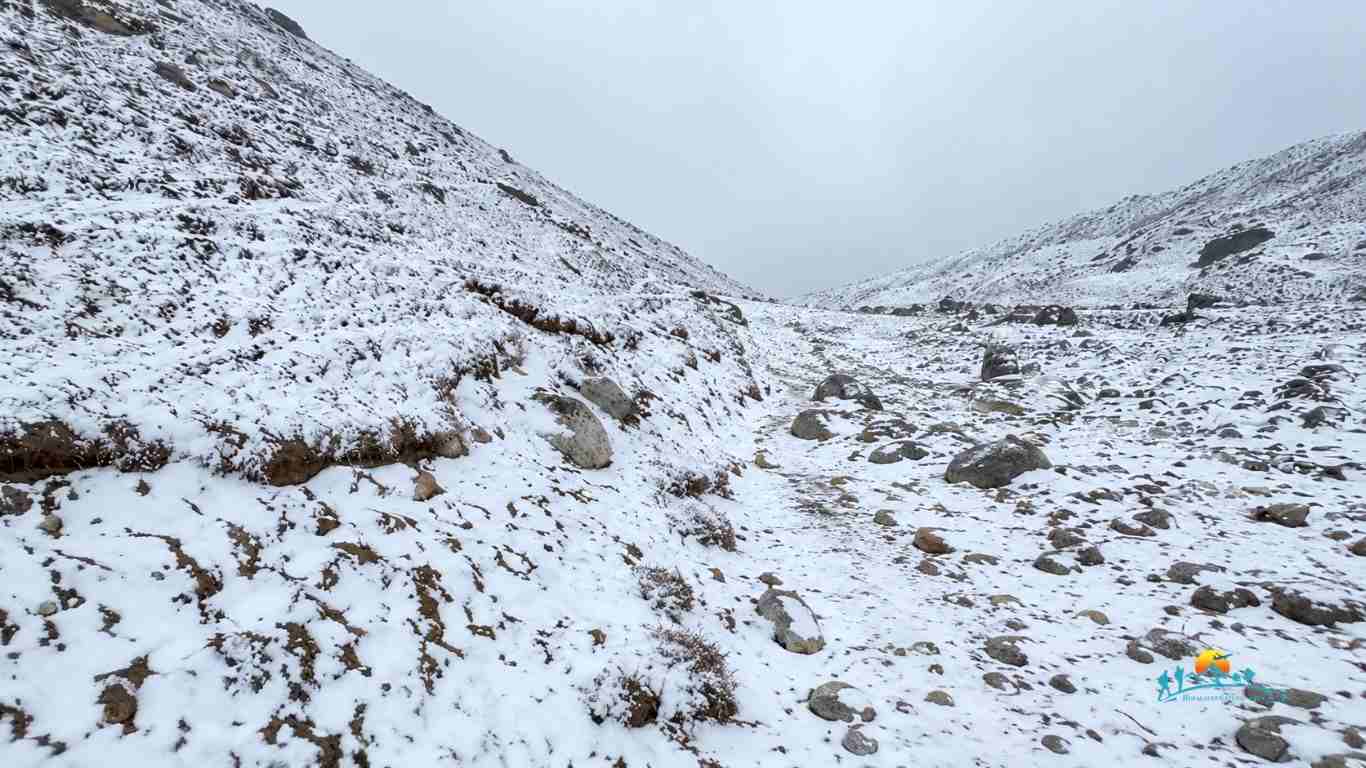
It’s possible to see snow on the Everest Base Camp trail in November, especially at higher altitudes. Dry days do not always occur and a snowfall or cold spell can greatly alter the condition of a trail.
The trail is not snow-covered the entire month. This varies according to the weather in the past few days, elevation and year.
Check with your guide before the walk for any snow, ice and conditions ahead. Bring footwear that has good traction, trekking poles and any additional traction devices recommended by your guide.
November tends to be the drier of the two months in the summer monsoon. This helps maintain the dry weather that makes fall a popular trekking season.
Cold conditions can be more difficult to control in open areas close to Gorak Shep and Kala Patthar where wind is likely to be a factor. Exposed skin will rapidly cool down in a strong wind, even in the sun.
Days are also shorter than in summer. Start your walks early enough to reach your destination before dark, and carry a headlamp in case the walk takes longer than expected.
Early November is generally the better choice if you prefer milder temperatures, while late November may appeal to trekkers who want fewer people on the trail and are prepared for colder conditions. Neither period guarantees clear weather.
| Factor | Early November | Mid-November | Late November |
|---|---|---|---|
| Daytime temperatures | Usually milder | Cooler | Colder |
| Nighttime temperatures | Cold at high elevations | Very cold at higher stops | Often freezing or well below freezing |
| Mountain visibility | Often good | Often good | Can be excellent on clear days |
| Trail traffic | May still be busy | Often begins to ease | May be quieter |
| Snow and ice | Possible at high elevations | Possible | Greater chance of icy sections |
| Accommodation | Confirm availability | Confirm availability | Check winter operating plans |
| Best for | Those seeking a balance of weather and comfort | Flexible travelers who want cooler conditions | Well-prepared trekkers comfortable with winter cold |
If your schedule is flexible, compare actual departure dates and recent trail reports before booking. A clear forecast is useful for short-term planning, but it cannot promise the weather for the full trek.
The Everest base camp route cuts through forests, Sherpa villages, suspension bridges, mountain valleys and rocky high elevation areas. These environments are easier to observe in November when the air tends to be dry following the monsoon.
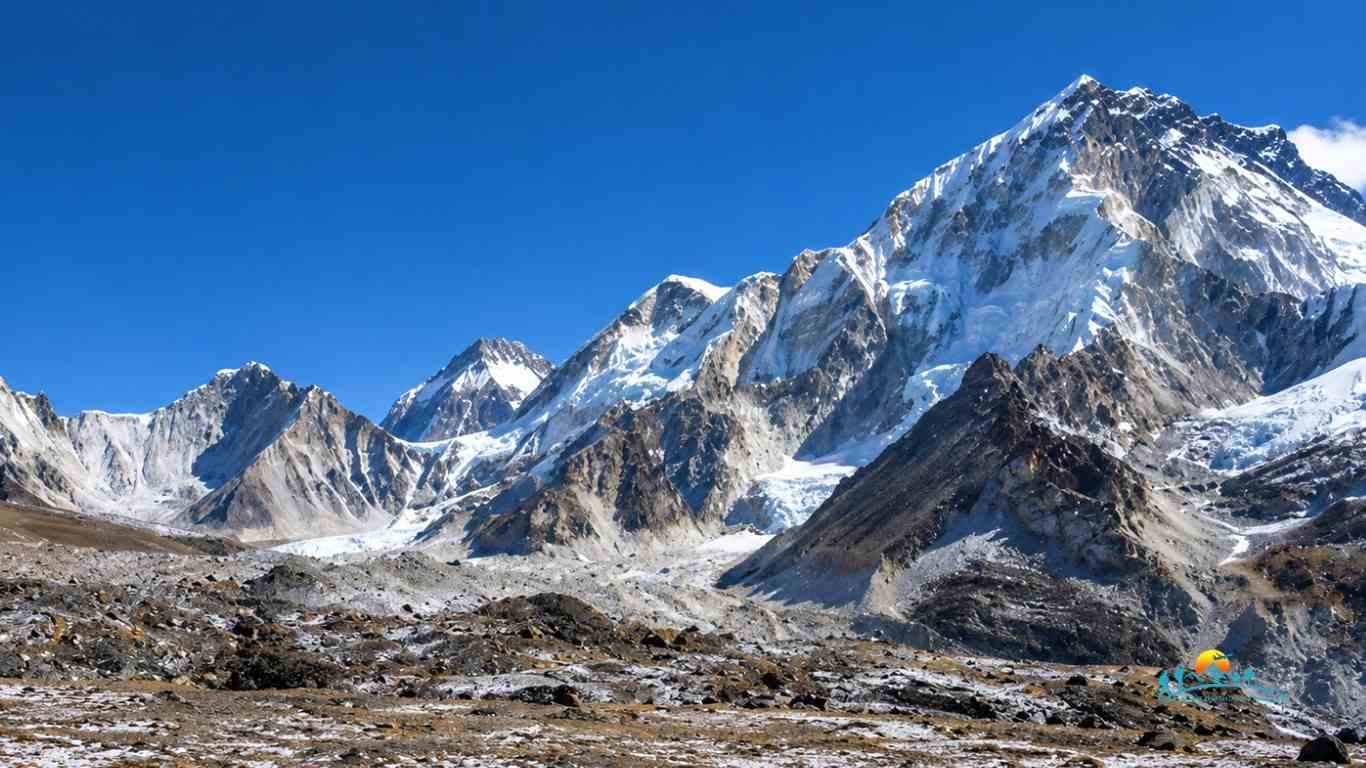
On clear mornings, you can see Everest, Lhotse, Nuptse, Ama Dablam, Thamserku, and other peaks. The view from Namche Bazaar and Tengboche are particularly stunning and Kala Patthar offers a classic vantage point towards Everest and the surrounding mountains.
For photography, start early when skies are often clearer. Bring spare camera batteries because cold temperatures can reduce battery life. Keep your phone or camera inside an insulated pocket when you are not using it.
Clouds may roll over the mountains, so don’t plan out your entire trip around one sunset or one viewpoint.
The lower path is usually dry in November, while the upper path could be cold and icy. Rocky ground, shady paths and stone steps call for good footing.
If trekking poles will help stabilize your gait, use them, and wear properly-fitting hiking boots that are broken-in. Don’t rush on icy surfaces.
If fresh snow or ice makes a section unsafe, follow your guide’s advice. Reaching a destination is never more important than returning safely.
Some years the month of November is quieter than the busiest of autumn but the popular villages can still lure many trekkers. Namche Bazaar, Tengboche, Dingboche and Gorak Shep continue to be prominent night stops on the highway.
Consideration should be given to booking a trekking package or making a reservation for lodging before leaving, particularly if you are on a fixed date. Discuss with your company what they would do if it became a full teahouse, or if something changed in the order.
Fewer trekkers are expected during late November, but some lodges can scale back their service during the winter months. Lower visitor numbers don’t always mean all rooms/service is available.
The trip isn’t just about the mountains, it’s about the journey. You cross through Sherpa settlements, where the people still follow age-old customs, religious beliefs and worship the mountains.
Namche Bazaar has shops, bakeries, cafés, and services for trekkers. Tengboche is known for its monastery and mountain views. Smaller settlements along the route offer a chance to learn about daily life in the Khumbu region.
Respect local culture, ask permission before taking pictures of people, and obey signs in monasteries and other religious locations.
With a little preparation, a good amount of time to acclimatize and an understanding of the physical strain, the trek can be done by beginners. There is no universal protection against altitude sickness, although experience in trekking prior to the journey is helpful.
Walk at a speed that is easy to maintain for you. Don’t schedule an unusually short trip for a few days’ savings.
If this is your first high-altitude trek, consider travelling with a qualified guide who can help with route decisions and recognize signs that require medical attention.
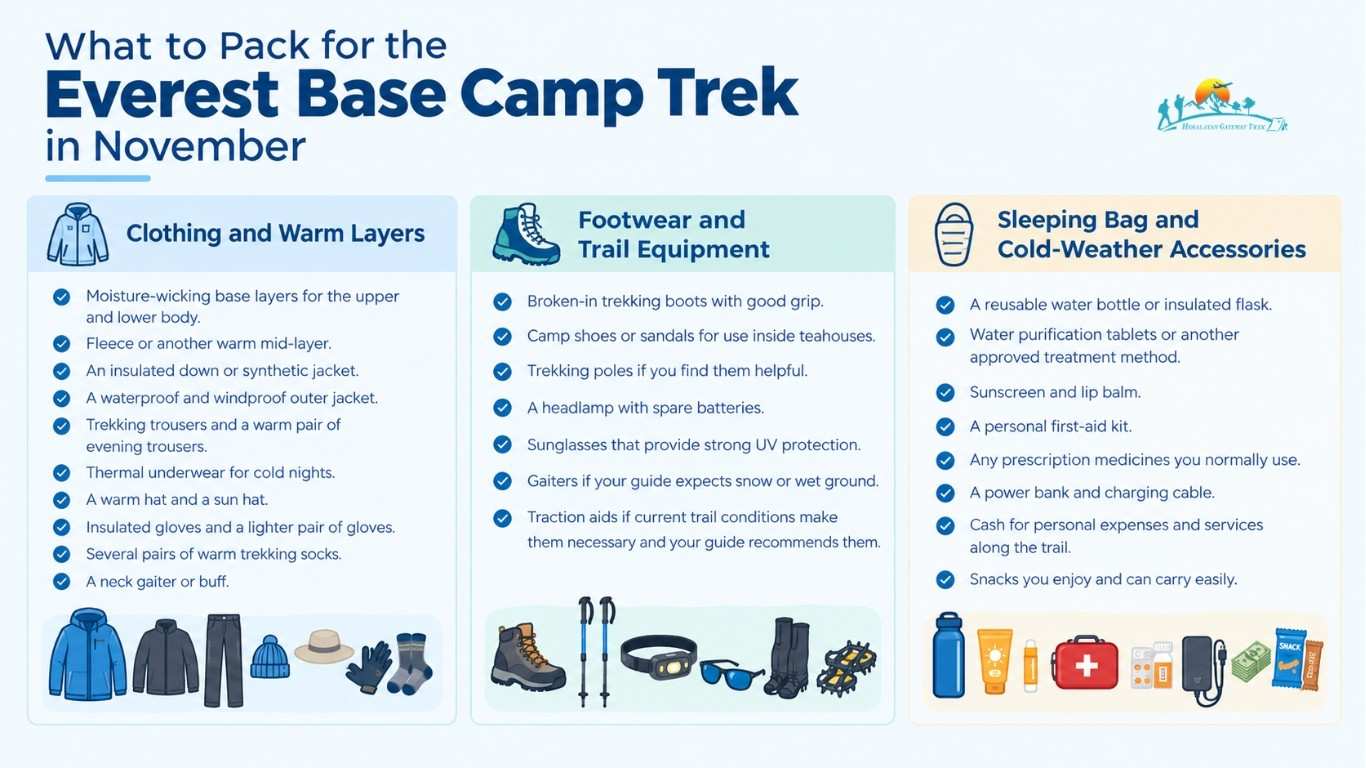
A suitable packing list for November must cover cold nights, changing daytime temperatures, strong sun, and possible snow or ice. Layered clothing lets you adjust as you climb and as the weather changes.
You do not need to carry every item you own. Focus on warm clothing, safe footwear, basic health supplies, and equipment that protects you from the conditions.
Pack the following items:
Wear layers while walking instead of waiting until you feel very cold. Remove a layer when you become hot and sweaty, then put it back on when you stop.
Footwear matters because the route can include rocky ground, steep steps, and icy patches.
Carry:
Do not buy boots for the first time just before departure. Walk in them on different surfaces before the trek to check for rubbing and pressure points.
A warm sleeping bag does not replace suitable clothing or a proper place to sleep. Ask your operator what equipment is included, what temperature rating it recommends, and whether you need to bring your own liner.
Other useful items include:
You can rent or buy some trekking gear in Kathmandu, including sleeping bags, insulated jackets, trekking poles, and other equipment. Renting can help reduce the amount of gear you need to bring from home.
However, bring your own well-fitting boots, personal medication, comfortable base layers, and any essential items you already rely on. Check rented equipment before leaving Kathmandu.
Make a written list of the gear provided by your trekking company so you do not pay to rent items that are already included.
The cost of the Everest Base Camp trek in November depends on the length of the trip, group size, accommodation, guide and porter services, flights, and the items included in your package.
As a rough planning guide, advertised guided packages for a standard 12 to 15-day trek can range from about US $1,300 to US $2,500 per person. Prices vary between companies, and this range is not a confirmed quote for a particular departure.
Before you book, ask for a written breakdown of all inclusions and exclusions.
| Expense | What to check |
|---|---|
| Trekking package | Whether guide, porter, meals, lodging, and transfers are included |
| Lukla flights | Return fare, baggage allowance, and possible flight changes |
| Accommodation | Kathmandu hotel nights and teahouse stays |
| Meals and drinks | Whether breakfast, lunch, and dinner are included on trek |
| Permits and local fees | Which permits are included in the package |
| Guide and porter | Staff costs, insurance, and agreed tipping arrangements |
| Travel insurance | High-altitude trekking and emergency evacuation coverage |
| Personal gear | Equipment to buy or rent |
| Personal expenses | Hot showers, charging, Wi-Fi, snacks, and drinks |
| Buffer days | Extra hotel nights, meals, or transport if flights are delayed |
Flights to Lukla depend on weather, visibility, airline operations, and the departure point in use for your travel dates. November often brings favorable conditions, but flight delays and cancellations remain possible.
Confirm your flight arrangements with your trekking company or airline before leaving Kathmandu. Depending on the season and current operations, flights may depart from Kathmandu or Manthali Airport in Ramechhap.
If your flight is delayed, your trekking company should explain the available options. These may include waiting for another flight, changing travel plans, or arranging another suitable form of transport if one is available and safe.
Do not plan an international departure immediately after your expected return from the mountains. A delayed flight from Lukla can affect the rest of your schedule.
Ask your operator these questions before booking:
Clear answers help you understand the real cost and time needed for the trip.
Altitude sickness is one of the most important risks on the Everest Base Camp trek. It can affect fit and experienced trekkers because the risk depends on altitude, the speed of ascent, and how each person’s body responds.
Follow an itinerary that includes suitable acclimatization days and avoids unnecessary increases in sleeping altitude. Your guide should adjust the pace if you struggle with the climb or show signs of altitude illness.
Helpful habits include:
Fitness does not prevent altitude sickness. Even if you exercise regularly, your body needs time to adjust to lower oxygen levels.
Common symptoms can include a headache, nausea, dizziness, fatigue, and difficulty sleeping. These signs can have other causes, so do not try to diagnose yourself while continuing to climb.
Severe breathlessness at rest, confusion, or trouble walking straight can signal a medical emergency. Tell your guide immediately and seek urgent help.
Do not ascend to a higher sleeping altitude while symptoms are getting worse. A medical professional should guide treatment and any decision about continuing the trek.
Cold-weather safety requires preparation before you leave each morning. Check the forecast, wear suitable layers, carry water and snacks, and make sure your guide knows the planned route and expected arrival time.
Use a headlamp if you must walk in low light, but plan your day so you do not need to rely on it. Keep your hands warm and take care on icy or uneven ground.
Follow your guide’s advice if conditions change. A shorter walking day or an extra night at a lower altitude is better than taking an unnecessary risk.
The Everest Base Camp trek in November can be a rewarding choice for trekkers who want clear mountain views, relatively dry trails, and a chance to experience the Khumbu region after the busy autumn period.
The main trade-off is the cold. Nighttime temperatures fall as the month progresses, and higher sections may become icy. You will need warm clothing, good footwear, a sensible pace, and enough time for acclimatization.
Choose your dates based on your comfort with cold weather rather than mountain views alone. Confirm the latest flight arrangements, accommodation, permits, and package inclusions before booking.
November can be a good time for the Everest Base Camp trek because post-monsoon skies often provide clear mountain views and trails are generally dry. However, colder nights, possible ice, and shorter daylight require careful preparation.
Temperatures fall as you gain altitude. Magical Nepal reports that daytime temperatures can reach around 10°C in Lukla early in the month, while Gorak Shep nights may fall to −18°C and Kala Patthar mornings can be colder with wind chill.
Nights become increasingly cold above Namche Bazaar. Haven Holidays reports that temperatures at Lobuche and Gorak Shep can fall to approximately −10°C to −15°C, so insulated clothing and a suitable sleeping bag are important.
Snow is possible, especially near Everest Base Camp, Gorak Shep, and Kala Patthar. Early and mid-November may bring only occasional light snowfall, but conditions vary each year, and fresh snow can make high-altitude paths slippery.
Microspikes are not generally necessary when the standard route is dry, according to Haven Holidays. However, ice or fresh snowfall can change trail conditions, so check current reports and follow your guide’s advice before carrying or using traction equipment.
Lukla flights often operate more smoothly in November than during the monsoon, thanks to generally drier weather. However, poor visibility, fog, and strong winds can still cause delays or cancellations, so keep extra days in your travel schedule.
November can be quieter than October, particularly later in the month. However, the trail remains popular in early November, and demand for rooms and guides can continue. Book essential arrangements early rather than assuming fewer trekkers mean empty teahouses.
Booking at short notice may be possible because November can be less crowded than October. Magical Nepal suggests that guide availability remains an important factor, so confirm accommodation, flights, and local arrangements before relying on a last-minute departure.
Beginners may be able to complete the trek with physical preparation, a suitable itinerary, gradual acclimatization, and experienced local guidance. However, November’s colder conditions add challenges, so first-time high-altitude trekkers should avoid rushing the schedule.
Yes, Gokyo Lakes can be included in a November trekking plan. Magical Nepal describes the period as favorable for quieter trails and clear mountain reflections, but your itinerary should account for cold conditions and the status of high passes.
December trekking remains possible, but colder conditions and winter-related disruptions can make planning more demanding. Magical Nepal recommends prior winter high-altitude experience for December departures and identifies spring, from March to May, as another option.
Visibility can remain comparable to October through mid-November. Later in the month, occasional high clouds may appear, although dry air can still offer sharp mountain views on clear days.
Altitude sickness can affect trekkers in November just as in other seasons. Ascend gradually, allow acclimatization days, drink fluids regularly, and report symptoms such as headaches or dizziness to your guide rather than continuing upward.
November is often preferable for trekkers seeking autumn conditions before winter becomes more demanding. It generally offers drier trails and good visibility, while December can bring harsher cold. Actual conditions vary, so choose dates based on preparation and experience.