Best Time to Visit Bhutan: Month-by-Month Guide
The best time to visit Bhutan depends on what you want from the trip, because spring brings rhododendron flowers and…
 Himalayan Gateway Trek - On
 The Dashain Festival of Nepal is the country’s biggest annual festival for many Nepali families, bringing together religious worship, family gatherings, blessings, food and travel. The festival is linked with Goddess Durga and the victory of good over evil, while the tenth day, Vijaya Dashami, is known for receiving Tika and Jamara from elders.
To visitors, Dashain is the opportunity to experience the other side of Nepal. The cities grow quieter when people head back to their hometowns, families spend more time together, and many of the traditional customs are added to everyday life.
| Fact | Details |
|---|---|
| Festival name | Dashain |
| Also known as | Bada Dashain, Vijaya Dashami |
| Main religious figure | Goddess Durga |
| Festival length | 15 days |
| First day | Ghatasthapana |
| Main Tika day | Vijaya Dashami |
| Main symbols | Tika, Jamara and blessings |
| 2026 starting date | October 11, 2026 |
| 2026 Vijaya Dashami | October 21, 2026 |
| 2026 Tika auspicious time | 10:26 AM on October 21 |
| Closing day | Kojagrat Purnima, October 25, 2026 |
| Main activities | Worship, family visits, Tika, feasts, new clothes, kites and swings |
Dashain festival of Nepal is the most important festival in Nepal, observed for 15 days with the aim of worshiping, giving blessings to relatives and celebrating the triumph of good over evil. The primary deity of the festival is Goddess Durga and the event is celebrated with prayers and offerings, as well as visiting elders.
Dashain is more than just a temple festival. A significant amount of its meaning is to be found in the interior of people’s houses. Families clean the house, make new clothes, visit relatives, prepare special meals, and gather.
The most well known tradition is on Vijaya Dashami. Elders are visited by younger members of the family, who are given blessings and Dakshina. This makes the religious festival the occasion of a family gathering, and reunites family members who might be residing in different parts of Nepal or abroad.
Although largely a Hindu festival, and though they celebrate it in very different ways, Dashain is primarily known for these Hindu practices. Newar people also have the similar festival in the Kathmandu Valley called Mohani that involves its unique rituals, family feasts and worship of local deities.
Dashain is also observed to honor Goddess Durga and the triumph of good over evil and is also a significant period of time for family get-togethers, blessings, feasting and worship. Nepal Tourism Board says that Dashain is a harvest festival and one of the greatest Hindu festivals.
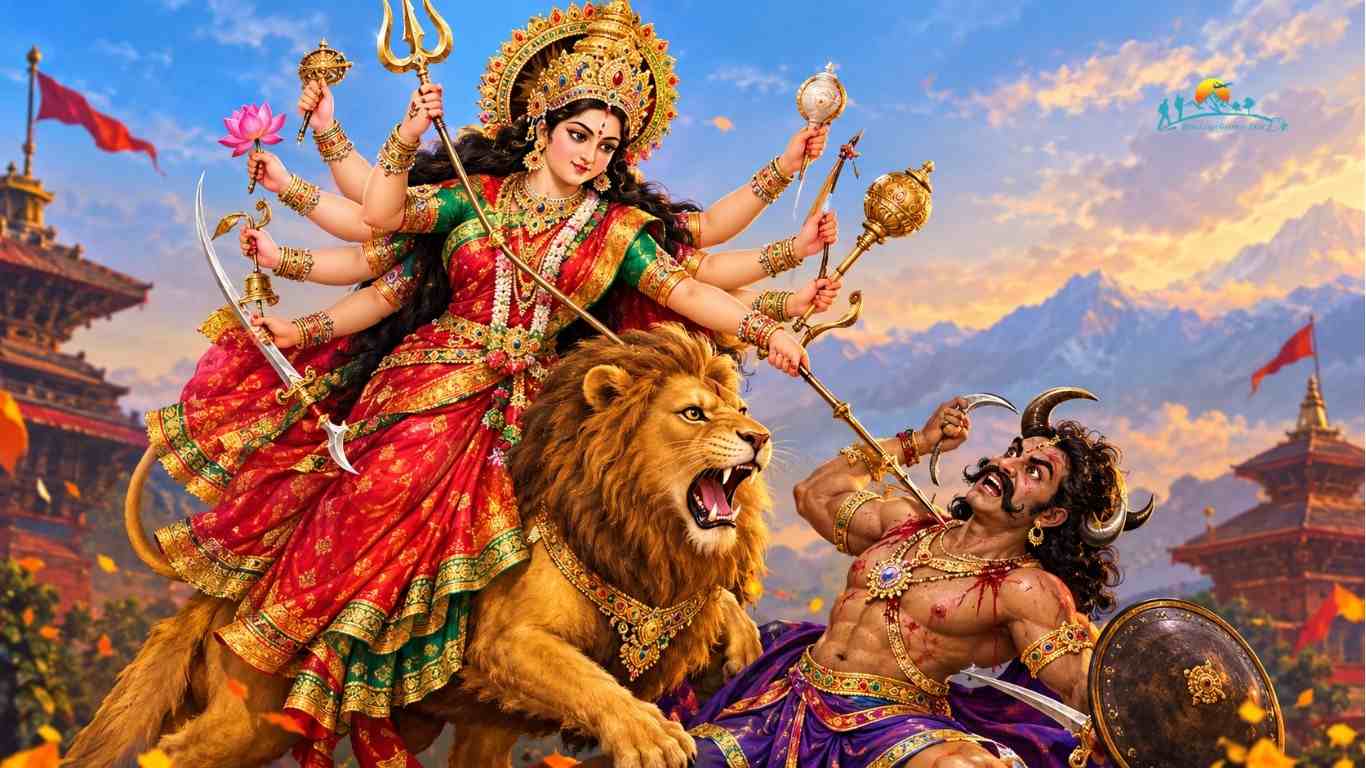
The Dashain story is full of several central narratives, one of which concerns the battle between Goddess Durga and Mahishasura, who had become a threat to the gods and the people. Durga is symbolized as divine strength and protection, and her victory signifies victory of good over evil.
In addition to its religious significance, this story also seeks to attach hopes of health, peace, prosperity and a better year ahead to Dashain for families.
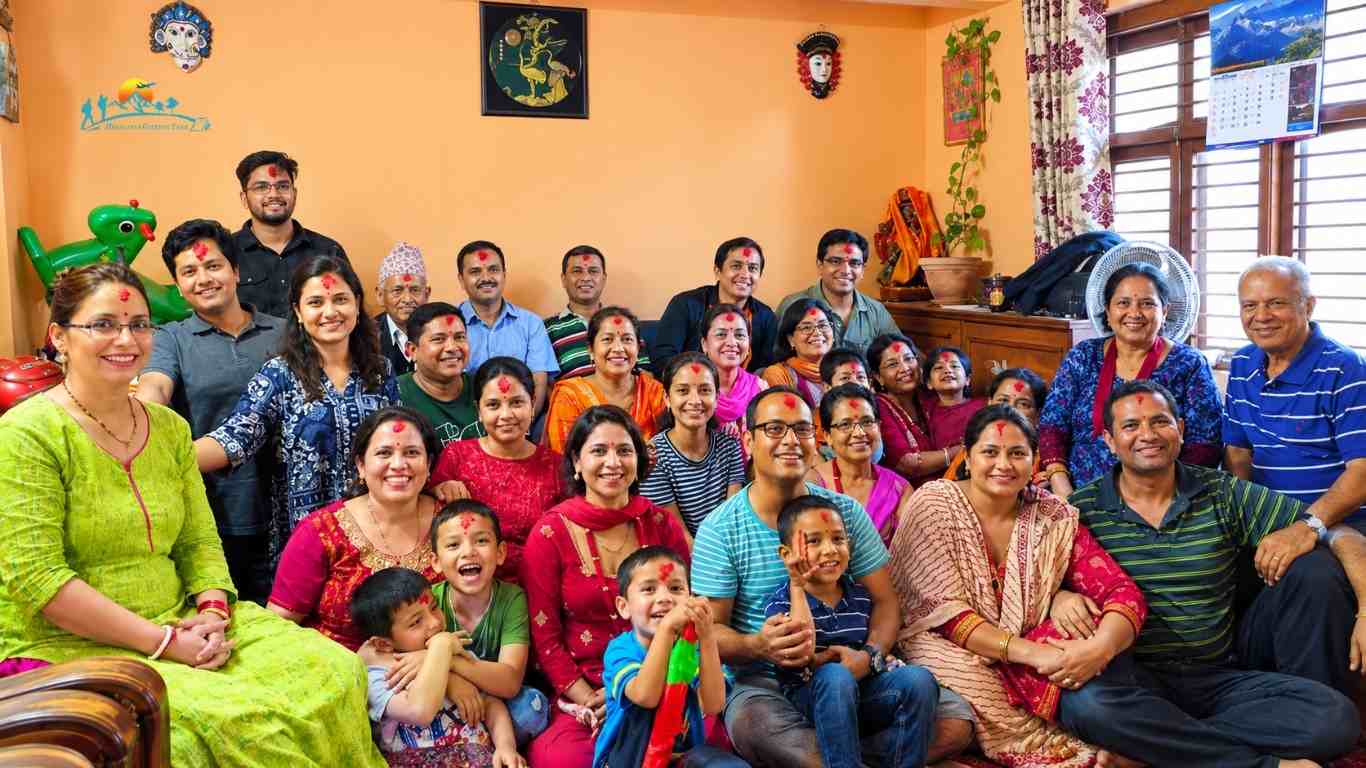
Family reunion is one of the most important parts of Dashain in Nepal. Individuals who are working or studying outside their place of origin tend to plan for their return. Some come back to Nepal from abroad, others travel to villages and smaller towns from Kathmandu.
For many households, the important part is not a large public event. It is sitting together, eating a family meal, receiving blessings from elders and spending time with relatives.
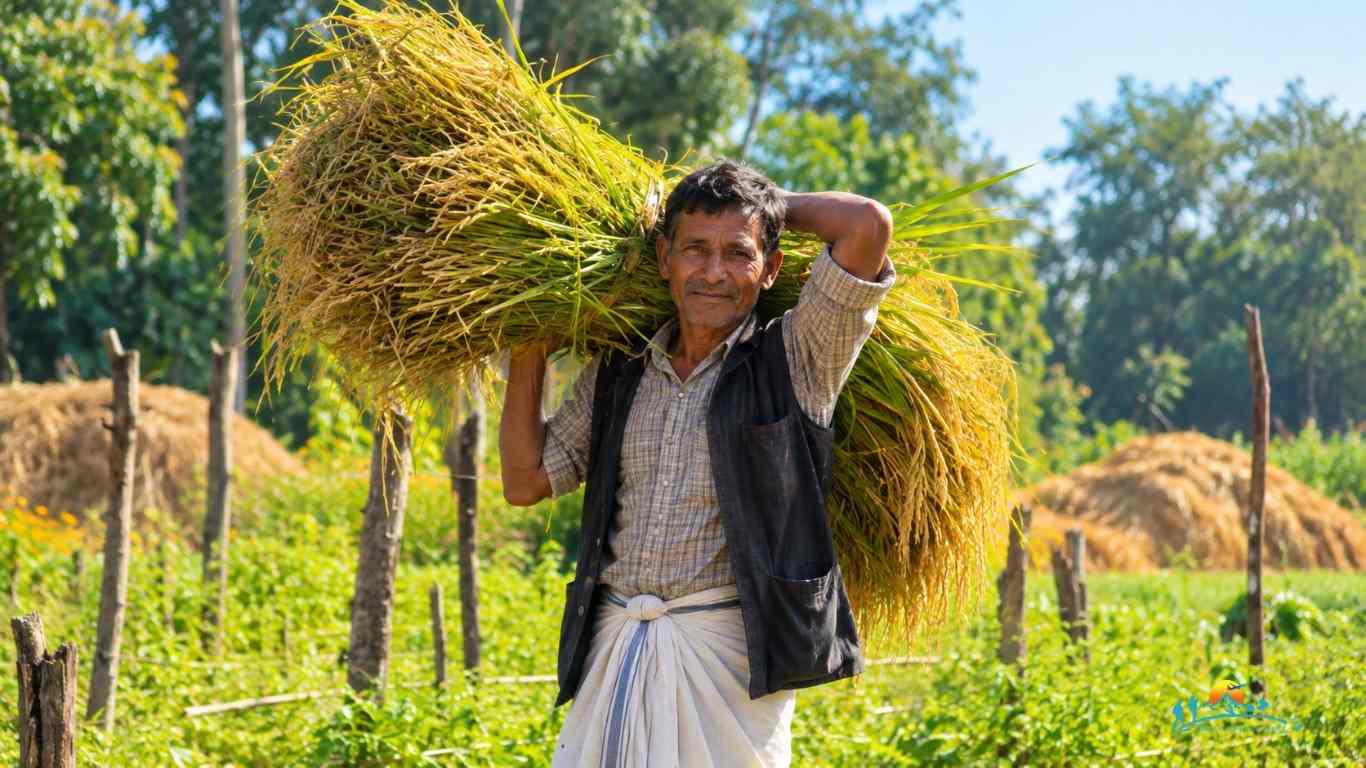
Agricultural cycle is also long to Dashain. The festival is usually held in the fall, following significant agricultural activities in numerous regions of Nepal.
It is one of the reasons why Dashain is always considered as a season when a family can rejoice in plenty, create wholesome and tasty foods and savor a few days of relaxation.
The festival is celebrated in September/October, the exact dates vary from year to year, as it follows the Nepali lunar calendar. The Dashain festival of 2026 will start from October 11 with Ghatasthapana and will culminate October 21 with the main Tika day.
The main 2026 dates are:
| Dashain event | Date in 2026 | Main meaning |
|---|---|---|
| Ghatasthapana | October 11 | Beginning of Dashain and planting of Jamara |
| Phulpati | October 17 | Major seventh-day ceremony |
| Maha Ashtami | October 18 | Major day of Durga worship |
| Maha Navami | October 20 | Ninth-day worship and ceremonies |
| Vijaya Dashami | October 21 | Tika, Jamara, blessings and family visits |
| Kojagrat Purnima | October 25 | Full moon and closing of the festival period |
In 2026, the auspicious time for Ghatasthapana, when families plant the seeds that will grow into Jamara, is 11:47 AM on October 11, 2026. This falls on Ashwin 25, 2083 B.S.
The auspicious time for receiving Dashain Tika in 2026 is 10:26 AM on October 21. The committee has stated that people may receive Tika throughout Vijaya Dashami, although the stated auspicious time is 10:26 AM. Those receiving the Tika at the official auspicious time are advised to face west.
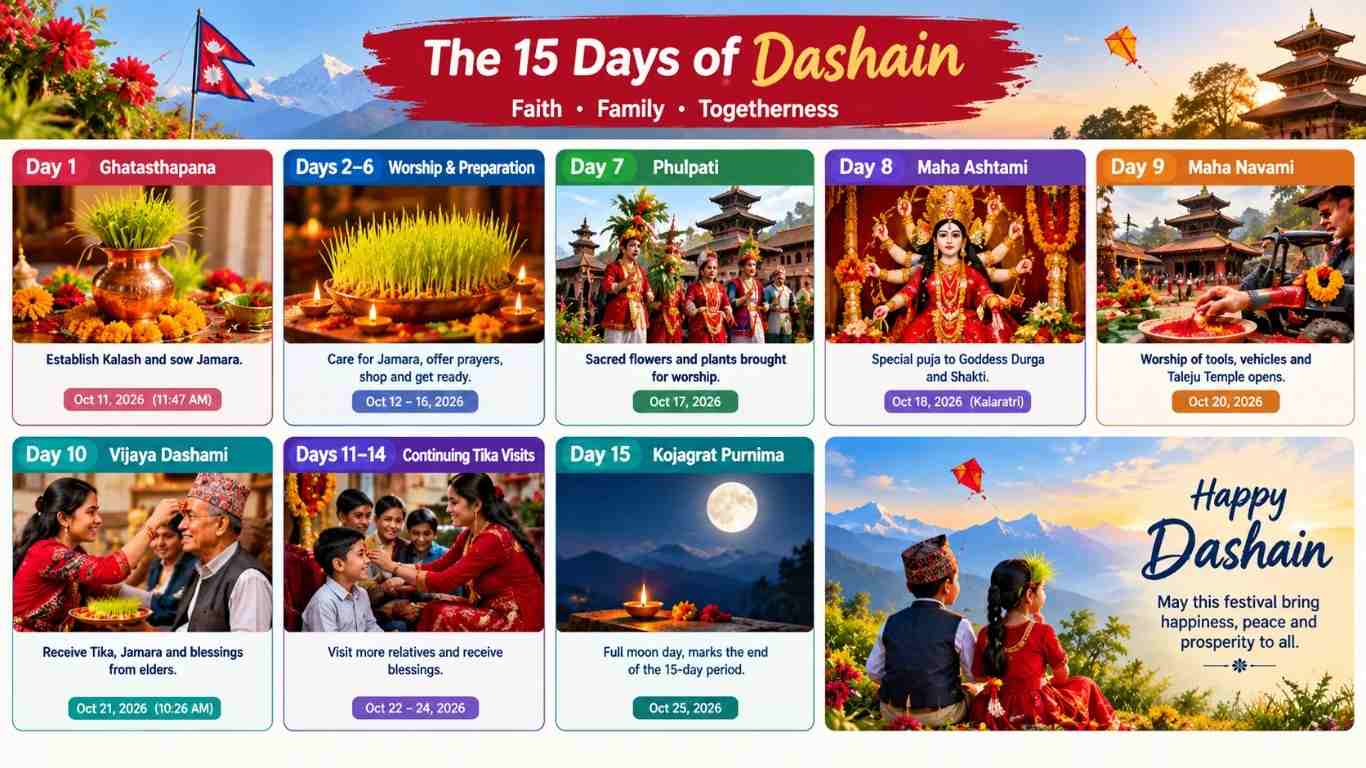
Dashain lasts for 15 days, beginning with Ghatasthapana and ending with Kojagrat Purnima. Each part of the festival has its own customs, although the exact practices can differ from one family and community to another.
Ghatasthapana marks the beginning of Dashain and is the day when many families begin preparing Jamara and establish the sacred Kalash for worship.
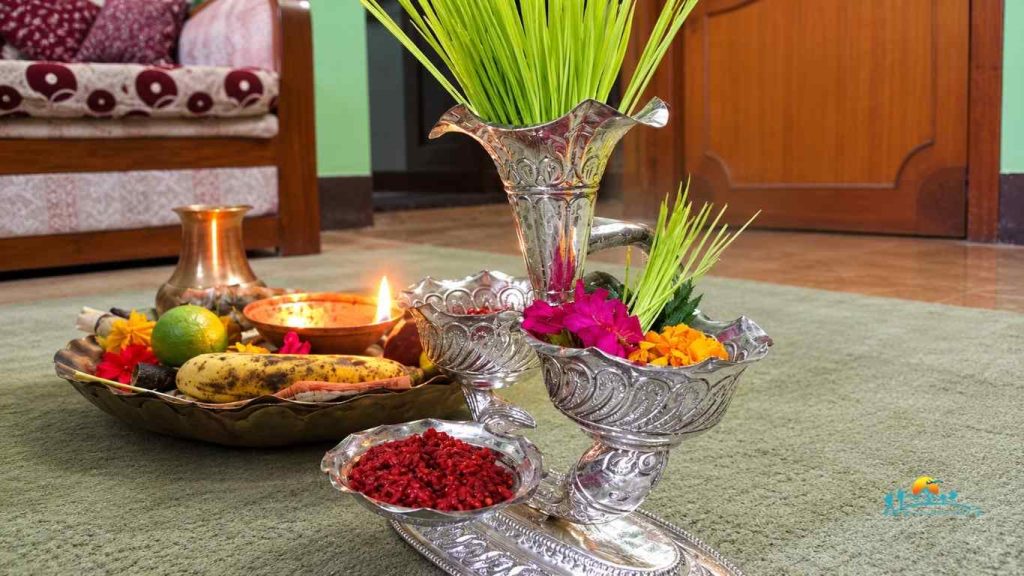
The word Ghatasthapana refers to the establishment of the sacred vessel, known as a Kalash. Families prepare a clean and protected place for the ritual and sow seeds, especially barley, which later grow into Jamara.
The Jamara is kept away from direct sunlight in many households so that the shoots grow yellow or pale rather than green. Family members water and worship the seeds during the following days.
For many families, Ghatasthapana is a quiet beginning to Dashain. The large family gatherings come later, but the religious part of the festival has already started.
In 2026, Ghatasthapana falls on October 11. The Nepal Panchanga Nirnayak Development Committee has set 11:47 AM as the auspicious time for Ghatasthapana this year.
The days between Ghatasthapana and Phulpati are marked by continued worship, preparation and anticipation of the major Dashain days.
Families continue caring for Jamara and performing their household prayers. People may also visit temples dedicated to Durga and other forms of Shakti.
Outside the home, markets become busier as people purchase clothes, food and gifts. Families also begin their journeys back to their hometowns.
These days show an important part of Dashain that is easy to miss in a short festival guide: the festival does not suddenly begin on Tika day. The religious and family preparations develop over several days.
Phulpati falls on the seventh day of Dashain and marks one of the major ceremonies before Tika.
The word Phulpati refers to an important collection of sacred plants and flowers that are traditionally brought for worship. In Kathmandu, the arrival of Phulpati has a long association with the former royal palace and the ceremonial traditions of Hanuman Dhoka.
In 2026, Phulpati falls on October 17. The Nepal Panchanga Nirnayak Development Committee has also published the year’s auspicious time for related ceremonies.
For visitors in Kathmandu, Phulpati can be one of the more interesting points in the festival calendar because it connects household worship with public ceremonies and historic traditions.
Maha Ashtami is one of the major worship days of Dashain and is closely associated with Goddess Durga and Shakti.
Families who follow the tradition may perform special puja and make offerings to the goddess. Temples dedicated to Durga and other forms of Shakti receive many devotees during this period.
In 2026, Maha Ashtami falls on October 18. Kalaratri is also observed during this part of the festival.
Customs vary between communities, so travelers should not assume that every temple or household follows the same practice.
Maha Navami is the ninth day of Dashain and is important for worship, household rituals and ceremonies connected with tools, vehicles and work.
In the Kathmandu Valley, some communities perform special worship of machines, tools and vehicles because these objects are connected with people’s daily work and livelihood.
Taleju temples also have a special place during this period. Nepal Tourism Board notes that the Taleju Temple, normally closed to the public, is opened during the ninth day in Kathmandu’s Dashain observances.
Some Dashain traditions also include animal sacrifice. These practices are religious customs followed by some communities, not a requirement for every Nepali family. Visitors should treat such rituals with respect and avoid assuming that the same practice occurs everywhere.
In 2026, Maha Navami falls on October 20.
Vijaya Dashami is the main family day of Dashain and the day most people associate with Tika and Jamara.
Younger family members visit elders to receive Tika, Jamara and blessings. Elders may also give Dakshina or gifts.
A traditional Tika mixture often contains red vermilion along with yogurt and rice. Jamara, made from the shoots grown since Ghatasthapana, is placed with the Tika.
The day often involves several family visits. A person may receive Tika from parents in the morning, then visit grandparents, uncles, aunts and other senior relatives.
For families spread across different cities, Dashain Tika can become a full day of travel.
In 2026, Vijaya Dashami falls on October 21, and the official auspicious Tika time is 10:26 AM.
Dashain does not finish when Vijaya Dashami ends.
Tika visits can continue during the following days as people visit more relatives and receive blessings from older family members.
For large families, it may not be possible to visit everyone on the main Tika day. The days that follow give families more time to meet.
This extended period also explains why Dashain has such a large effect on travel inside Nepal. People may remain away from work and school while visiting family.
Kojagrat Purnima is the full moon day that closes the 15-day Dashain period.
The name refers to being awake during the night, and the day has its own religious meaning and customs.
By this stage, the main family Tika period has ended, but the festival season is drawing to a close.
In 2026, Kojagrat Purnima falls on October 25.
Tika is a blessing that comes from elders and Jamara is a sacred shoot that is cultivated with seeds that are sown on the day of Ghatasthapana. In all, the two Tika and Jamara are significant symbols of Vijaya Dashami. In Tika, elders put a paste of rice, yogurt and vermilion on the forehead and bless for health, happiness, long life, and success.
Jamara is typically grown from barley and other grains, and is placed with Tika during the festival. Sometimes, after Tika, people also receive Dakshina (typically a monetary gift from elders). The giving is more important than the quantity, and the family relationship is the issue behind it.
Dashain food is closely connected with family gatherings and celebration. Families often prepare special meals when relatives return home, with dishes varying by family and community. People eat together, share food with guests and spend more time with their loved ones during the festival.
Mutton, chicken, sel roti, achar, rice, dal and various sweets are common Dashain delicacies. There are also many families that cook their own local cuisine and offer it to the visiting family members. Food plays an essential role in Dashain as it unites people and enhances the fun of family reuniting.
Dashain is not only about religious rituals. Family visits, Tika, Jamara, new clothes, special food, travel, kite flying and traditional swings are also a big part of the festival. These customs make Dashain a special time for families to meet, eat together and receive blessings from elders.
One of the most vital Dashain tradition in Nepal is to get Tika and Jamara. On Vijaya Dashami, the younger members of the family visit their elders (parents, grandparents, etc.) and get Tika and Jamara from them, and also get blessings from them. The Tika is generally worn on the forehead and the Jamara is worn with it. During this festival, the younger generation is joined by the older generation.
The blessing of the elders is an integral part of Dashain. Parents, grandparents and senior family members place blessings on younger family members when they put Tika and Jamara on them. They can pray for health, longevity, happiness, peace and success. This is one of the most significant events of Dashain for many families.
After giving Tika, the older family members give Dakshina which is money or a small gift to the younger family members. During Dashain time, children are excited for Dakshina and adults can receive it from elder relatives also. It’s not about the quantity. The essence of Dakshina is in the act of giving, and it is a tradition of Dashain.
Another common Dashain tradition in Nepal is to wear new clothes. Many parents purchase new clothing for their children and adults can make new wardrobe choices for themselves as well. They are commonly worn by individuals when going to visit their relatives or receiving Tika. Children receive new clothes, which also brings excitement to the festival.
One of the biggest time-consuming aspects of Dashain is visiting relatives. Visits made to parents/grandparents’ houses, and visits with family members who aren’t seen throughout the year. From Vijaya Dashami onwards there are a few houses where relatives can come to get Tika, exchange blessings, and meet each other.
The celebration of Dashain is a time when the family is united by food. Special meals are prepared at homes due to the presence of relatives and their stay for several days. Families gather around, eat traditional foods and have lengthy discussions. The food can vary from family to family or area to area but it is certainly a key part of the celebration and it is important to eat together.
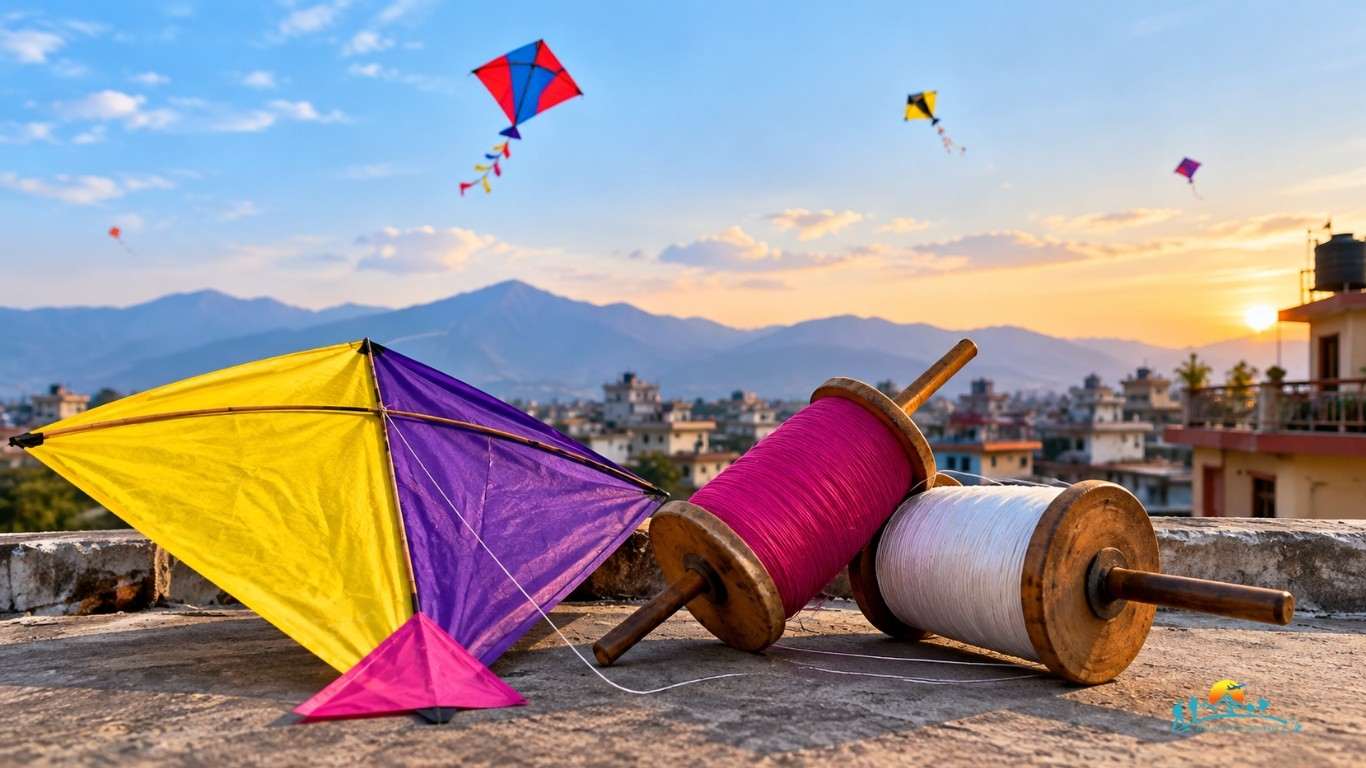
During the time of Dashain, people like to fly kite which is a common practice among young and children. Usually the weather is favorable for kite flying as the skies are clear during autumn. Friends and family fly kites together on rooftops, open spaces and on fields. It adds a fun and relaxed side to the festival.
Many places in Nepal it is customary to construct traditional swings made of bamboo called “ping” during Dashain. Children and adults come together around them and celebrate the festival with their friends, neighbors, and family. These swings can be a popular meeting place in the villages and smaller towns during the Dashain holidays.
Phulpati is one of the most significant days of Dashain, which is celebrated during the seventh day of the celebration. It’s an important part of the Dashain festival. A traditional Phulpati ceremony takes place at Hanuman Dhoka in Kathmandu, during which a formal procession is made to bring the Phulpati and offer it as a part of the traditional Dashain ceremony.
Phulpati is made up of different sacred plants, flowers and leaves that are carried into homes as part of the festival. Families decorate their houses and create a space for Dashain ceremony. It is also a day that brings people together; families get ready for the main Tika celebration.
During Dashain, many people visit temples and religious sites, pray, worship Goddess Durga and other gods and observe special rituals. People can find quite a few places of interest in Kathmandu Valley which get more lively during the festival.
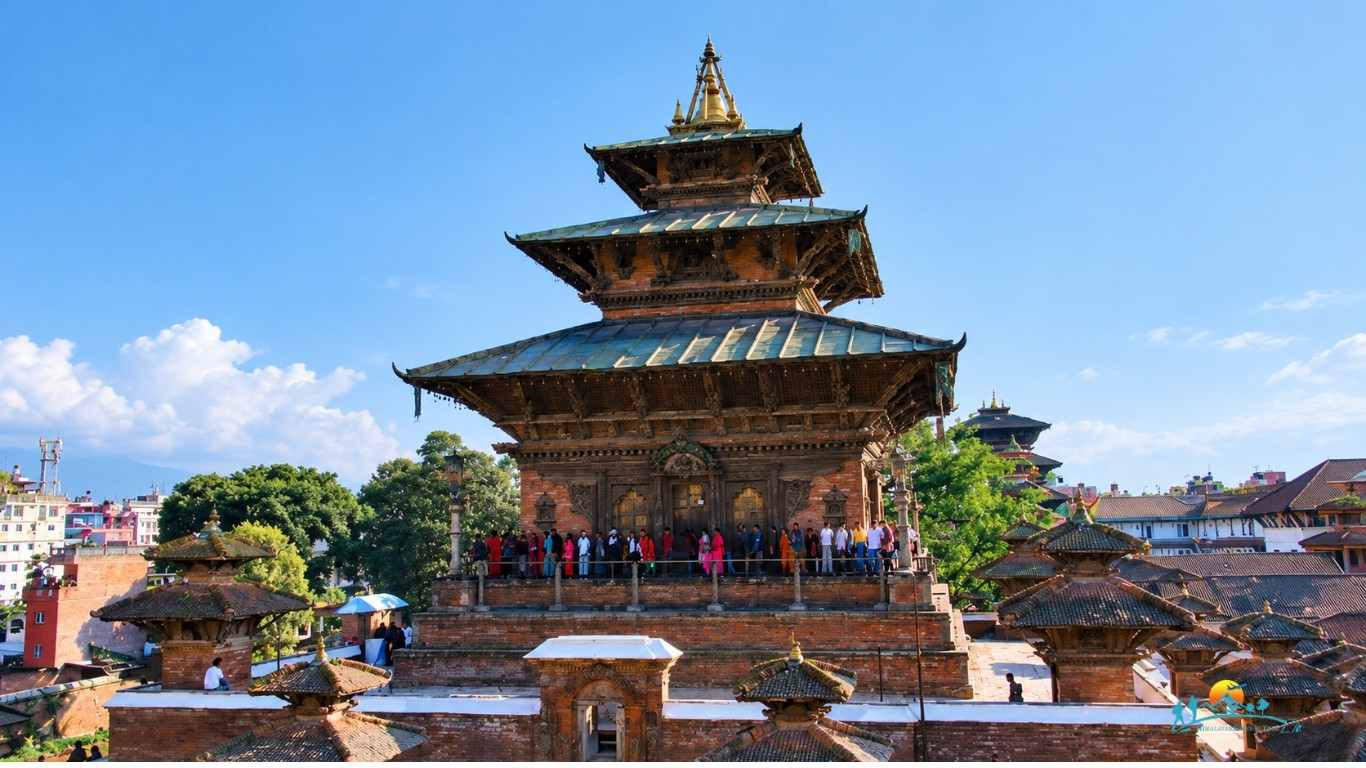
Taleju Temple is one of the religious places related with Dashain in Kathmandu. The temple is related to Goddess Taleju, the family deity of Malla kings. The temple is opened to the public on special occasions during Dashain.
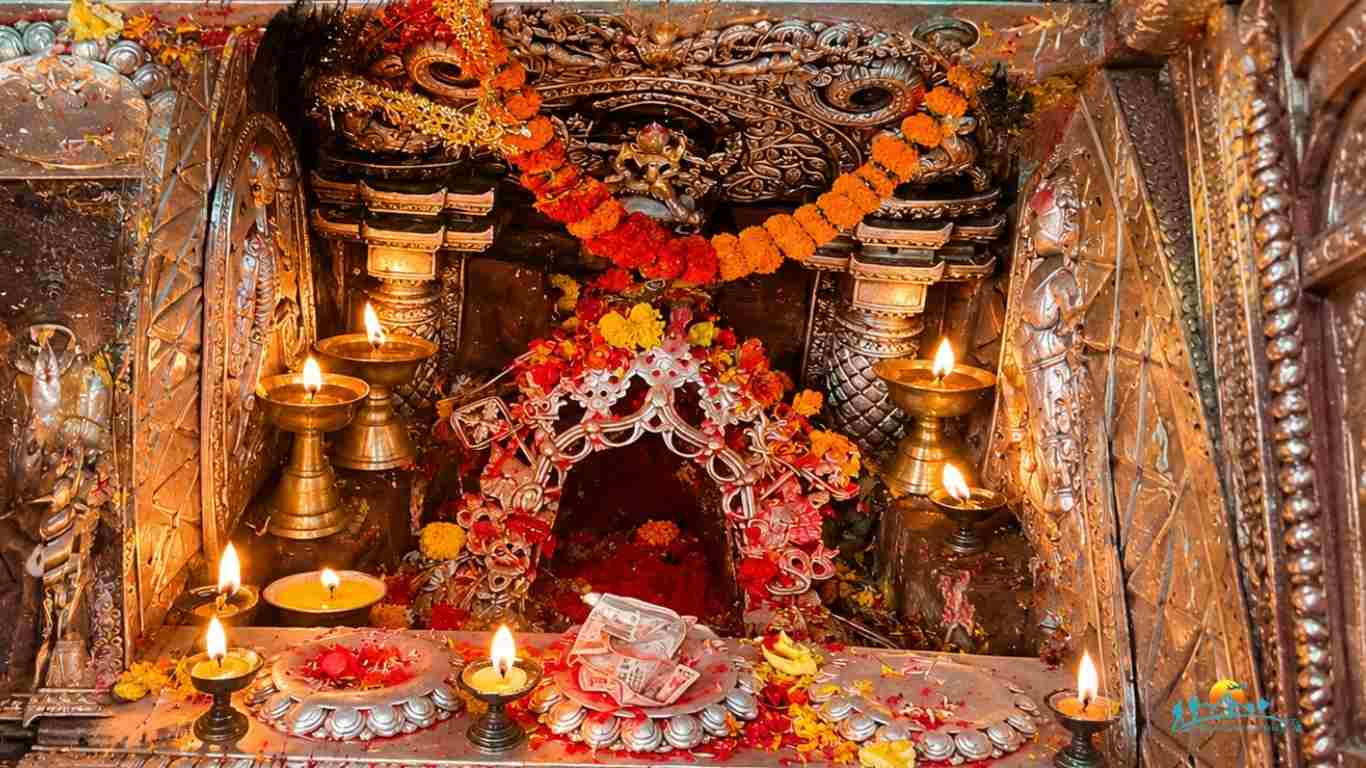
Patan Bangalamukhi Temple is dedicated to Goddess Bangalamukhi, one of the forms of Goddess. During Dashain, many devotees visit the temple to pray and get blessings for their families.
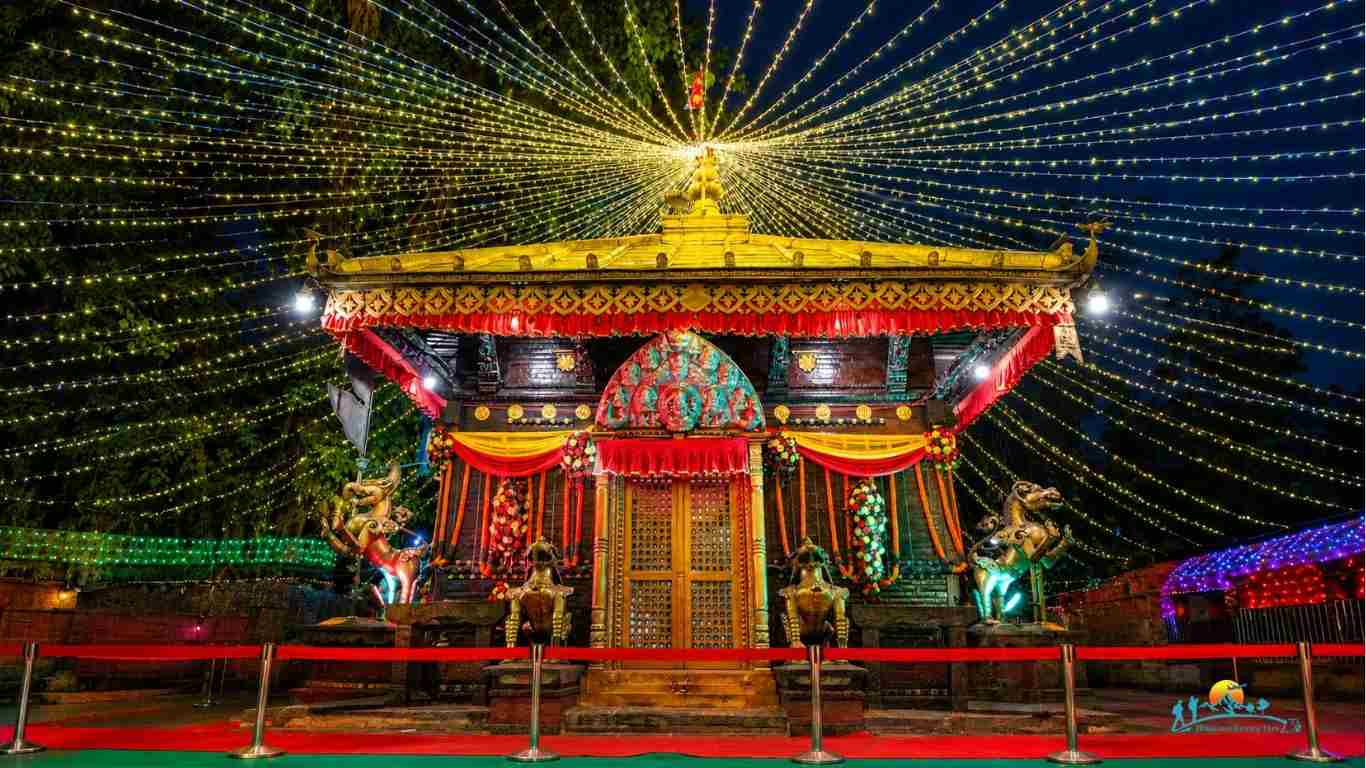
Maitidevi Temple is another religious shrine in Kathmandu. The environment around the temple becomes active during the period of Dashain and people come in and worship the Goddess, offering prayers. The decorations and lights around Maitidevi also enhance the festive atmosphere.
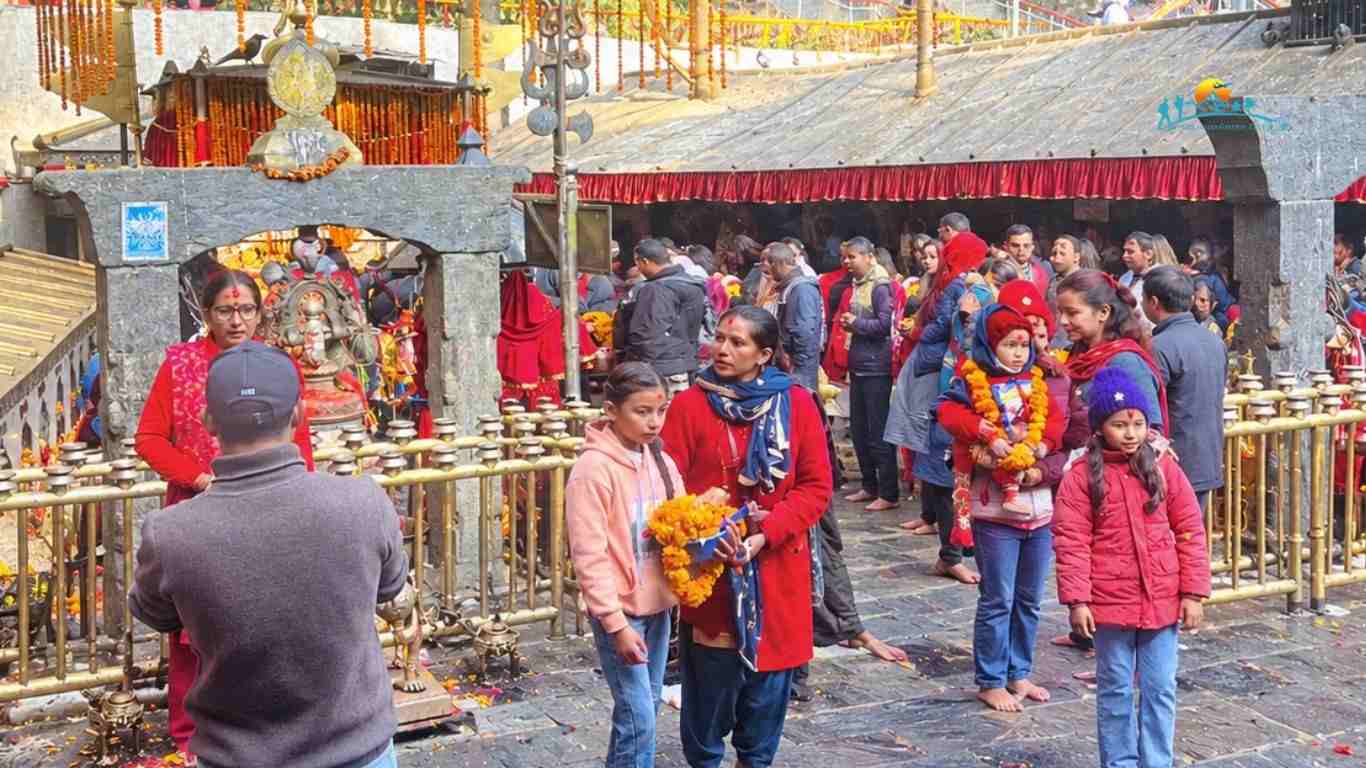
The Goddess temple of Dakshinkali is one of the most popular Goddess temples in Nepal situated south of Kathmandu. Devotees visit many times during Dashain, particularly on special days like Maha Ashtami and Maha Navami, to pray and participate in religious activities.
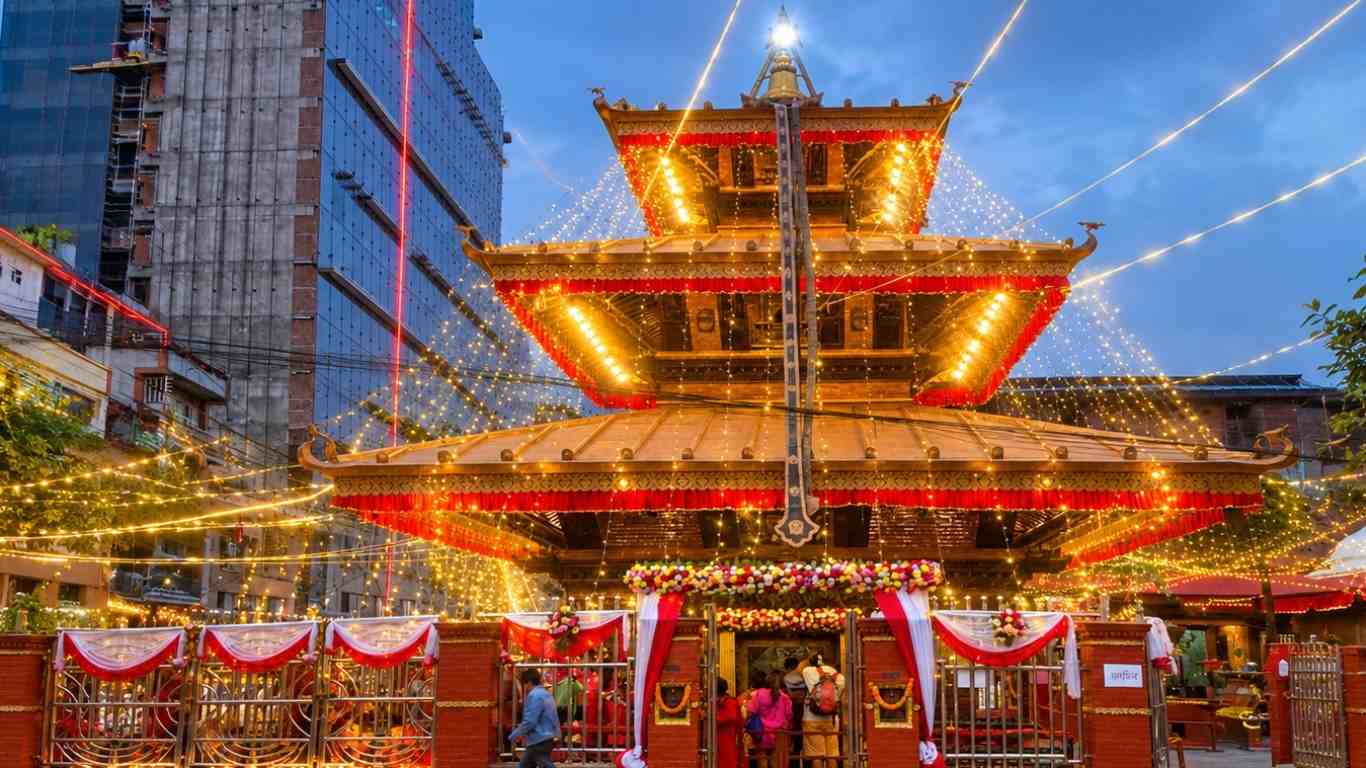
In Kathmandu Valley, there are several Shakti sites that are visited during Dashain. There are a number of well-known sites in which devotees pay their vows to various forms of the Goddess, such as Bhadrakali, Shobha Bhagawati, Naradevi, Raktakali and Guhyeshwari.
Another reason is that Dashain is also the best time for trekking in Nepal as it comes in the autumn trekking season, when most of the mountain areas would have clear skies and great mountain views. Not all trekking regions were affected by the major floods in 2026, instead they mainly impacted the Rasuwa and Trishuli corridors. It was reported that Everest Base Camp and a few Annapurna routes remained unaffected from the flood in August while Langtang, Gosaikunda and other nearby routes suffered severe access issues.
While it can be a fantastic occasion for travellers who want to experience everyday Nepali culture, it also involves their careful planning due to the festival’s impact on the normal travel pattern.
The Dashain festival of Nepal is truly a festival that understands nothing from the calendar but is deeply interwoven with the lives of the family and religion. The festival starts slowly with Ghatasthapana, builds up during the Phulpati days and the worship days and culminates in the most familiar Vijaya Dashami, where families come together for Tika and blessings.
For many Nepali families, the heart of Dashain is the journey home. Someone may travel for hours from Kathmandu to a village, return from another country or simply cross the city to sit with parents and grandparents. The distance traveled matters less than being together.
Dashain is a period for travelers to discover Nepal amidst Nepal’s family traditions besides the well-known mountains and heritage sites. If it is planned respectfully, a temple visit, the celebration of the festival, seasonal food, etc., and the slower rhythm of the Nepal life can be enjoyed during one of the most significant festivals of the country.
Dashain is Nepal’s major 15-day festival, centered on Goddess Durga and the victory of good over evil. It is also a time for family reunions, blessings from elders, cultural traditions, feasts, new clothes, and community celebrations.
Dashain is celebrated to honor the victory of good over evil, especially Goddess Durga’s victory over Mahishasura. For Nepali families, it also represents renewal, blessings, reunion, prosperity, and the strengthening of relationships across generations.
Dashain follows the lunar calendar, so its Gregorian dates change each year. It usually falls in September or October, beginning with Ghatasthapana and continuing for 15 days until Kojagrat Purnima on the full moon.
Dashain lasts 15 days, beginning with Ghatasthapana and ending with Kojagrat Purnima. Although every day has religious meaning, Ghatasthapana, Phulpati, Maha Ashtami, Maha Navami, Vijaya Dashami, and Kojagrat Purnima receive particular attention.
The key Dashain days are Ghatasthapana, Phulpati, Maha Ashtami, Maha Navami, Vijaya Dashami, and Kojagrat Purnima. Together, they mark the planting of Jamara, major worship rituals, Tika Day, continued blessings, and the festival’s conclusion.
Goddess Durga is the main deity worshipped during Dashain, with different forms honored through the festival. In various traditions, devotees also worship Kali, household deities, and deities associated with protection, prosperity, strength, tools, and family well-being.
Dashain Tika is a blessing ceremony held mainly on Vijaya Dashami. Elders place a mixture of rice, yogurt, and vermilion on younger relatives, often with Jamara, and give blessings for health, long life, prosperity, and happiness.
Jamara is sacred yellow-green grass grown from seeds planted during Ghatasthapana. On Vijaya Dashami, elders place Jamara with Tika as a blessing. It symbolizes prosperity, growth, protection, and the divine blessings associated with Goddess Durga.
In 2026, Dashain Tika, or Vijaya Dashami, falls on Wednesday, October 21. The day is the festival’s main celebration, when families gather, receive Tika and Jamara from elders, exchange blessings, and often share a festive meal.
Dashain dates change because the festival follows the lunar calendar and specific tithi calculations rather than fixed Gregorian dates. As lunar dates shift against the solar calendar, Ghatasthapana, Vijaya Dashami, and other Dashain days occur on different dates each year.
The 15-day festival begins with Ghatasthapana and includes the major observances of Phulpati, Maha Ashtami, Maha Navami, and Vijaya Dashami before ending with Kojagrat Purnima. Family Tika and visits continue for several days after Vijaya Dashami.
People celebrate Dashain through family reunions, Tika and Jamara blessings, temple visits, festive meals, new clothes, home cleaning, kite flying, traditional swings, gifts, and community events. Customs vary by family, community, region, and religious tradition.
Common Dashain foods include Khasi ko Masu, sel roti, achar, rice-based dishes, kheer, and other festive sweets. Families often prepare larger meals than usual and share food with relatives, guests, neighbors, and returning family members.
Dashain brings relatives together after long periods apart, especially when family members return from cities or overseas. Receiving blessings, visiting elders, sharing meals, exchanging gifts, and spending time together make family connection one of the festival’s central values.
Dashain in Nepal and Dussehra in India share Hindu roots and themes of good defeating evil, but their customs differ. Nepal’s Dashain lasts 15 days and places strong emphasis on family Tika, Jamara, blessings, and household traditions.
Yes, tourists can experience Dashain respectfully by observing local customs, visiting public celebrations, and accepting Tika or invitations when offered. Local families, guides, and communities may welcome visitors, making the festival a meaningful cultural experience.
Jamara is planted on Ghatasthapana, the first day of Dashain. Families sow barley and other traditional seeds in a prepared space and care for them until the shoots are ready to be used during Tika ceremonies.