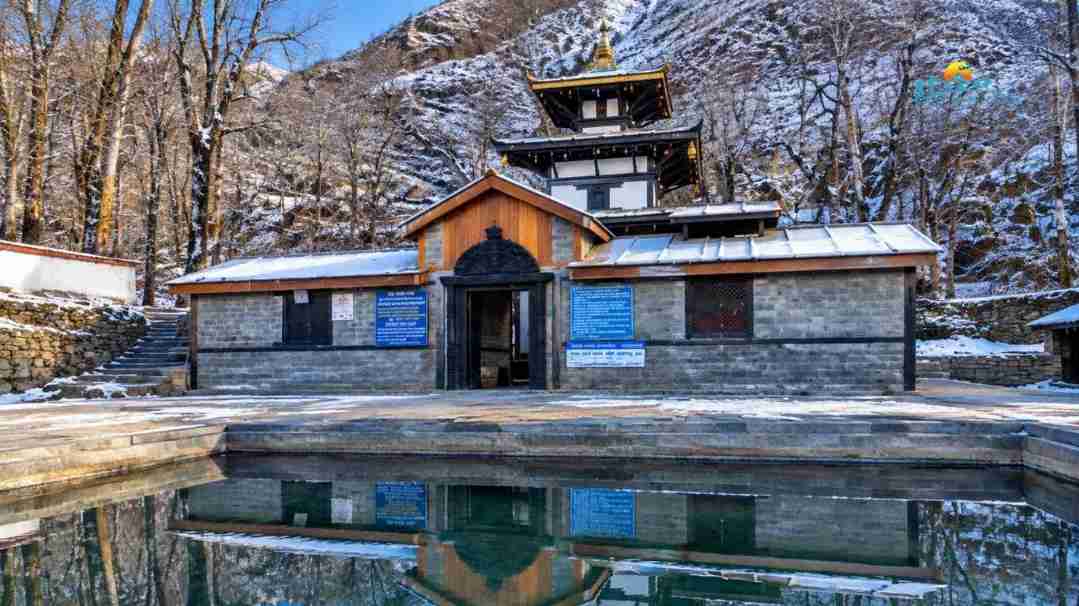
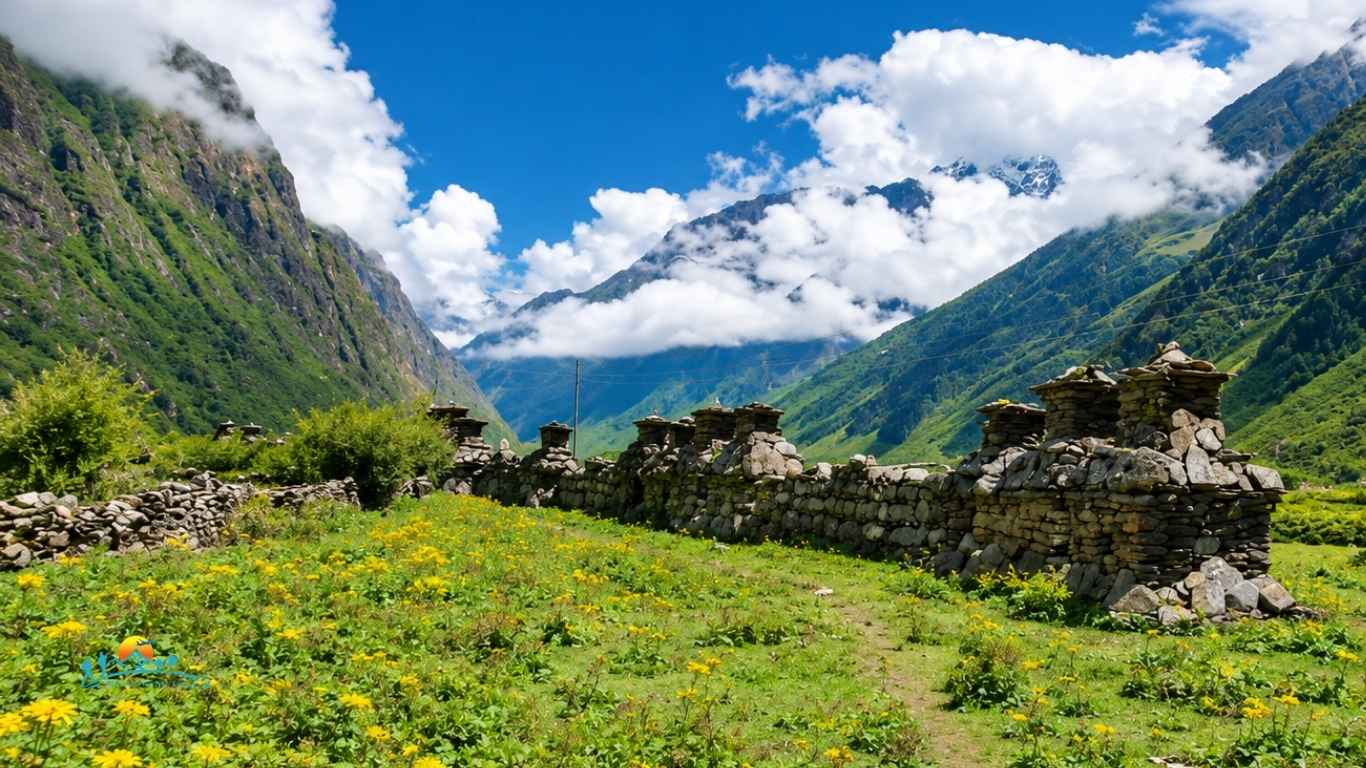
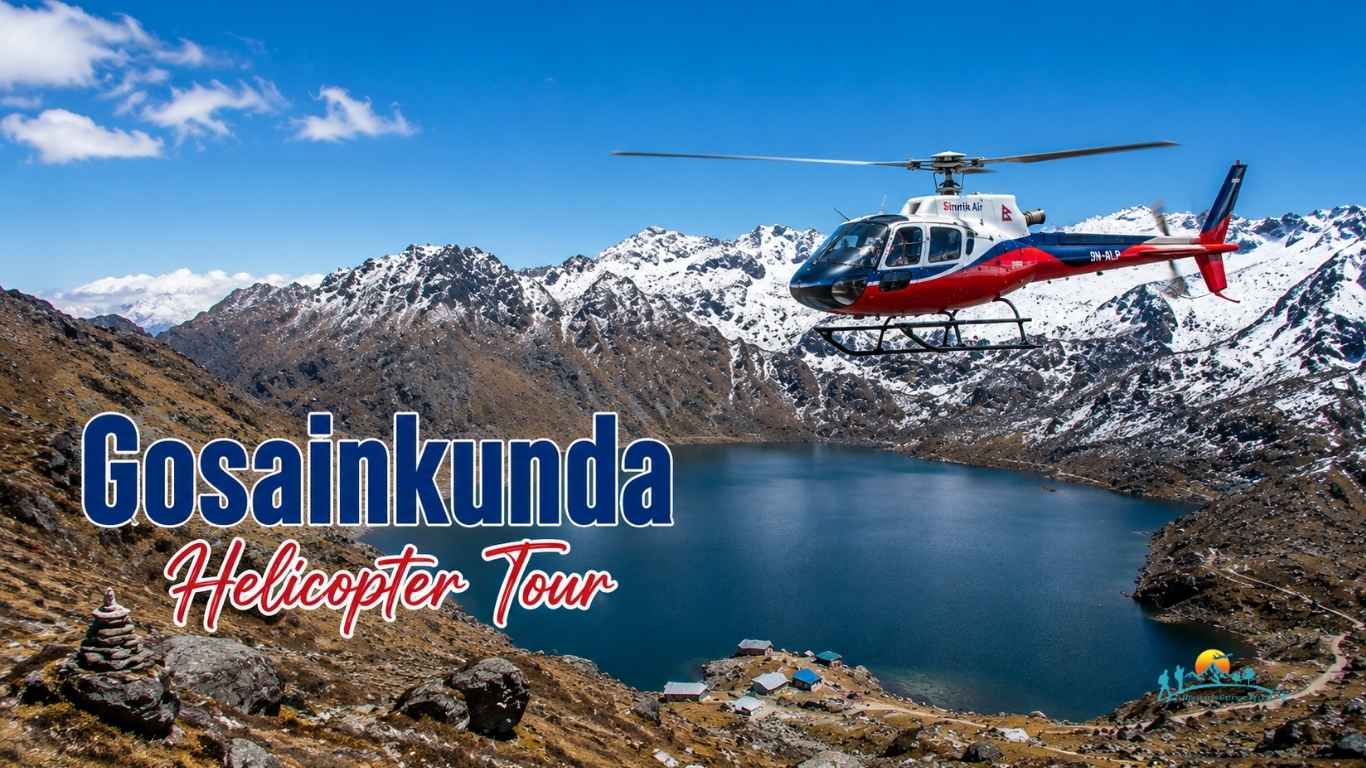
The Api Himal Base Camp Trek is a rare journey into the far-western part of Nepal, far from the busy trekking routes. This 15-day trek brings you close to raw mountain beauty, quiet trails, and local cultures that have remained unchanged for generations. Standing at 7,132 meters, Mount Api is the highest peak in this region, yet very few trekkers make their way to its base camp.
The trail moves through green forests, terraced farms, fast-flowing rivers, and small villages. Along the way, you meet Chhetri, Thakuri, and other local communities whose daily life reflects simplicity and tradition. The peaceful setting allows you to walk at your own pace and truly connect with the surroundings.
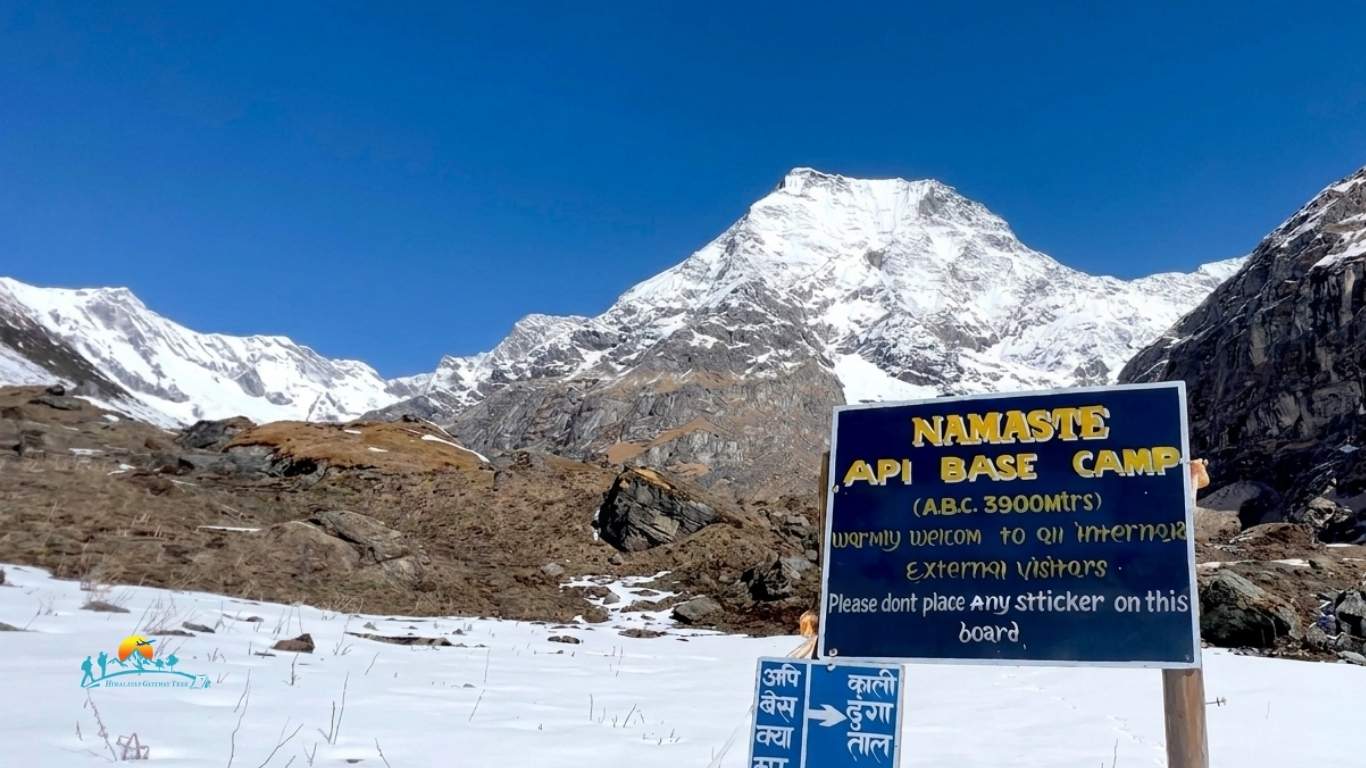
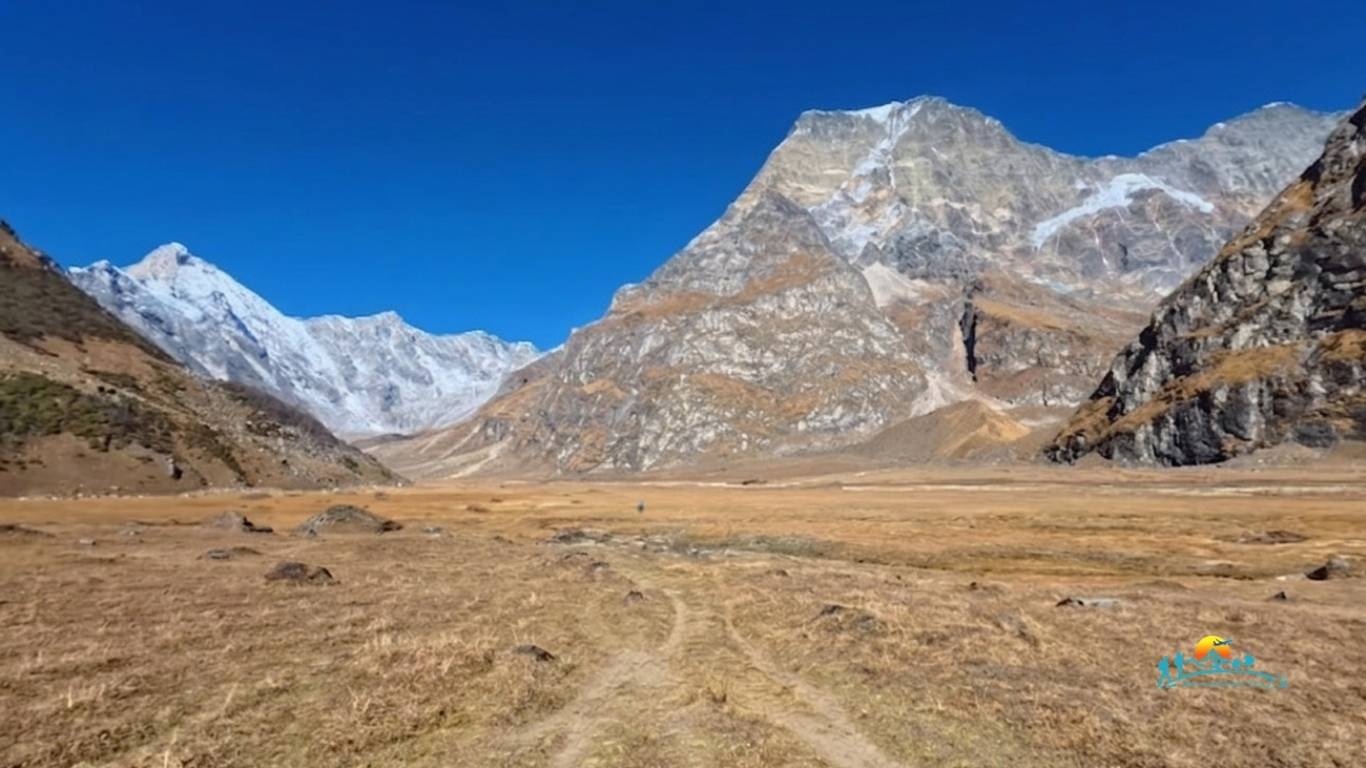
Reaching Api Base Camp feels special. The views open up to Api Himal, Nampa, Jethi Bahurani, and the Saipal range. Snow-covered peaks rise above wide alpine fields and glacial terrain, creating a scene that feels untouched and calm.
At Himalayan Gateway Trek, the focus is on making your journey safe, comfortable, and genuine. Experienced local guides, well-planned itineraries, and warm hospitality help you enjoy the trek without worry.
Permits Required for Api Himal Base Camp Trek
1. Api Nampa Conservation Area Permit
- This permit is needed to enter the Api Nampa Conservation Area.
2. Restricted Area Permit (Api Nampa Valley RAP)
- Since the region is remote and controlled, this special permit is required.
3. TIMS Card (Trekkers’ Information Management System)
- All trekkers in Nepal must have this card, including those trekking to Api Himal.
- Must be issued via a registered trekking agency, no longer available for individual pickup at NTB or TAAN offices.
Highlights of Api Himal Base Camp Trek
- Explore one of Nepal’s least-visited trekking regions, offering pristine landscapes and solitude.
- Witness the towering Api Himal, the highest peak in western Nepal, in all its glory.
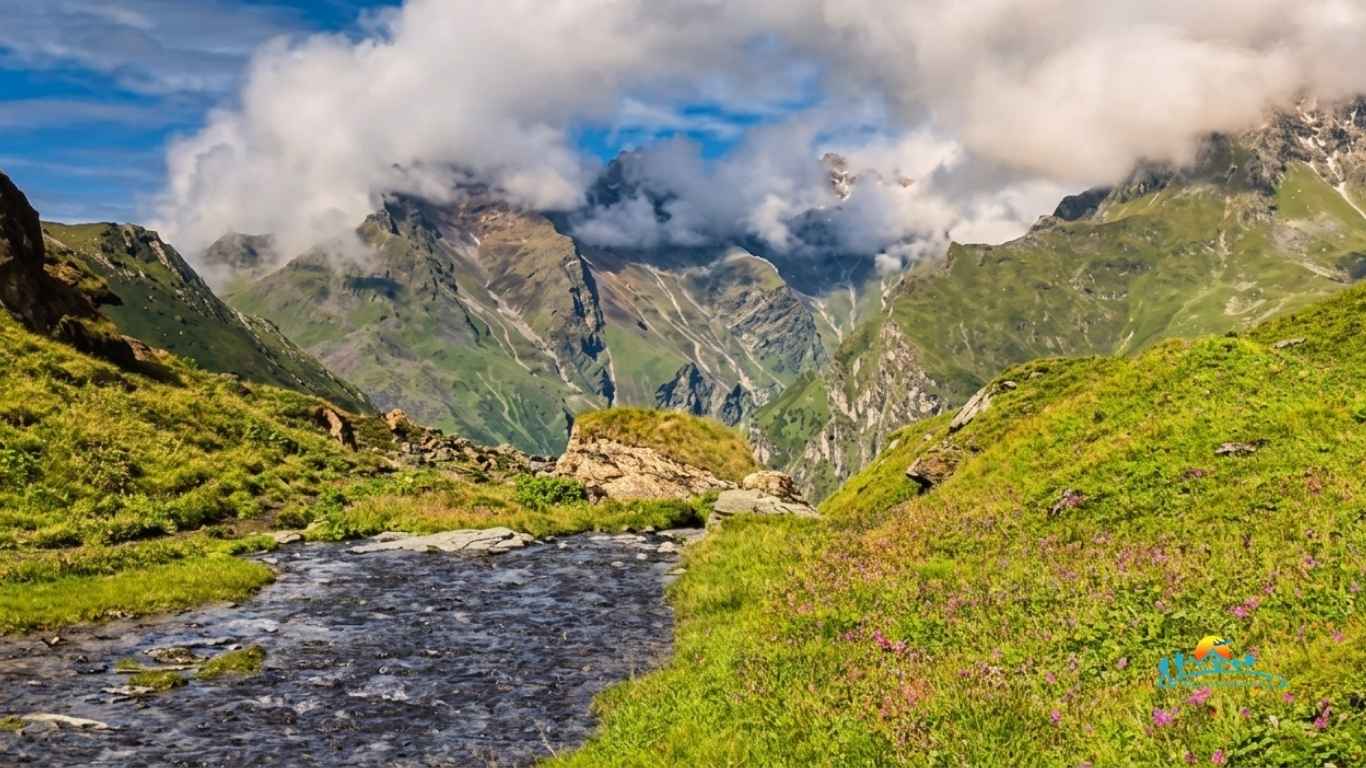
- Experience lush forests, alpine meadows, glacial rivers, and rugged mountain terrain.
- Visit this sacred high-altitude lake with deep spiritual significance and breathtaking scenery.
- Interact with indigenous Byansi, Chhetri, and Tibetan-influenced communities.
- Trek through untouched trails with minimal crowds, offering a true wilderness experience.
- Spot Himalayan wildlife like blue sheep, musk deer, and diverse bird species.
- Enjoy spectacular views of Api Himal, Nampa, Bobaye, and other surrounding peaks.
Benefits of trekking with Himalayan Gateway Trek
- Friendly and knowledgeable guides for a safe and enjoyable trek.
- Flexible trekking plans based on your needs and fitness level.
- Responsible tourism that supports local people and nature.
- Organized food, lodging, and transport for a smooth trip.
- Quick help in emergencies and guidance to prevent altitude sickness.
- Personalized experience with small group sizes for better service.
- Stay in local teahouses and interact with the community.
- Fair and transparent pricing with no hidden costs.
Comprehensive Api Himal Base Camp Trek Guide
Api Himal Base Camp Trek Itinerary
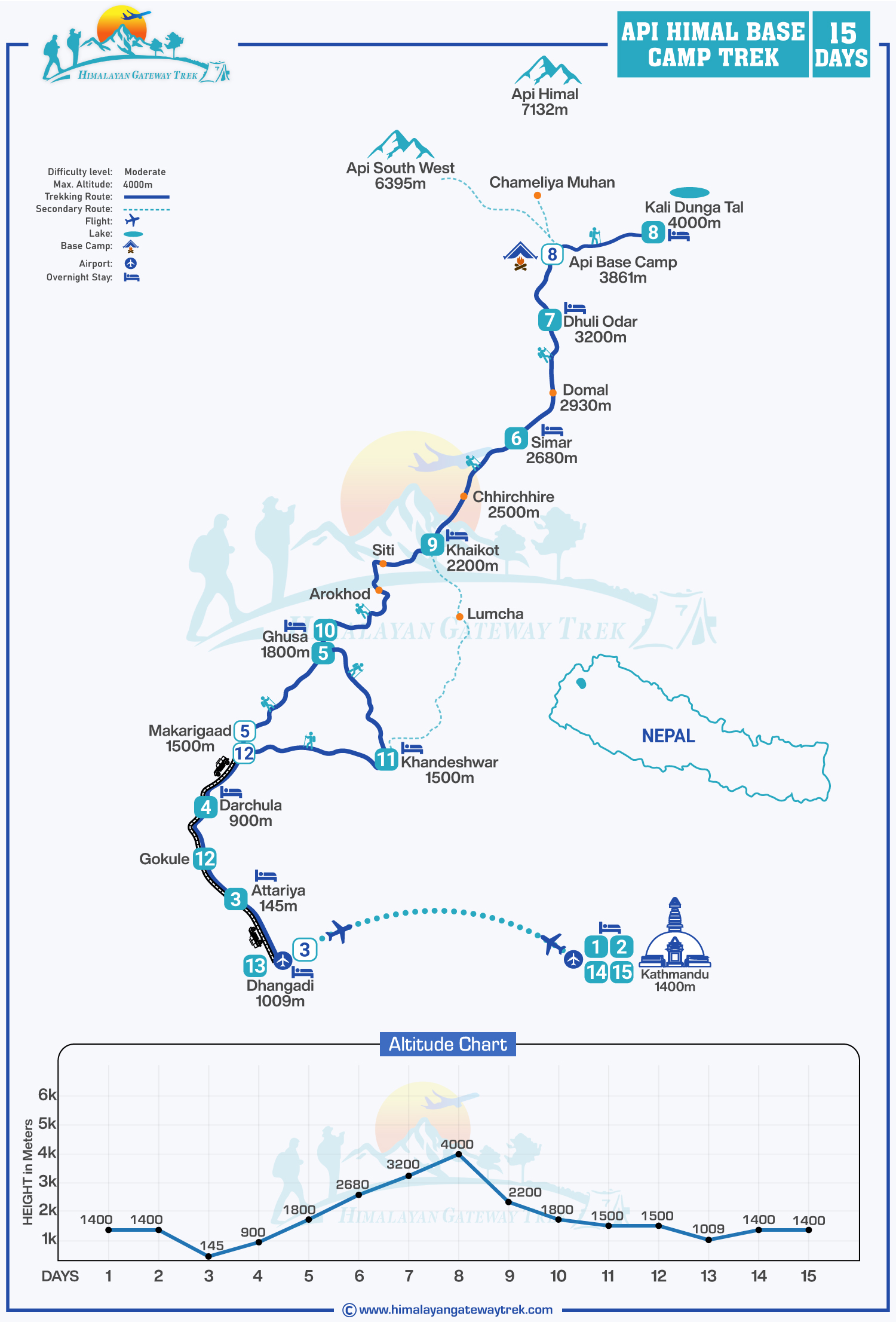
Day 01: Arrival at Kathmandu Airport (1,400m ) and transfer to the hotel for check-in and rest.
Upon your arrival at Tribhuvan International Airport in Kathmandu, the vibrant capital of Nepal, our friendly team from Himalayan Gateway Trek will be there to greet you with a warm welcome and take you to your hotel.
Once you arrive, you’ll receive a warm welcome, with staff presenting you with traditional flower garlands. They will assist you with the check-in process and make sure you’re comfortable. Afterward, you can relax and get ready for your adventure the next day. In the evening, walk around Thamel and have dinner whenever you like.
At Himalayan Gateway Trek, we are excited to begin this journey with you and ensure a memorable experience throughout your stay in Nepal.
Day 02: Sightseeing Around Kathmandu (1,400m)
Your second day in Nepal is set aside for visiting the cultural and historic sites of the Kathmandu Valley. After breakfast, you will go to UNESCO World Heritage Sites such as Swayambhunath, also known as the Monkey Temple, which sits on a hill and offers wide views of the city. You will also visit Pashupatinath Temple, the most important Hindu temple in Nepal, located beside the Bagmati River, and Boudhanath Stupa, one of the largest Buddhist stupas in the world. If time allows, you may walk around Kathmandu Durbar Square, known for its old palaces, courtyards, and living traditions.
This day gives you a chance to understand Nepal’s rich culture before your trek. In the evening, your guide will meet you again to go over the trek details and help you finish any last-minute preparations before your journey toward the remote Api Himal region begins.
Day 03: Fly to Dhangadhi (109m) and Drive to Attariya (145m)
You take a scenic one-hour flight from Kathmandu to Dhangadhi, a city in far-western Nepal close to the Indian border. During the flight, you can see the wide Terai plains below with distant views of the Himalayan peaks.
After landing, you drive to Attariya, a busy town that serves as a gateway to the far-western hills. The drive takes about one hour and passes through flat land, small villages, and lively local markets. This stop gives you time to rest before heading further toward the remote Api Himal region. You will stay overnight at a hotel or guesthouse in Attariya.
Day 04: Drive to Ganna, Darchula (900m) from Attariya(145m)
After breakfast, you start a long but pleasant drive from Attariya to Darchula, a remote district near the borders of India and Tibet. The journey takes about 9 to 10 hours, passing through green hills, riversides, terraced fields, and small villages that show the charm of western Nepal.
As you get closer to Ganna village, the flat land slowly turns into hills. You will also see clear views of the Mahakali River, which marks the border between Nepal and India. This drive brings you nearer to the culturally rich and less-visited Api Himal region. Overnight stay in Ganna, Darchula.
Day 05: Drive to Makarigaad (1,500m) and Trek to Ghusa (1,800m)
You begin the day with a short drive from Ganna to Makarigaad, where the trek starts. From here, you walk uphill at a steady pace toward Ghusa village. The trail moves through terraced fields, patches of forest, and small settlements where you can see daily life in the hills.
After about 3 to 4 hours of walking, you reach Ghusa at 1,800 meters. It is a quiet village with traditional houses and views of the surrounding hills. Overnight stay at Ghusa.
Day 06: Trek to Simar (Ghopte - 2,680m)
Leaving Ghusa, the trail climbs steadily through forest, past small waterfalls and over rocky sections. As you gain height, the area becomes quieter with very few villages. The walk offers calm views of the hills and valleys, with a strong sense of remoteness in the far-western Himalayas.
After about 5 to 6 hours of walking, you arrive at Simar also known as Ghopte at 2,680 meters. It is a small and peaceful place surrounded by nature. Overnight stay at Simar.
Day 07: Trek to Dhuli Odar (3,200m)
Today’s walk takes you further into the wild areas of the Api region, with a steady climb through pine and rhododendron forests. The path slowly opens into wider valleys, where you can see distant snow-covered peaks. The trek lasts about 5 to 6 hours and passes through quiet areas with very few villages, showing how remote this route is.
By late afternoon, you arrive at Dhuli Odar (3,200 m), a natural rock shelter used by herders and trekkers as a resting place. Overnight stay at Dhuli Odar.
Day 08: Trek to Api Base Camp (3,861m) and Hike to Kali Dhunga Lake (4,000m)
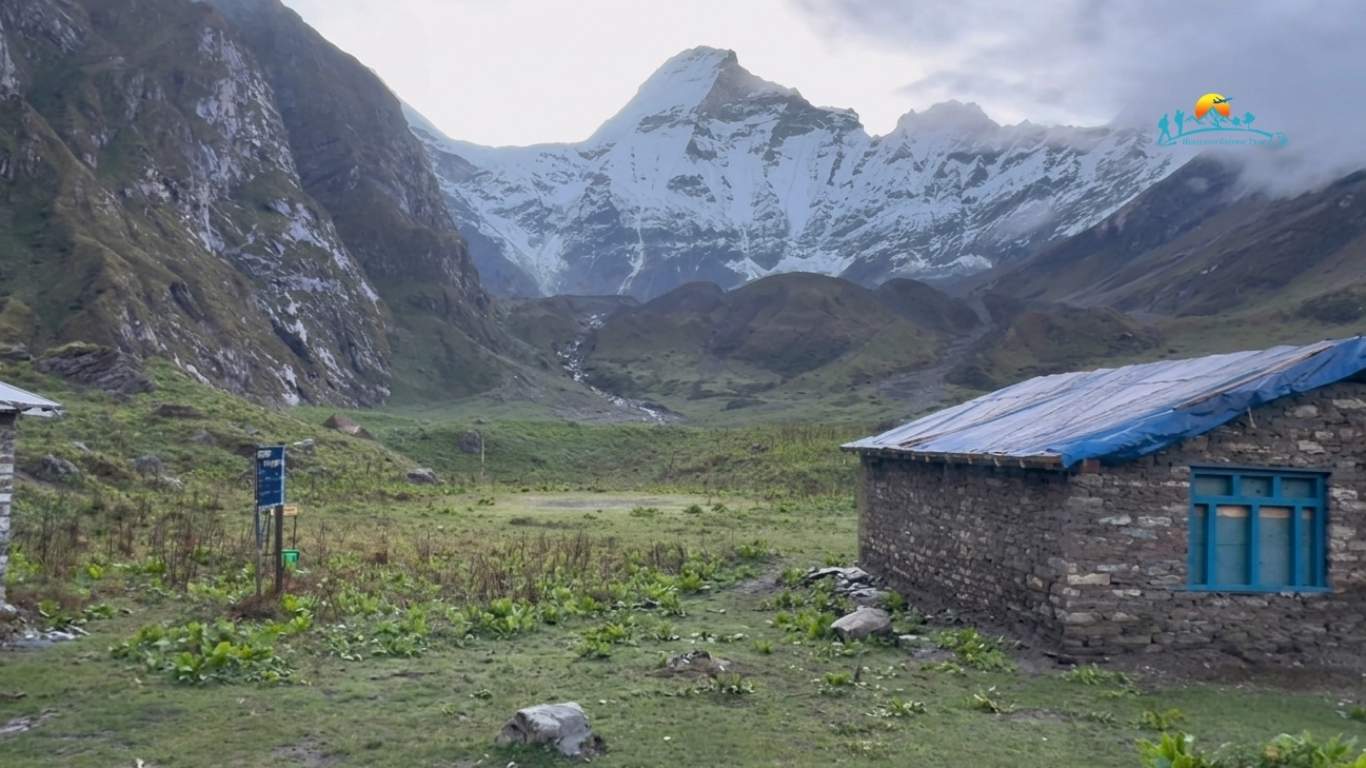
Today is one of the most memorable days of the trek as you arrive at Api Himal Base Camp. The camp sits beneath the tall peaks of Mt. Api (7,132 m), Nampa (6,757 m), and Jethi Bahurani. The trail takes you through open alpine fields, yak grazing areas, and rough rocky paths, with clear views of glaciers and steep cliffs along the way.
From the base camp, you take a short walk to Kali Dhunga Lake at around 4,000 m. This lake is a sacred place for local people, and many visitors stop here quietly out of respect. It is believed to hold spiritual meaning. The calm blue water, set against snowy peaks, creates a peaceful and striking scene that leaves a lasting impression.
After spending some time at the lake, you walk back to Api Base Camp and stay overnight in tents.
Day 09: Trek Back to Khaikot (Last Local Village - 2,200m)
After your time at Api Base Camp, you start descending toward Khaikot, the last village before the remote section of the trek. The trail slowly goes down through open meadows, yak grazing areas, and rocky paths. Along the way, you get wide views of Api and Nampa peaks from a new angle.
You may pass local herders, simple stone shelters, and small streams that show the daily life in this high region. After about 5 to 6 hours of walking, you arrive at Khaikot at 2,200 meters. It is a small and peaceful village surrounded by hills and clean natural surroundings. Overnight stay at a local teahouse.
Day 10: Trek Back to Ghusa (1,800m)
Today you walk back down from Khaikot to Ghusa on the same path you took earlier. The trail goes through woods, hill farms, and small towns. This gives you more time to see how the people here live and talk with them. The walk takes about 5 to 6 hours. It is mostly downhill and not as hard as the uphill parts.
Once you reach Ghusa at 1,800 meters, you can rest in the quiet spot and think about your trip in the Api Himal area. You will stay in a local guest house for the night.
Day 11: Trek Back to Khandeshwar (1,500m) – Cultural and Scenic Retreat
Today you descend from Ghusa toward Khandeshwar, a quiet village known for its local culture and traditional way of life. The walking trail moves through green forests, farm fields carved on hills, and small streams, offering nice views throughout the journey.
On the way, you will see everyday village life, stone-built houses, and may meet local people who still follow old customs and routines. The walk usually takes about 5 to 6 hours, giving you a mix of nature and local experience. You stay overnight in Khandeshwar.
Day 12: Trek to Makarigaad (1,500m) and Drive to Gokule
Today, you walk back along a part of the trail as you move from Khandeshwar to Makarigaad (1,500m). The route goes through forest paths, terraced farms, and small villages, giving you one last close view of the quiet mountain life.
After arriving at Makarigaad, you leave the trekking route and continue by road to Gokule. The drive takes you gradually lower, where the hills start opening up toward the plains. You stay overnight in Gokule and rest before continuing your journey toward Dhangadhi or Kathmandu.
Day 13: Drive Back to Dhangadhi – Return to Urban Comfort
Today, you begin a long and scenic drive from Gokule back to Dhangadhi. The journey takes you out of the quiet Himalayan region and into the open plains of far-western Nepal. Along the way, you pass through winding hills, rivers, and small villages, giving you a final look at the natural surroundings and daily life in rural areas.
Once you reach Dhangadhi, you check into a hotel, enjoy comfortable facilities, and take time to rest after the trek. This brings you back to city life before your return trip to Kathmandu.
Day 14: Fly Back to Kathmandu – A Scenic Farewell to the Himalayas
After breakfast, you will take an early morning flight from Dhangadhi back to Kathmandu. During the flight, you can enjoy clear views of the Himalayan ranges, rivers, and the Terai plains that you passed through during your trek. It is a final chance to see the beautiful landscapes of far-western Nepal from above.
After landing in Kathmandu, you will be transferred to your hotel. The rest of the day is free for you to rest, shop, or walk around the city. In the evening, many trekkers join a farewell dinner to celebrate the successful completion of the Api Himal Base Camp Trek.
Day 15:Departure to your home.
On the final day of your trip, you will be taken to Tribhuvan International Airport in Kathmandu for your departure. Based on your flight time, you may have some free time for last-minute shopping or a short walk around the city.
As you leave Nepal, you will carry home lasting memories of your journey to Api Himal Base Camp Trek.
What is included in this trek package?
- Airport Pick up / drop by private car.
- Hotel accomodation in kathmandu with breakfast (3* catagory)
- All standard full-board (main course) meals during the trek
- All necessary permits
- Snacks (cookies) and seasonal fresh fruits every day
- A government-licensed English-speaking trek leader, with an assistant guide for groups of 12 or more trekkers.
- A porter will assist with trekkers' luggage, with 2 trekkers sharing 1 porter. The maximum weight limit per porter is 25 kg (12.5 kg per trekker). Non-essential items can be stored at your hotel.
- The wages, meals, insurance, lodging, transportation, flights, and other necessary equipment for guides and porters.
- Farewell dinner
- Trekking certificate
- Sleeping nag & Duffel bag to each TRekker (to be returned after the trip )
- Rescue Management , based on our clients travel insurance.
What is excluded in this trek package?
- International flight costs
- Nepal Entry Visa Fees for multiple entries on arrival at Tribhuvan International Airport- (15 days - $30, 30 days- $50 and 90 days- $125)
- All accommodations in Kathmandu, before and after the journey
- Extra night accommodation in Kathmandu due to early arrival or late departure, or early return from the trek.
Api Himal Base Camp Trekking Route Map
For the Api Himal Base Camp Trek, packing carefully is important because the route goes through remote high-altitude areas where weather can change quickly. Dressing in layers works best. Start with a moisture-wicking base layer, add a warm fleece or down jacket, and finish with a waterproof and windproof outer shell to handle cold winds and snow. Trekking pants, quick-dry shirts, and warm items like gloves, a beanie, and a neck cover will help you stay comfortable.
Strong trekking boots with good ankle support are important since the trail can be rough. Warm socks help keep your feet comfortable, and gaiters can be useful when walking through snow or muddy sections. After walking for long hours, light camp shoes or sandals will give your feet a break.
A sleeping bag rated between -15°C and -20°C is necessary because nights can get very cold. A sleeping bag liner adds extra warmth. Use a backpack of 50 to 65 liters for your main gear, and a smaller 20 to 30 liter daypack for daily items like water, snacks, and extra layers.
Staying hydrated is very important, so carry a refillable water bottle or hydration bladder. Bring a water purification method such as tablets, a filter, or a SteriPEN so you can safely drink water along the way. Pack energy-rich snacks like nuts, protein bars, and dried fruits for quick energy during breaks.
A basic first aid kit is needed and should include altitude sickness medicine like Diamox, pain relief tablets, blister treatment, and any personal medicines you use. Sunscreen with high SPF, lip balm with sun protection, and UV-protective sunglasses are important because the sun is strong at high altitude. Wet wipes, biodegradable soap, and a quick-dry towel will help you stay clean when showers are not available.
Trekking poles are useful for balance and to reduce pressure on your knees during steep climbs and descents. A headlamp with spare batteries is needed for early morning starts or walking in the dark. A power bank or solar charger will help keep your phone and other devices charged since electricity can be limited on the trail.
- Clothing
- Thermal base layers, fleece/down jacket, waterproof outer shell, trekking pants, gloves, beanie, neck gaiter
- Footwear
- Sturdy trekking boots, thermal socks, camp shoes, gaiters
- Sleeping Gear
- -15°C to -20°C sleeping bag, liner
- Backpacks
- 50-65L main pack, 20-30L daypack
- Hydration & Food
- Water bottle/hydration bladder, water purification system, energy snacks
- First Aid & Hygiene
- Diamox, painkillers, blister care, sunscreen, wet wipes
- Trekking Support
- Trekking poles, headlamp, power bank
Best Seasons
The best time to do the Api Himal Base Camp Trek is spring (March to May) and autumn (September to November). Spring brings mild weather and blooming rhododendron flowers along the trails. Autumn usually has clear skies and steady weather after the monsoon, making walking easier and mountain views much clearer. Winter (December to February) is very cold, and monsoon (June to August) brings heavy rain, making the trails slippery and harder to walk.
Typical Day
A normal trekking day begins early in the morning. Breakfast is usually served around 6:30 to 7:00 AM. After that, you walk for about 5 to 7 hours with a lunch stop at a teahouse along the way. The route goes through small villages, forests, and open alpine areas before reaching the next stop in the afternoon. Evenings are simple and calm. You eat dinner, rest, and get ready for the next day. Accommodation is basic since the area is remote, and facilities are limited.
Transportation & Flight Delays
This trek does not include any flights. The journey starts with a long drive from Dhangadhi to Latinath or Gokuleshwar, and then continues on rough roads toward the trailhead. Road travel can take longer than expected because of road conditions. It is better to keep an extra day in the plan in case of delays, especially during the monsoon season.
Visa & Permits
A Nepal visa can be obtained on arrival at Kathmandu Airport. The fee is $30 for 15 days and $50 for 30 days. You will need a valid passport and passport-sized photos, and payment is made in USD cash. Since Api Himal lies in a restricted region, a special trekking permit is required. This permit must be arranged through a registered trekking agency before starting the trek.
Travel Insurance
Travel insurance is required for this trek. It should include coverage for trekking above 4,000 meters and emergency helicopter evacuation. This is important because the area is remote and medical help is not easily available on the trail.
Currency Exchange & Extra Expenses
There are no ATMs on the route, so it is important to carry enough Nepali rupees before starting the trek. Daily extra costs can be around $25 to $30. This may include hot showers, charging devices, snacks, and internet access where available. Small payments may also be needed for monastery visits and local cultural activities.
Note to Travelers :
We organize private treks for groups of at least two people and do not add anyone in your group. Contact us via Call/WhatsApp/Viber at +977 - 9861197727 or email himalayangatewaytrek@gmail.com You can also use our Free Trip Planner.
Group Discount Price
Terms & Policies
Thank you for choosing Himalayan Gateway Trek. Our goal is to provide a safe, enjoyable, and memorable travel experience. Please review the following terms and policies before confirming your booking.
📍Booking & Payment
- 👉 A 20% deposit is required to confirm your booking.
- 👉 The remaining balance must be paid on your arrival day in Nepal
- 👉 Your booking is confirmed once we receive your deposit and send a confirmation.
📍Cancellation & Refunds
- 👉 If you cancel your trip 45 days or more before departure, 50% of the deposit amount will be refunded.
- 👉 No refunds are available for cancellations made within 45 days of departure.
- 👉 Any non-refundable costs already incurred, including permits, flights, accommodation, transportation, or other third-party services, will be deducted from the refund amount.
Note: Eligible refunds will be processed within 14 business days of receiving the cancellation request.
📍 Travel Insurance
- 👉 Travel insurance is mandatory for all trekking and adventure trips.
- 👉 Your insurance should cover emergency medical treatment, helicopter evacuation, trip cancellation, and personal accidents.
- 👉 Himalayan Gateway Trek is not responsible for expenses arising from inadequate insurance coverage.
📍 Trip Changes
- 👉 Weather conditions, flight delays, road conditions, government regulations, or other unforeseen circumstances may require changes to the itinerary.
- 👉 Any changes will be made with the safety and well-being of our guests as the highest priority.
📍 Responsibility
- 👉 Himalayan Gateway Trek is not responsible for flight delays, cancellations, injuries, loss of personal belongings, natural disasters, political unrest, or other events beyond our control.
- 👉 By booking a trip with us, you acknowledge and accept the inherent risks associated with trekking and adventure travel.
FAQs
How hard is Mount Api base camp trek?
The trek is moderate to challenging, requiring good fitness. You will walk 5 to 8 hours daily over varied terrain, including steep ridges and rocky paths. High altitudes and remote conditions add to the physical demand.
Is there electricity and Wi-Fi in the Api base camp trek?
Electricity and Wi-Fi are generally unavailable or extremely limited in this remote region. There is no reliable mobile network coverage or charging stations. Trekkers are advised to carry power banks and satellite communication for emergencies.
How long is API base camp trek?
A standard trek takes between 16 and 20 days to complete, including travel and acclimatization. The actual walking portion usually lasts 12 to 15 days, starting from Dhangadhi or Gokuleshwor and returning to the same point.
How much does the API trek cost?
A full trek package typically costs around USD 2,200. This price often includes guide services, accommodation, and meals. Additional costs include flights (USD 420–560) and mandatory permits ranging from USD 100 to USD 200.
Why is the Api Himal Trek must-do adventure in Nepal?
It offers a raw wilderness experience far from crowded commercial trails. You will see Mount Api (7,132m) and interact with local Byansi and Chhetri communities. It is perfect for those seeking solitude and authentic culture.
What permits do I need for the Api Himal Trek?
You must obtain a Restricted Area Permit (RAP), an Api Nampa Conservation Area Permit, and a TIMS card. Trekkers must be in a group of at least two and accompanied by a licensed guide.
Where is the Api Himal Base Camp Trek located?
The trek is located in the Darchula district within far-western Nepal. It sits near the borders of Tibet and India, centered around Mount Api, the highest peak in the western Himalayas of Nepal at 7,132 meters.
What are the accommodation options like?
Options include basic tea houses run by local families and homestays where you can learn about traditional lifestyles. These lodges are welcoming but simple. Camping is used in the most secluded areas where no lodges exist.
What is the total trekking distance of Api Himal Base Camp Trek?
The total walking distance varies by route but generally covers over 100 kilometers. Daily segments range from 7 to 10 kilometers, often involving steep elevation gains of up to 900 meters as you approach the base camp.
What should I pack for the Api Himal Trek?
Pack a high-quality down jacket, waterproof layers, a four-season sleeping bag, and sturdy trekking poles. Include a medical kit, satellite communication, and enough cash in local currency, as there are no ATMs in the region.
How long does the Api Himal Base Camp Trek take?
The entire journey usually takes about 11 to 20 days. This timeframe allows for necessary travel between Kathmandu and the remote Far West, as well as essential acclimatization days to ensure safety at higher altitudes.
Are there any risks associated with the Api Himal Trek?
Key risks include altitude sickness, unpredictable mountain weather, and the extreme remoteness of the trail. There is limited rescue infrastructure and no medical facilities. Proper travel insurance and a professional guide are essential.
What is the best season for Api Himal Base Camp Trek?
The best times are Spring (March to May) and Autumn (September to November). These seasons offer stable weather and clear views. Spring features blooming flora, while Autumn provides the clearest skies for viewing the high peaks.