Best Time to Visit Nepal: Weather, Seasons, and Month-by-Month Guide
October to November and March to April are the best time to visit Nepal for clear mountain views and trekking,…
 Himalayan Gateway Trek - On
 The Teej Festival is one of Nepal’s most colorful Hindu festivals, bringing women together for prayer, fasting, family gatherings, music, dance, and traditional celebrations. It is closely associated with the Goddess Parvati and Lord Shiva, and has a special significance in Nepali culture. Women gather at their homes, community spaces, and temples in red saris and traditional jewellery, and many fast and pray.
For tourists, Teej is an opportunity to witness a significant aspect of everyday Nepali culture rather than a tourist festival. Kathmandu really comes alive around Pashupatinath Temple, where huge crowds of pilgrims visit the Temple for prayers at the time of the festival. The main feast is spread over a number of days, during which important events include Haritalika Teej, Dar Khane Din and Rishi Panchami.
| Quick Fact | Details |
|---|---|
| Festival name | Teej or Haritalika Teej |
| Main location | Nepal |
| Main religious figures | Goddess Parvati and Lord Shiva |
| Main observance | Three-day celebration |
| 2026 Teej date | September 14, 2026 |
| Feast day | Dar Khane Din |
| Final day | Rishi Panchami |
| Major Kathmandu site | Pashupatinath Temple |
| Main activities | Prayer, fasting, singing, dancing, feasting, temple visits |
| Traditional color | Red |
The Teej Festival is a Hindu festival of Nepal mainly observed by women in Nepal, with prayer, fasting, family gatherings, songs, dancing, and temple visits forming important parts of the celebration. Teej is a three-day festival celebrated by women in all parts of Nepal.
The festival is strongly associated with Goddess Parvati, who is the one who is said to have performed severe penance to become the spouse of Lord Shiva. This story gives Teej a strong religious significance, particularly for women who pray for the welfare of their families and happiness of their marriages.
At the same time, Teej is not limited to temple rituals. It is also a social occasion. Women meet their sisters, relatives, and friends, share food, sing traditional songs, dance together, and spend time away from their usual daily routine.
This blend of religion and social festivity makes Teej unique from a festival which is observed only as a religious ritual.
Teej remains important because it brings religious devotion, family ties, women’s gatherings, and traditional culture into one celebration.
For many women, the festival is a time to:
The meaning of Teej can also differ from one woman to another. Some follow the religious customs very closely, while others place more value on family gatherings, friendship, music, and cultural traditions.
Haritalika Teej is based on the religious story of Goddess Parvati. As per the story, Parvati wanted to marry Lord Shiva, but her father wanted her to marry Lord Vishnu. Her female friend assisted her to get away from the house and she brought her to a forest where Parvati continued her worship of Shiva. This is related to the name Haritalika, which is normally understood as a word meaning “going with a female friend.
The story explains why devotion, determination, and the relationship between women hold an important place in the festival.
The Teej Festival does not fall on the same English calendar date every year because the festival follows the Hindu lunar calendar. In Nepal, it usually falls around August or September.
Haritalika Teej falls on Monday, September 14, 2026. In Kathmandu, the main puja period listed for that day begins early in the morning.
The 2026 festival sequence includes:
| Occasion | 2026 Date |
|---|---|
| Dar Khane Din | September 13, 2026 |
| Haritalika Teej | September 14, 2026 |
| Rishi Panchami | September 16, 2026 |
The date may appear differently in some calendars because religious dates depend on the lunar calendar and local sunrise calculations. For a travel article, use a current Nepal-based calendar or official local source when updating the yearly date.
Teej is often considered to be a three-day festival where each day plays a specific part in celebrating it. It is also presented by Nepal Tourism Board as a 3 day festival.
The three important days are:
Each day has its own customs, foods, prayers, and social activities.
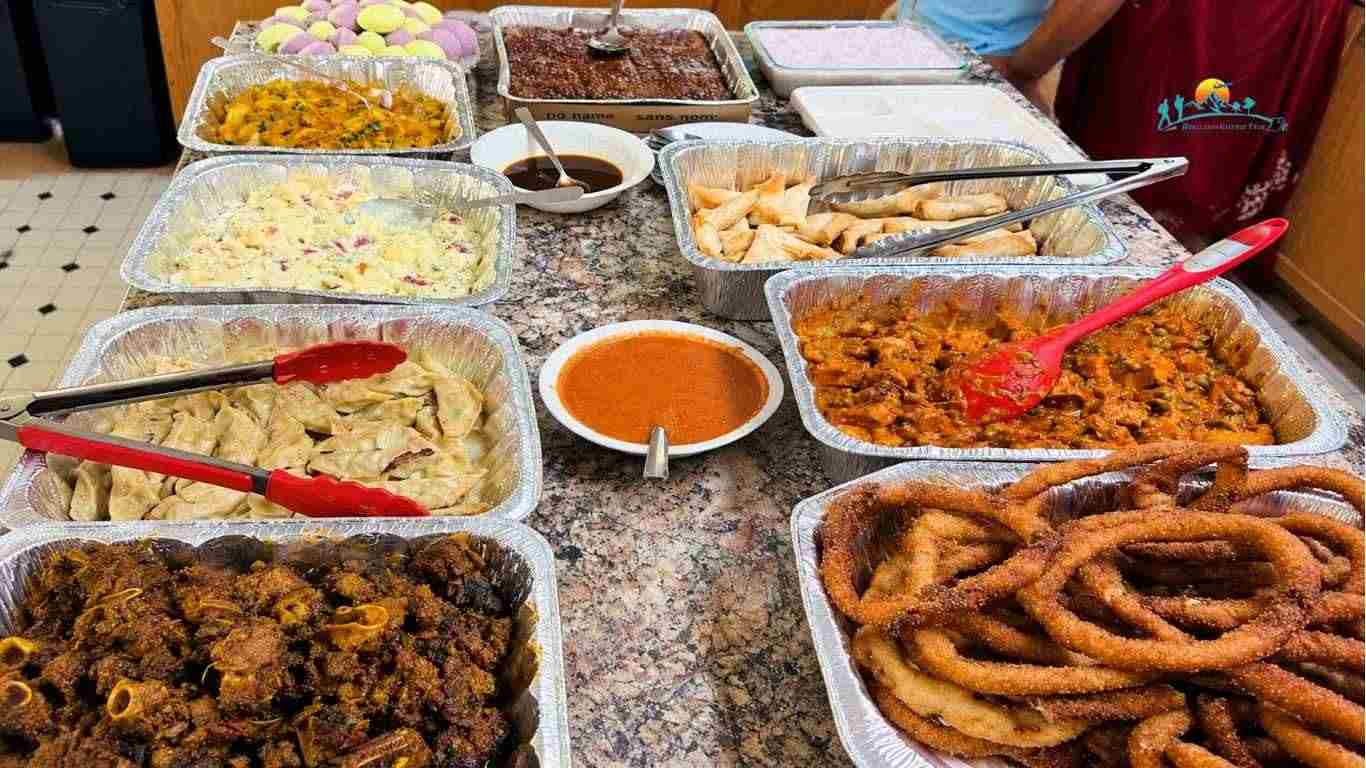
Dar Khane Din is the feast day before the main fasting day, when women gather for a large meal and spend time together before beginning the fast. Women are frequently presented with a special invitation to their maternal home and a feast named Dar.
On this day, family members may prepare a wide range of foods. Women gather with sisters, relatives, and friends, often staying together late into the night.
The atmosphere can be lively, with:
For married women, visiting the maternal home is an important part of the tradition in many families. It gives daughters a chance to return to their parents’ home and spend time with their family.
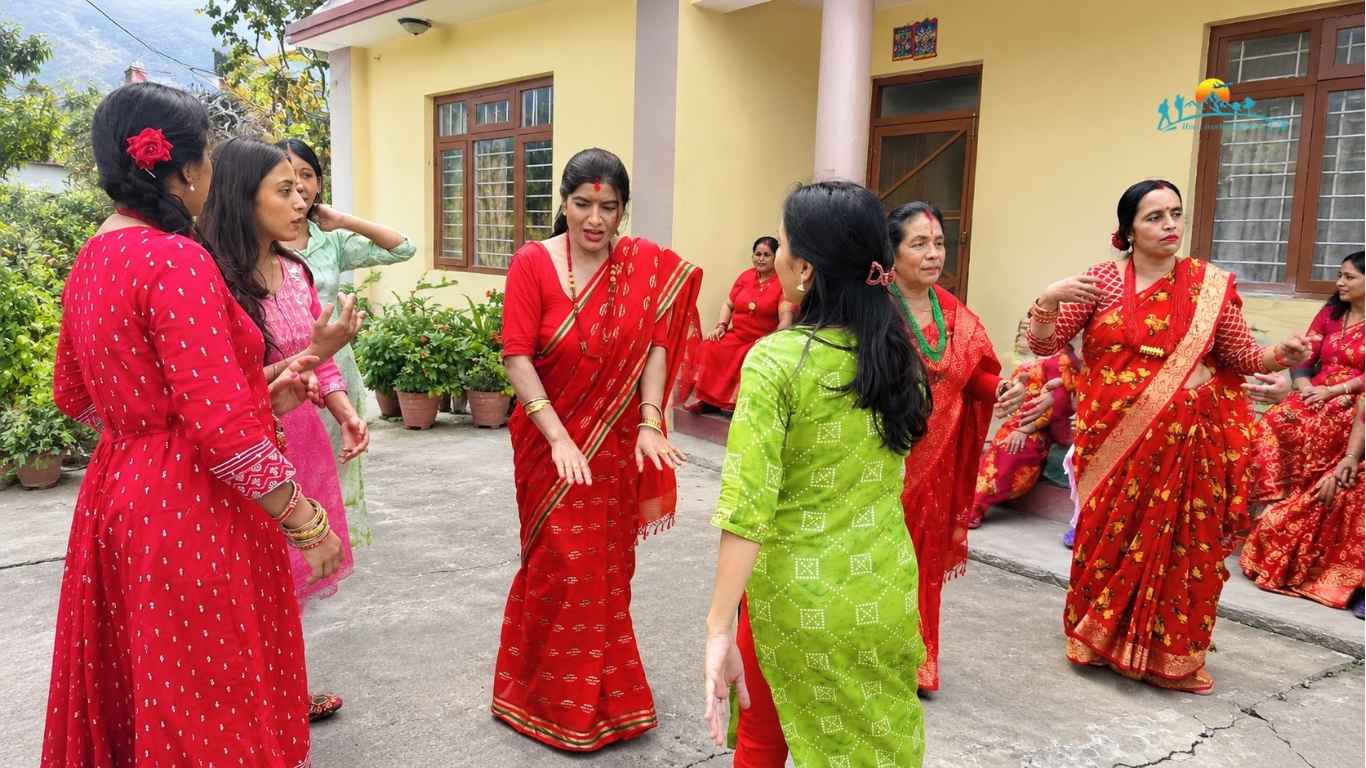
Haritalika Teej is a primary day of prayer, worship and fasting. Women wear traditional dress, go to the temples, offer prayers, sing songs and practice their preferred type of fasting.
Many women follow a waterless fast, while others may choose different forms of fasting depending on their health, family practice, and personal beliefs. Traditionally, many women in Nepal do not eat or drink during the fast.
Traditionally the fast is linked to prayer for husband’s good health and longevity. Unmarried women make the fast as well and pray for a good marriage.
The religious part of the day often includes:
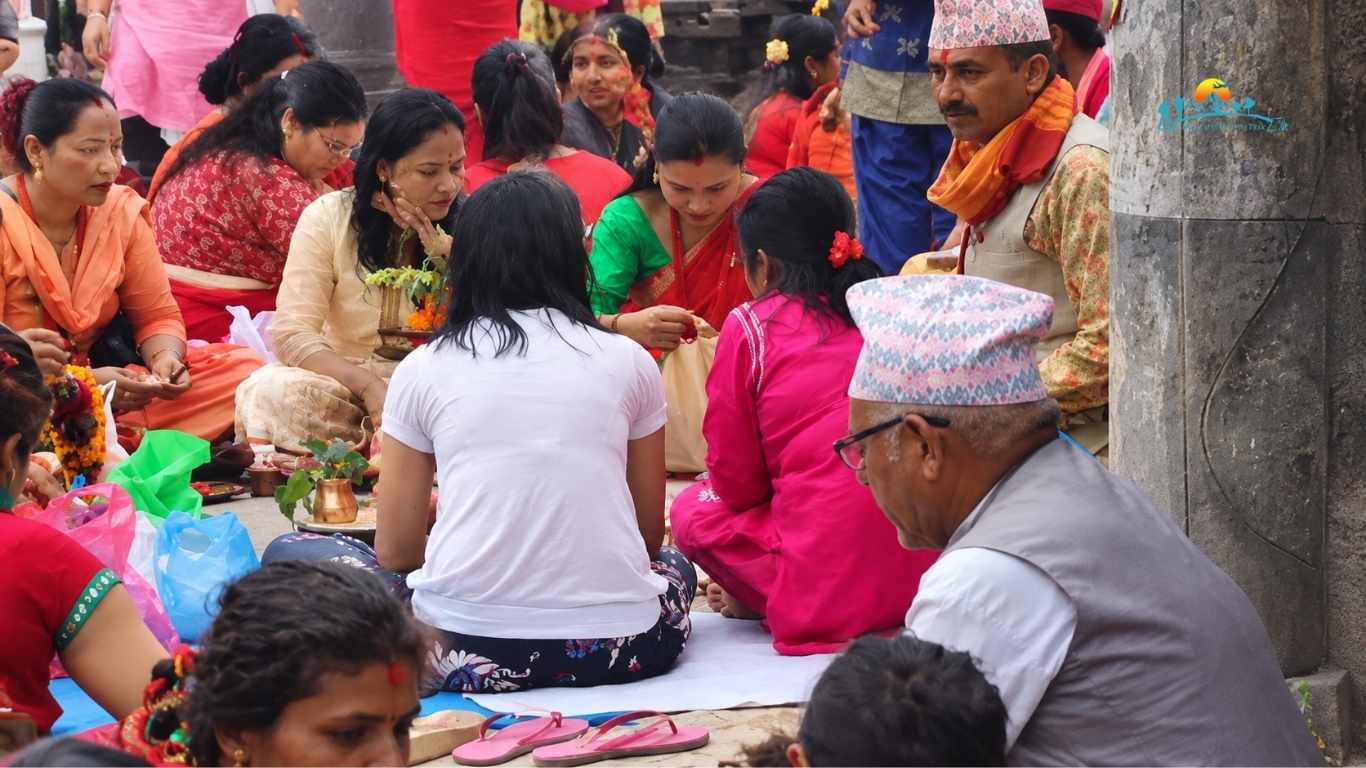
Rishi Panchami follows the main fasting day and is an important final observance connected with Teej traditions.
The day is devoted to worship and purification ceremonies. Women honour the seven sages (the Saptarishi) and practice their family or community traditions related to purification.
Every family has its own unique tradition, and it is not the same for everyone. Different customs are found in different places, by family and by religion.
The last day is dedicated to the festival with a different atmosphere than the days of songs, feasts and crowds.
Teej is traditionally observed by women as a day of fasting, devotion and prayers, particularly for the health and longevity of their husbands. For unmarried women the fast may be a time for hope toward marriage and a good husband.
The meaning of fasting can also be personal. For some women it is primarily a religious ritual, for others it is tradition, family and beliefs.
There is no need to assume that every woman observes Teej in the same way. Modern celebrations show a mix of older customs and personal choices.
Eating is not the only thing involved in the Teej Festival. Its rituals are a combination of worship, clothing, food, music, dance, family visits, and temple visits.
Women worship Lord Shiva and Goddess Parvati and offer prayers according to their family traditions. Many prepare for the puja by bathing, wearing clean clothes, and gathering the items needed for worship.
Temple visits are an integral part of the Teej. During the festival in Kathmandu, Pashupatinath Temple is one of the primary hubs that gathers significant crowd of women.
Hands are decorated with mehendi before or during the festival by many women. It contributes to the holiday spirit, and is often a component of preparation with loved ones and friends.
Traditional Teej songs and group dancing are among the most visible parts of the celebration. Women often sing about marriage, family life, relationships, work, and social experiences.
Teej gives women a chance to visit their maternal homes, meet sisters, and spend time with relatives. This aspect of the festival is as much a social event as it is a religious one and for many families, it is the most significant part of the occasion.
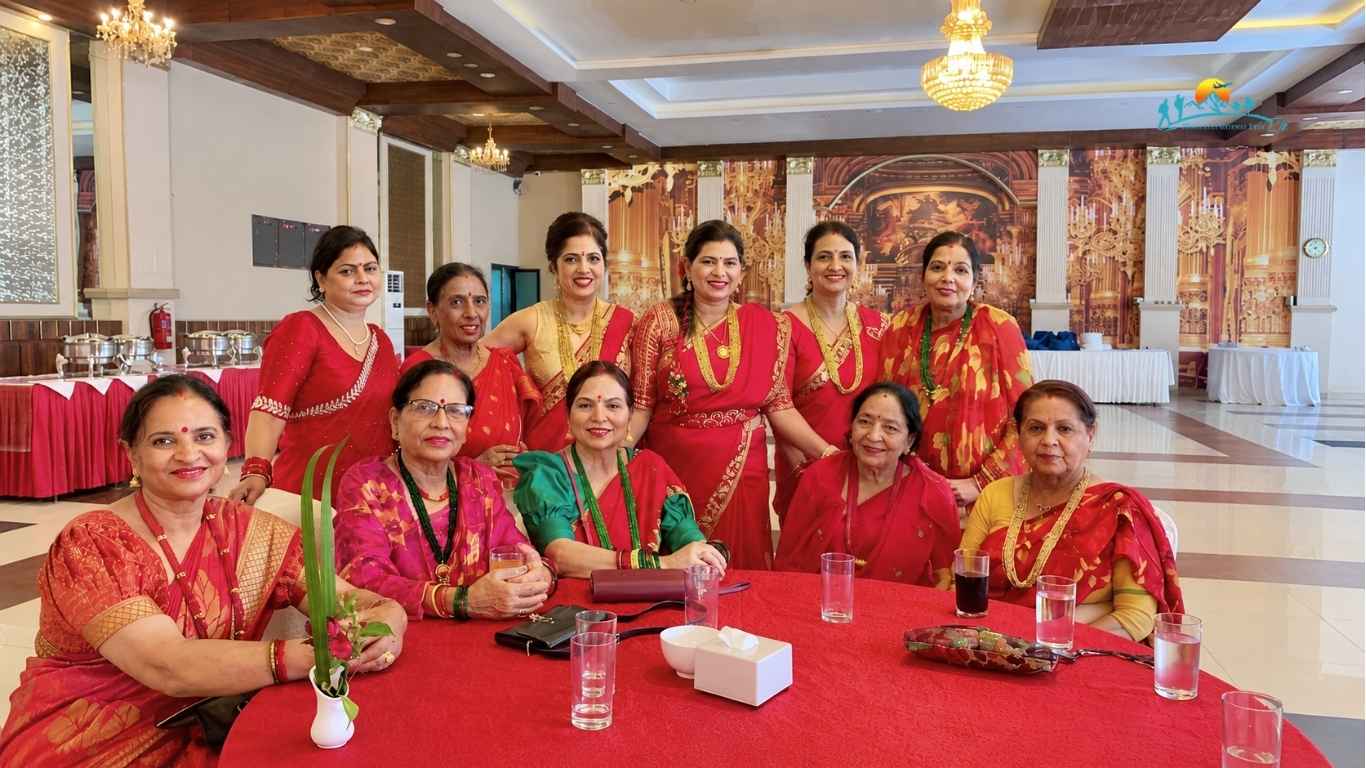
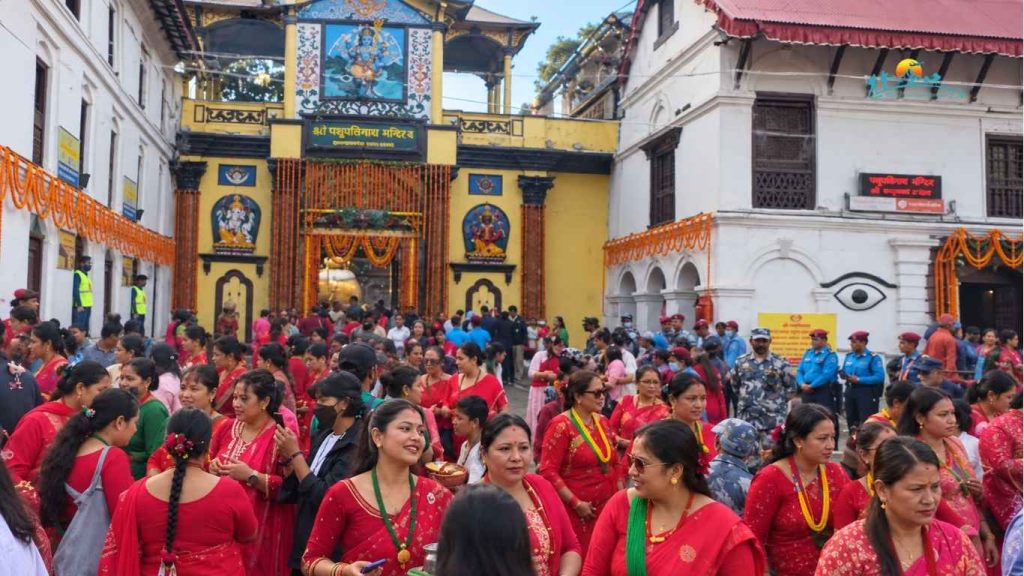
Red is also very associated with the festival of Teej and is used in the traditional dresses and jewellery during this festival. Women tend to wear red saris, blouses, bangles, tika and other accessories at prayer time and social functions.
At Pashupatinath, large groups of women dressed in red visit the temple during Teej.
The strong use of red also makes the festival visually distinctive. Women wearing red clothes can be seen filling the streets, temple areas and gatherings, particularly in Kathmandu Valley.
In Nepali Hindu culture red is closely associated with marriage, festivity and auspicious events. The definition might vary within a community and among families.
Teej songs provide a platform to women for celebration and conversation. Traditional songs may have themes of love, marriage, family, separation, work, hardship, and social change.
Usually, dances are performed as a group activity. Women can gather in a circle or dance together, singing well-known songs.
Teej songs are also now used to discuss social issues and the experiences of women. This has played a major role in keeping Teej pertinent to the younger generation and not restricted to the religious practice of the elderly.
The food has a large role in Teej, particularly on the day of Dar Khane Din, when women have a large meal before the fast.
The types of food provided may differ from place to place and from house to house and a Dar gathering may include:
The feast is more than a meal. It is a social gathering where women eat together, talk, sing, and enjoy time with family and friends.
After the fasting period, people also eat according to their family customs and personal needs.
Teej is not only celebrated in Nepal, but also in the busy cities as well as the smaller communities in the country. The ways of celebration can vary from one locality to another, but prayer, fasting, music, family associations, and temple attendance are common elements of a celebration.
Pashupatinath is one of the most important places to experience Teej in Kathmandu. Thousands of women come to pray and celebrate at the temple and other adjacent areas during the festival. As many of the women wear red clothes, Nepal Tourism Board says the surrounding in the time of Teej is a sea of red colour.
For visitors, this is one of the most striking cultural scenes in Kathmandu.
However, visitors must follow certain rules. Only Hindus can enter the main temple of Pashupatinath. The Bagmati is visible from the main temple area for non-Hindu visitors, and photography is not allowed inside the temple complex.
Outside Pashupatinath, Teej can be seen in Shiva temples, homes, community spaces, neighborhoods, and organized cultural programs around Kathmandu.
Visitors to Nepal can experience Teej festivities, and they can be invited to some public cultural events. Women travellers can get invited to participate in the feasting from time to time.
Participation should always depend on the setting.
A private family ceremony is not open to visitors, but a public cultural program may be open to visitors.
Visitors can usually enjoy public aspects of the festival, such as:
The Teej Festival is more than a day of fasting. It combines devotion to Goddess Parvati and Lord Shiva, family tradition, women’s gathering, music, dance, food and worship in the temple. The festival is also evolving, with the younger generations enjoying the festival in innovative ways while continuing to propagate many of the older customs.
For inhabitants of Nepal, Teej is a part of their culture and provides a true glimpse of local living, particularly in Kathmandu, where Pashupatinath is one of the primary gathering spots. The sight of women in colorful muirang style, listening to traditional songs and watching families during the festival can make the experience of the festival memorable.
Teej is primarily celebrated to honor the reunion of Goddess Parvati and Lord Shiva. Women observe fasting and offer prayers seeking marital bliss, the long life of their husbands, and the overall well-being and prosperity of their families.
Unmarried girls traditionally celebrate Teej by fasting and praying to Lord Shiva to bless them with a loving and compatible husband. Married women observe the festival to seek divine blessings for their husband’s health, longevity, and a joyful marriage.
In Nepal, Teej is a vibrant three-day national festival. Women gather wearing beautiful red saris, sing traditional folk songs, and dance together. It features a grand feast called “Dar,” followed by a strict day-long fast for family happiness.
Haritalika Teej falls on Monday, September 14, 2026. In Kathmandu, the main puja period listed for that day begins early in the morning.
Dar Khane Din is the first day of Teej, where women gather, dress in fine clothes, sing, dance, and consume a rich midnight feast called “Dar.” This feast provides endurance for the strict waterless fast following the next day.
On the second day of Teej, women observe Nirjala Vrat, a rigorous 24-hour fast without consuming food or water. They gather at Shiva temples to offer prayers for marital bliss, family prosperity, and spiritual strength.
Rishi Panchami is the final day of Teej, dedicated to honoring the Seven Sages (Sapta Rishis). Women perform ritual baths using Datiwan roots and red mud to seek purification and forgiveness for any unintentional sins.
Yes, unmarried women actively observe the Teej fast. While married women fast for their husband’s health and long life, unmarried women observe the ritual to pray for a virtuous, loving, and suitable life partner like Lord Shiva.
Pashupatinath Temple in Kathmandu is the premier location to experience Teej. Thousands of women dressed in vivid red gather here to worship Lord Shiva, offer prayers, dance, sing traditional folk music, and celebrate female solidarity.
Yes, foreign tourists are welcome to observe Teej celebrations. While non-Hindus cannot enter the inner sanctum of temples like Pashupatinath, visitors can freely join temple courtyard festivities, capture photos, dance, and enjoy the cultural music.
During Dar Khane Din, women consume rich foods including kheer (rice pudding), heavy dairy items, sweets, fruit, ghee, and savory local delicacies. This energy-dense midnight meal sustains them through the following day’s strict waterless fasting.
The three main Teej variations are Haryali Teej (welcoming monsoons and greenery), Kajari Teej (marked by songs of separation and devotion), and Hartalika Teej (the grand 24-hour fast honoring Goddess Parvati’s ultimate spiritual penance).
Yes, Teej is a recognized national public holiday in Nepal specifically designated for women. Government offices, educational institutions, and corporate entities provide female employees leave to participate in rituals, temple visits, and family gatherings.
Women break their Teej fast on the morning of the third day after performing morning pujas to Lord Shiva and Goddess Parvati. They offer prayers and consume holy water (Panchamrit), fresh fruits, and lightweight satvik food.
Singing and dancing offer women a joyful platform for self-expression, sisterhood, and cultural solidarity. Traditional Teej songs reflect women’s marital experiences, social issues, joys, religious devotion, and female empowerment within traditional society.
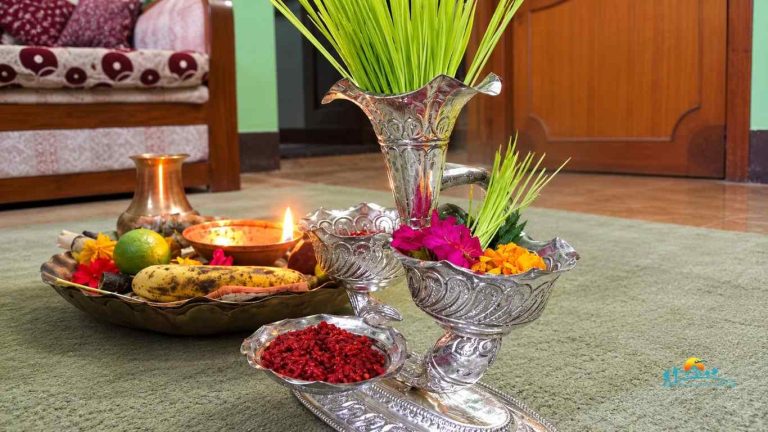
Key items for Teej Puja include idols of Shiva and Parvati, flowers, bilva leaves, fruits, oil lamps, incense, holy water, sand for lingam creation, and shringar items like vermilion, bangles, and sacred red threads.