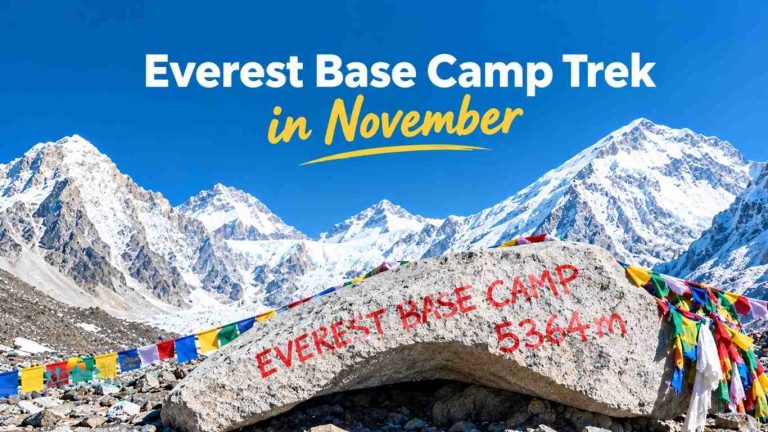
Everest Base Camp Trek in November: Weather, Cost, and Tips
The November trek to Everest Base Camp promises to give you a clearer view of the mountains, mostly dry trails…
 Himalayan Gateway Trek - On
October to November and March to April are the best time to visit Nepal for clear mountain views and trekking, or for spring flowers and warmer days, respectively. The timing, however, depends on where you want to go, the length of time you have to spend and what you want to do. Whether you’re walking under rhododendrons in the mountains or visiting old temples in Kathmandu and wildlife in Chitwan, Nepal offers something for travellers year-round.
A few of the high mountain trails are challenging in winter and some of the roads and trekking trails are prone to heavy monsoon rain. Deciding when to go on your trip can make a big difference.
October and November are some of the best times to visit Nepal for trekking, sightseeing and mountain views. March and April are also great times, particularly for springtime views and the extended daylight. Spring and autumn are the peak seasons for tourists to visit Nepal, with the clear skies in October and November being a special event during the monsoon season.
The best month is also dependent on your plans. A visitor to Kathmandu Valley for festivals and temples will have different requirements to a trekker on a high mountain pass or a family on a safari to see wildlife.
| Travel period | Best for | What to consider |
|---|---|---|
| October to November | Trekking, mountain views, cultural tours | Popular trails and accommodation can get busy |
| March to April | Spring trekking, rhododendrons, sightseeing | Days get warmer, and haze or afternoon showers can occur |
| December to February | Heritage tours, lower-altitude walks, wildlife trips | Cold mornings and nights, with snow possible at high elevations |
| June to September | Rain-shadow treks, green scenery, cultural visits | Rain can affect roads, flights, and trails |
| Late September | Travelers seeking the start of the autumn season | Rain may continue, especially in early September |
| May | Trekkers seeking spring conditions and warmer days | Heat, haze, and pre-monsoon storms may affect some areas |
These are general travel periods, not promises of good weather. Conditions change with elevation, location, and the weather in a particular year.
If your main goal is trekking, October, November, March, and April are good months to compare first. If you are visiting for culture, food, temples, or wildlife, you may have more flexibility.
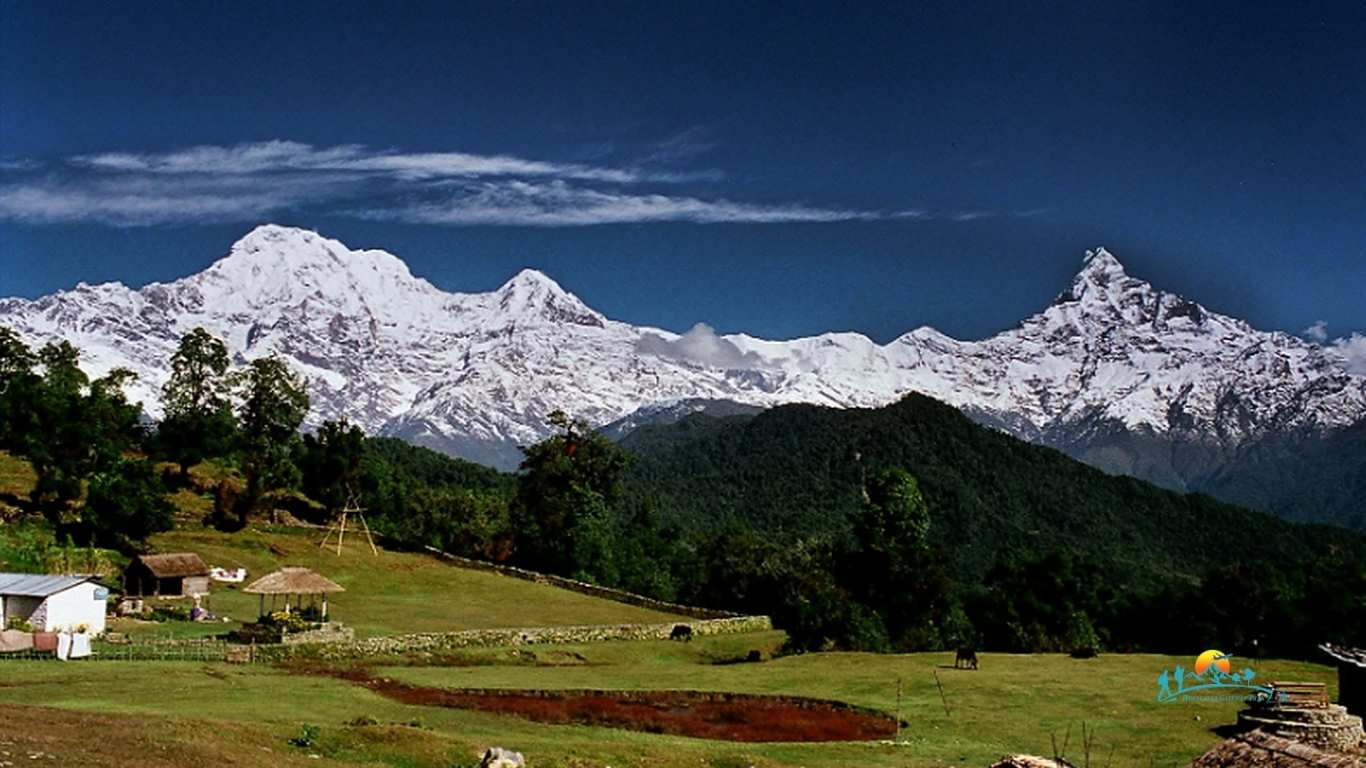
The weather is variable in Nepal depending on altitude, amount of rainfall and area to area, which means there are significantly different conditions in two locations during the same month. Even in the spring time, it may be hot in the southern Terai and vice versa in the higher Himalayan regions.
The temperature of a place is greatly influenced by its altitude above sea level. Even though all four places (Kathmandu, Pokhara, Chitwan, and Everest Base Camp) are in the same season, the weather is different.
A rule of thumb is that temperature drops on average by 6°C with each 1,000 metres of ascent. This is a mean figure rather than a prediction for any specific site.
This difference matters when packing for a trip. You may wear light clothing while sightseeing in a warm city, then need a warm jacket and gloves a few days later on a high mountain trail.
There are five main seasons in Nepal: Spring, Summer, Monsoon, Autumn and Winter. Summer and monsoon overlap, but refer to different aspects of the weather cycle.
| Season | Usual months | Typical conditions |
|---|---|---|
| Spring | March to May | Warmer days, flowering forests, and increasing heat toward May |
| Summer | June to August | Warm or hot weather, with monsoon rain across much of the country |
| Monsoon | June to September | Frequent rain, cloudy skies, wet trails, and possible travel delays |
| Autumn | September to November | Rain gradually decreases, with clearer skies often appearing in October and November |
| Winter | December to February | Cooler days and cold nights, with snow possible in higher mountain areas |
The monsoon usually brings most of Nepal’s annual rainfall. The Nepal Tourism Board estimates that about 80% of the country’s precipitation falls between June and September. The amount varies greatly between regions.
Nepal’s regional weather differences are important when you plan a trip that includes several destinations.
| Destination | What to expect | Suitable travel plans |
|---|---|---|
| Kathmandu Valley | Warm spring and summer days, cooler winter mornings, and monsoon rain | Heritage sites, temples, local markets, and cultural tours |
| Pokhara | Warm weather, mountain scenery on clear days, and heavy monsoon rain | Lakeside visits, viewpoints, and trekking access |
| Chitwan and the Terai | Hot summer days and generally milder winter conditions | Jungle activities, birdwatching, and wildlife trips |
| Everest region | Cold temperatures at altitude, with changing weather and possible snow | High-altitude trekking during suitable spring and autumn windows |
| Annapurna region | Conditions vary from warm lower valleys to cold high passes | Village walks, forest trails, and longer mountain treks |
| Upper Mustang | Dry conditions compared with many southern slopes because of its rain-shadow location | Trekking during the monsoon, with suitable permits and local planning |
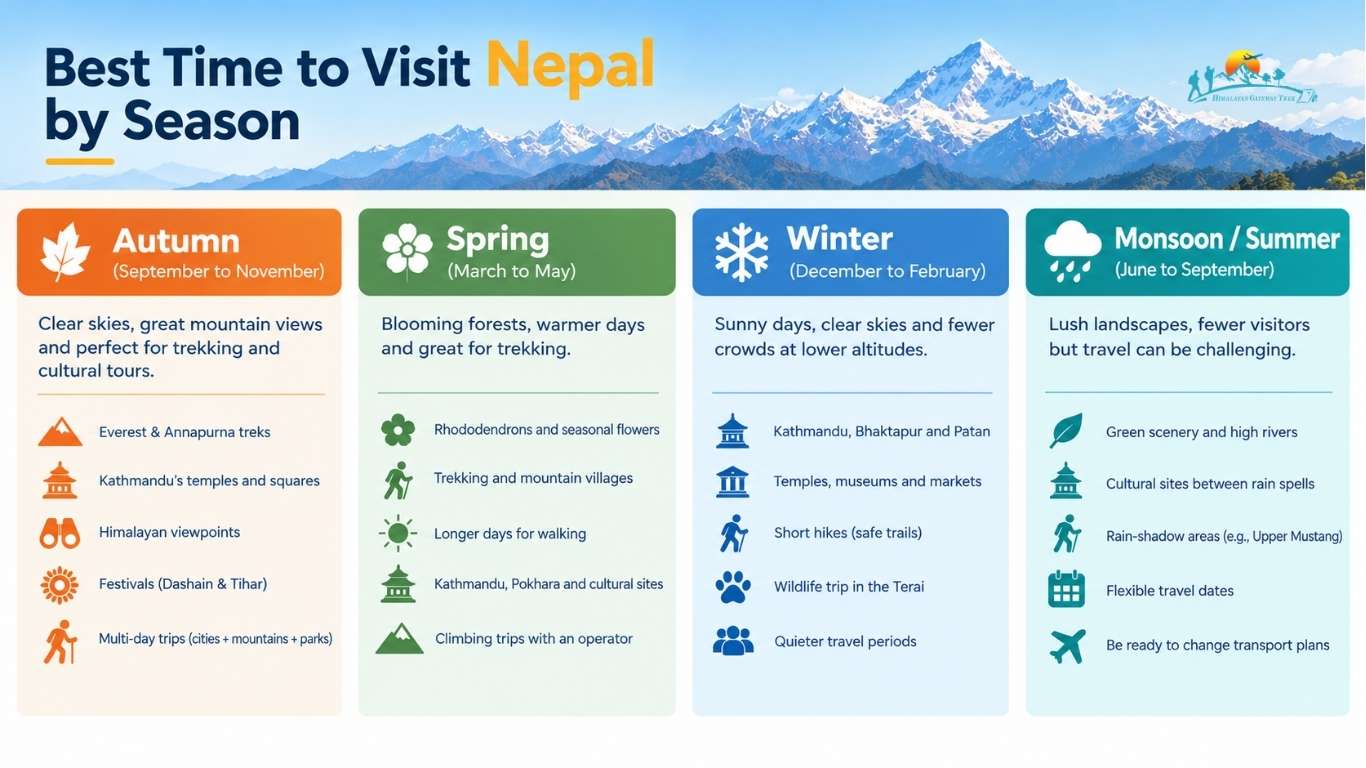
Every season has its pros and cons. Autumn and spring are perfect for many people, winter is capable, and monsoon, if the right places and time are chosen.
Autumn is one of the most favorable seasons for visiting Nepal for the mountain views, trekking and cultural tours. In general, the summer monsoon begins to recede in September, leaving many hills and valleys green. October and November can sometimes be a good time for walks due to clearer skies.
October is particularly a favorite month for trekkers, for many trails throughout the country provide favorable daytime weather. November can also be a great month – but mornings and evenings get chillier as winter approaches.
Autumn is a good choice for:
There are a couple of problems with this. Trek routes are often overcrowded and teahouses or hotel can be full during holiday seasons. There should also be some leeway as not all mountain flights will run on clear days.
The period of Spring is great for trekking in many parts of the mountains and for the blooming of the forests as well as for warmer weather in Nepal. As the season goes on, rhododendrons flower at various heights, enlivening hillsides and woodland paths. Spring is an important time of the year for viewing rhododendrons.
In March, it is frequently the beginning of spring trekking weather. In April, the weather is nice for hilly walks and for climbing up to the higher mountain regions. As temperatures begin to increase, especially in the low lands, by May, pre-monsoon storms could occur more frequently.
Spring suits travelers who want to:
The downside is with warmer weather, there’s no guarantee of clear weather. Mountains can be obscured by haze and cloud, particularly later in spring. Nights at high altitudes may also be quite cold.
For cultural sightseeing, less crowded lower altitude trips and some wildlife activities, winter is a good time to visit Nepal. Its sunny days and clear skies can turn to cold nights and cold temperatures in the mountains.
Kathmandu and Pokhara are good for daytime sightseeing, but can be cold at night and early morning. Generally, Chitwan is warmer, and these lowlands can be a good choice for those who don’t like falling in the severe cold of the mountains.
Winter is suitable for:
The main concern is altitude. Some high passes may be difficult or close some trails when the snow is heavy or very cold. Short daylight hours can also impact on trekking plans. Review your specific route and its condition prior to booking a winter hike.
While the monsoon is a good time to think about Nepal’s Rain Shadow regions, travel is difficult in many other parts of the country during the heavy rains. June is typically the start of above-normal rainfall and it may continue through September, but the timing and length of the period vary from year to year and place to place.
The hills are green, rivers are high and there are clouds on the mountains’ view during the monsoons. The rain may also trigger landslides, muddy trails, closure of roads and delays on flights. Do not take it for granted that an area is safe and open due to previous year access.
Monsoon travel can suit people who:
One of the more popular rain shadow destinations is Upper Mustang. It lies behind the main ranges of the Himalaya and is an area that receives less rainfall than other areas like Pokhara. The path may still be windy, cold or suffer from local conditions though. Upper Mustang has special permit requirements, too.
If you are still unsure, compare the main reason for your trip rather than choosing a month only because it is popular.
| Your main goal | Period to consider first | Why |
|---|---|---|
| Clear Himalayan views | October to November | The post-monsoon skies are often clearer |
| Spring flowers | March to April | Rhododendrons bloom at suitable elevations |
| Everest Base Camp trekking | March to May or October to November | These are common spring and autumn trekking windows |
| Cultural tours | Year-round, depending on comfort | Temples and heritage sites can be visited in any season |
| Wildlife trips in the Terai | Winter and suitable shoulder periods | Cooler weather can make daytime activities more comfortable |
| Upper Mustang trekking | Often suitable during the monsoon | It lies in a rain-shadow area |
| Quieter travel | Selected winter or monsoon dates | Visitor numbers can be lower, but weather and access need checking |
These suggestions are starting points, not guarantees. For any trek, follow the current advice for the trail, altitude, permits, and weather.
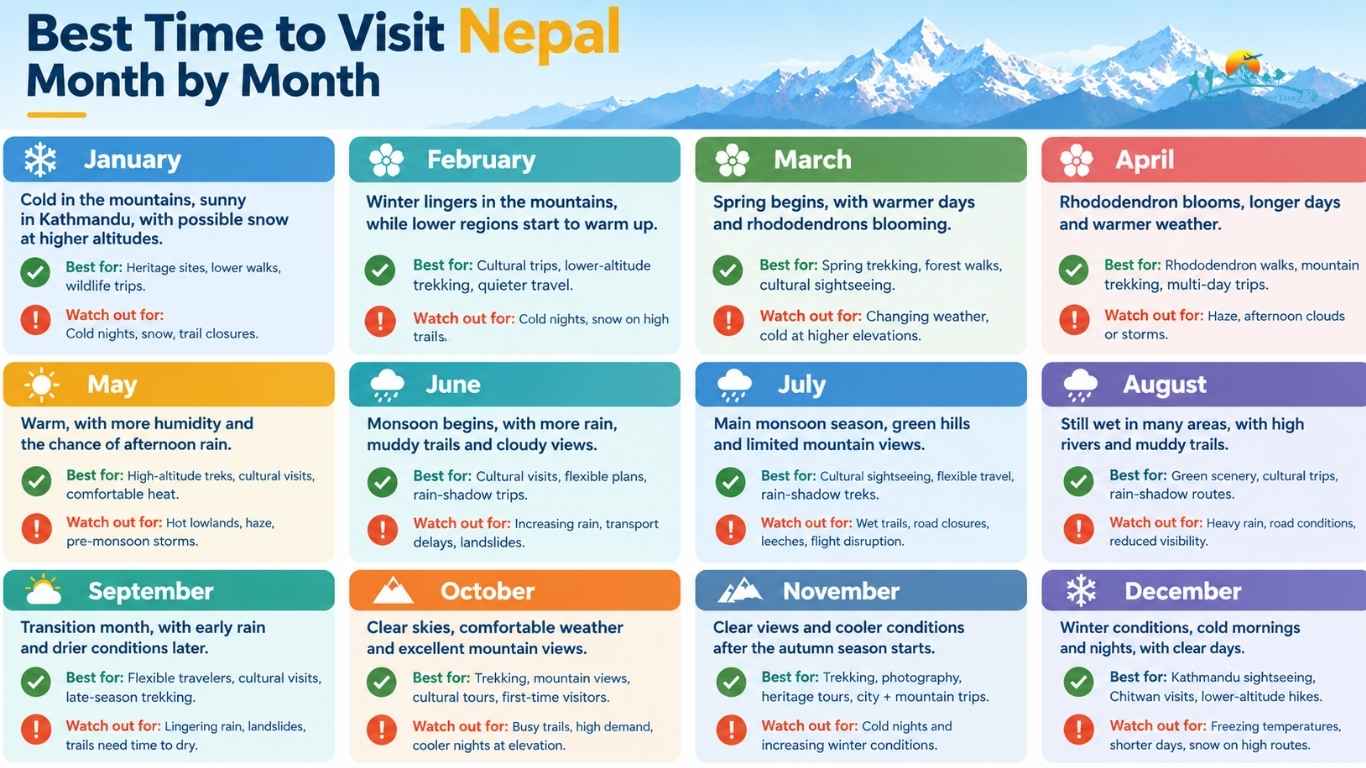
The best month to visit Nepal depends on your destination, the kind of weather you enjoy, and the activities you plan to do. The monthly guide below explains what each part of the year usually offers and what you should check before booking.
January is one of the coldest months in Nepal, especially in the mountains. Kathmandu can have sunny afternoons, but mornings and nights are chilly. High-altitude routes may experience snow, icy paths, and freezing temperatures.
January is a good month for visiting heritage sites, taking lower-altitude walks, and planning wildlife trips in the Terai. Trekkers can still enjoy some lower routes when conditions permit, but high passes may be difficult.
Best for: Cultural tours, Chitwan visits, and selected lower-altitude hikes.
Watch out for: Cold nights, snow at higher elevations, and possible trail closures.
February brings a gradual change toward spring, although winter conditions remain in many mountain areas. Lower regions begin to warm up, while higher trails can still be snowy and cold.
It is a good month for Kathmandu sightseeing, village walks at lower elevations, and visitors who prefer to avoid the busiest trekking periods. By late February, some spring trekking routes may become more attractive, depending on local weather.
Best for: Cultural trips, lower-altitude trekking, and quieter travel.
Watch out for: Cold nights and snow on high trails.
March marks the beginning of spring and is a popular choice for trekking. Daytime temperatures become more comfortable in many areas, and rhododendrons start flowering at suitable elevations.
The weather is not the same everywhere. Lower regions can become warm, while mountain passes remain cold. You may also experience cloudy afternoons, so early starts can be useful when mountain views are a priority.
Best for: Spring trekking, forest walks, and cultural sightseeing.
Watch out for: Changing mountain weather and cold conditions at higher elevations.
April is one of the most popular spring months for trekking in Nepal. Many hillsides display colourful rhododendron blooms, days are longer, and lower villages become warmer.
Trekkers often choose April for routes in the Everest and Annapurna regions. However, warmer temperatures can bring haze in some valleys, and afternoon clouds or storms may affect visibility.
Best for: Rhododendron walks, mountain trekking, and multi-day trips.
Watch out for: Increasing heat in the lowlands, haze, and unsettled afternoon weather.
May is warm, especially in Kathmandu and the Terai. It can still be a useful month for mountain travel, but the approach of the monsoon brings more humidity and the chance of afternoon rain.
Higher areas may offer good trekking conditions early in the month, depending on the route. Travelers planning to visit Chitwan should prepare for hot weather and choose activities with local guidance.
Best for: Selected high-altitude treks, cultural visits, and travelers who are comfortable with heat.
Watch out for: Hot lowland temperatures, hazy views, and pre-monsoon storms.
June is a transition month as the monsoon begins to affect more parts of Nepal. Rainfall can increase, roads may become muddy, and clouds can hide mountain views.
Some travelers still visit during early June, especially when they have flexible schedules. Before choosing a trek, check the current condition of the route rather than relying on general seasonal advice.
Best for: Cultural visits, flexible itineraries, and suitable rain-shadow trips.
Watch out for: Increasing rain, transport delays, and possible landslides.
July falls within the main monsoon season. Many hills are lush and green, but frequent rain can make travel slower and less predictable. Mountain views may be limited by clouds.
This month is more suitable for travelers who can change their plans and do not depend on uninterrupted trekking or mountain flights. Cultural tours can still work between periods of rain.
Best for: Cultural sightseeing, flexible travel, and carefully planned rain-shadow treks.
Watch out for: Wet trails, possible road closures, leeches in some forest areas, and flight disruption.
August usually remains wet across much of Nepal. Rivers run high, hillsides are green, and some trails may be muddy or affected by landslides.
Travel is still possible, but you should leave extra time between destinations and avoid making tight connections after long road journeys. Rain-shadow regions may offer better trekking conditions than areas exposed to the monsoon, but local checks remain essential.
Best for: Green scenery, cultural trips, and suitable rain-shadow routes.
Watch out for: Heavy rainfall, road conditions, and reduced mountain visibility.
September is a transition month between the monsoon and autumn. Early September can still be rainy, while conditions may become drier later in the month. The change does not happen at the same time in every region.
It can be a reasonable choice for travelers hoping to visit before the busiest part of autumn. However, trekkers should check recent rainfall, trail access, and the forecast for their chosen route.
Best for: Flexible travelers, cultural visits, and some late-season trekking plans.
Watch out for: Lingering monsoon rain, landslides, and trails that need time to dry.
October is one of the strongest months for visiting Nepal because it often brings clearer skies, comfortable daytime conditions, and good trekking weather. The hills remain green after the monsoon, and mountain views can be excellent.
It is a popular month for Everest Base Camp, Annapurna, and other classic treks. Kathmandu’s cultural sites also make a great addition to a mountain itinerary, particularly when Dashain or Tihar falls around your travel dates.
Book popular routes and accommodation early if your dates are fixed. Weather can still change, and clear skies are never guaranteed every day.
Best for: Trekking, mountain views, cultural tours, and first-time visitors.
Watch out for: Busy trails, high demand, and cooler nights at elevation.
November often brings clear mountain views and cooler conditions after the main autumn trekking period begins to wind down. It remains an excellent month for walking in many popular Himalayan regions, and daytime sightseeing can be pleasant.
Higher elevations become colder as the month progresses. Pack warm layers for early starts and evenings, especially if your itinerary includes mountain villages or high passes.
Best for: Trekking, photography, heritage tours, and trips combining cities with mountain areas.
Watch out for: Cold nights and increasing winter conditions toward the end of the month.
December brings winter conditions to much of Nepal, with cold mornings and nights in the hills and mountains. Clear days can still provide fine views, and lower-altitude destinations may be comfortable for sightseeing.
It is a good choice for travelers who prefer quieter cultural visits or wildlife trips. High-altitude trekking needs greater care because snow and cold can make some routes difficult.
Best for: Kathmandu Valley sightseeing, Chitwan visits, and selected lower-altitude hikes.
Watch out for: Freezing temperatures at elevation, shorter daylight hours, and snow on high routes.
| Month | Main attraction | Main concern |
|---|---|---|
| January | Cultural visits and lowland wildlife | Cold mountain conditions |
| February | Quieter travel and early spring change | Snow at high elevations |
| March | Spring trekking and early flowers | Changing mountain weather |
| April | Rhododendrons and trekking | Haze and rising temperatures |
| May | Selected high-altitude routes | Heat and pre-monsoon storms |
| June | Cultural trips and suitable rain-shadow areas | Beginning of monsoon |
| July | Green scenery and flexible trips | Heavy rain and travel delays |
| August | Lush hills and selected rain-shadow treks | Wet trails and landslides |
| September | Transition toward autumn | Lingering rain, especially early in the month |
| October | Clear views and classic trekking | Crowds and high demand |
| November | Clear skies and autumn trekking | Colder nights |
| December | Quieter cultural and wildlife trips | Winter cold and possible snow |
The best time for trekking in Nepal depends on the route, altitude, and weather conditions. Everest Base Camp, Annapurna Base Camp, and Manaslu each offer different seasonal experiences, so choose your dates based on the trek you plan to do.
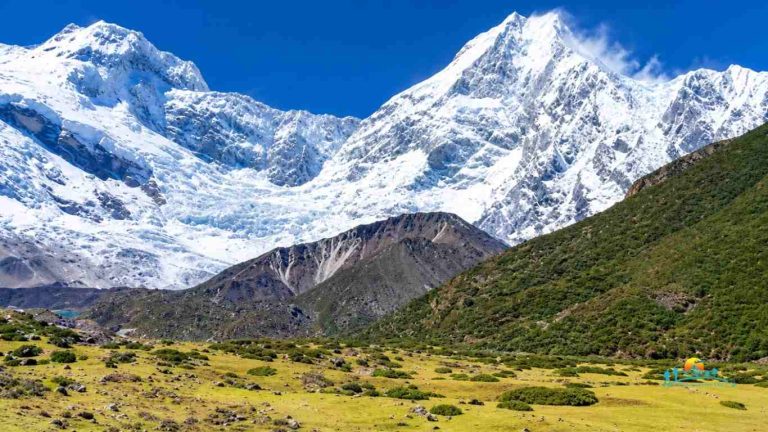
March to May and October to November are popular months for the Everest Base Camp Trek. Spring brings warmer days, while autumn often offers clear mountain views. Winter and monsoon trips require extra care due to cold, snow, rain, and possible flight delays.
Spring and autumn are ideal for the Annapurna Base Camp Trek. March and April bring blooming forests, while October and November often offer clear mountain views. Monsoon rain and winter snow can make trails more challenging.
March to May and October to November are popular for the Manaslu Circuit Trek. Check weather and snow conditions before crossing Larkya La Pass. You must also arrange the required permits for this restricted area.
Nepal’s weather can vary from one region to another, so it helps to choose your travel dates based on your main destinations.
| Region | Preferred time to visit | Weather and travel notes |
|---|---|---|
| Kathmandu Valley | March to May and September to November | Good periods for walking tours, heritage sites, and cultural events |
| Pokhara | October to November and March to April | Clear days often offer mountain views, while monsoon rain can be heavy |
| Everest region | March to May and October to November | High altitude brings cold nights, and mountain weather can change quickly |
| Annapurna region | March to May and September to November | Conditions vary between lower villages and high mountain passes |
| Chitwan and Bardia | Cooler months, especially winter | Heat can be strong before and during the monsoon |
| Upper Mustang | Late spring to early autumn is often considered | The rain shadow helps during the monsoon, but strong winds and local conditions still matter |
| Manang | Spring and autumn are popular | High elevations can be cold, and snow may affect access |
The monsoon is not necessarily a bad time to visit Nepal, but it requires more care when choosing destinations and transport. Rain can affect trekking trails, roads, mountain views, and domestic flights.
Some travelers still enjoy Nepal during this period. The hills become green, rivers run high, and fewer visitors may be present in some areas. Cultural sites in Kathmandu remain worth visiting, even if you need to plan around rain.
Upper Mustang is a well-known choice for summer trekking because it lies in a rain-shadow area. However, the weather can still be windy, cold, or difficult, and permits are required.
Before traveling during the monsoon:
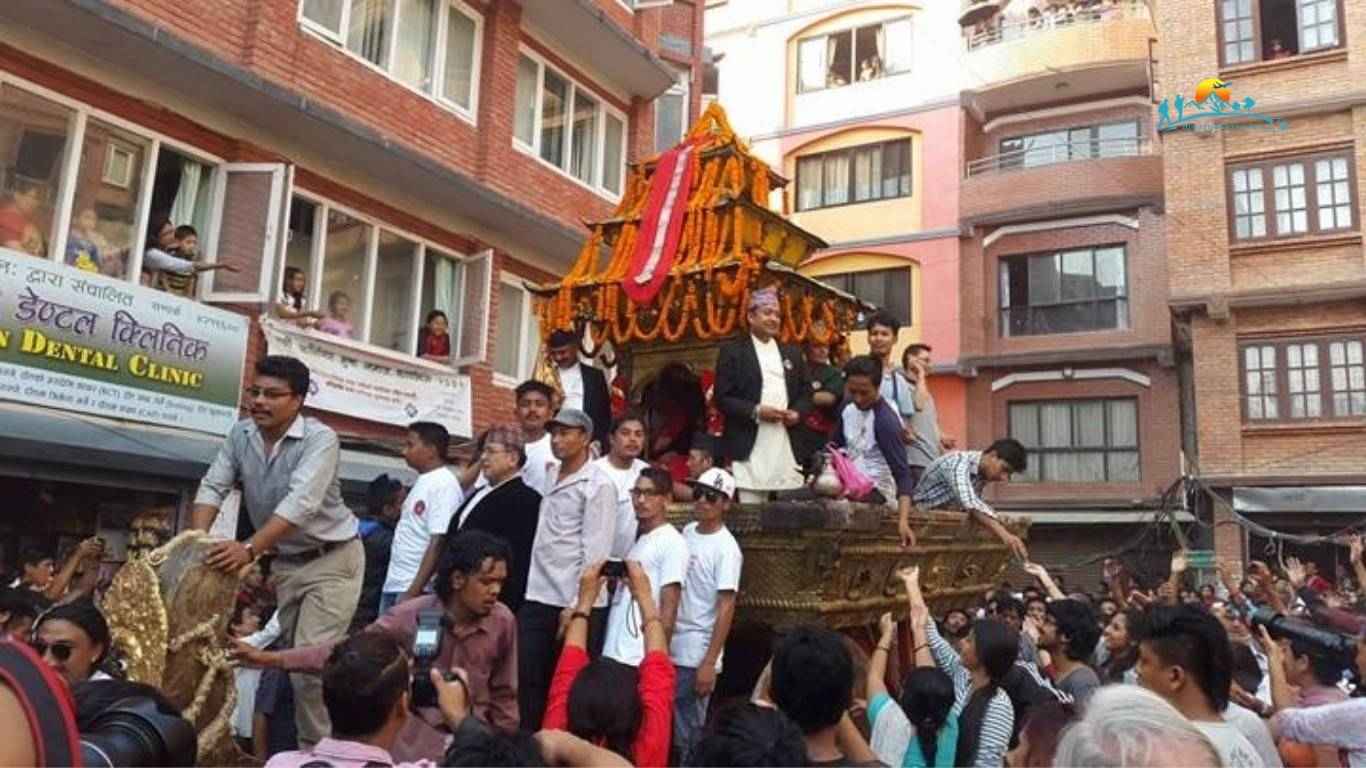
Nepal’s festivals are a good reason to plan a trip around particular dates. Many celebrations follow the lunar calendar, so their dates change from year to year. Check the relevant year’s calendar before booking flights or accommodation.
Here are some major festivals to consider.
| Festival | Usual time of year | Where to experience it |
|---|---|---|
| Holi | February or March | Kathmandu, Pokhara, and many towns across Nepal |
| Nepali New Year | Mid-April | Kathmandu, Bhaktapur, Patan, and other cities |
| Buddha Jayanti | April or May | Lumbini, Boudhanath, Swayambhunath, and other Buddhist sites |
| Indra Jatra | Usually September | Kathmandu Durbar Square and nearby streets |
| Dashain | September or October | Across Nepal, with family gatherings and temple visits |
| Tihar | October or November | Across Nepal, with lights, decorations, and family celebrations |
Autumn is an excellent choice if you want to combine trekking with Dashain or Tihar. Spring works well for visitors interested in Holi, Nepali New Year, or Buddha Jayanti.
Good planning helps you prepare for the weather, avoid unnecessary delays, and choose the right activities for your travel dates.
Check forecasts for your actual destinations rather than relying on a single forecast for all of Nepal. Conditions in Kathmandu may differ sharply from those along an Everest trek or around Pokhara.
For trekking, ask about recent snowfall, rainfall, trail access, and conditions at high passes. Weather at lower elevations does not always show what you can expect higher up.
Your packing list should match your destinations and the time of year.
High-altitude treks need more careful preparation than city sightseeing. Follow your guide’s equipment advice and do not rely on the season alone to decide what to pack.
Road conditions and mountain weather can affect journeys in Nepal. During the monsoon, rain and landslides may cause delays. Mountain flights can also be disrupted by poor visibility or changing weather.
Avoid booking an important international connection immediately after a domestic mountain flight. A spare day can give you more flexibility if your journey takes longer than expected.
October, November, March, and April are popular travel months, especially on well-known trekking routes. If your dates are fixed, arrange accommodation, guides, transport, and permits early enough for your chosen itinerary.
For restricted areas such as Upper Mustang, confirm the current permit rules before setting off. Requirements may differ by location, so use official guidance rather than relying on an old travel article.
The best time to visit Nepal depends on what you want to experience. October and November are excellent choices for clear mountain views and classic trekking, while March and April offer spring flowers and warmer days. Winter can suit cultural tours and wildlife trips, and the monsoon may work for travelers visiting suitable rain-shadow areas.
Before booking, compare the weather, altitude, and local conditions for your chosen destinations. With the right dates and careful planning, you can enjoy Nepal’s mountains, heritage sites, wildlife, and local festivals in every season.
October and November are generally the best months to visit Nepal for trekking, mountain views, and cultural tours. March and April are also excellent for spring trekking and rhododendron blooms. The right time ultimately depends on your destinations, planned activities, altitude, and tolerance for rain or cold.
October is a strong choice for first-time visitors because it often offers clear mountain views, comfortable daytime weather, and opportunities to explore cultural sites. April is another good option for spring scenery. Book around your priorities, since weather, crowds, and conditions vary by region.
Yes, Nepal offers worthwhile experiences in every season, although some activities become harder at certain times. Spring and autumn suit many trekking routes, winter works well for cultural visits and lowland wildlife trips, and the monsoon can suit carefully selected rain-shadow destinations.
The monsoon season, generally June through August, can offer lower demand and discounts on some accommodation and travel packages. However, savings depend on the destination and provider. Before booking, consider possible transport delays, rainfall, and whether your planned activities will operate during your visit.
October and November often provide some of Nepal’s clearest Himalayan views because the monsoon has usually passed. Spring can also offer beautiful scenery, although haze, clouds, and wildfire smoke may reduce visibility. Mountain weather changes quickly, so clear views cannot be guaranteed on specific dates.
Yes, you can visit Nepal during the monsoon, but flexible planning is important. Rain can affect mountain views, roads, trekking trails, and domestic flights. Cultural sightseeing remains possible, while Upper Mustang and certain other rain-shadow areas may offer better trekking conditions with suitable local guidance.
December and January can be cold, particularly in the mornings, at night, and at higher elevations. Kathmandu may still have sunny afternoons, while mountain trails can experience snow and freezing temperatures. Lower-altitude sightseeing and wildlife trips are often more comfortable than demanding high-pass treks.
Seven to ten days can suit a trip combining Kathmandu, Pokhara, and a short activity or excursion. Longer itineraries are preferable if you want a multi-day Himalayan trek, wildlife experiences, or several regions. Allow extra days for weather-related delays and changes to transport plans.
March to May and October to November are popular trekking periods in Nepal. Spring offers flowering forests and warmer days, while autumn often brings clearer views. The ideal window varies by route and altitude, so check trail conditions, permits, snowfall, and weather before departing.
March and April are generally good months to see Rhododendrons in Nepal, although flowering times vary with altitude, location, and weather. Lower-elevation forests may bloom earlier than higher mountain areas. Ask locally about current flowering conditions if seeing these colourful forests is a main trip priority.
September to November is an excellent period for experiencing major festivals such as Dashain and Tihar, depending on the year’s calendar. Spring offers celebrations such as Holi and Nepali New Year. Since festival dates can change annually, confirm the dates before booking your trip.
May can suit trekkers heading to selected higher-altitude routes and travellers interested in spring scenery. Temperatures rise in lower regions, and haze, afternoon storms, or early monsoon conditions may affect some plans. Check the specific destination’s forecast before choosing May for trekking or sightseeing.
Upper Mustang and some other Himalayan rain-shadow areas receive less monsoon rain than many southern slopes. They can be worth considering for summer trekking, but weather and access still vary. Check current trail conditions, permit requirements, and local advice before arranging a trip.
Pack according to the season, destination, and elevation. Spring and autumn call for layers, sun protection, and rainwear. Monsoon travel requires waterproof clothing and suitable footwear, while winter and high-altitude treks need warmer insulation. Check your itinerary and follow your guide’s equipment recommendations.
No, rainfall varies by location and day, and it does not necessarily rain continuously everywhere. However, frequent downpours, cloudy skies, and wet trails are common in many areas during the monsoon. Check local forecasts and travel conditions because heavy rain can disrupt roads and flights.
Autumn and spring are convenient seasons for many family trips because they often offer favourable conditions for sightseeing and outdoor activities. The best dates depend on children’s ages, destinations, and planned travel. Choose realistic daily schedules, allow rest time, and check weather before arranging longer journeys.
Yes, some lower-altitude treks are possible in winter, depending on local weather and trail conditions. High-altitude routes and passes may become difficult because of snow, ice, and freezing temperatures. Choose a suitable route, carry appropriate gear, and check conditions with an experienced local guide.