Best Time to Visit Nepal: Weather, Seasons, and Month-by-Month Guide
October to November and March to April are the best time to visit Nepal for clear mountain views and trekking,…
 Himalayan Gateway Trek - On
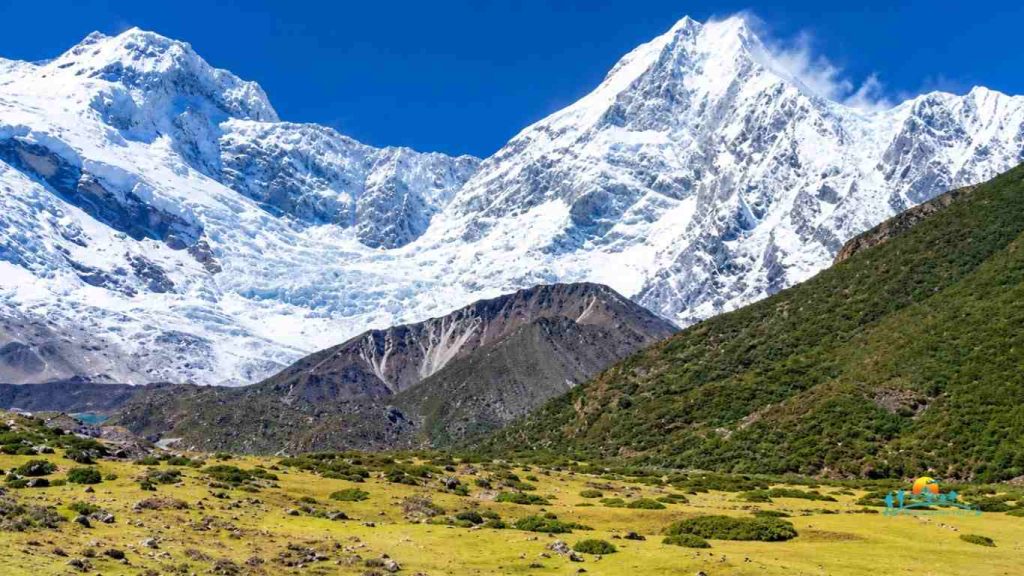
 The best time for Manaslu Circuit Trek is generally spring and autumn, but the right dates depend on weather, snow at Larkya La, trail conditions, crowds, and what you want to see. October usually brings some of the clearest mountain views, while April offers warmer days and rhododendron flowers. Late September and November can also be good, but conditions change as the season moves on.
Manaslu is not a trek where the calendar tells the whole story. The lower Budhi Gandaki Valley can feel warm while the area around Dharamsala and Larkya La is freezing. A rainy week in the lower valley can also affect bridges, trails, and road access. For that reason, check recent route conditions before leaving Kathmandu.
The main trekking windows are March to May and late September to November, with October often chosen for stable weather and clear mountain views. Spring is a good choice for warmer walking conditions and rhododendron flowers, while late autumn brings colder nights but often crisp views.
| Time | Lower Valley | Higher Manaslu | Larkya La | Crowds | Best For |
|---|---|---|---|---|---|
| March | Mild to warm | Cold mornings and nights | Snow can remain | Lower | Quieter spring trek |
| April | Comfortable | Cold at night | Usually good conditions | Moderate to high | Flowers and mountain views |
| May | Warmer | Mild to cold | More cloud can develop | Moderate | Warm days and spring scenery |
| June | Warm and wetter | Cloud and rain increase | Conditions become less reliable | Low | Experienced trekkers with flexible plans |
| July | Wet | Wet and cloudy | More difficult to plan | Low | Monsoon trekking with local advice |
| August | Wettest period | Rain and cloud | Trail problems can occur | Low | Experienced trekkers only |
| September | Improving | Conditions change quickly | Early month can be wet | Moderate | Late-month autumn trekking |
| October | Dry and comfortable | Cold nights | Usually the most dependable period | High | Clear views and classic trekking |
| November | Mild below, cold above | Colder nights | Snow becomes possible later | Moderate | Crisp views and quieter trails |
| December | Cool | Very cold | Snow and closures become more possible | Low | Experienced winter trekkers |
| January | Cold | Very cold | Snow and ice can make crossing difficult | Very low | Quiet winter trekking |
| February | Cold, slowly warming | Cold | Snow may remain | Low | Late winter conditions |
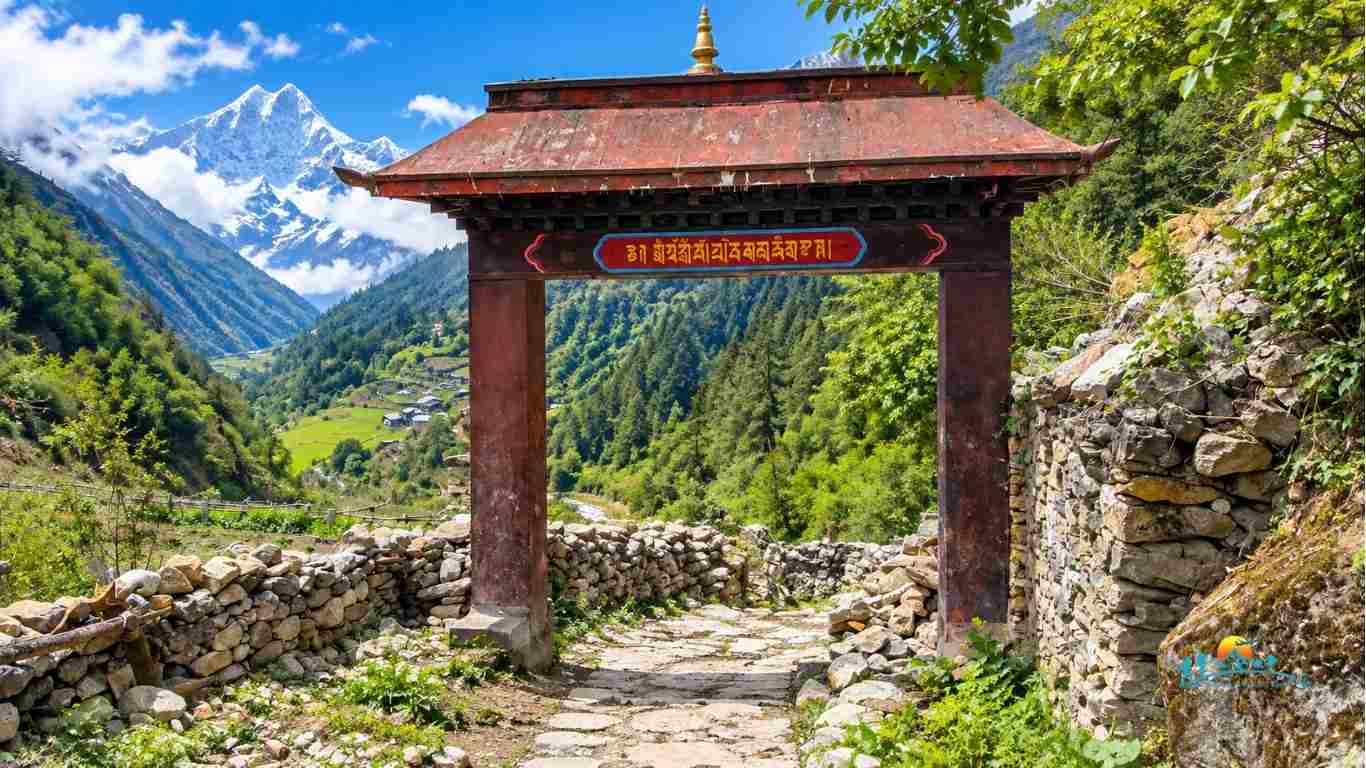
Timing matters because the Manaslu Circuit passes through several climate zones before reaching the 5,160-meter Larkya La Pass. Nepal Tourism Board lists Larkya La at 5,160 meters, while the route itself rises from subtropical sections of the Budhi Gandaki Valley to high mountain terrain.
A morning can be warm around Machha Khola and much colder by the time you reach Samagaun.
The route changes in a clear pattern:
The Larkya La crossing is the highest point of the standard Manaslu Circuit, so snow, wind, visibility, and trail conditions matter greatly on this day.
A good trekking season lowers the chance of serious weather problems, but it does not remove them. Fresh snow can slow the group down. Strong wind can make the pass feel much colder. Poor visibility can make route finding harder.
The first part of the Manaslu trip often involves a road journey toward the trailhead. A trek can have good mountain weather and still face a delay because of road or bridge problems farther down the valley.
This is especially important during the rainy season and after major rainfall. Check recent transport and road information along with mountain weather.
The latest Nepal Tourism Board update available before publication states that damaged structures on the route near Namrung had been restored to a condition suitable for trekking and that the earlier trekking restriction in the affected section had been lifted. Nepal Tourism Board also advised travelers to stay updated on local conditions and follow safety precautions.
This update followed damage to the route in September 2026. Because trail conditions can change after heavy rain, readers should check for a fresh local update close to their departure date.
Route status is not the same as weather status. A trail can be open while rain, snow, a local landslide, or a damaged side trail still affects a particular day.
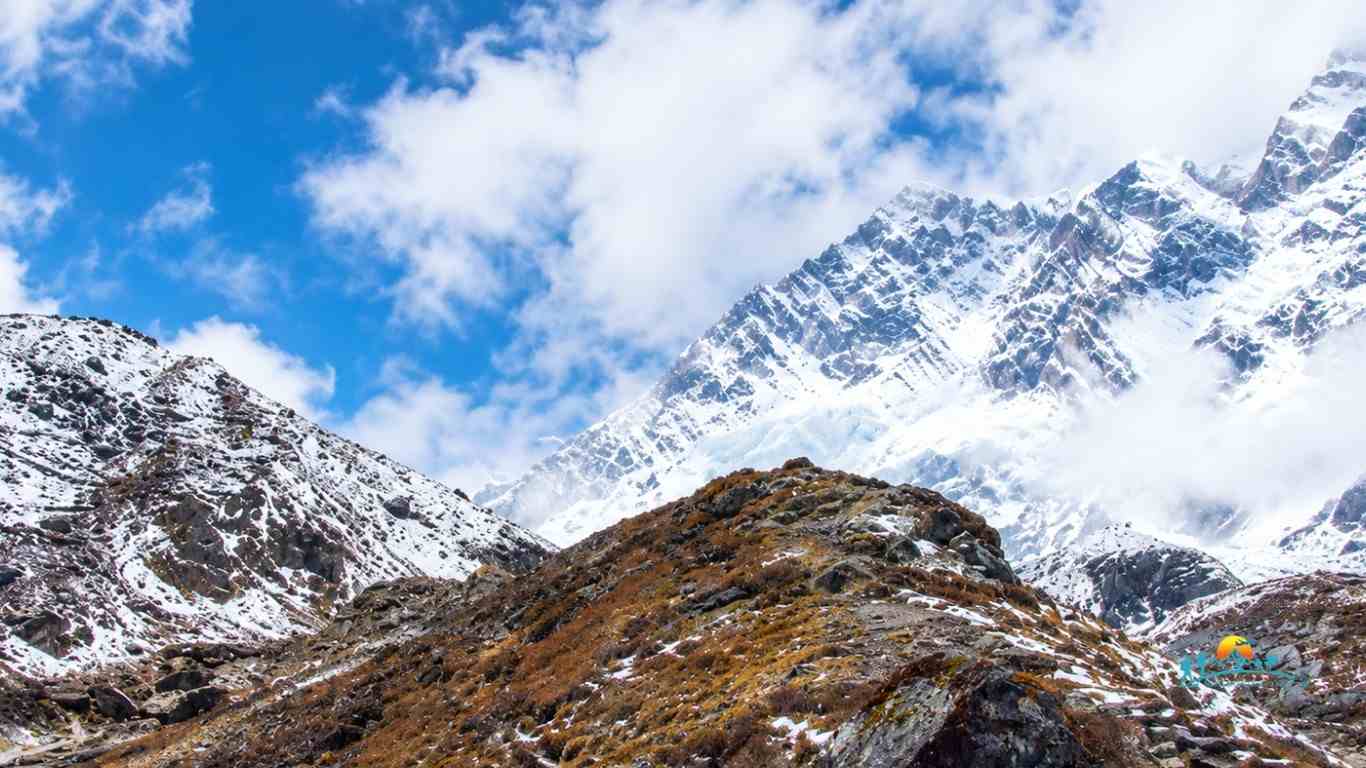
Autumn is the most popular season for the Manaslu Circuit because the monsoon has usually passed, mountain views often become clearer, and October normally brings strong trekking conditions. September and November need more careful date selection because both months sit on either side of the main autumn peak.
September is a transition month, so the second half of the month is generally easier to plan than the first half.
Early September can still feel like the end of monsoon, particularly in the lower valley. Rain can affect trails, rivers, bridges, and roads. Recent 2026 events also show why trekkers should not treat September 1 as an automatic start to dry-season conditions.
Late September is a different story. The weather can become drier, mountain views can improve, and autumn trekking begins to feel more established.
For a September trek, check the route close to departure rather than relying only on the calendar.
October is commonly chosen for the clearest mountain views and stable trekking conditions. It is also the busiest period, so accommodation and transport can require more planning than during quieter months.
The days are usually comfortable for walking in the lower and middle sections, but nights become cold as the trek climbs higher.
Around Samagaun, Samdo, and Dharamsala, warm layers become much more important. The Larkya La day can start very cold, even when the lower part of the trek feels pleasant.
October suits trekkers who want:
The trade-off is simple. October usually gives excellent trekking conditions, but more people also choose the same month.
November starts with many of the qualities people like about October. The skies can stay clear, the air feels crisp, and the trail becomes quieter.
The main change is temperature.
As November progresses, nights become colder and the higher sections can receive snow. Late November therefore needs more flexibility than early November, especially around Larkya La.
For trekkers who prefer fewer people and do not mind colder mornings, early or mid-November can be an appealing time.
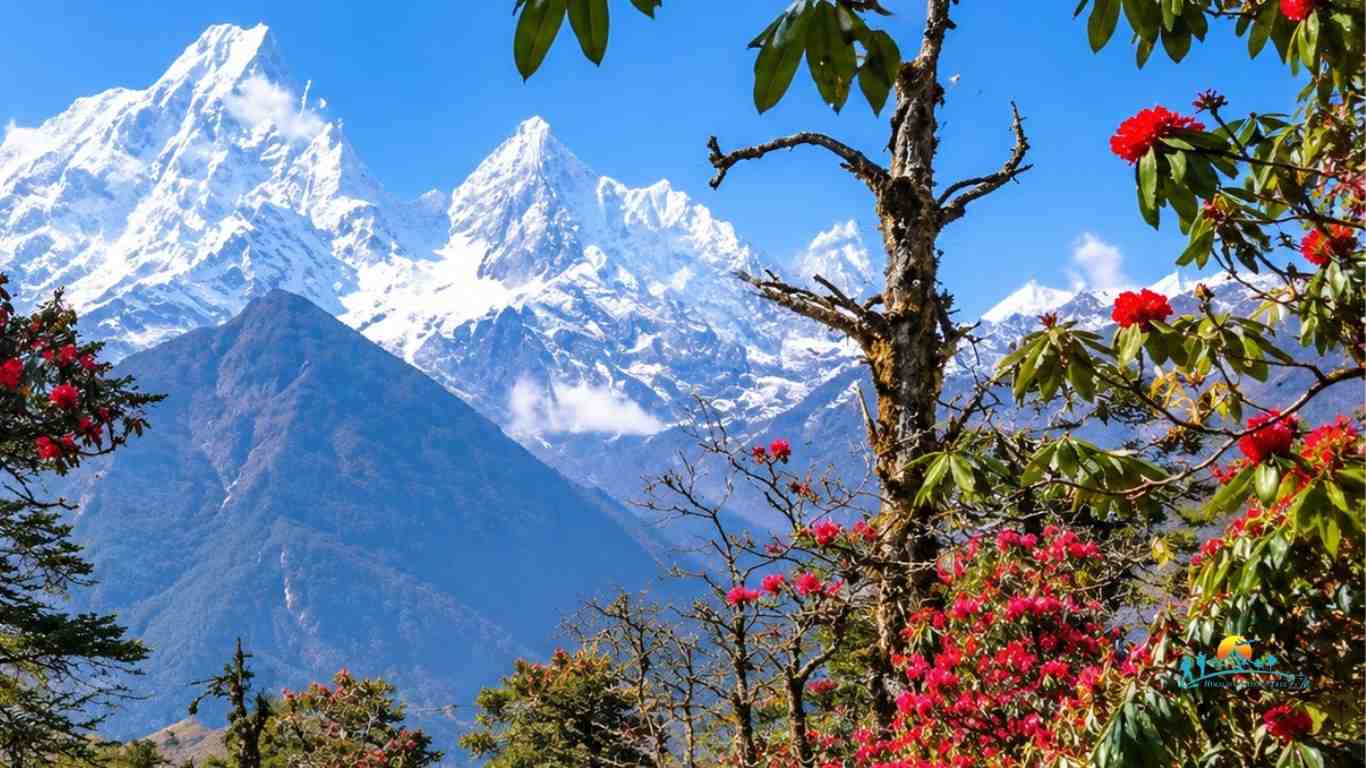
Spring is the second major trekking season and is especially attractive to people who want warmer conditions, blooming rhododendrons, and a quieter trail than the main October rush.
March marks the start of the spring trekking period, but early March can still feel like winter at higher elevations. Lower sections gradually become more comfortable, while snow can remain around the higher parts of the route.
Late March usually gives a better balance than the first part of the month. Trekkers can enjoy improving temperatures and the start of spring vegetation while still seeing snow on higher mountains. If you choose March, pack for both spring days and winter-like nights.
April is one of the strongest spring months for the Manaslu Circuit.
The lower and middle parts of the trail become greener, rhododendrons add color to the forests, and walking conditions are generally more comfortable than in the colder months.
April can also offer good mountain views, although afternoon cloud can develop in some areas.
April is a strong choice for trekkers who want a mix of:
May is warmer than April, but the weather becomes less settled as the monsoon season gets closer. Mornings can still provide good views, while clouds can build later in the day. The exact timing changes from year to year.
Early May is generally easier to plan than late. May can work well for people who want warmer conditions and spring scenery but can accept a greater chance of afternoon cloud and changing weather.
Want help choosing your dates and planning the Larkya La crossing? See our Manaslu Circuit Trek – 15 Days.
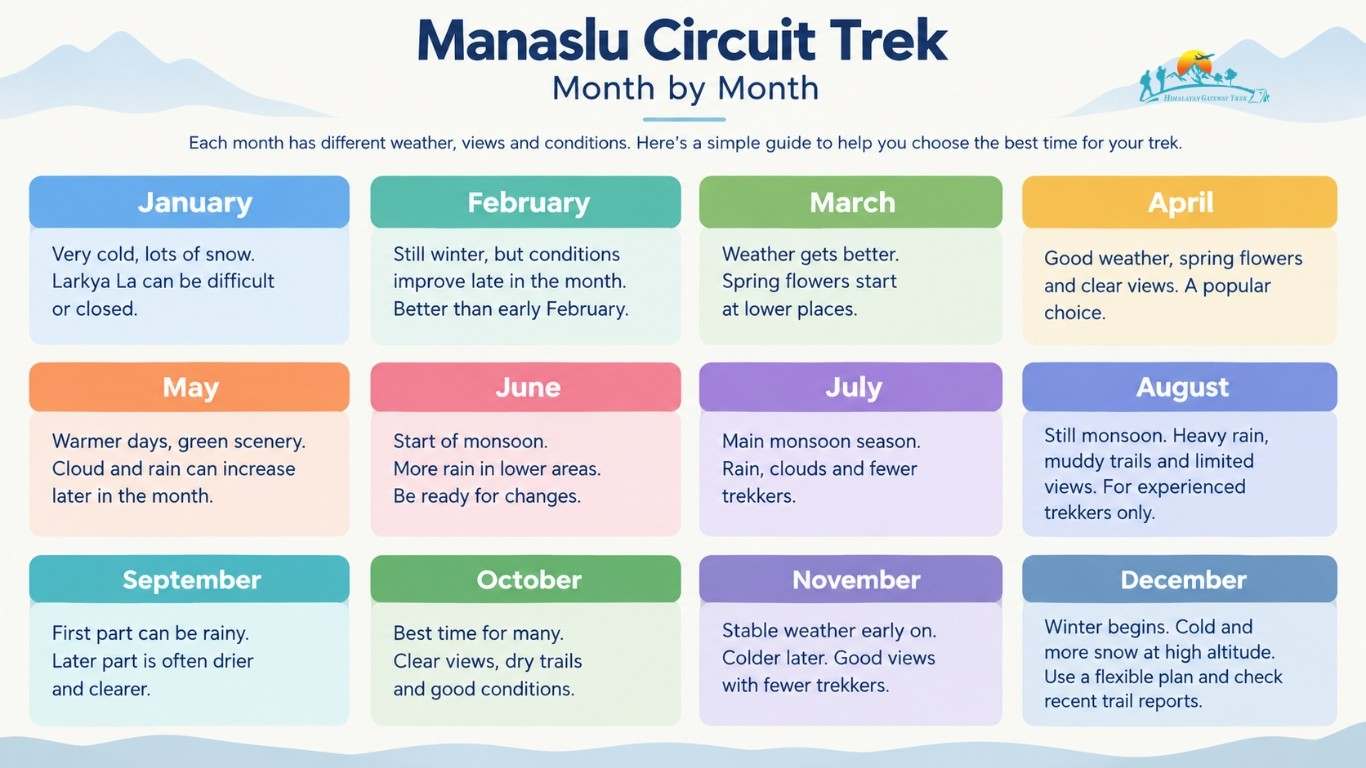
The best month depends on the kind of trek you want, so looking at each month gives a more useful answer than naming only one season.
January is one of the coldest times to trek Manaslu. Snow and ice become more important at higher elevations, and the Larkya La crossing may become difficult or impossible depending on conditions. The trail is very quiet, but winter conditions require strong preparation and flexibility.
February remains a winter month, although conditions begin to change toward the end of the month. Lower sections slowly become more comfortable, while the higher route can still have snow and very cold nights.
Late February can be a better choice than early February for trekkers who want an early start to the spring season.
March brings improving weather and the start of spring flowers at lower elevations. Early March can still have winter conditions at high altitude.
Late March is generally more suitable for trekkers who want warmer days without waiting until April.
April offers a strong mix of comfortable daytime conditions, spring flowers, and mountain scenery. Rhododendrons are an important attraction, and higher parts of the route remain cold enough for snow.
April is a popular spring choice for good reason.
May brings warmer days and green scenery, but cloud and rainfall can become more common as the month progresses. Early May is generally easier to plan than late May. Check the forecast and recent trail reports before departure.
June marks the move toward the monsoon period. Rainfall becomes more important in the lower valley, while cloud can limit mountain views. Road access and trail conditions deserve extra attention.
Trekkers choosing June should have a flexible plan.
July is part of the main monsoon season. Rain can affect lower trails, roads, rivers, bridges, and visibility. The number of trekkers usually drops sharply, but the quiet trail comes with more weather-related uncertainty.
August is also deeply affected by monsoon weather. Heavy rain can create muddy trails and increase the chance of landslides or temporary access problems. Mountain views can remain limited by cloud.
This month suits experienced trekkers who understand the risks and have a flexible route plan.
September is a changing month. The first part can still carry monsoon conditions, while the later part often becomes drier and clearer.
Recent 2026 events show why current trail reports matter even when autumn is approaching.
October is one of the most popular choices for Manaslu. It often brings clear mountain views, dry walking conditions, and good conditions around the high pass.
The main disadvantages are higher demand and colder nights at higher elevations.
November starts with stable autumn conditions in many years and becomes colder as the month progresses. Early and mid-November can offer clear views with fewer trekkers than October. Late November has a greater chance of snow around Larkya La.
December marks the start of serious winter conditions. Early December can still provide suitable trekking weather in some years, but temperatures fall quickly and snow becomes a bigger concern at high altitude.
Trekkers choosing December should use a flexible schedule and obtain a recent report on Larkya La before attempting the crossing.
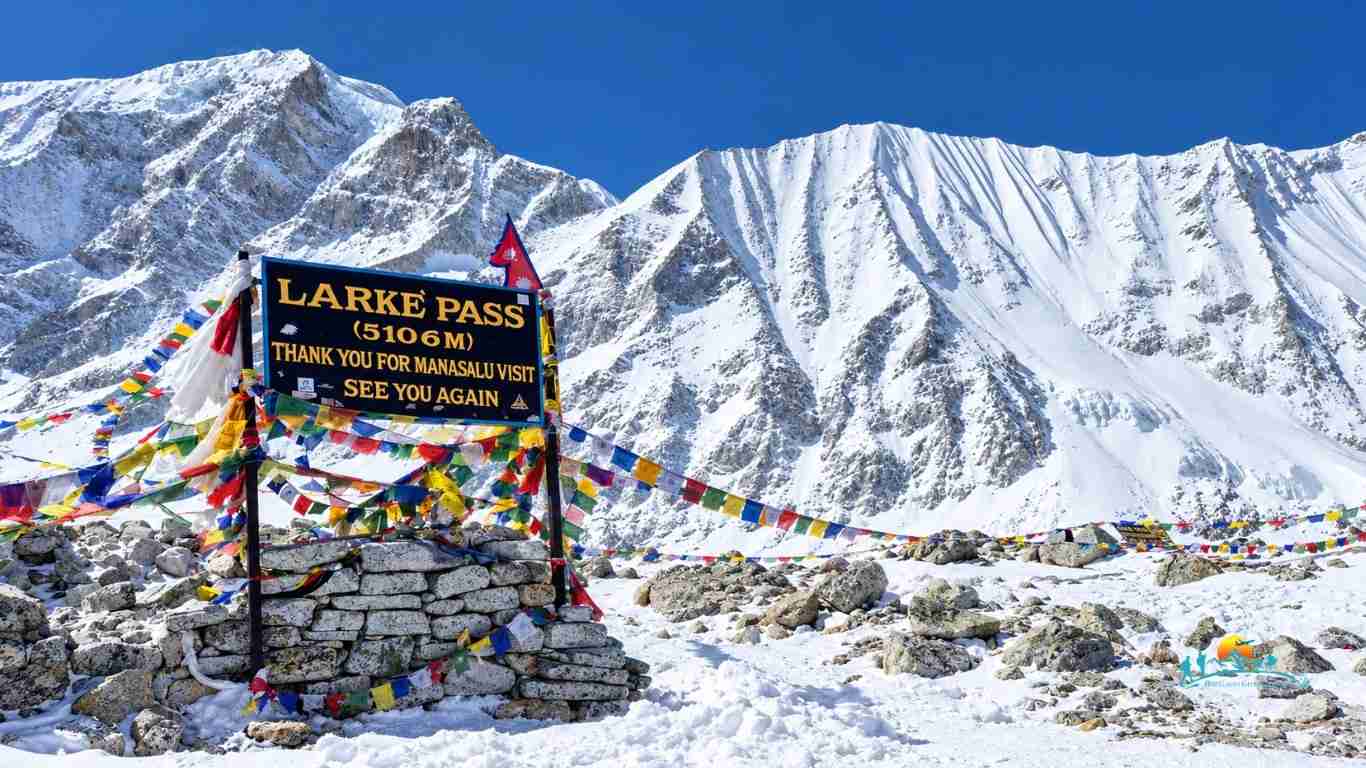
Larkya La is one of the most important parts of the Manaslu Circuit because the pass reaches 5,160 meters and is the highest point of the trek. The conditions at the pass can change quickly, so the season alone cannot tell you whether the crossing will be easy. Snow, wind, visibility, temperature, and recent weather all play a role.
Recent snowfall can make the trail slower and harder to follow, especially when fresh snow covers the path. Strong wind can make the cold feel much stronger at high altitude. Poor visibility can also make the route harder to see.
The temperature, weather from the previous few days, and the time of day can all affect the crossing. A clear morning in Samdo does not always mean that the weather will stay clear at Larkya La.
Most trekkers spend the night near Dharamsala before crossing Larkya La the next day. The group usually starts early because the crossing is long and trekkers need enough daylight to reach the other side. Starting early can also help avoid some of the stronger winds and changing weather that may come later in the day.
The exact start time can change from one trip to another. Your guide will consider the weather, trail condition, group walking speed, and the latest information from the route before deciding when to leave.
Larkya La can become more difficult after fresh snowfall, strong wind, or poor visibility. Snow can slow down the group and make parts of the trail harder to follow. Strong winds can make the high pass much colder, while clouds or fog can reduce visibility.
Snow is more likely during late autumn and winter than during the main part of October, but weather in the mountains can change at any time. A good trekking season can still have a difficult crossing day.
Your trekking plan should have enough time to deal with changing weather. If conditions become unsafe or the trail becomes too difficult, the guide may decide to wait, change the schedule, or use an extra day. It is better to adjust the plan than to rush across the pass in poor conditions.
A Manaslu itinerary should therefore leave some space for weather changes, especially around Larkya La. This gives the group more time to make a safe crossing when conditions are suitable.
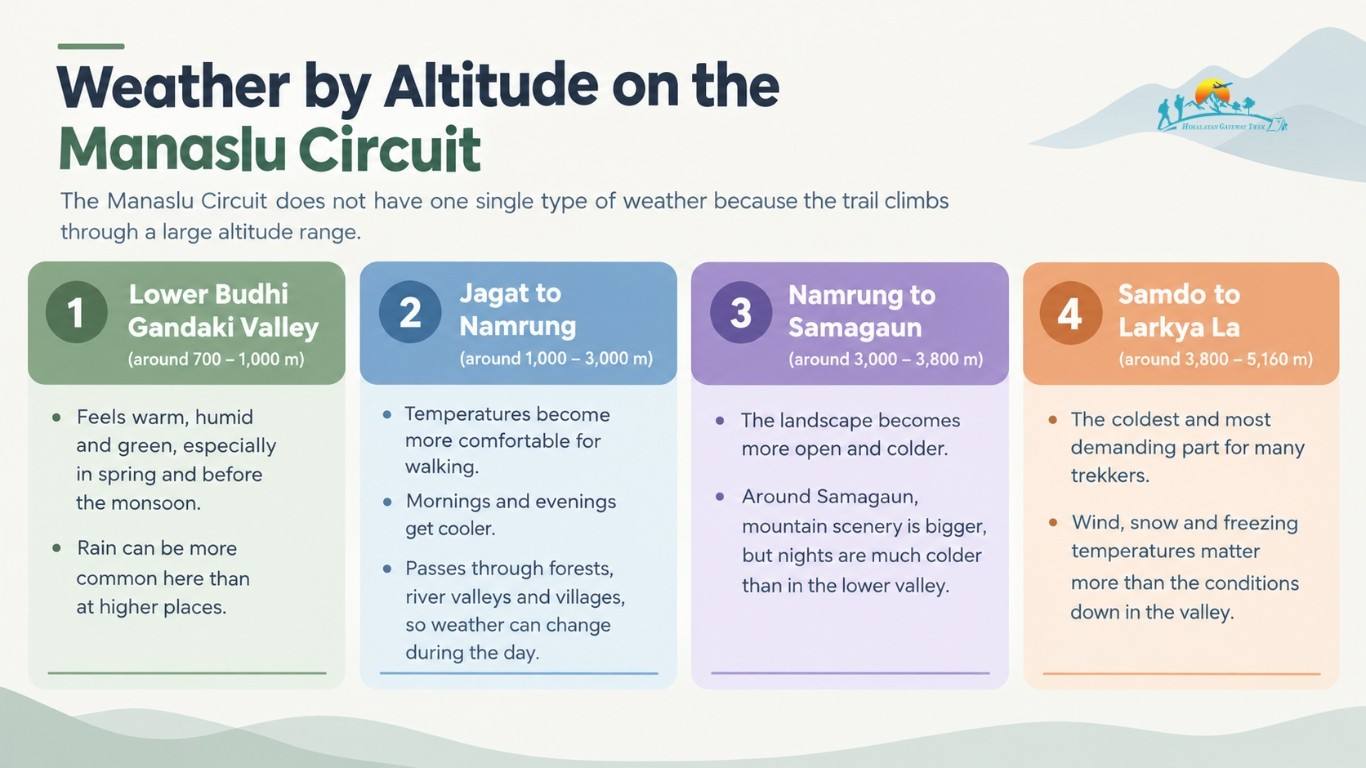
The Manaslu Circuit does not have one single type of weather because the trail climbs through a large altitude range.
The lower section can feel warm, humid, and green, especially during spring and before the main monsoon period.
Rain can be more important here than around the higher villages.
Temperatures become more comfortable for walking as the trail climbs, but mornings and evenings get cooler.
This section also passes through forest, river valleys, and villages, so weather can change during the day.
The landscape becomes more open and colder.
Around Samagaun, mountain scenery becomes a bigger part of the trek, but nights are much colder than in the lower valley.
This is the coldest and most demanding part for many trekkers.
At these elevations, wind, snow, and freezing temperatures matter more than the conditions down in the valley.
Crowds are highest during the main autumn window, particularly in October, while winter and the monsoon period are much quieter. Spring sits between those extremes, with April often attracting a strong number of trekkers.
| Period | Trail Traffic | Lodge Demand | What to Expect |
|---|---|---|---|
| March | Low to moderate | Moderate | Quiet spring conditions |
| April | Moderate to high | Moderate to high | Busy spring period |
| May | Moderate | Moderate | Warmer and less busy |
| June to August | Low | Low | Few trekkers, weather concerns |
| September | Moderate | Moderate | Increasing demand late in month |
| October | High | High | Peak autumn period |
| November | Moderate | Moderate | Quieter, colder conditions |
| December to February | Low | Lower | Winter closures can matter |
Dharmasala is particularly important because it is the final overnight stop before Larkya La for many itineraries. During busy periods, a shortage of beds can affect the plan.
Ask your agency how accommodation is handled before you start, especially for October departures.
Yes, you can trek the Manaslu Circuit during monsoon, but June to August brings more rain, muddy trails, and cloudy weather. Heavy rain can also affect roads, bridges, and river crossings.
The trail is quieter during monsoon, but mountain views are less reliable and landslides can cause delays. Trekkers should check current trail conditions and travel with a local guide. A flexible itinerary is helpful because weather and road conditions can change quickly.
Yes, you can trek Manaslu in winter, but snow and very cold temperatures make the higher sections harder than in spring or autumn.
December can still have suitable trekking days, while January and February are usually much colder. Snow and ice can affect the trail, and Larkya La can become difficult to cross.
Winter also brings fewer trekkers and quiet mountain views. However, some lodges may close, daylight is shorter, and you need more time in case weather changes.
A clear forecast in Kathmandu does not mean the conditions at Larkya La will be the same. Always check recent high-altitude weather and trail conditions before crossing the pass.
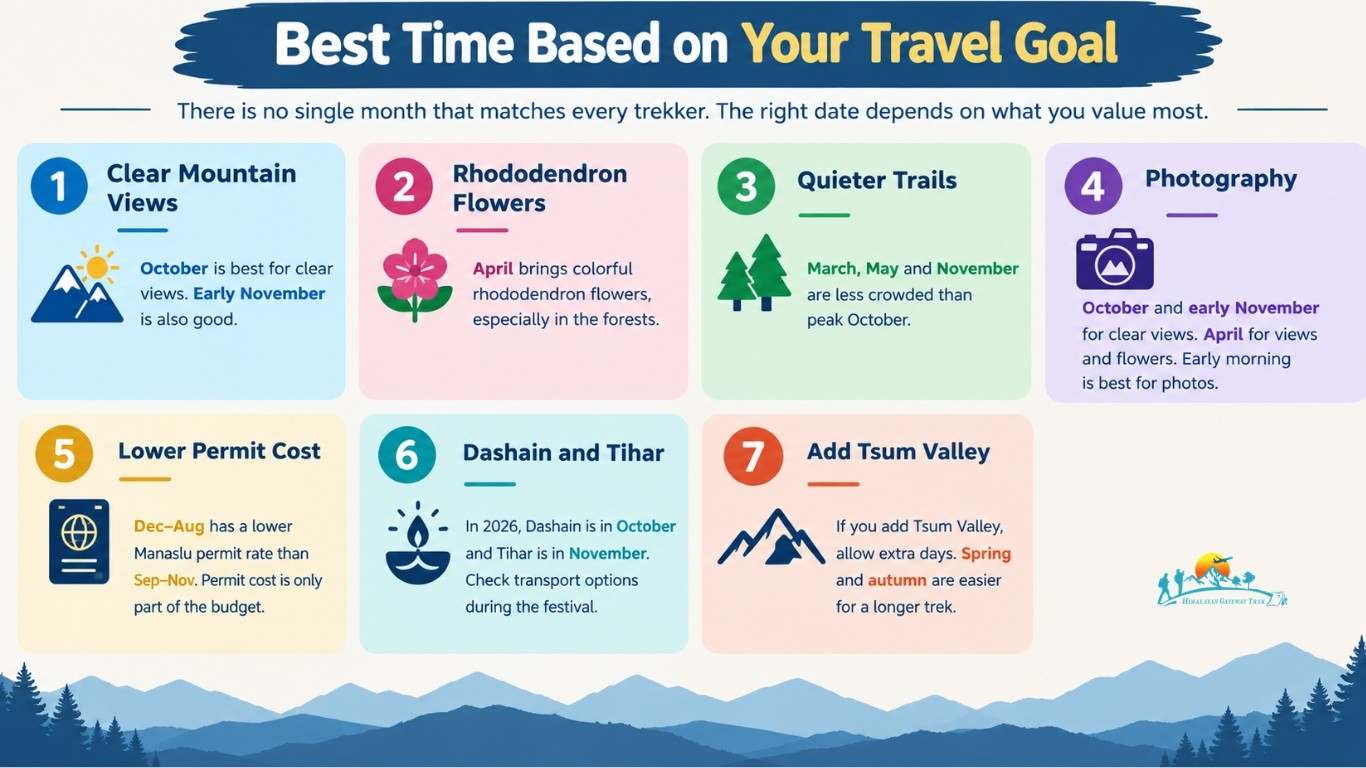
There is no single month that matches every trekker. The right date depends on what you value most.
October is a popular choice for clear mountain views because it follows the monsoon and usually offers dry, crisp conditions. Early November can also be good, with colder temperatures becoming the main change.
April is one of the most attractive months for rhododendron scenery, especially through the forested sections of the trek.
Spring brings more color to the lower and middle parts of the route while higher areas remain cold and snowy.
March, May, and November can offer a quieter experience than peak October.
For an even quieter trail, winter and monsoon months have fewer trekkers, but the lower number of people comes with colder conditions or greater weather concerns.
October and early November work well for trekkers who want clear mountain backgrounds.
April is a strong choice for people who want both mountain scenery and spring flowers.
Photography also depends on the time of day. Early mornings often give better mountain visibility before clouds build around some peaks.
The Department of Immigration currently lists a lower Manaslu restricted-area permit rate from December through August than during September through November.
Permit cost is only one part of the budget, so do not choose a month based on the permit alone.
Autumn trekking can overlap with Nepal’s major festivals.
In 2026, Dashain falls in October and Tihar takes place in November. Trekkers planning travel around the festival period should also check transport availability because many local people travel between cities and villages during major holidays.
If you plan to combine Tsum Valley with the Manaslu Circuit, allow extra days in your itinerary.
Spring and autumn are generally the easier seasons for a longer trek because the main route and the added valley both need to fit into the same weather window.
Start with what matters most to you, then check whether the expected weather matches your plan.
| Your priority | Period to consider | Main point to remember |
|---|---|---|
| Clear mountain views | October to early November | Higher demand |
| Spring flowers | April | Some afternoon cloud possible |
| Quieter trail | March, May, November | Weather varies more |
| Warm spring walking | April to early May | Monsoon approaches later |
| Cold, quiet trek | December to February | Snow becomes a bigger concern |
| Lower permit rate | December to August | Weather can be less suitable |
| Autumn experience | Late September to November | Early September is different from late September |
| Monsoon experience | June to August | Rain and access problems can occur |
The best time for Manaslu Circuit Trek depends on your plans. October is a good choice for clear mountain views, April for spring flowers, and November for a quieter trail.
Late September can also be good, while early September may still have monsoon rain. Winter brings cold and snow, and monsoon can cause rain, muddy trails, and road delays.
Before booking, check the latest weather, Larkya La conditions, road access, accommodation, and route updates.
The ideal time is during Autumn (September to November) and Spring (March to May). These seasons offer crystal-clear mountain views, stable weather, and moderate temperatures, ensuring safer trail conditions and the best overall trekking experience in the Himalayas.
Yes, but winter (December to February) brings freezing temperatures and heavy snowfall. While trails are peacefully crowd-free, crossing the 5,106m Larkya La Pass becomes highly challenging and often impassable. It is strictly recommended only for experienced, well-equipped alpine trekkers.
While technically open, monsoon trekking (June to August) is highly discouraged. Heavy rainfall causes dangerously slippery trails, severe landslide risks, and dense clouds that obscure mountain views. If you go, pack premium rain gear and expect frequent itinerary disruptions.
Temperatures fluctuate drastically by altitude and season. Spring and autumn days average 10°C to 15°C, dropping below freezing at night. Winter nights at high camps like Dharmasala plunge to -20°C, requiring exceptional cold-weather gear for safe survival.
The safest periods are October to November and April to May. During these peak months, weather remains highly stable, snowmelt minimizes ice hazards, and clear skies provide optimal visibility for navigating the challenging 5,106-meter high-altitude terrain safely.
Yes, hiring a licensed guide is legally mandatory. The Nepal government designated Manaslu a restricted area, meaning independent solo trekking is strictly prohibited. You must trek with a registered guide and a minimum group size of two people.
You absolutely need three specific permits: the Special Restricted Area Permit (RAP), the Manaslu Conservation Area Project (MCAP) permit, and the Annapurna Conservation Area Project (ACAP) permit. Your licensed trekking agency must legally arrange these official documents for you.
It is considered a strenuous, high-altitude trek demanding excellent physical fitness. Covering rugged, steep terrain for roughly 13 to 15 days, trekkers face significant elevation gains, culminating in the physically exhausting 5,106-meter Larkya La Pass crossing.
The route features basic but comfortable teahouses managed by local families. You can expect twin-bed rooms with shared bathrooms. While lower elevations offer hot showers and WiFi, amenities become extremely sparse and basic as you ascend toward higher altitudes.
October and November bring the highest crowds, though it remains significantly quieter than Everest or Annapurna. Expect bustling teahouses and busy trails. If you prefer absolute solitude alongside good weather, early March or late November are excellent, peaceful alternatives.