

Dashain Festival of Nepal: Dates, 15 Days, Traditions and History
The Dashain Festival of Nepal is the country's biggest annual festival for many Nepali families, bringing together religious worship, family…
 Himalayan Gateway Trek - On
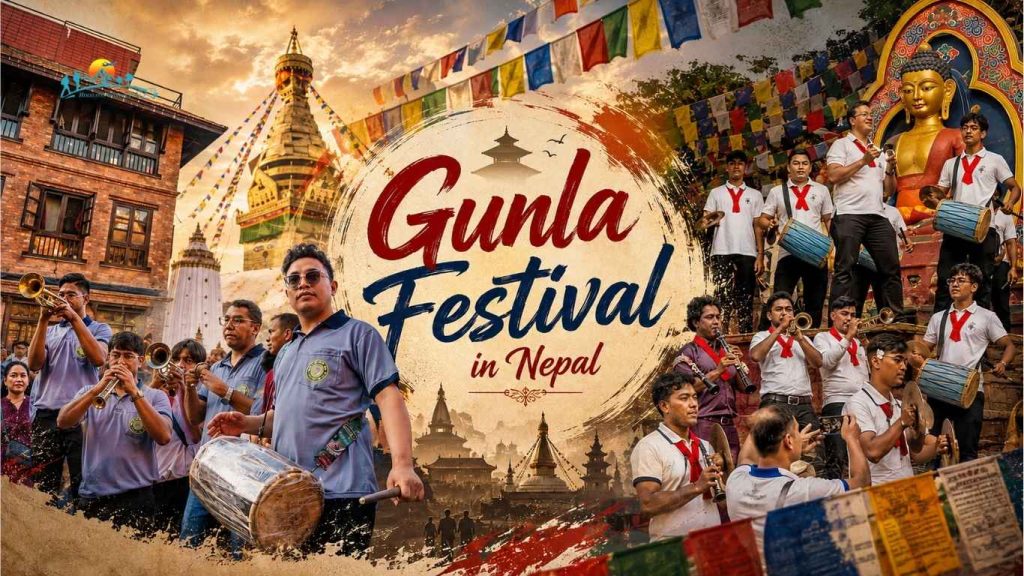
 Gunla Festival, or Gunla Parva, is a month-long Newar Buddhist festival that is celebrated with early-morning pilgrimages, devotional music, prayer, fasting, reading of Buddhist scripture and visiting Buddhist shrines throughout the Kathmandu Valley. The published festival calendar for 2026 has Gunla Parva from August 13 to September 12.
The festival brings a new look to Kathmandu Valley in the early hours of the morning. Devotees gather in groups to travel to stupas, chaityas and monasteries before the streets fill up, to play Gunla Baja before travelling to the places of worship. These drums, cymbals and wind music echo around the old Newar neighbourhoods and also vibrate around sacred spots like Swayambhunath.
Gunla is more than just a festival to view for Newar Buddhist communities. It is a time for worship, pilgrimage, giving and involvement in the community. The month also gathers family and community traditions of music, art and rituals handed down from generation to generation.
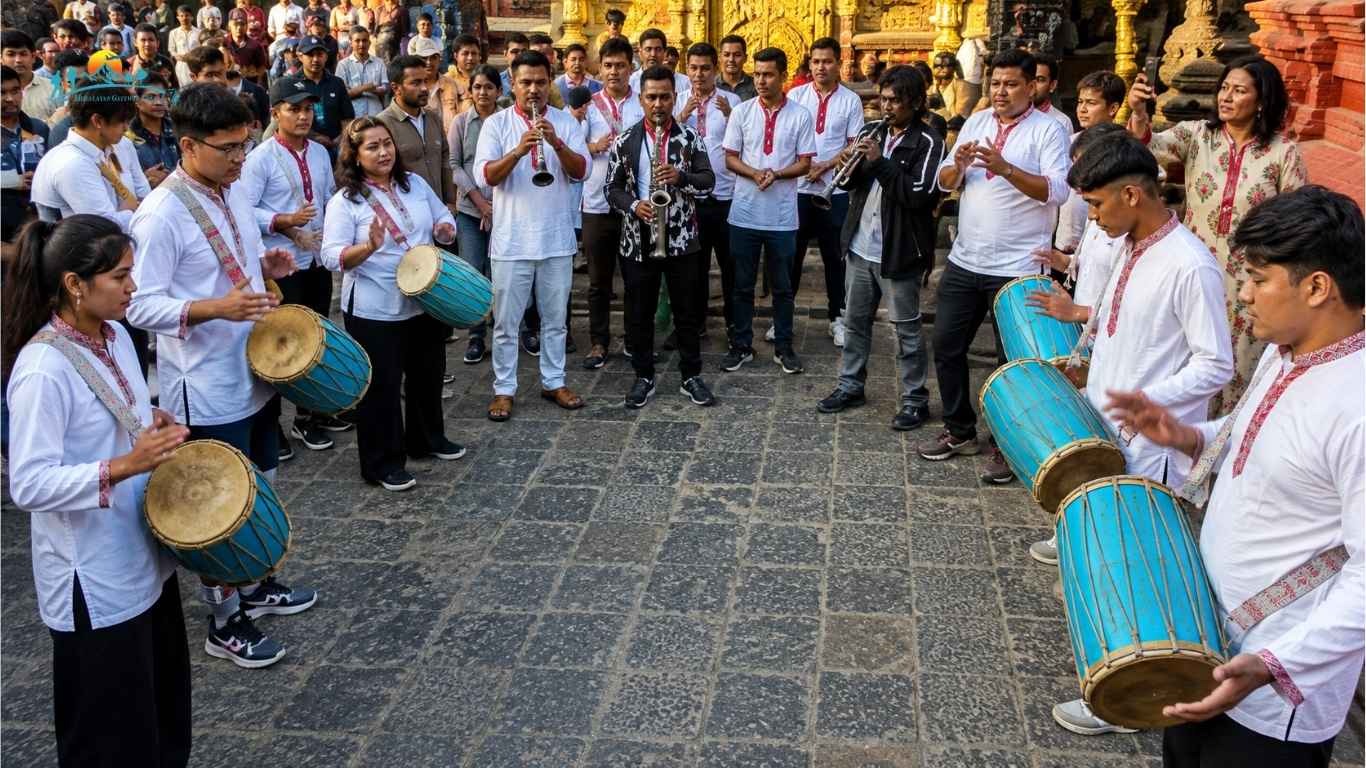
Gunla is a sacred month of Nepal Sambat calendar observed by the Newar Buddhist communities that is called Gunla Parva or Gunla Festival. The devotees visit Buddhist temples, recite Buddhist scriptures, make offerings, fast and participate in devotional processions during this period.
The name Gunla can be misleading as it is located in different places and referred to differently by various sources. The ninth month of Nepal Sambat is called Gunla, hence the name Gunla comes from the words “gun” meaning “nine” and “la” meaning “month”. Gunla is one of the most important Newari festivals celebrated in Nepal.
| Detail | Information |
|---|---|
| Common name | Gunla |
| Festival name | Gunla Parva |
| Main community | Newar Buddhist communities |
| Main region | Kathmandu Valley and other Newar Buddhist communities |
| 2026 dates | August 13 to September 12 |
| Main practices | Pilgrimage, prayer, scripture reading, fasting and offerings |
| Famous tradition | Gunla Bajan |
| Major pilgrimage site | Swayambhunath |
| Important cities | Kathmandu, Lalitpur and Bhaktapur |
Gunla Parva 2026 is celebrated from August 13 to September 12, covering about one lunar month. These are the dates of festivals as listed at the moment from sources of travel in Nepal, but some festivals have individual dates and adhere to the appropriate lunar calendar.
Gunla is a significant period in 2026 because of a number of important observations. The following festivals are mentioned on the calendar for August: Naag Panchami on 17 August, Janai Purnima on 28 August, Gai Jatra on 29 August and Krishna Janmashtami on 4 September. Such festivals take place at this time of the year, but it is not suitable to call all of these Gunla rituals.
The day of Gunla is celebrated as a day of religious observance, merit creation and pilgrimage by the Buddhist community of Newar ethnic group. During the month devout people pray, recite scripture, visit sacred sites, provide charity, and engage in other religious activities.
The tradition also has connections to the Buddhist rains retreat or “Vassa”, during which monks are said to stay in their one location during the rainy season for meditation and instruction. With the passage of time, the sacred month was closely associated with the Buddhist practice among the Newar population living in the Kathmandu Valley.
Many families find the meaning of Gunla Parva to be more than a visit to a temple. Parents, children, elders and community members can be involved together. Musical bands parade the streets and pilgrims visit sacred places, and religious ceremonies are performed in the homes.
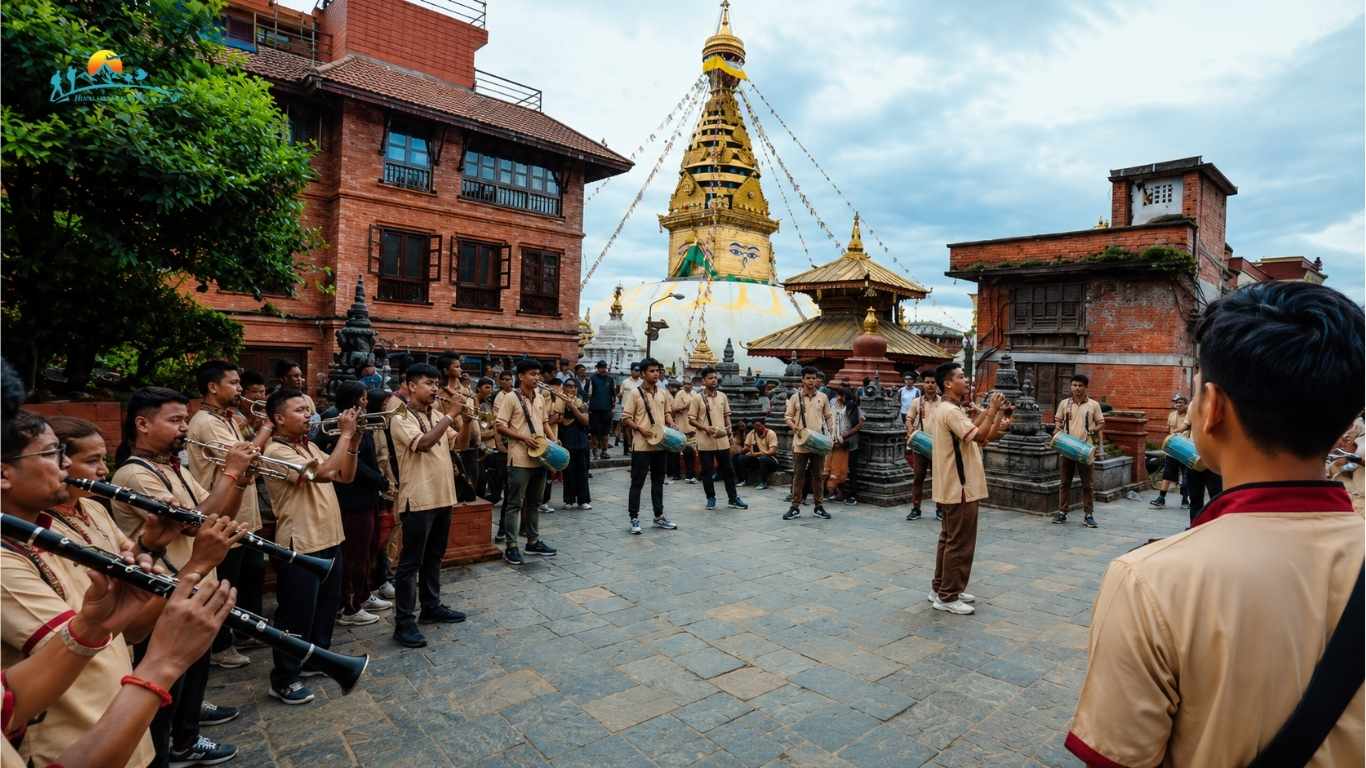
Gunla festival has been an expression of Newar Buddhist life in the Kathmandu Valley that stretches back over time. The month is a blend of Buddhist religious practices and local customs, music, art and community organization.
The traditional stories around Gunla Dharma go hand in hand with Chaitya Seva, the worship and care of Buddhist chaityas. This is one of the annual acts of the Newar Buddhist community, which was developed over generations.
The historical record is not always clear on all details of Gunla. Explanations are based on traditional accounts and/or modern historical and cultural studies. Thus, a writer ought to distinguish between historical facts and folklore when writing.
The one evident thing is the ongoing significance of pilgrimage. Although Swayambhunath is the central point of the observance, pilgrims from various towns and communities have their own routes. There are traditions associated with local sacred places in each of Kathmandu, Lalitpur and Bhaktapur.
It is the early morning procession which is most noticeable about Gunla to the visitor. People abandon their homes and walk towards the Buddhist temples, chaityas and stupas and play music to their own traditional style. Groups circulate around the Swayambhunath stupa, pray and perform their devotional activities there.
A typical Gunla observance can include:
Not all the devout are on the same path. Local traditions vary from community to community and there are certain pilgrimage routes or local sacred sites to which some communities pay special attention.
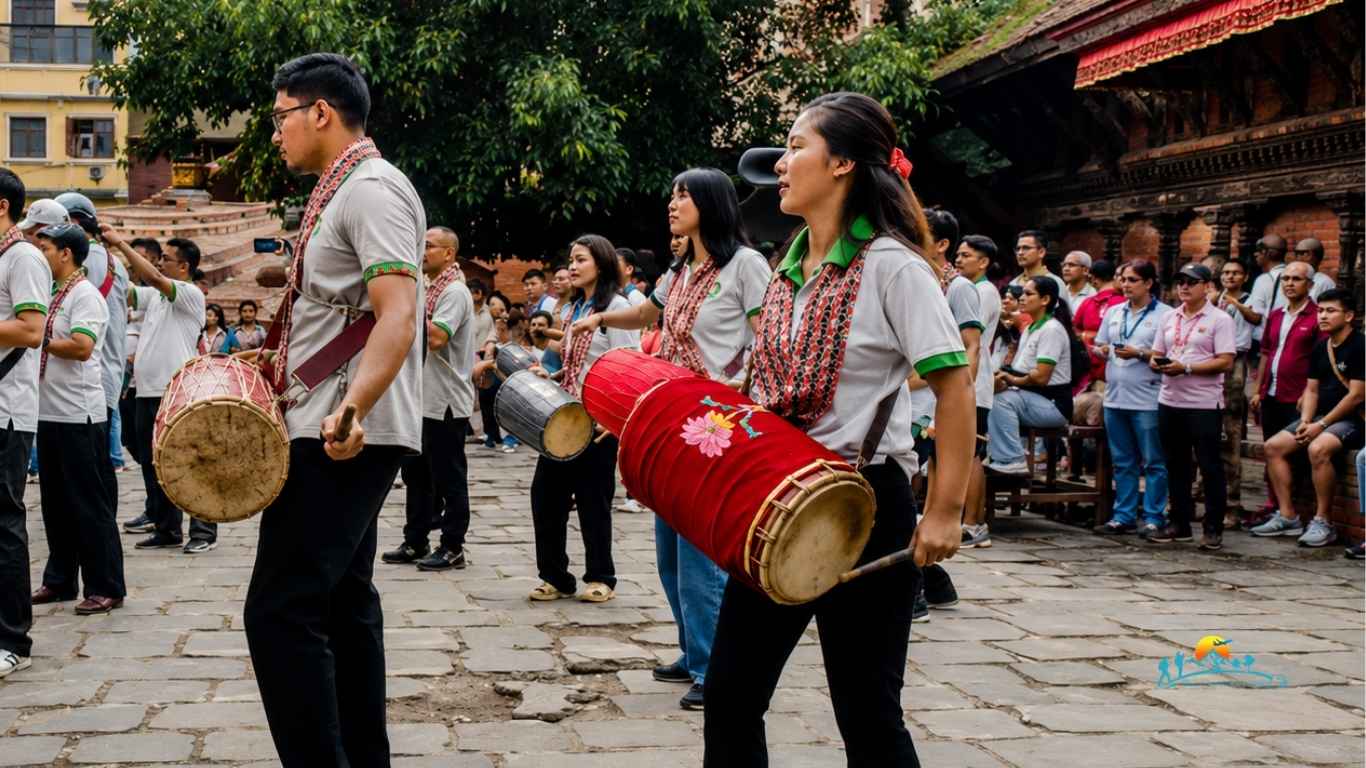
Gunla Baja is the traditional devotional music associated with Gunla, and its sound is one of the clearest signs that the sacred month has arrived in the Kathmandu Valley.
The music is heard during the early morning processions when the groups go from neighbourhoods to temples and stupas. Many musical groups can be seen at Swayambhunath, an amalgamation of drums, cymbals and wind instruments.
Some of the typical instruments used in Gunla are:
| Instrument | Role |
| Dhaa baja | Large double-sided drum and a central instrument in the ensemble |
| Naykhin | Small drum used in Newar musical groups |
| Taa | Cymbal |
| Bhusya | Larger cymbal |
| Mwahali | Traditional wind instrument |
| Basuri | Flute |
| Neku | Long horn used in some processions |
The Dhaa baja is a special instrument among the Gunla music. Other drums, cymbals, trumpets and traditional wind instruments were also used, according to historical records on Gunla Bajan. Gunla Bajan demonstrates the continued existence of music through community groups. Youth continue to learn instruments and play with older players.
There are several religious and cultural practices which are included in Gunla. Some are done during the whole month, others are done on specific days.
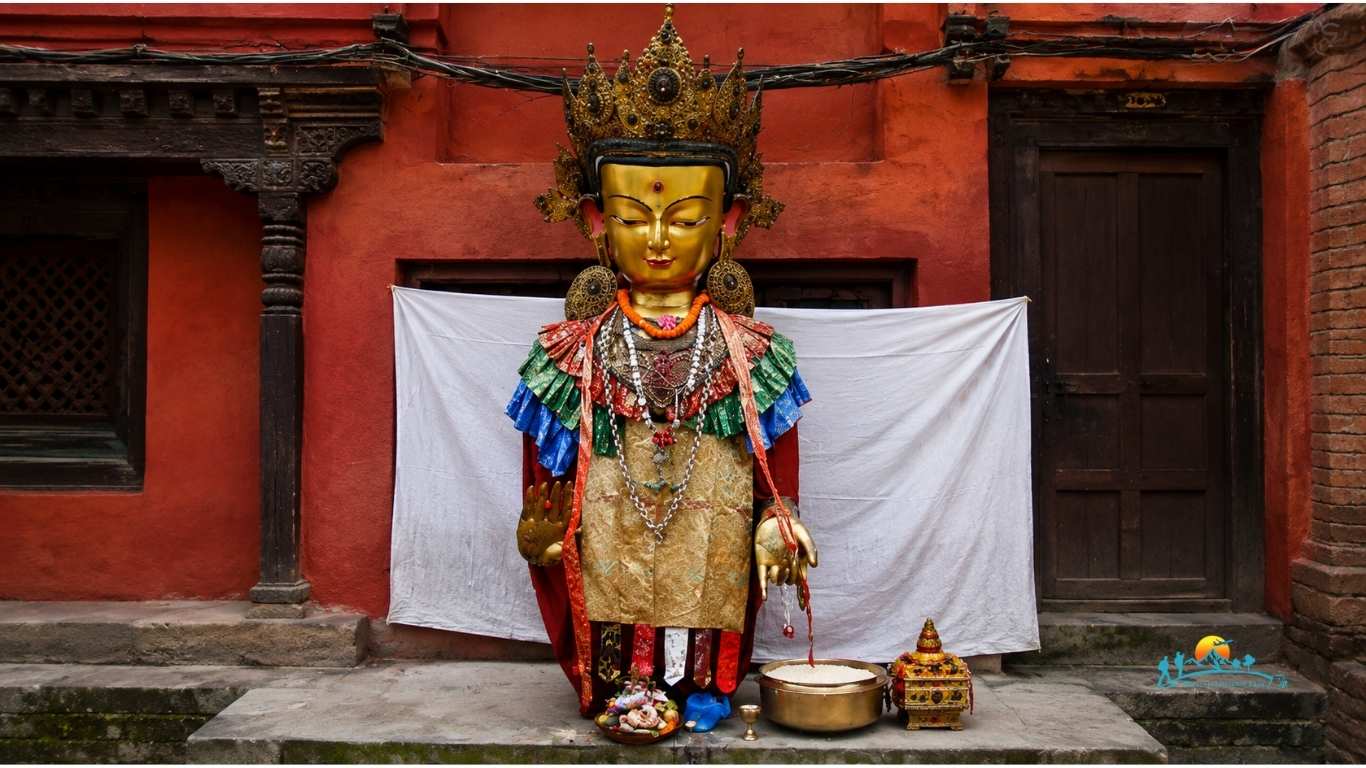
During the Gunla period sacred art and religious objects can be displayed for worshippers. The displays may be of Buddhist images, manuscripts and paintings of Paubha. The practice provides the people with an opportunity to see the religious works which may be normally hidden within the monastery or sacred courtyard or inside their houses.
Panchadan, also called Panchara in some communities, is a ritual of offering five types. According to Bhaktapur traditions, the offerings include rice, unhusked rice, salt, money and pulses local practices may vary.
Practice links religious giving to everyday needs. In Bhaktapur, the traditional practice is to sell the vegetables linked to their backyard.
Devotional service in connection with Buddhist chaitya is called Chaitya Seva. In Gunla, the believers go to the holy places, make donations to them, pray to them and circumambulate around the holy places.
In some communities, the people make small clay stupas as part of their religious observance. According to Bhaktapur cultural sources, Dyo Thayegu is one of the devotional practices related to Gunla.
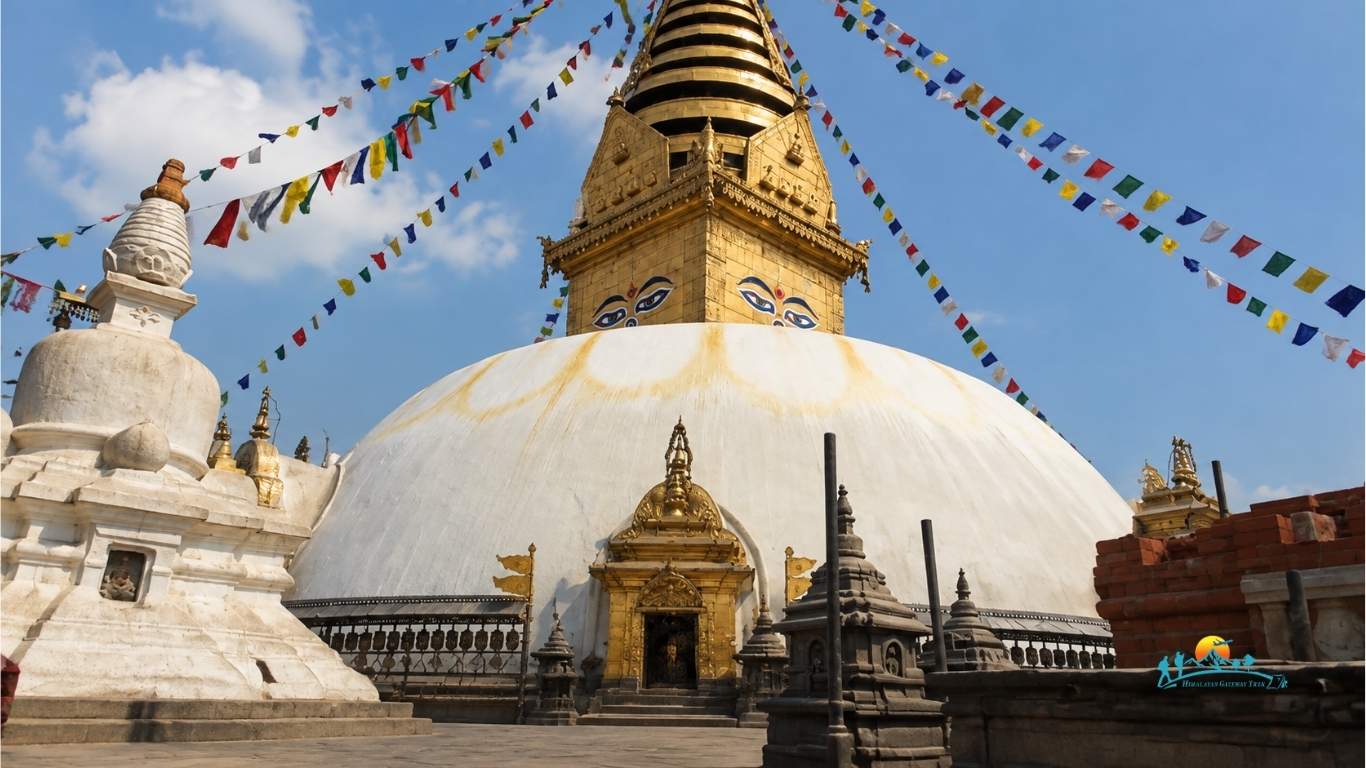
If you wish to experience Gunla Bajan and pilgrimage early in the morning, then you cannot miss Swayambhunath. During the month, the site is especially active with devotees from all over the Valley congregating around the stupa.

Another significant Buddhist site that is visited during Gunla is Boudhanath. The size of its stupa and the surrounding monasteries offer an alternative setting to Swayambhunath.

There are also prominent traditions and pilgrimage routes in Lalitpur. Devotees can go to the sacred places, like Bungamati and other local Buddhist sites, towards it.

There are some local Gunla customs followed in Bhaktapur town which are different from Kathmandu and Lalitpur. Cultural sources provide information about visits to Dattatreya, Nyatapola, Surya Binayak and other sacred places, and about local Panchadan traditions.
Gunla continues to be significant in terms of the connection between religious practice, music and community life. The tradition also allows for the younger generation to learn practices that might be lost in everyday life.
Young musicians are still joining in the Gunla Bajan groups, learning instruments and walking with the older musicians. This exchange of knowledge is important because the Gunla music is not just background music in the festival. It is an integral part of the religious life and cultural heritage of the community.
One of the best things to know about Gunla Parva for the visitor is that it offers essential support. The processions are not for tourists’ entertainment. They are the way of living of religious life as witnessed by communities which have passed on the practice as a way of life over centuries.
If you have only one morning available, keep the plan simple.
Before sunrise: Reach the Swayambhunath area.
Early morning: Watch the musical groups arrive and observe the pilgrimage without standing in the path.
During the procession: Listen to the Gunla Bajan and watch how different groups move around the stupa.
After the religious activities: Walk through nearby Newar neighborhoods and visit other heritage sites in the area.
A short Gunla cultural experience works best when the festival remains the main purpose of the visit rather than becoming a backdrop for a normal sightseeing trip.
Gunla month is marked by various festivals and religious events, each with its own significance and history. These Festivals complement the rest of the religious offering for the month, and are not to be mistaken for Gunla.
Naag Panchami is a day dedicated to worshiping snakes and the deities of snakes. The devotees pray, offer milk and other items at homes, temples and any place which has a relation to Naag worship.
Janai Purnima, also known as Gunhi Punhi in the Newar community, is a full-moon festival marked by sacred thread rituals, family gatherings, religious ceremonies and temple visits. In many Hindu communities.
The day is also associated with Raksha Bandhan, when brothers and sisters exchange protective threads as a symbol of love and family bonds. In the Newar community, Gunhi Punhi has its own cultural traditions and is an important observance during the Gunla period.
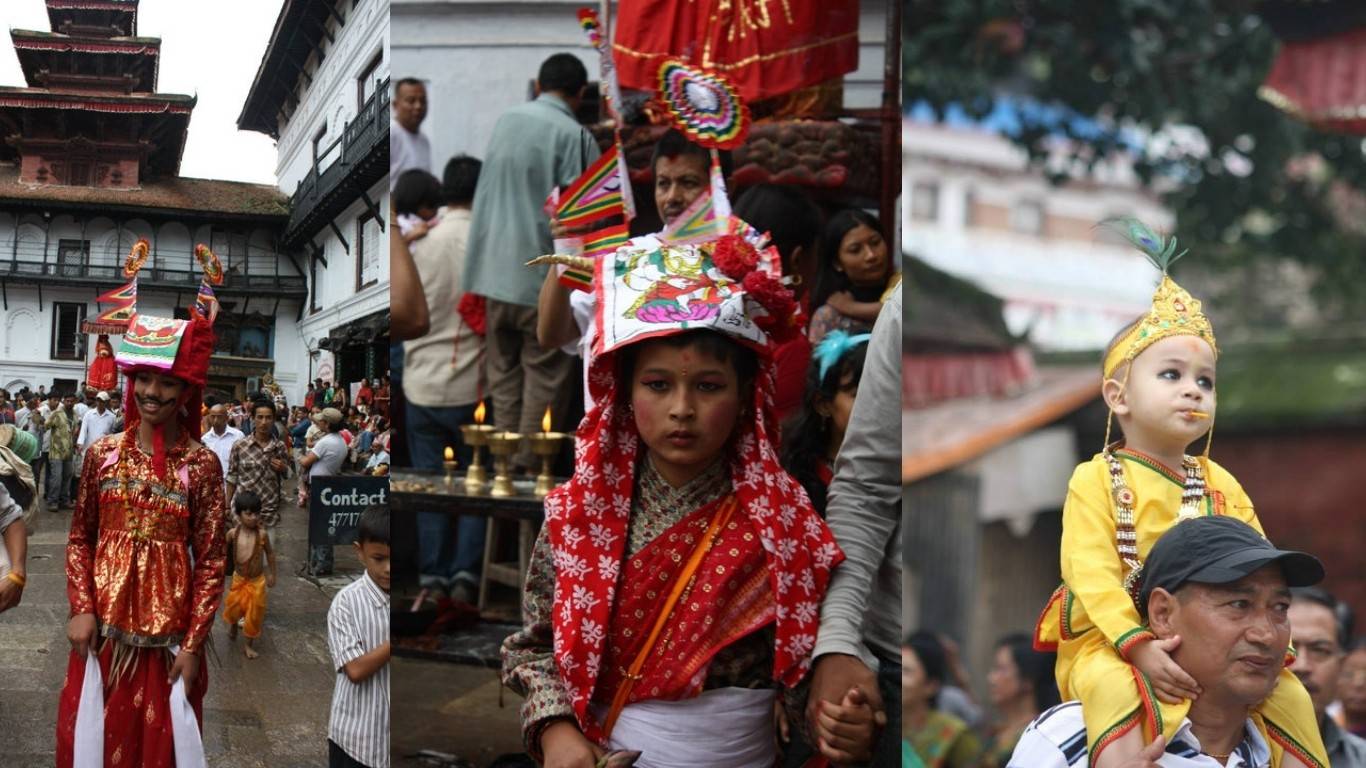
Gai Jatra is one of the most popular festivals in Kathmandu Valley. Processions are held and the day is marked by traditional performances, costumes and rituals by the communities who have lost loved ones.
Mataya is a major festival of Lalitpur. Devotees visit Buddhist shrines and courtyards in a long procession, offering prayers, incense, butter lamps and other religious offerings. The word Mataya is commonly associated with the practice of showing light.
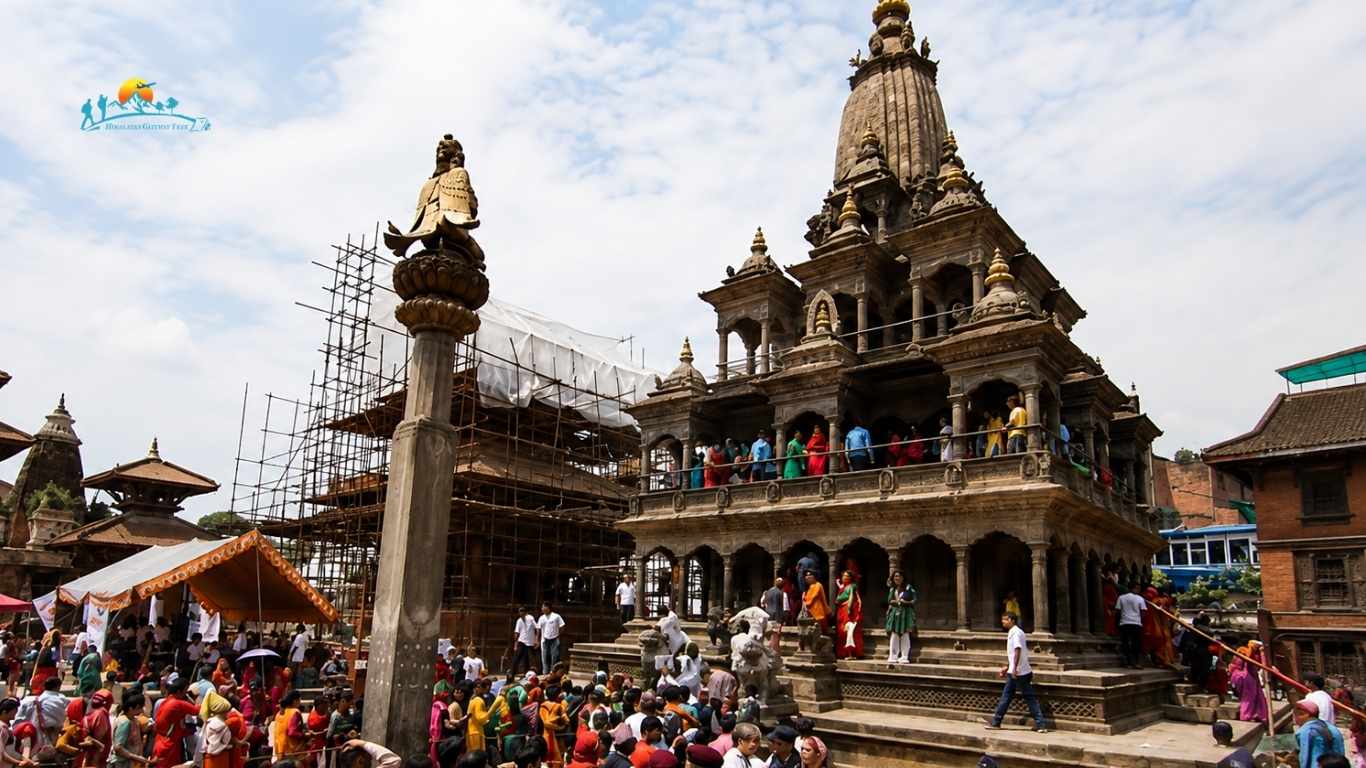
Krishna Janmashtami is celebrated at temples and homes to pay homage to the birth of Lord Krishna with prayers, devotional acts and gatherings. It is celebrated in the latter part of the Gunla in those years where the calendars coincide.
Gunla Parva is not just a month of religious celebration for the Newar Buddhist community, but rather a month of celebration. Early morning walks (Gunla Bajan), prayers, offerings, fasting and community traditions maintain an important aspect of Newar culture.
The month is filled with unique experiences at each of the spots, ranging from Swayambhunath and Boudhanath to the historic streets of Lalitpur and Bhaktapur.
Gunla is a place for visitors to see traditional living and not just a festival. When visiting, it’s important to approach with respect, allow the devotees some space, and take some time to understand the customs that are observed.
Gunla Parva (or Gunla Dharma) is a holy, month-long festival celebrated primarily by the Newar Buddhist community in the Kathmandu Valley (Kathmandu, Patan, Bhaktapur, Thimi, and Sankhu). It is dedicated to praising and adoring Lord Buddha, acquiring religious merit, observing fasts, reciting scriptures, and making early morning pilgrimages while playing devotional traditional music.
In Nepal Bhasa, “Gunla” combines “Gun” (or Guni) and “La”. “La” translates to month, while “Gun” represents the ninth or tenth month, or “Guni” meaning merit. It also refers to the tradition of reading nine sacred Mahayana Buddhist sutras.
Gunla Parva 2026 is celebrated from August 13 to September 12 for an entire lunar month, typically occurring between July and August (Shrawan and Bhadra).
Gunla Bajan is a devotional musical ensemble played during early morning pilgrimages to stupas. Using instruments like Dhaa, Taa, Nyakhin, and Bhusya, it fosters spiritual reflection, unites the community, and historically protected early morning pilgrims from wild animals.
Dyo Thāyegu is a devotional ritual performed throughout Gunla where devotees form mini stupas or chaityas out of black clay using special molds. This practice acts as a meditative exercise to earn spiritual merit and demonstrate deep reverence for Lord Buddha.
Panchadan is an auspicious festival of giving held during Gunla. Devotees offer five essential items rice, paddy, salt, money, and pulses (or local produce in Bhaktapur) to Bajracharya and Shakya priests, cultivating generosity, compassion, and communal harmony.
Devotees undertake daily pilgrimages to major Buddhist shrines including Swayambhunath, Boudhanath, Namobuddha, Bajrayogini, and local Bahals and Bahis. They circumambulate the stupas, spin prayer wheels, light butter lamps, and chant prayers to purify mind and spirit.
According to tradition, Manjushree cut the Chobhar hill to drain Nagdaha lake, allowing the self-emerged Swayambhu lotus to settle. Manjushree and King Dharmakara established the Chaitya Sewa worship ritual at Swayambhu, which eventually developed into Gunla Dharma.
The month of Gunla features several major celebrations alongside daily rituals. These include Naag Panchami, Janai Purnima (Gunpunhi), Gai Jatra (Sa Paru), Mataya Jatra, Krishna Janmashtami, and Bahidyo Swowonegu, the public display of ancient sacred statues and scriptures.
Bahidyo Swowonegu is a sacred tradition during Gunla where Buddhist monasteries (Bahas and Bahis) bring out ancient statues, manuscripts, paintings, and relics for public viewing. Devotees visit these courtyards to pay homage and admire sacred Buddhist artistic heritage.
Gunla concludes on Yanlathwo Paru with Paru Bwoye. Musical groups and devotees gather at Swayambhunath for final prayers, honor ancestors, break their fasts with traditional Newari feasts, and wear cultural attire like Tapalan Suruwal and Haku Patasi.