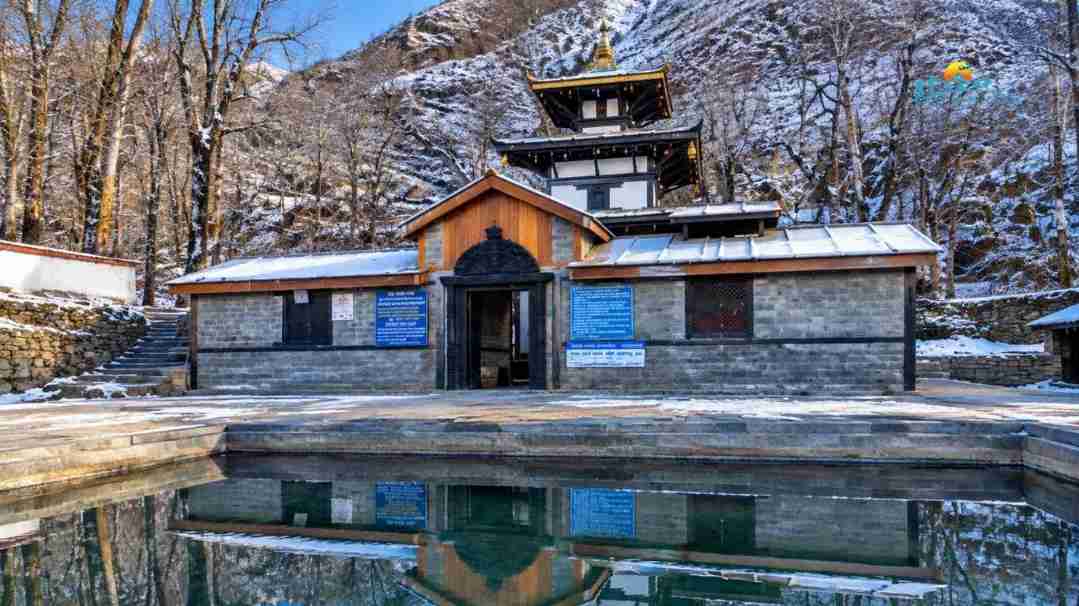
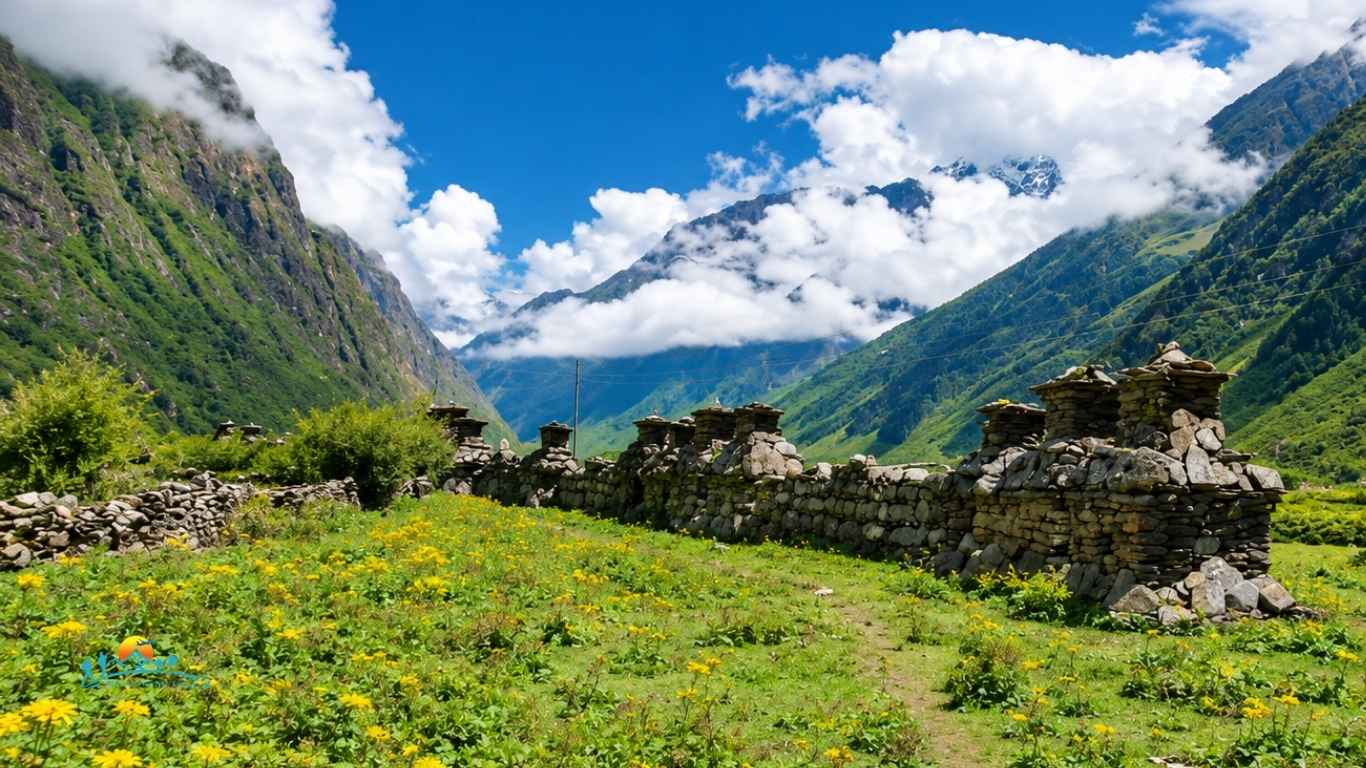
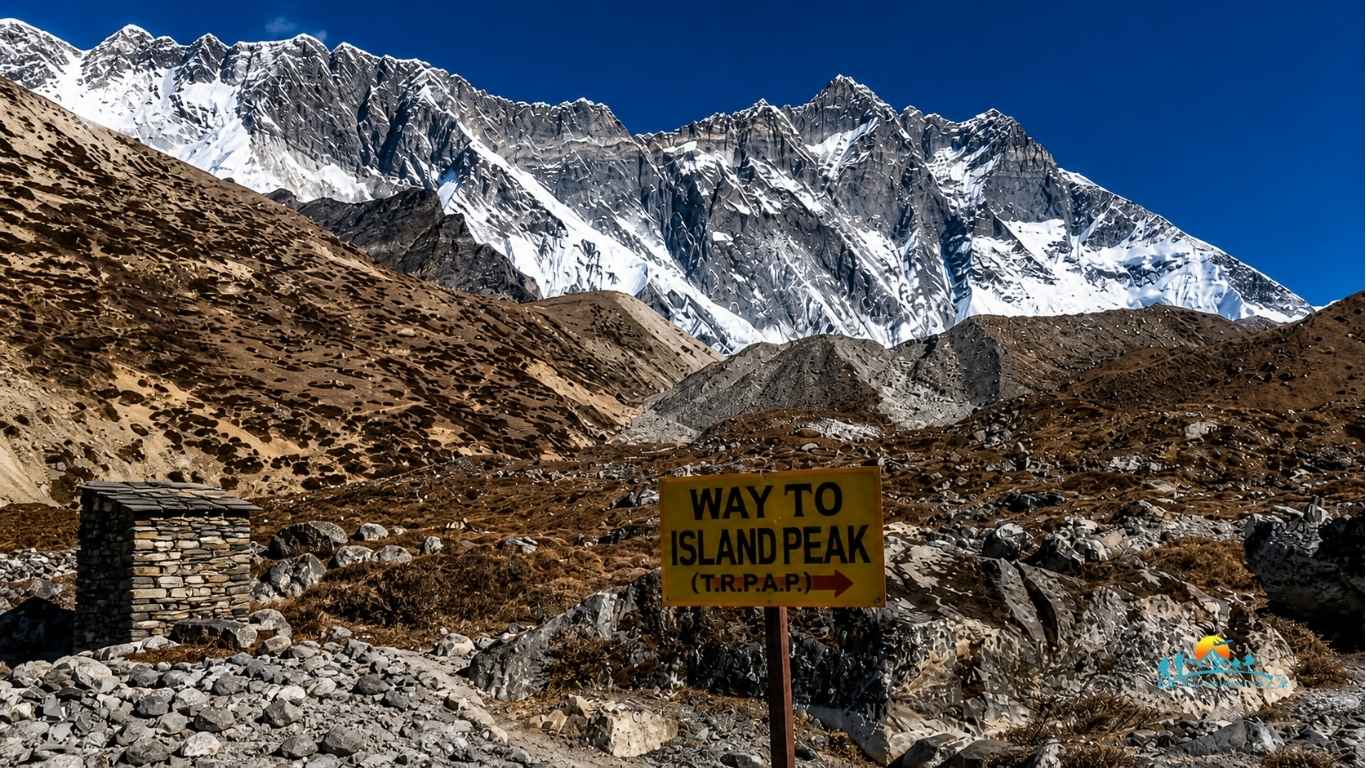
The Everest Base Camp with Island Peak expedition offers an unforgettable journey, combining the iconic trek to Everest Base Camp with the thrill of summiting Island Peak. Named by Eric Shipton in 1952, Island Peak earned its name due to its striking resemblance to an island surrounded by a sea of ice. Locally known as “Imja Tse,” this peak provides breathtaking views of the towering Himalayan giants, including Ama Dablam, Lhotse, Nuptse, and Mount Everest.
Throughout the expedition, you will not only witness the grandeur of the 8,000-meter peaks but also immerse yourself in the rich culture, traditions, and lifestyle of the local Sherpa community. Throughout the journey, trekkers will pass through iconic Himalayan villages, visit ancient monasteries, and witness the stunning beauty of the Khumbu Glacier.
This 16-day adventure with Himalayan Gateway Trek is a perfect blend of trekking and climbing, making it an ideal challenge for those aiming to push their limits in the Himalayas.
Permit Required For Everest Base Camp with Island Peak Climb
1. Sagarmatha National Park Entry Permit
- What it is: This permit is required to enter Sagarmatha National Park, a UNESCO World Heritage site that encompasses the Everest region.
- Where to get it: You can obtain it from the Nepal Tourism Board office in Kathmandu or at the park entry gate in Monjo.
- Validity: Valid throughout your stay in the park.
2. Khumbu Pasang Lhamu Rural Municipality Permit
- What it is: Introduced in 2018, this local permit replaced the old TIMS card in the Everest region. It’s issued by the local government of Khumbu and is required for all trekkers.
- Where to get it:
- In Lukla, upon arrival, or
- From the municipality counter in Monjo
- Validity: Single-entry, valid for the entire trek within the Khumbu region.
3. Island Peak Climbing Permit (NMA Permit)
- What it is: This permit is issued by the Nepal Mountaineering Association (NMA) for climbers attempting Island Peak (Imja Tse), which is classified as a Group B trekking peak.
- Where to get it: Arranged by your trekking/climbing agency in Kathmandu. Solo applications aren’t accepted you must go through a registered company.
- Validity: Covers one climb of Island Peak within your travel window.
Everest Base Camp Island Peak Climbing Highlight
- Scenic Flight to Lukla – Experience a thrilling flight to Tenzing-Hillary Airport in Lukla.
- Summit Island Peak (6189m/20299ft)
- Namche Bazaar – Explore the vibrant Sherpa town, the gateway to Everest.
- Tengboche Monastery – Visit the most famous monastery in the region with panoramic mountain views.
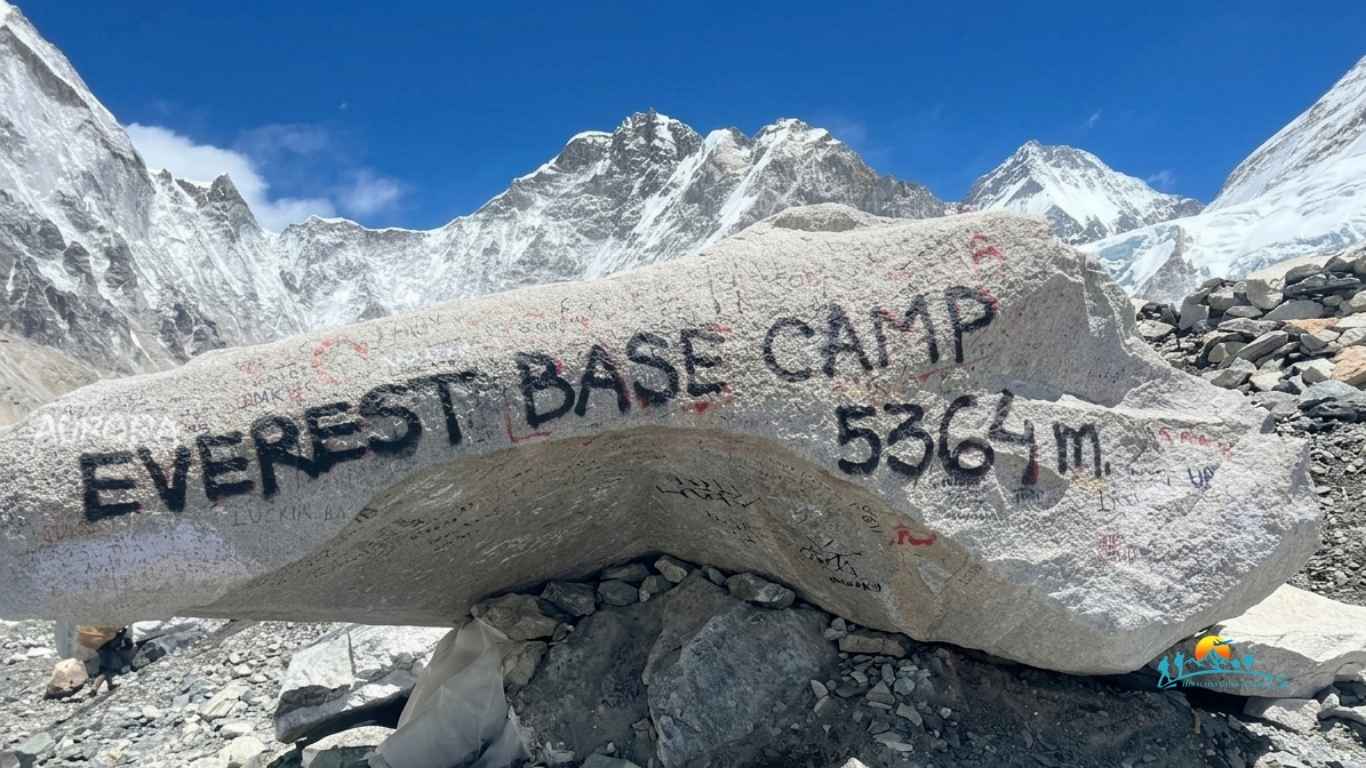
- Everest Base Camp (5,364m) – Stand at the base of the world’s highest peak and witness the iconic Khumbu Icefall.
- Wildlife like musk deer, colorful pheasants, snow leopard, and Himalayan tahr
- Kala Patthar (5,545m) – Best viewpoint to see Mount Everest, Lhotse, and Nuptse up close.
- Experience the wilderness of Sagarmatha National Park.
- Spectacular views of Mt. Everest, Ama Dablam, Lhotse, Nuptse, Thamserku, Cho Oyu, and many more.
Benefits with Himalayan Gateway Trek
- Free transfer from Tribhuvan International Airport to the hotel during arrival and vice-versa on departure.
- Easy booking and reservation system.
- Online trip briefing after booking confirmation.
- Trek with experienced local guides who prioritize your safety and enjoyment throughout the journey.
- Enjoy transparent, fair pricing with no hidden costs, ensuring value for your money.
- Receive quick assistance in emergencies, along with guidance to prevent altitude sickness.
- Stay in local teahouses and connect with the local people to immerse yourself in their culture.
- Multi-channel communication (Email, WhatsApp, Facebook, WeChat, Viber, Skype, Zoom)
Comprehensive Everest Base Camp Island Peak Climbing Trek Guide.
The Everest Base Camp Island Peak Climbing Trek is an incredible journey that combines high-altitude trekking with an exhilarating mountaineering experience. This 16-day adventure, organized by Himalayan Gateway Trek, takes you through breathtaking landscapes, iconic Sherpa villages, and ancient monasteries before leading you to the summit of Island Peak (6,189m / 20,305ft).
The trek begins with a scenic flight from Kathmandu to Lukla (2,840m / 9,318ft), followed by a gradual ascent through Namche Bazaar, Tengboche, Dingboche, and Lobuche, ultimately reaching Everest Base Camp (5,364m / 17,598ft). After experiencing the base camp of the world’s highest peak, trekkers climb Kalapatthar (5,550m / 18,209ft) for panoramic views of Mount Everest, Lhotse, Nuptse, and Ama Dablam.
The journey then continues to Island Peak Base Camp (5,200m / 17,060ft), where climbers prepare for the summit push. Scaling Island Peak, also known as Imja Tse, is a challenging yet rewarding experience, offering a real taste of Himalayan mountaineering. Along the way, trekkers will immerse themselves in Sherpa culture, Buddhist traditions, and the stunning glacial landscapes of the Khumbu region.
The best time for the Everest Base Camp Island Peak Climbing Trek is during the pre-monsoon (spring) season from March to May and the post-monsoon (autumn) season from September to November. During these months, the weather is generally stable, with clear skies and moderate temperatures, providing excellent conditions for both trekking and climbing. Spring brings beautiful rhododendron blooms and lush greenery, while autumn offers crisp mountain views and vibrant festivals like Mani Rimdu in Tengboche Monastery.
This guide provides essential insights on itinerary, preparation, altitude acclimatization, gear recommendations, and safety measures, ensuring an unforgettable and successful expedition with Himalayan Gateway Trek.
Everest Base Camp Island Peak Climbing Itinerary
Day 01: Arrival at Kathmandu Airport (1,400m / 4,593ft) and transfer to the hotel for check-in and rest.
Upon your arrival at Tribhuvan International Airport in Kathmandu, the vibrant capital of Nepal, our friendly team from Himalayan Gateway Trek will be there to greet you with a warm welcome and take you to your hotel.
Once you arrive, you’ll receive a warm welcome, with staff presenting you with traditional flower garlands. They will assist you with the check-in process and make sure you’re comfortable. Afterward, you can relax and get ready for your adventure the next day. In the evening, walk around Thamel and have dinner whenever you like.
At the Himalayan Gateway Trek, we are excited to begin this journey with you and ensure a memorable experience throughout your stay in Nepal.
Day 02: Fly from Kathmandu (1,400m / 4,593ft) to Lukla (2,840m / 9,318ft), and trek to Phakding (2,652m / 8,701ft)
On Day 2 of your Everest Base Camp Island Peak Climbing journey, you begin with an early morning flight from Kathmandu to Lukla, a short but scenic flight that takes about 35 minutes. Lukla is the gateway to the Everest region and serves as the starting point for most treks in the area. The flight provides stunning aerial views of the Himalayas, including glimpses of Mount Everest in the distance.
Upon arriving in Lukla, you will begin your trek toward Phakding, which is about 2-3 hours away. You will pass through Sherpa villages, cross suspension bridges over the Dudh Koshi River, and enjoy the lush surroundings of pine forests and farmland.
Day 03: Trek from Phakding (2,652m / 8,701ft) to Namche Bazaar (3,440m / 11,286ft).
On Day 3, the trek takes you from Phakding to Namche Bazaar, a significant milestone in your Everest Base Camp Island Peak Climbing adventure. This is one of the most scenic and rewarding days of the trek, and it typically takes around 6-7 hours to reach Namche Bazaar.
One of the key highlights of today’s trek is the first view of Mount Everest, which can be seen from a viewpoint near Monjo. As you continue, the trail becomes steeper, and the climb gets a bit more strenuous. You’ll pass through several small Sherpa villages and dense forests of pine and rhododendron trees, giving you a chance to experience the beauty of the local landscape.
Day 04: Acclimatization at Namche Bazaar (3,440m / 11,286ft).
Today is dedicated to acclimatization at Namche Bazaar, allowing your body to adjust to the increasing altitude. It’s essential to take it easy and avoid strenuous activity. You can take short hikes to nearby Khunde and Khumjung villages, where you’ll get the chance to explore local Sherpa culture.
A popular option is to visit the Sherpa Museum or hike up to the Everest View Hotel for stunning panoramic views of Mount Everest, Lhotse, and Ama Dablam. Namche Bazaar itself is a bustling market town, and you can spend time shopping or simply relaxing before continuing your trek.
Day 05: Trek from Namche Bazaar (3,440m / 11,286ft) to Tengboche (3,867m / 12,687ft).
On Day 5, you will trek from Namche Bazaar to Tengboche, a journey that takes around 5-6 hours. The trail begins with a descent through the Dudh Koshi River Valley, followed by an ascent to the village of Tyangboche, famous for its stunning Tyangboche Monastery.
Along the way, you will enjoy beautiful views of Mount Everest, Ama Dablam, and Lhotse. The route takes you through lush forests of pine and rhododendron, and you’ll cross a suspension bridge over the river. Tyangboche serves as a great place for rest and acclimatization at this higher altitude.
Day 06: Trek from Tengboche (3,867m / 12,687ft) to Dingboche (4,260m / 13,976ft).
On Day 6, you will trek from Tyangboche to Dingboche, a journey that takes approximately 5-6 hours. The trail begins with a descent through lush forests before crossing the Imja Khola and gradually ascending towards Dingboche.
Along the way, you will be treated to spectacular views of Ama Dablam and Lhotse. As you approach Dingboche, the landscape opens up into a high-altitude valley, with striking views of the surrounding peaks. Dingboche, located at 4,260m, is a popular rest point for acclimatization and offers beautiful views of Island Peak and the Nuptse-Lhotse Ridge.
Day 07: Acclimatize at Dingboche (4,260m / 13,976ft)
Today is dedicated to acclimatization to help your body adjust to the increasing altitude and prepare for higher climbs ahead. Dingboche is a beautiful high-altitude village nestled in the Imja Valley, surrounded by spectacular Himalayan giants like Ama Dablam, Lhotse, and Island Peak.
You’ll take a short hike to Nangkartsang Hill (approx. 5,100m), which offers stunning panoramic views and acts as a critical altitude gain without sleeping high. After enjoying the views, you’ll descend back to Dingboche for rest, hydrating well and preparing for the next leg of the trek.
Day 08: Trek from Dingboche (4,260m / 13,976ft) to Lobuche (4,910m / 16,109ft)
Today’s trek takes you higher into the Khumbu region, with a gradual ascent through rocky terrain and sparse vegetation. The trail passes memorials dedicated to climbers who lost their lives on Everest, offering a reflective and solemn atmosphere.
Lobuche is a small high-altitude settlement surrounded by towering peaks like Nuptse, Pumori, and Cholatse. The hike typically takes 5–6 hours, giving trekkers time to acclimatize while enjoying dramatic Himalayan panoramas.
Day 09: Trek from Lobuche (4,910m / 16,109ft) to Gorakshep (5,140m / 16,864ft), then to Everest Base Camp (5,364m / 17,598ft) and back to Gorakshep.
On Day 8, you will embark on one of the most exciting and challenging days of your trek. The journey begins with a trek from Lobuche to Gorakshep , a small settlement that serves as the last stop before heading to Everest Base Camp. This section of the trek takes around 3-4 hours and includes a relatively gradual ascent along the Khumbu Glacier. The views of the surrounding peaks, including Pumori and Nuptse, will inspire you as you approach Gorakshep.
After a rest at Gorakshep, you will continue on a challenging but rewarding hike to Everest Base Camp, which will take around 2-3 hours. Once at Everest Base Camp, you will be standing at the foot of the world’s highest peak, surrounded by towering mountains and glaciers.
After spending time at Everest Base Camp and soaking in the extraordinary views, you will head back to Gorakshep to rest and acclimatize.
Day 10: Trek from Gorakshep (5,140m / 16,864ft) to Chhukung (4,730m / 15,518ft) after an early sunrise at Kalapatthar (5,550m / 18,209ft).
Day 9 begins early with a pre-dawn hike up to Kalapatthar (5,550m / 18,209ft), a popular viewpoint known for its panoramic sunrise views of Mount Everest, Lhotse, Nuptse, and the surrounding peaks. The trek to Kalapatthar takes about 1-1.5 hours, and the reward is a breathtaking view as the sun rises over the Himalayas, casting a golden glow over the world’s tallest mountain.
After enjoying the sunrise, you’ll descend back to Gorakshep for breakfast before continuing on your trek to Chhukung. The descent from Gorakshep to Chhukung takes about 5-6 hours, and the trail offers spectacular views of Island Peak and other surrounding mountains.
The route follows the Khumbu Glacier and passes through the Imja Valley, offering a dramatic change in scenery as you move toward the quieter, more remote village of Chhukung.
Day 11: Trek from Chhukung (4,730m / 15,518ft) to Island Peak Base Camp (5,200m / 17,060ft).
On Day 10, you will ascend to Island Peak Base Camp, which marks a key point in your Island Peak Climbing with EBC Trek. The trek takes about 3-4 hours, and the trail begins with a steady climb through the Imja Valley.
The last portion of the trek to Island Peak Base Camp is relatively steep and demands careful attention to your footing. Once you arrive at Base Camp, you’ll be surrounded by towering cliffs and glaciers, with spectacular views of the surrounding mountains.
Spending the night at Island Peak Base Camp is crucial for acclimatization before the climb, and it provides an opportunity to rest, prepare your gear, and get ready for the ascent in the coming days.
Day 12: Trek from Island Peak Base Camp (5,200m / 17,060ft) to Island Peak (6,189m / 20,305ft), then back to Chhukung (4,730m / 15,518ft).
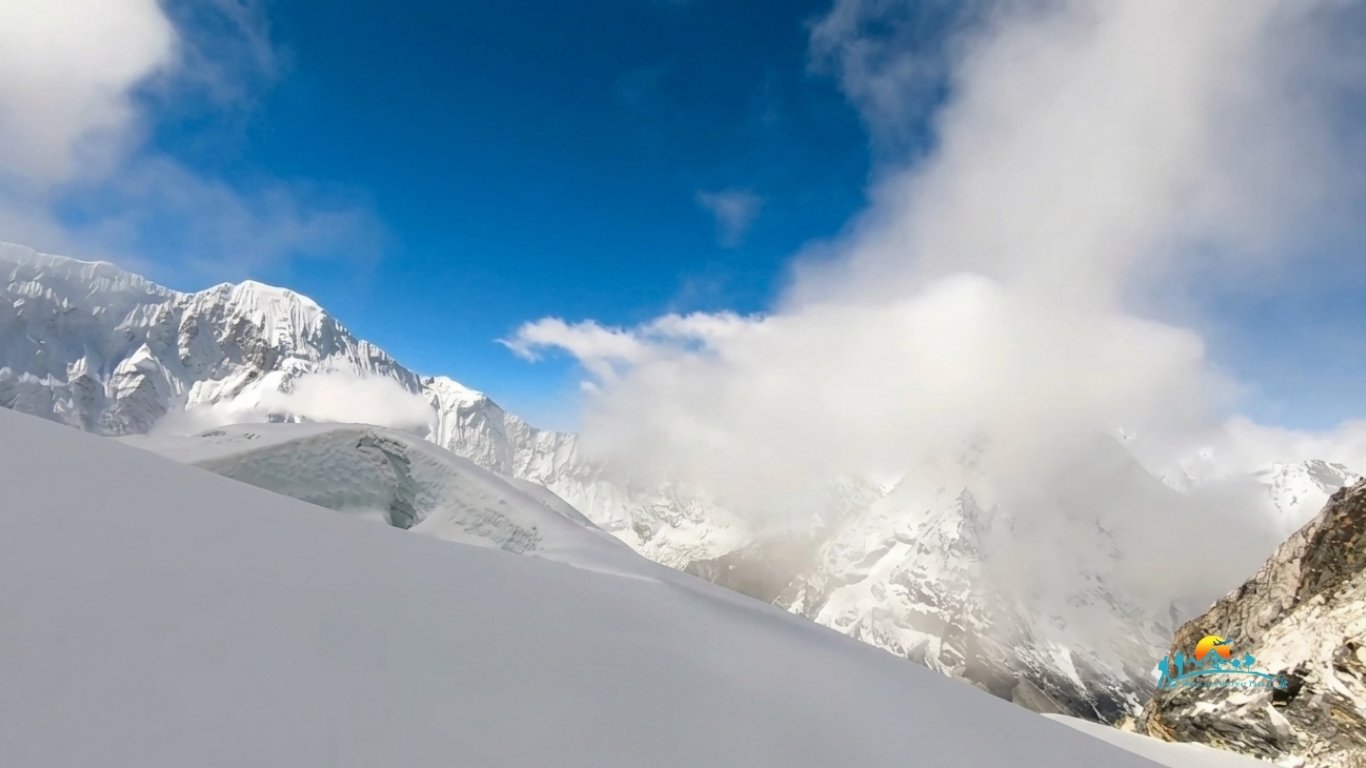
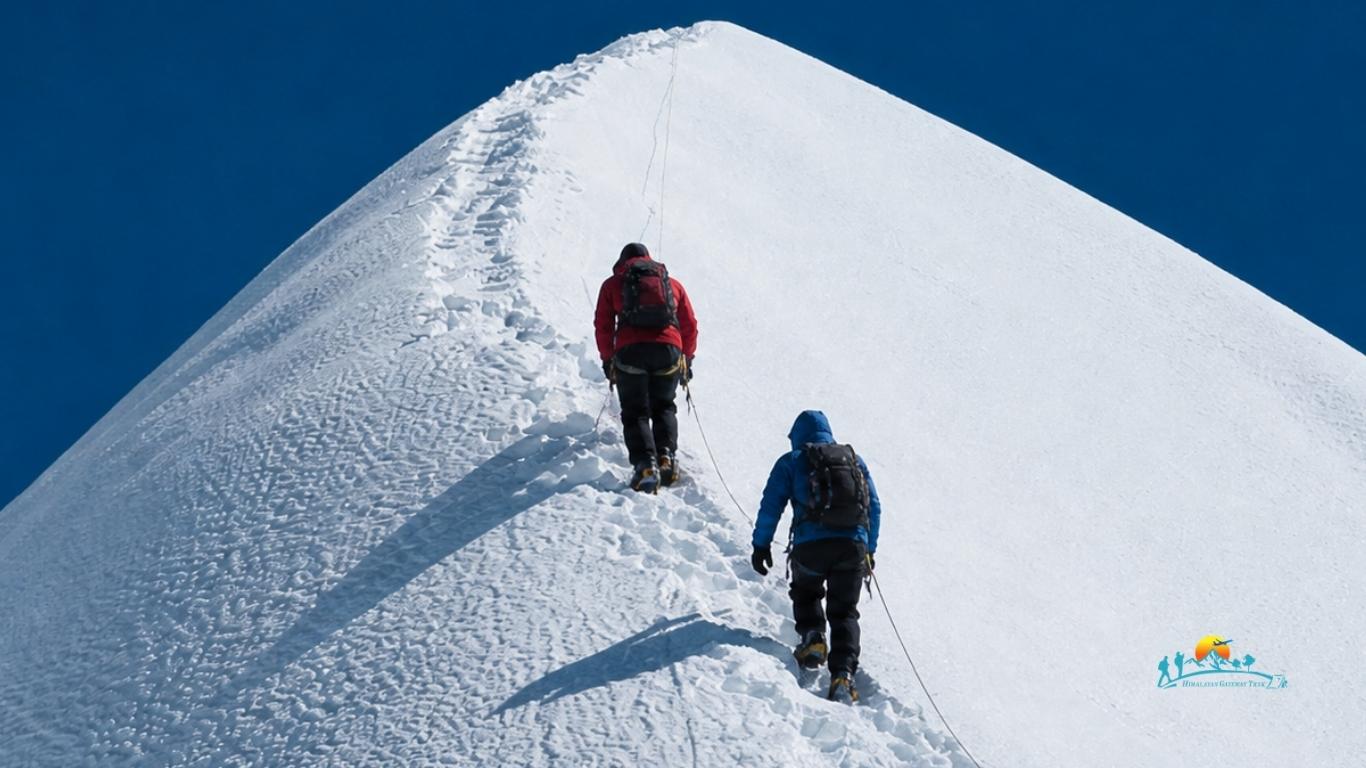
Day 11 is the most exciting and physically demanding day of your Island Peak Climbing with EBC Trek. You will start early from Island Peak Base Camp , as the climb to the summit of Island Peak is a long and challenging one.
After reaching Base Camp, you will continue your journey down the valley, retracing your steps to Chhukung. The trek back to Chhukung will take approximately 3-4 hours, where you can relax and recover after a thrilling and exhausting day of climbing.
Day 13: Trek from Chhukung (4,730m / 15,518ft) to Tengboche (3,870m / 12,697ft).
On Day 12, after a thrilling climb to Island Peak, you will begin your descent as you trek from Chhukung to Tengboche. The trek will take approximately 5-6 hours and involves a steady descent through the Imja Valley.
As you leave Chhukung, you’ll follow a well-trodden trail that winds down through moraine and alpine meadows, offering stunning views of Ama Dablam, Lhotse, and the surrounding peaks.
Once you arrive in Tengboche, you’ll have the chance to relax and recover. Tengboche is known for its monastery, one of the most important spiritual sites in the Khumbu region, and you may want to visit the monastery to experience the peaceful atmosphere and learn more about the Sherpa culture and Buddhist practices.
Day 14: Trek from Tengboche (3,870m / 12,697ft) to Namche Bazaar (3,440m / 11,286ft).
On Day 13, you will trek from Tengboche back to Namche Bazaar . The journey will take approximately 5-6 hours and involves a steady descent through beautiful forests of pine and rhododendron.
Once you arrive in Namche Bazaar, the bustling Sherpa town known for its markets, shops, and local eateries, you can relax and enjoy some well-earned rest. The day offers some free time to explore the town, shop for souvenirs, or visit local attractions like the Sherpa Museum or Everest View Hotel.
Day 15: Trek from Namche Bazaar (3,440m / 11,286ft) to Lukla (2,850m / 9,350ft).
On Day 14, you will embark on the final leg of your trek, descending from Namche Bazaar to Lukla. The trek typically takes about 6-7 hours and follows a well-established trail that takes you through lush forests, past villages, and alongside the Dudh Koshi River.
Along the way, you will pass through the village of Monjo and the Sagarmatha National Park entrance, where you will have to show your permits before continuing. As you approach Lukla, the trail flattens out, and the vibrant atmosphere of the town becomes more evident. Upon reaching Lukla, you’ll have some time to relax and reflect on your incredible journey.
Day 16: Fly back to Kathmandu (1,400m / 4,593ft) from Lukla (2,850m / 9,350ft).
On the final day of your Everest Base Camp and Island Peak Climbing adventure, you will fly back to Kathmandu from Lukla. Upon landing in Kathmandu, you’ll be transferred to your hotel, where you can rest, reflect on your incredible journey, and perhaps share stories with fellow trekkers.
This day also allows you some time to explore Kathmandu if you have extra days, visit cultural sites, or shop for souvenirs before continuing with your travels.
Day 17: Departure from Kathmandu.
On the final day of your journey, you will be transferred to Kathmandu’s Tribhuvan International Airport for your departure. Depending on your flight schedule, you may have some free time to do some last-minute shopping or explore the city.
As you leave Nepal, you’ll take with you unforgettable memories of your incredible trek through the Everest Base Camp Island Peak Climbing.
What is included in this trek package?
- Airport pickups and drops in a private vehicle
- Accommodation in Kathmandu with breakfast
- Teahouse accommodation during the trek
- Tented accommodation during the climb
- All meals (breakfast, lunch and dinner) with tea/coffeeduring the trek and climb
- All ground transportation on a comfortable private vehicle as per the itinerary
- Domestic flights (Kathmandu- Lukla -Kathmandu)
- English speaking, trained and experienced trekking guide(leader), climbing guide (leader) and assistant guides
- Porter service (2 trekkers: 1 porter)
- Staff costs including their salary, insurance, equipment, domestic airfare, food and accommodation
- Sleeping bag (to be returned after trip completion)
- All necessary paper work; trekking permits and Peak climbing permit
- Good quality tents and kitchen utensils for camping
- Group mountaineering (climbing) equipments
- Medical kit (carried by your guide)
- All government and local taxes
- Farewell Dinner at typical Nepali restaurant
- Travel and Rescue arrangement (Helicopter evacuation available if required, at the clients cost based on clients insurance policy)
What is excluded in this trek package?
- Nepalese visa fee (bring accurate USD cash and two passport photographs)
- International airfare to and from Kathmandu
- Excess baggage charges (if you have more than 15 kg luggage, cargo charge is around $1.5 per kg)
- Extra night accommodation in Kathmandu because of early arrival, late departure, early return from mountain (due to any reason) than the scheduled itinerary
- Altitude chamber (PAC) or oxygen
- Lunch and evening meals in Kathmandu (and also in the case of early return from mountain than the scheduled itinerary)
- Travel and rescue insurance
- Personal expenses (phone calls, internet, laundry, bar bills, battery recharge, extra porters, bottled or boiled water, shower, etc.)
- Personal climbing equipment
- Personal climbing guide if requested
- Optional trips and sightseeing if extended
- Tips for guides and porters
- Services not listed in the include section
Island Peak Climbing Map
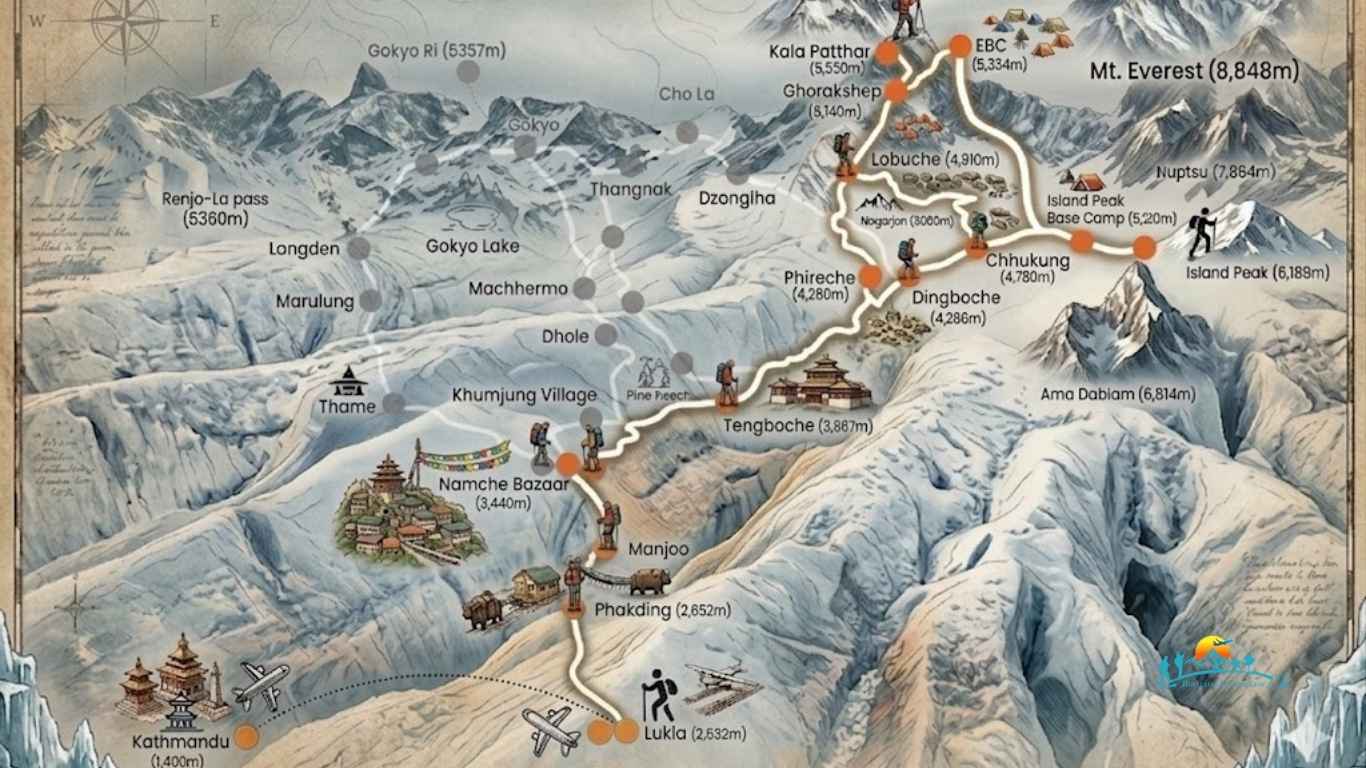

Preparing for a trek to Everest Base Camp Island Peak Climbing is an exciting adventure, but having the right gear is essential for a comfortable and successful journey.
The following personal equipment list will help you ensure that you are well-equipped for the varying conditions you’ll encounter along the trek.
- Fleece beanie
- Sun glasses
- Chap stick / Sunscreen
- Face mask or Scarf
- Hand towel
- Wind stopper / waterproof top and bottom
- Cold weather down jacket below waist
- Fleece jacket and trouser
- Trekking trouser
- T-Shirts(short or long sleeves) dry fit is better.
- Polypropylene thermal tops and bottom, at least 2pairs.
- Wind stopper and fleece gloves
- Socks and under wears
- Trekking boot
- Snow Gaiter (optional)
- Runners / Snickers for camps
- Head torch
- Personal medical kit
- Water Bottle/Camel Pak
- Trekking / Ski pole (optional. Handy for anyone with knee problem)
- Spare batteries for Camera and flashlight. Check charging facility along your journey.
- Day pack Minimum25L with side pocket for water bottle.
Best Season:
The best time for the Everest Base Camp Island Peak Climbing is during spring (March to May) and autumn (September to November). Spring offers pleasant weather with blooming rhododendrons along the trails, while autumn provides clear skies and stable conditions, making it ideal for both trekking and climbing. These seasons ensure the best visibility and safer climbing conditions on Island Peak (6,189m / 20,305ft).
Trekking Duration & Difficulty:
This is a 16-day challenging adventure that combines high-altitude trekking with mountaineering. The trek reaches a maximum elevation of 6,189m at the summit of Island Peak, requiring basic climbing skills and good physical fitness. While the trek to Everest Base Camp (5,364m / 17,598ft) is considered moderate, the climb to Island Peak involves glacier travel, steep ascents, and the use of ropes, ice axes, and crampons, making it a strenuous trek suitable for experienced trekkers and climbers.
Transportation:
The adventure begins with a 35-minute scenic flight from Kathmandu to Lukla (2,840m / 9,318ft), offering breathtaking aerial views of the Himalayas. After completing the trek, you will fly back from Lukla to Kathmandu, marking the end of an unforgettable journey.
Typical Daily Schedule:
Each trekking day starts with breakfast at 7:00 AM, followed by 4-8 hours of trekking, depending on the altitude and terrain. There will be a midday lunch break at a teahouse before continuing to the next destination. Evenings are spent relaxing, exploring villages, or acclimatizing, followed by dinner and preparation for the next day. Summit day on Island Peak requires an early start around midnight or 1:00 AM, ensuring safe ascent and descent before weather conditions change.
Accommodation & Meals:
Throughout the trek, trekkers stay in teahouses or lodges that provide basic but comfortable accommodations. At Island Peak Base Camp, climbers will stay in tented camps before the summit attempt. Meals include breakfast, lunch, and dinner, with a mix of traditional Nepali, Tibetan, and international dishes. Hot drinks such as tea and coffee are available to keep trekkers warm and refreshed.
Permits & Entry Fees:
To complete the Everest Base Camp Island Peak Climbing, trekkers need the following permits:
- Sagarmatha National Park Entry Permit
- Khumbu Pasang Lhamu Rural Municipality Permit
- Island Peak Climbing Permit
Trekking Support & Safety:
The package includes an experienced, licensed, English-speaking trekking and climbing guide, ensuring safety and navigation throughout the journey. Porters (one per two trekkers) will carry up to 15 kg per person. Safety measures include first aid kits, pulse oximeters, and emergency support. For high-altitude trekking and climbing, 24/7 emergency assistance is available to handle any unforeseen situations.
This comprehensive Everest Base Camp Island Peak Climbing package with Himalayan Gateway Trek offers a thrilling adventure, combining the classic Everest Base Camp trek with an exciting Island Peak summit experience, making it perfect for trekkers looking to step into the world of high-altitude mountaineering.
Note to Travelers :
We organize private treks for groups of at least two people and do not add anyone in your group. Contact us via Call/WhatsApp/Viber at +977 - 9861197727 or email himalayangatewaytrek@gmail.com You can also use our Free Trip Planner.
Group Discount Price
Terms & Policies
Thank you for choosing Himalayan Gateway Trek. Our goal is to provide a safe, enjoyable, and memorable travel experience. Please review the following terms and policies before confirming your booking.
📍Booking & Payment
- 👉 A 20% deposit is required to confirm your booking.
- 👉 The remaining balance must be paid on your arrival day in Nepal
- 👉 Your booking is confirmed once we receive your deposit and send a confirmation.
📍Cancellation & Refunds
- 👉 If you cancel your trip 45 days or more before departure, 50% of the deposit amount will be refunded.
- 👉 No refunds are available for cancellations made within 45 days of departure.
- 👉 Any non-refundable costs already incurred, including permits, flights, accommodation, transportation, or other third-party services, will be deducted from the refund amount.
Note: Eligible refunds will be processed within 14 business days of receiving the cancellation request.
📍 Travel Insurance
- 👉 Travel insurance is mandatory for all trekking and adventure trips.
- 👉 Your insurance should cover emergency medical treatment, helicopter evacuation, trip cancellation, and personal accidents.
- 👉 Himalayan Gateway Trek is not responsible for expenses arising from inadequate insurance coverage.
📍 Trip Changes
- 👉 Weather conditions, flight delays, road conditions, government regulations, or other unforeseen circumstances may require changes to the itinerary.
- 👉 Any changes will be made with the safety and well-being of our guests as the highest priority.
📍 Responsibility
- 👉 Himalayan Gateway Trek is not responsible for flight delays, cancellations, injuries, loss of personal belongings, natural disasters, political unrest, or other events beyond our control.
- 👉 By booking a trip with us, you acknowledge and accept the inherent risks associated with trekking and adventure travel.
FAQs
What is the 2 pm rule on Everest?
The 2 pm rule is a critical safety guideline requiring climbers to start their descent from the summit by 2:00 pm. This ensures they return to high camp before sunset, avoiding dangerous nighttime temperatures and unpredictable afternoon weather shifts.
How tall is the base camp at Island Peak?
Island Peak Base Camp, also known as Pareshaya Gyab, is situated at an elevation of approximately 5,080 meters (16,667 feet). It serves as the primary staging area where climbers prepare their gear for the final technical ascent.
Is Camp 4 in the Death Zone?
Yes, Everest’s Camp 4 sits at approximately 7,950 meters, marking the entrance to the “Death Zone.” Above 8,000 meters, oxygen levels are insufficient to sustain human life long-term, making rapid movement and supplemental oxygen vital.
How difficult is the Island Peak climb compared to the EBC trek?
While the EBC trek is a strenuous hike, Island Peak is a technical “Alpine Grade PD+” climb. It requires using crampons, ice axes, and fixed ropes. You must be physically fit and comfortable with basic mountaineering skills.
What is the best season for this expedition?
The optimal windows are Spring (March to May) and Autumn (September to November). These months offer stable weather, clear visibility, and safer climbing conditions on the glacier compared to the monsoon rains or extreme winter cold.
Do I need previous mountaineering experience?
While previous high-altitude trekking experience is mandatory, technical climbing experience isn’t strictly required. We provide a pre-climb training session at Base Camp to teach you essential skills like rappelling, jumaring, and using safety harnesses.
How do I prevent altitude sickness (AMS)?
Our itinerary includes mandatory acclimatization days in Namche Bazaar and Dingboche. Staying hydrated, maintaining a slow pace, and eating enough calories are vital. We also carry pulse oximeters and supplementary oxygen for emergency use during the climb.
What permits are required for this trip?
You need three primary permits: the Sagarmatha National Park Entry Permit, the Khumbu Pasang Lhamu Rural Municipality Permit, and the Island Peak Climbing Permit issued by the Nepal Mountaineering Association (NMA). We handle all paperwork for you.
What kind of accommodation is available?
During the trek, you will stay in comfortable mountain teahouses with twin-sharing rooms. However, at Island Peak Base Camp, we transition to high-quality tented camps with professional kitchen staff to support the climbing phase of your journey.
Is travel insurance mandatory for this climb?
Yes, specialized travel insurance is mandatory. It must specifically cover “mountaineering up to 6,200 meters” and include emergency helicopter evacuation. Standard trekking insurance often excludes technical climbing, so verify your policy details carefully before arriving.
What is the weight limit for porters and domestic flights?
Domestic flights to Lukla allow 15kg (33 lbs) total weight per person. For the trek, porters typically carry up to 25kg (combined for two trekkers). We recommend packing efficiently and leaving non-essential items at your Kathmandu hotel.
Can I charge my electronics and access Wi-Fi?
Most teahouses offer Wi-Fi (via Everest Link) and charging stations for a small fee ($3–$7). However, service can be intermittent. We recommend bringing a high-capacity power bank and a solar charger for the tented camp sections.
What climbing gear is provided by the company?
We provide group climbing equipment, including high-altitude tents, ropes, and cooking gear. Personal technical gear like boots, crampons, harnesses, and ice axes can be rented in Chhukung or Kathmandu if you do not own them.
What happens if there are Lukla flight delays?
Weather in Lukla is unpredictable, and delays are common. We recommend building at least two “buffer days” into your international travel schedule. In cases of prolonged cancellations, we can arrange emergency helicopter transfers at an additional cost.
Is the water safe to drink?
You should never drink untreated tap or stream water. We recommend using water purification tablets, LifeStraws, or UV filters. While bottled water is available at teahouses, we encourage using purified water to reduce plastic waste in the Himalayas.
What kind of food is served during the expedition?
Teahouses offer a mix of local Dal Bhat and international dishes like pasta and pancakes. During the climbing phase, our private chef prepares high-energy, hygienic meals designed to maintain your strength at high altitudes.
Can I do this trek and climb solo?
Since 2023, the Nepal government requires trekkers in most regions to have a licensed guide. For Island Peak, a certified climbing guide is legally mandatory for safety and permit regulations. Solo technical climbing is not permitted.
What is the tipping culture for guides and porters?
Tipping is a standard practice and a way to show appreciation for the hard work of your crew. Generally, we suggest budgeting 10–15% of your trip cost to be distributed among guides, porters, and kitchen staff.
What training should I do before arriving?
Focus on cardiovascular endurance, leg strength, and stamina. Incorporate hiking with a weighted pack, stair climbing, and running into your routine for at least 3–4 months prior to departure to ensure you can handle long trekking days.