15 Mountain Passes in Nepal: Complete Guide to High Pass Trekking
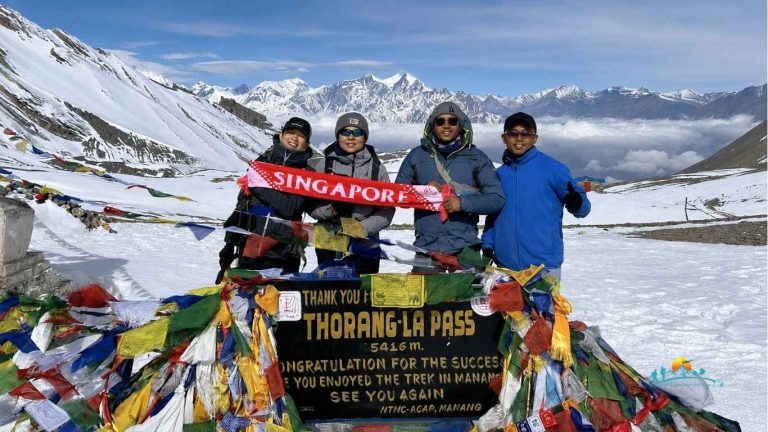
There are many mountain passes in Nepal, from the well-known Thorong La and Everest Three Passes, as well as the…
 Himalayan Gateway Trek - On
 A solo trek to Manaslu Circuit is not legally allowed without a licensed guide. The Government of Nepal classifies the Manaslu region as a restricted area, which means you must hire a registered guide and process permits through a licensed trekking agency. Independent trekking without a guide is prohibited, and at least two trekkers are required to obtain the Restricted Area Permit.
This rule often confuses experienced trekkers who have completed Everest Base Camp or Annapurna Circuit independently. Manaslu follows a different system due to its remote border location, fragile mountain environment and limited rescue access.
This guide explains the legal rules, real costs, permit process, safety factors and whether trekking Manaslu as a single traveler makes sense for you.
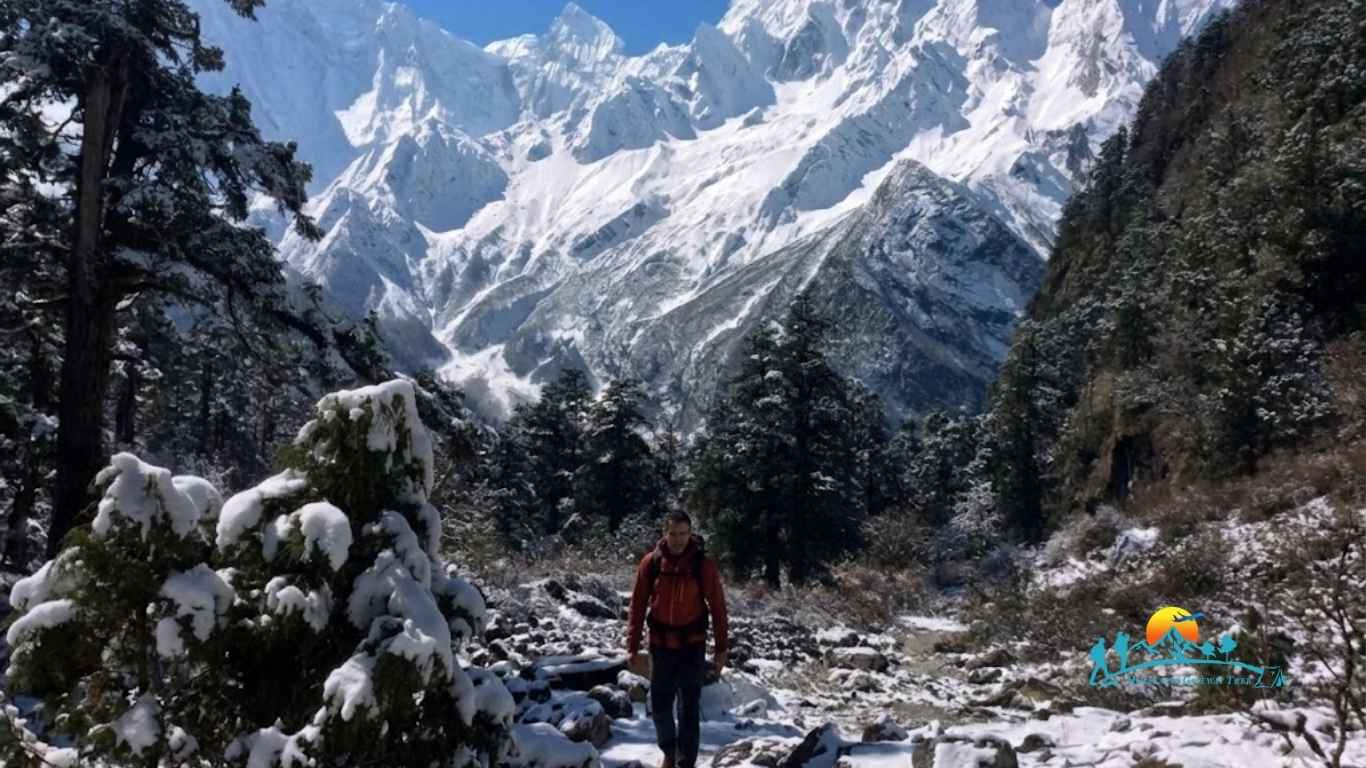
Independent trekking without a guide is not permitted in the Manaslu region. The area falls under Nepal’s Restricted Area regulations due to its remote terrain and proximity to the Tibetan border.
To legally complete a solo trek to Manaslu Circuit:
Many solo travelers still complete the circuit each year. They travel physically as a single client but meet permit requirements through an agency arrangement.
The Manaslu region lies close to the Nepal and Tibet border and remains one of the least developed trekking routes in the country. The government introduced restrictions to control movement, ensure safety, and protect local communities.
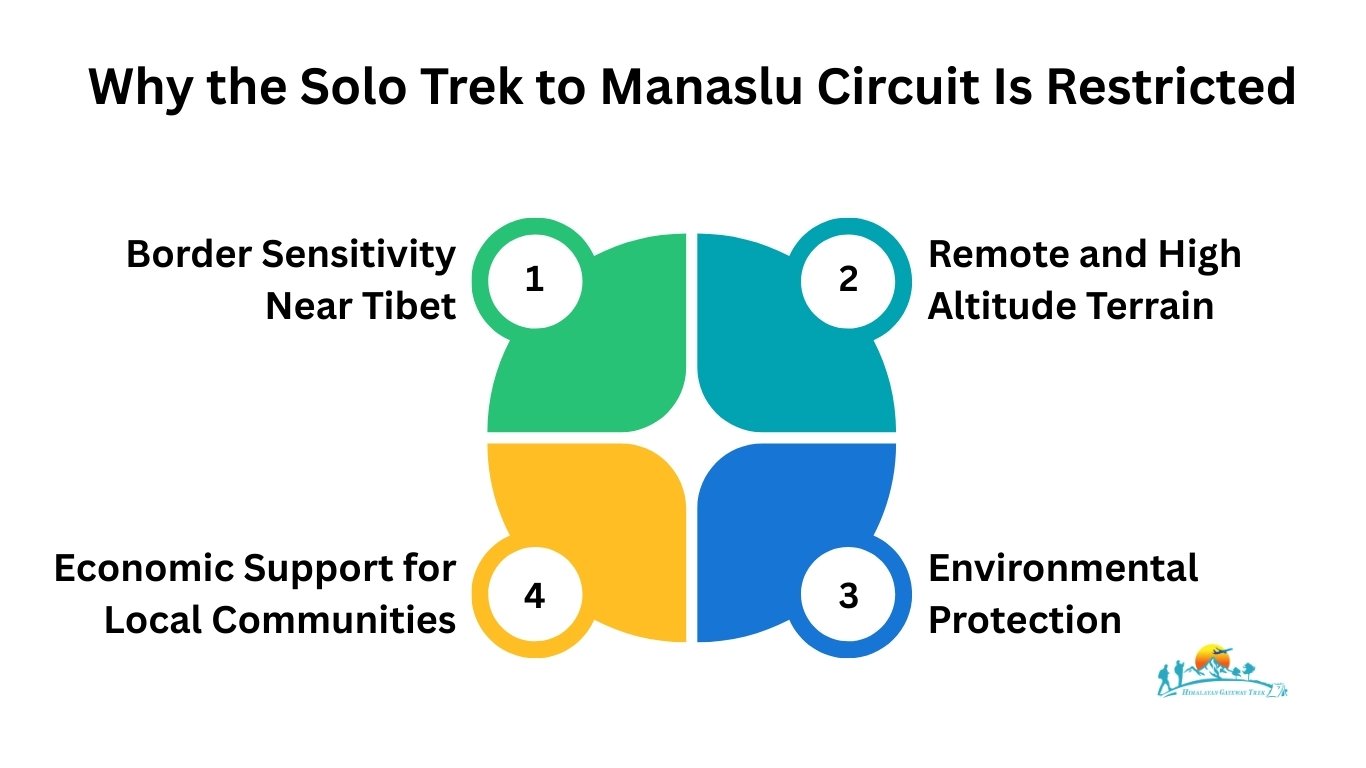
Manaslu borders China in the north. Authorities regulate access to prevent unauthorized cross-border travel and maintain security control.
The trail crosses isolated villages, narrow gorges and high mountain passes, including Larkya La Pass
Larkya La stands at 5,106 meters, and weather changes rapidly. Rescue services remain limited compared to Everest or Annapurna regions.
The circuit passes through Manaslu Conservation Area
This protected area preserves wildlife, forests and local culture. Authorities monitor tourism numbers to reduce environmental damage.
Mandatory guide hiring ensures income for mountain communities and promotes regulated tourism growth.
Every trekker must obtain three primary permits. Agencies arrange these on your behalf.
The Manaslu Restricted Area Permit is the most important document for this trek because the region is officially classified as a restricted area by the Government of Nepal. This permit is mandatory from Jagat to Dharapani, which covers the core section of the Manaslu Circuit.
The government introduced this permit to:
Unlike other trekking permits in Nepal, the Restricted Area Permit cannot be issued to an individual traveler directly. A registered trekking agency must apply on your behalf.
The permit cost depends on the season:
| Season | Cost per person |
|---|---|
| September to November | USD 100 for first 7 days, USD 15 per extra day |
| December to August | USD 75 for first 7 days, USD 10 per extra day |
Most trekkers complete the restricted section within 7 days. If your itinerary takes longer, you must pay for additional days in advance.
Police checkpoints along the trail check this permit carefully. You will show it at Jagat, Philim, Namrung, and other control points.
The Manaslu Conservation Area Permit allows entry into the protected environmental zone that surrounds Mount Manaslu and its surrounding valleys.
This permit is required from the beginning of the trek because most of the route lies within the conservation boundary.
The Manaslu Conservation Area is managed to protect:
Funds collected from this permit support local conservation efforts, trail maintenance, and community programs.
You receive a printed card which must be shown at entry checkpoints.
After crossing Larkya La Pass, the trail descends into the Annapurna region. At this point, you officially enter the Annapurna Conservation Area.
Because of this transition, the Annapurna Conservation Area Permit becomes mandatory.
The Annapurna region operates under its own conservation authority. Even though you began in Manaslu, you finish in the Annapurna territory. That means a separate permit is legally required.
The Annapurna Conservation Area protects:
You will show this permit at checkpoints near Dharapani and beyond.
A solo trek to Manaslu Circuit is possible only when you follow the legal process set by the Government of Nepal. You cannot walk into the immigration office and apply on your own. The Restricted Area Permit must be processed through a registered trekking agency in Kathmandu.
Below is a clearer breakdown of how solo travelers complete the trek legally.
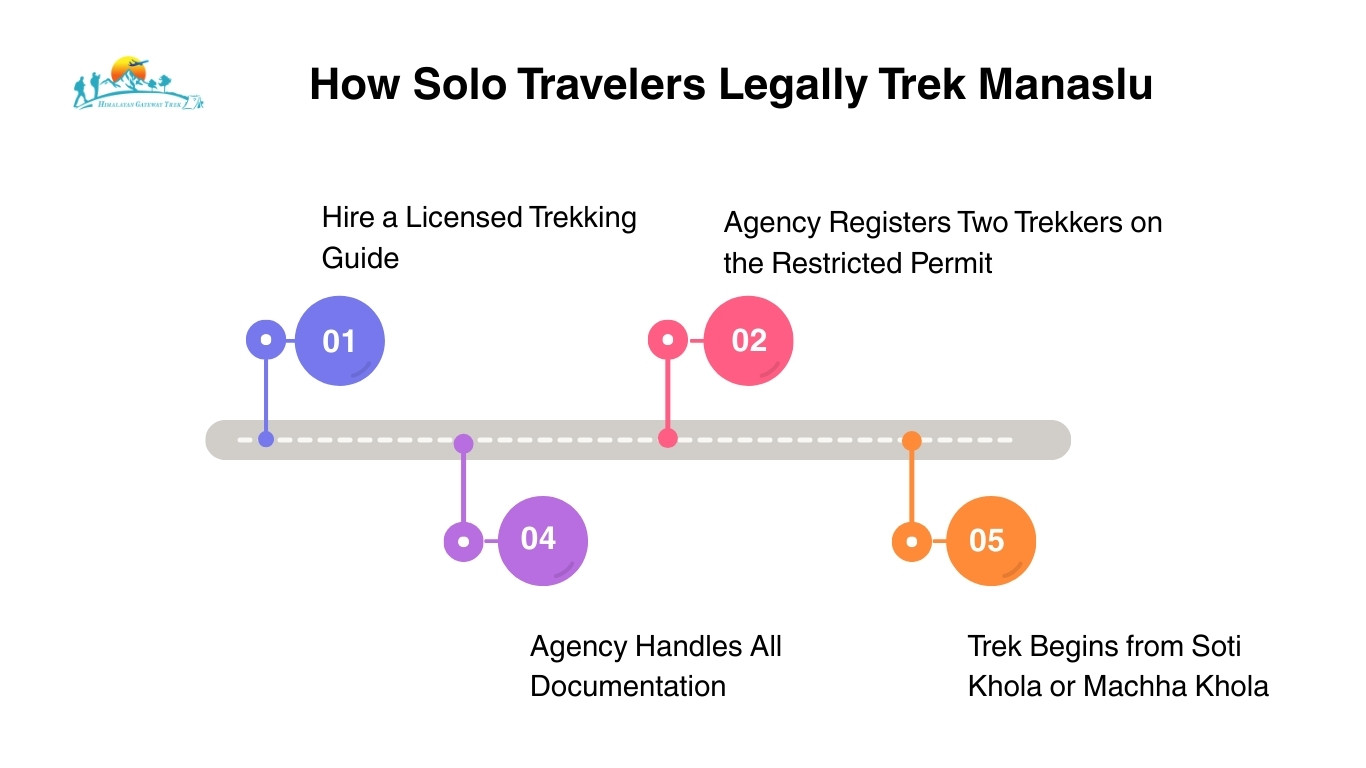
A government-licensed guide is mandatory for the Manaslu Restricted Area. The guide must carry:
You cannot enter the restricted section without a guide. Checkpoints along the trail verify guide credentials.
Your guide is not only a legal requirement. They also:
The Manaslu Restricted Area Permit requires a minimum of two trekkers listed under one application. If you are traveling alone, the agency arranges a second name on the permit to satisfy the regulation.
This second name is usually:
You still trek as a single client with your guide, but the permit formally lists two individuals.
This process is legal and widely practiced, as long as it is processed through an authorized agency.
Your agency prepares and submits:
Permits are issued through the Department of Immigration in Kathmandu. Processing usually takes one working day if the documents are complete.
You cannot obtain the Restricted Area Permit in Pokhara or on the trail. It must be arranged before departure.
After permits are issued, you travel from Kathmandu to either Soti Khola or Machha Khola depending on road conditions and itinerary preference.
The first checkpoint at Jagat verifies your Restricted Area Permit. Police and conservation officials check:
If documents are correct, you continue without issue.
A clear cost breakdown helps avoid budget surprises.
| Type | Estimated Cost |
|---|---|
| Budget with guide | USD 1,100 to 1,400 |
| With porter included | USD 1,400 to 1,700 |
Helicopter evacuation insurance not included.
Yes, if you hire a licensed guide and prepare carefully, the Manaslu Circuit can be completed safely. A guide not only ensures compliance with local regulations but also helps manage altitude risks, navigate the trail, and handle emergencies. Despite this, the trek remains physically demanding and requires proper fitness and mental readiness.
The trek crosses Larkya La Pass, the highest point at 5,106 meters. At this elevation, the risk of Acute Mountain Sickness (AMS) is significant, even for experienced trekkers. Symptoms can include headache, nausea, dizziness, and fatigue. Proper acclimatization days at Samagaun or Samdo are essential to reduce risk, and trekkers should monitor themselves and their companions for early signs of AMS. Drinking plenty of water, moving at a slow pace, and avoiding alcohol can help manage altitude-related issues.
Medical facilities along the route are basic, mostly limited to small health posts or clinics in larger villages like Samagaun. Serious injuries, altitude sickness, or emergencies require helicopter evacuation, which can be expensive and subject to weather conditions. Trekkers must carry a personal first aid kit and basic medications. Travel insurance covering high-altitude trekking and emergency evacuation is strongly recommended for anyone attempting this route.
Weather in the Manaslu region can change suddenly. Heavy snowfall or rain may block trails, rivers may swell, and landslides are possible during the monsoon. Early spring or late autumn snowstorms can temporarily trap trekkers at high camps. A licensed guide monitors local forecasts and adjusts plans to minimize risks. Carrying proper waterproof clothing and layering systems ensures safety and comfort in unpredictable conditions.
Many sections of the Manaslu Circuit are far from roads, cellphone coverage, or transport options. Villages are small, sparsely populated, and trails pass through steep gorges and exposed ridges. Guides help with navigation and local communication, and they also coordinate with porters or emergency services if problems arise. Trekkers should be prepared to rely on their guide, carry sufficient supplies, and remain self-sufficient for at least a day or two in remote areas.
Many trekkers compare these two routes before planning.
| Feature | Manaslu Circuit | Annapurna Circuit |
|---|---|---|
| Solo Independent Trekking | Not allowed | Allowed |
| Crowds | Low | Moderate to High |
| Permit Type | Restricted | Standard |
| Infrastructure | Basic | Developed |
| Highest Pass | 5,106 m | 5,416 m |
Manaslu feels quieter and less commercial. Annapurna offers more road access and independent travel freedom.
Stable weather reduces risk and improves mountain views.

Day temperature: 10 to 20°C lower elevations
Night temperature at high camps: below freezing
Autumn remains the most popular season.
Teahouses offer basic twin-sharing rooms. Expect:
Common meals include:
Prices increase with altitude.
Packing correctly reduces discomfort and risk.

Manaslu feels more isolated and remote than Everest Base Camp. Trail sections are steeper, with longer ascents and descents, and infrastructure such as lodges, medical posts, and road access remains limited compared to the Everest region. Trekkers should be capable of walking 6 to 7 hours daily at altitude.
The route also involves crossing the high Larkya La Pass, which adds technical difficulty and requires careful acclimatization. Unpredictable weather and fewer trekkers on the trail mean that self-reliance and preparation are crucial for safety and comfort.
Women can safely trek the Manaslu Circuit when accompanied by licensed guides. Many female trekkers complete this route each year without issues. Choosing reputable agencies, confirming guide experience, and carrying personal safety items such as a whistle, basic first aid, and a communication device enhances security. Local communities are welcoming and respectful, but it is important to follow cultural norms and travel with awareness of the remote environment.
Cash withdrawal is not possible on the trail.
Manaslu suits trekkers who:
It may not suit travelers seeking luxury lodges or independent travel freedom.
A solo trek to Manaslu Circuit requires planning, respect for regulations and physical preparation. You cannot walk this trail independently, but you can experience its remote beauty with a licensed guide.
The region rewards trekkers with quiet villages, strong mountain culture and dramatic Himalayan scenery. If you accept the permit system and prepare carefully, Manaslu delivers one of Nepal’s most authentic trekking experiences.
No, completely solo trekking is strictly prohibited in the Manaslu region. The Nepal government mandates a minimum of two trekkers per group, accompanied by a licensed guide, because the trail passes through a sensitive, restricted area near the Tibetan border.
You cannot trek Manaslu without a guide. Since April 2023, Nepal has enforced mandatory guide requirements for all restricted areas. A licensed guide is essential for navigating the remote terrain, managing safety, and clearing checkpoints with your special permits.
While you cannot trek alone, you can join a group or have an agency process a “ghost permit” for a second person. You will still need to be accompanied by a licensed guide to legally enter the restricted Manaslu region.
The ban ensures trekker safety in high-altitude, remote terrain and protects the sensitive border environment. Mandatory guides help prevent trekkers from getting lost, assist during medical emergencies, and ensure compliance with local regulations and cultural preservation efforts in restricted zones.
You need three permits: the Manaslu Restricted Area Permit (RAP), the Manaslu Conservation Area Project (MCAP), and the Annapurna Conservation Area Project (ACAP). These can only be issued through a registered Nepali trekking agency for a minimum of two people.
From September to November, the Restricted Area Permit costs $100 for the first week. From December to August, it drops to $75. Additionally, the MCAP and ACAP permits cost approximately $30 each, regardless of the season or duration.
No, individual trekkers cannot apply for Manaslu permits. Only registered Nepali trekking agencies can process these Restricted Area Permits. You must provide your original passport and a copy of your Nepal visa to the agency to complete the application.
Many consider Manaslu more challenging than EBC due to its remote nature and the grueling Larkya La Pass. While EBC has more developed infrastructure, Manaslu offers rugged trails, steeper ascents, and less frequent teahouses, requiring higher physical and mental stamina.
Legally, you must have a licensed guide. While some “porter-guides” hold licenses, a standard porter is not sufficient to meet the legal requirement for restricted area entry. Ensure your professional companion holds a valid trekking guide license from the Nepal government.
The minimum legal group size is two trekkers plus one licensed guide. If you are traveling alone, your trekking agency will often pair your permit with another trekker’s or help you join an existing group to meet the government’s requirements.
The standard Manaslu Circuit trek takes 14 to 18 days. This includes travel from Kathmandu, acclimatization days in villages like Samagaon, and the crossing of the Larkya La Pass. The total walking distance is approximately 177 kilometers (110 miles).
Spring (March to May) and Autumn (September to November) are the best times. These windows offer stable weather and clear views of Mt. Manaslu. During these peak seasons, it is much easier for solo travelers to find groups to join.
Electricity for charging devices is available in most teahouses for a small fee. Wi-Fi is increasingly available but can be slow and unreliable at higher altitudes. Buying a local Ncell or Nepal Telecom SIM card is recommended, though coverage is spotty.
As of recent updates, the special Restricted Area Permit (RAP) replaces the need for a TIMS card in the Manaslu region. However, since the trek ends in the Annapurna region, you still require the ACAP permit to legally exit through Dharapani and Besisahar.
Yes, May is an excellent time for the Manaslu trek. The weather is warm, and the rhododendrons are in full bloom. However, it can get quite hot at lower elevations, and late May may see early pre-monsoon clouds obscuring some mountain views.
The highest point is the Larkya La Pass, situated at an altitude of 5,106 meters (16,752 feet). Crossing this pass is the most challenging part of the trek, requiring an early morning start to avoid high winds and snowy conditions.
A typical 15-day trek costs between $900 and $1,300. This budget includes permits, a licensed guide, basic teahouse accommodation, meals, and transportation. Prices vary based on the level of service, group size, and whether you hire an additional porter.