

Places to Visit in Kathmandu: Complete Local Guide to Temples, Culture, Nature and Hidden Gems
Kathmandu stands as the cultural, spiritual, and historical heart of Nepal, shaped by centuries of faith, trade, art, and daily…
 Himalayan Gateway Trek - On
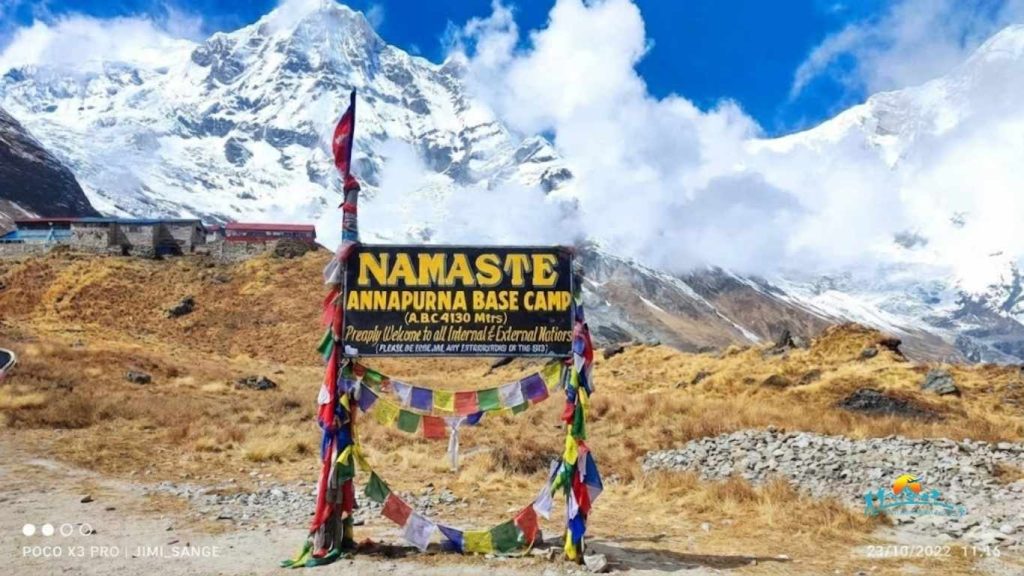
 The Annapurna Base Camp Trek for Beginners is suitable for first-time trekkers who have reasonable fitness, patience, and the willingness to walk 5 to 7 hours a day on mountain trails. It does not require technical climbing skills, ropes, or prior mountaineering experience. The trail reaches a maximum altitude of 4,130 meters and follows a well-established teahouse route through traditional villages, forests, and high alpine terrain.
This trek attracts beginners because it offers real Himalayan mountain views without extreme risk. You sleep in simple lodges, eat warm meals in dining halls, and walk on marked paths used by thousands of trekkers every year. At the same time, the trail includes steep stone steps, long uphill sections, and cold mornings at base camp. Preparation matters.
This guide explains everything a beginner needs to know before committing to the trek, including difficulty level, altitude, fitness training, itinerary options, packing list, safety advice, and realistic expectations.
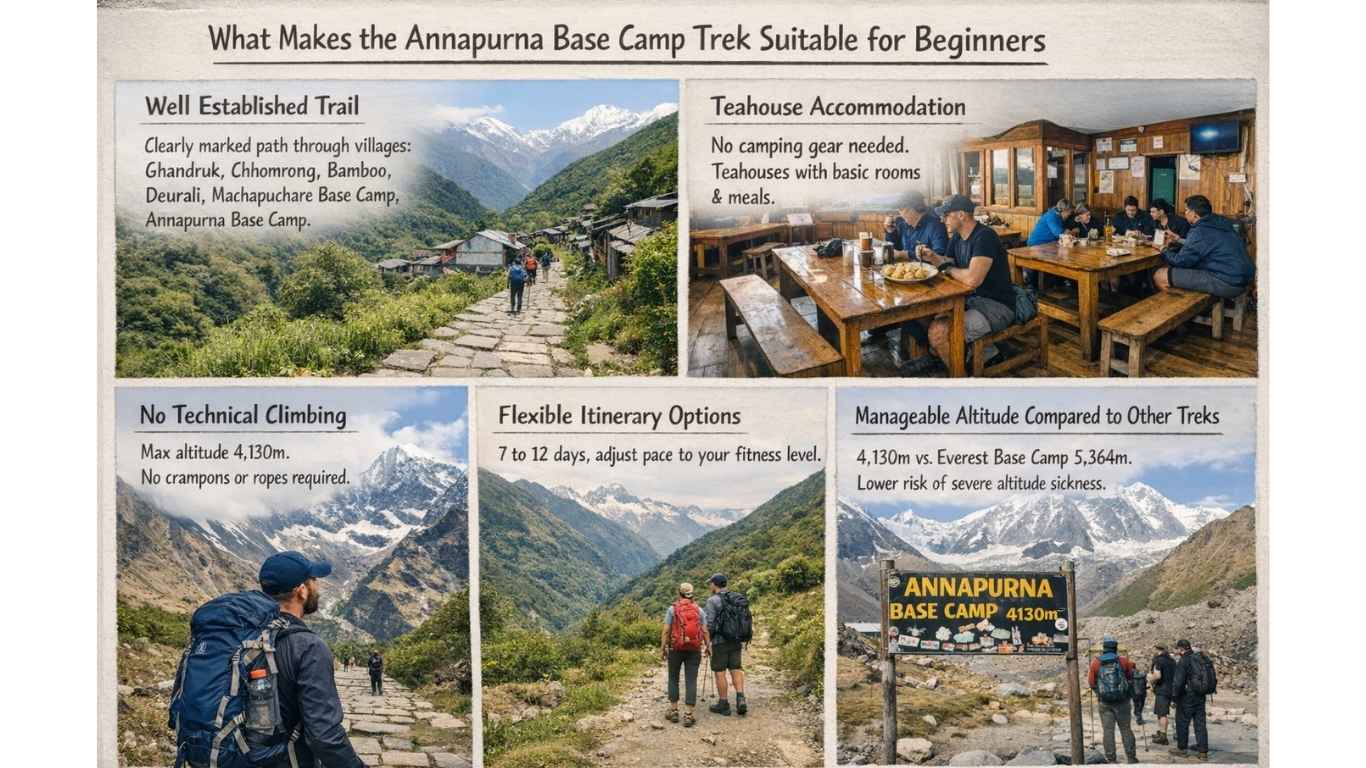
The Annapurna Base Camp route is beginner-friendly because it combines accessibility, infrastructure, and moderate altitude compared to many other Himalayan treks.
The trail is clearly marked and heavily used during peak seasons. You walk through villages such as Ghandruk, Chhomrong, Bamboo, Deurali, and Machapuchare Base Camp before reaching Annapurna Base Camp. Losing the trail is rare when visibility is good.
You do not need camping equipment. Local teahouses provide basic rooms, shared bathrooms, and cooked meals. This reduces the weight you carry and makes the trek less intimidating for first-timers.
The highest point sits at 4,130 meters. You do not use crampons, ice axes, or fixed ropes. The challenge comes from walking uphill, not climbing vertical rock or ice.
You can complete the trek in 7 days with strong fitness or stretch it to 10 to 12 days for better acclimatization. Beginners benefit from slower pacing.
Everest Base Camp reaches 5,364 meters. Annapurna Base Camp stays lower at 4,130 meters. The risk of severe altitude sickness is lower, although caution is still necessary.
The Annapurna Base Camp Trek is moderate, not easy, and beginners must accept that physical effort, changing weather, and basic facilities are part of the journey. Proper preparation reduces stress and helps you enjoy the experience instead of struggling through it. So Annapurna Base Camp Trek for Beginners is little difficult.
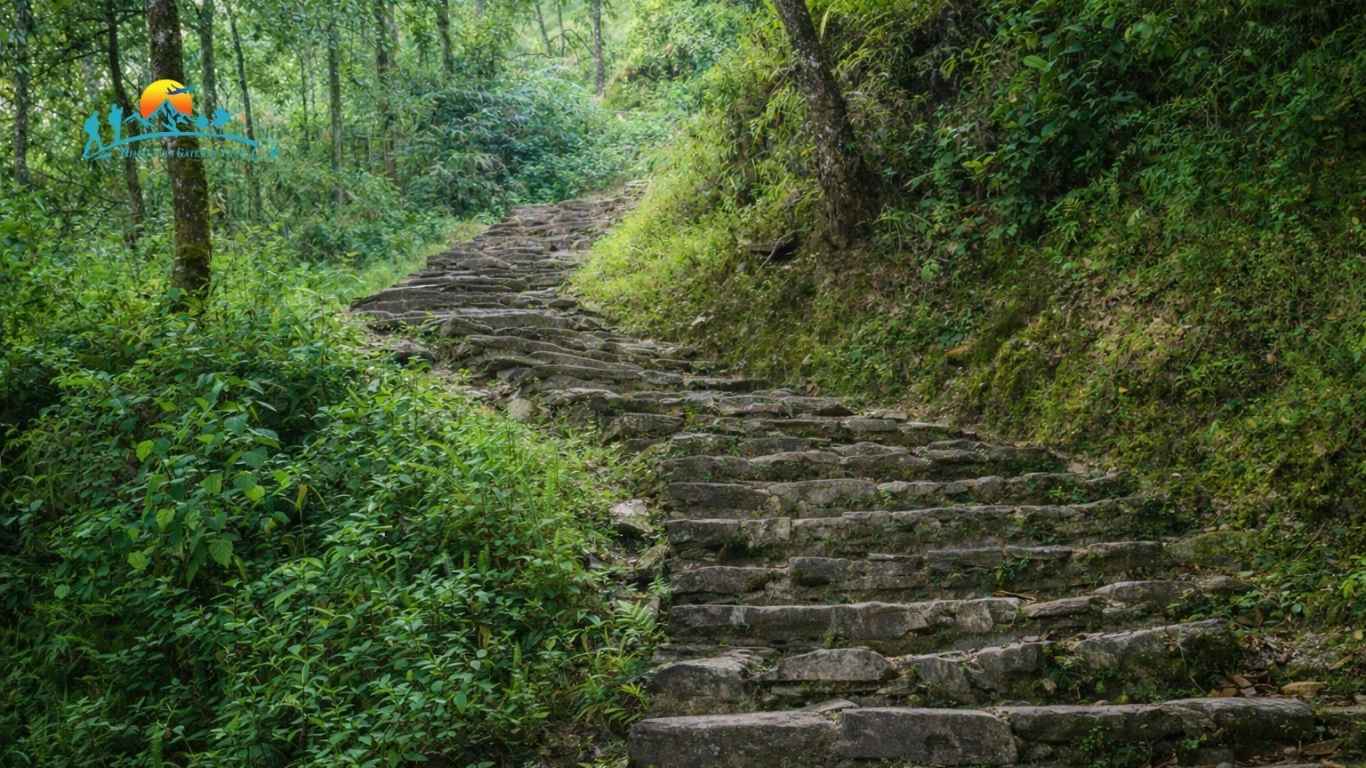
The stone staircases between Chhomrong and Bamboo are one of the most physically demanding sections of the trek. Thousands of uneven steps test both leg strength and balance. Climbing them raises your heart rate quickly, especially when carrying a backpack. Descending is often harder because it places repeated pressure on your knees and thighs.
Many beginners underestimate downhill sections. Strong quadriceps muscles are essential for safe descent. Trekking poles help reduce knee strain and improve stability on long staircases. Walking slowly and maintaining rhythm prevents early exhaustion.
The Annapurna region does not offer long flat trails. You descend into river valleys and climb back up to ridge-top villages multiple times. This pattern repeats throughout the trek.
These elevation changes create cumulative fatigue. Even if the daily walking hours seem manageable, the repeated ascent and descent challenge stamina. Beginners often find day two or three harder than expected because their legs are still adapting.
To handle this challenge:
Consistency matters more than speed.

At 4,130 meters, temperatures drop significantly, especially at night and early morning. In spring and autumn, morning temperatures can fall below freezing. Water bottles may freeze overnight. Rooms at base camp are not heated.
Cold air also affects breathing. You may notice dryness in your throat or mild discomfort while inhaling cold air. Proper layering prevents heat loss. A good down jacket, thermal layers, gloves, and a warm hat are necessary.
Sleeping can feel uncomfortable if you are not used to cold mountain conditions. A sleeping bag rated for minus 10°C provides extra insulation and comfort.
Teahouses provide comfort compared to camping, but they remain simple. Expect small rooms with twin beds, thin mattresses, and shared bathrooms. Hot showers are available in lower villages for an extra fee, but at higher altitudes, hot water becomes limited.
Toilets at higher elevations are often basic squat-style facilities. Cleanliness varies depending on season and crowd levels. Toilet paper is usually not provided, so carrying your own is important.
Electric charging costs extra and may be unavailable during power shortages. WiFi works in some villages but becomes slow or unreliable higher up.
Accepting these conditions as part of the trekking culture makes the experience smoother.
Altitude presents the most serious challenge for beginners. As you climb above 2,500 meters, oxygen levels decrease. Your body needs time to adjust.
If you ascend too quickly, you increase the risk of Acute Mountain Sickness. Mild symptoms include headache, fatigue, nausea, and sleep disturbance. Ignoring these signs can lead to more serious conditions.
Prevention requires:
Descending remains the most effective treatment if symptoms worsen.
Physical effort is only one part of the challenge. Walking several hours each day in changing weather requires mental resilience. Rain, cold mornings, or long uphill sections can test patience.
Beginners sometimes focus too much on the final destination. Concentrating on each day’s progress reduces mental pressure. Celebrate small achievements such as reaching the next village or crossing a suspension bridge.
A calm mindset helps you conserve energy.
Mountain weather changes quickly. Clear mornings can turn cloudy by afternoon. In shoulder seasons, unexpected snowfall may occur near base camp.
Rain makes stone steps slippery. Fog reduces visibility. Wind increases cold exposure at higher elevations.
Carrying proper rain gear and checking forecasts before departure lowers risk. Starting early each morning also avoids afternoon weather shifts.
Medical facilities are limited along the trail. Small health posts exist in some villages, but advanced care requires evacuation to Pokhara or Kathmandu.
Travel insurance that covers helicopter evacuation is essential. In emergencies, helicopters provide the fastest rescue option.
Knowing that help is not immediately available encourages cautious decision-making.

The difficulty level is moderate. A healthy beginner who trains in advance can complete the trek safely.
Expect:
You start around 800 to 1,000 meters and gradually climb to 4,130 meters over several days.
The trail includes:
No glacier walking is required.
| Feature | Annapurna Base Camp | Everest Base Camp |
|---|---|---|
| Maximum Altitude | 4,130 meters | 5,364 meters |
| Duration | 7 to 12 days | 12 to 14 days |
| Difficulty | Moderate | Moderate to challenging |
| Flight Required | No | Yes, Lukla flight |
| Technical Climbing | No | No |
Annapurna Base Camp is generally better for beginners due to lower altitude and shorter duration.
Altitude is the most crucial factor that distinguishes a comfortable trek from a perilous one. The Annapurna Base Camp Trek gradually climbs from low hills to 4,130 meters, and your body needs time to adjust to thinner air. Most beginners start to feel altitude changes above 2,500 meters, especially in villages like Chhomrong and Deurali.
The key to staying safe is controlled ascent and awareness of symptoms. Strength alone does not protect you from altitude sickness. Even very fit trekkers can experience it if they climb too fast.
At 4,130 meters, the air contains significantly less oxygen than at sea level. Each breath delivers less oxygen to your bloodstream. Your body responds in several ways:
You may notice shortness of breath during small uphill walks. This is normal at high altitude. Mild headache during the first day at a higher elevation is also common.
Your body begins producing more red blood cells to carry oxygen efficiently. This adjustment takes time. Rushing upward does not give your system enough time to adapt.
Morning at Annapurna Base Camp often feels harder than daytime because cold air and lower oxygen levels combine. Slow movements and deep breathing help during these hours.
Acute Mountain Sickness, often called AMS, can affect anyone. It usually appears within 6 to 24 hours after gaining significant altitude.
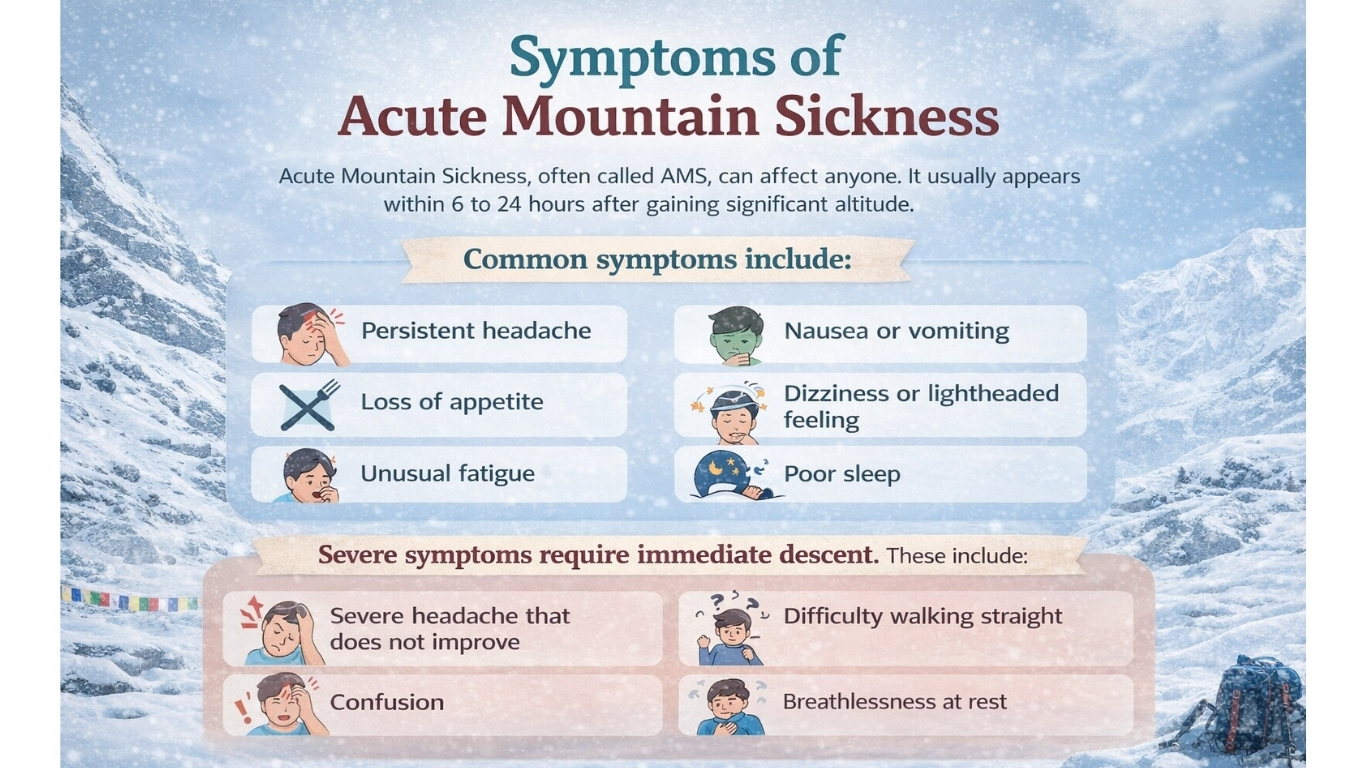
Common symptoms include:
Mild symptoms often improve with rest and hydration. Severe symptoms require immediate descent. These include:
Descending even 300 to 500 meters can improve symptoms quickly. Never ignore worsening signs.
Your body adapts to altitude step by step. Sleeping altitude matters more than hiking altitude. You can climb higher during the day but should avoid large increases in sleeping elevation.
Most well-planned Annapurna Base Camp itineraries increase sleeping altitude by 300 to 500 meters per day once above 2,500 meters. This gradual rise reduces stress on the body.
A rushed 5 or 6-day itinerary increases altitude risk, especially for beginners. A 10 to 12 day schedule gives your body time to adjust naturally.
Following simple rules makes a big difference.
Hydration supports circulation and oxygen delivery. Dehydration can worsen headaches and fatigue.
Walking slowly does not mean weakness. It allows your lungs to adapt efficiently. Many experienced trekkers follow the principle of walking at a pace where they can speak in full sentences without gasping.
If you feel unwell, communicate clearly with your guide or companions. Do not hide symptoms out of pride.
Listening to your body remains the most important rule. The mountain will remain there. Your safety comes first.
Training increases confidence and reduces injury risk.
Strong legs help manage steep stone sections.
You should comfortably walk uphill for one hour without severe breathlessness.

Stable weather improves safety and enjoyment.
Beginners should choose spring or autumn.
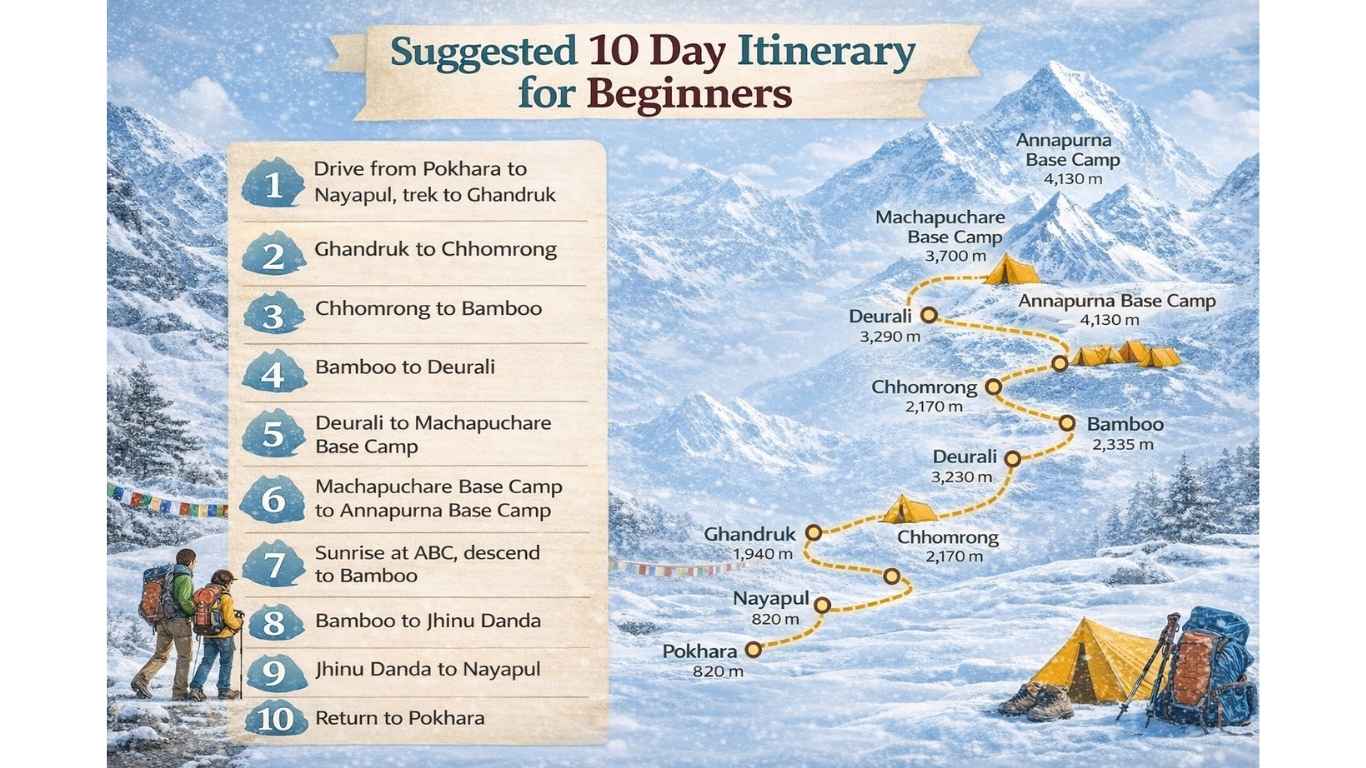
A 10 day itinerary provides steady altitude gain, balanced walking hours, and enough time for your body to adjust properly. This schedule reduces exhaustion and lowers the risk of altitude sickness while still allowing you to enjoy the scenery and local culture. Daily walking averages 5 to 7 hours, which suits beginners with moderate fitness.
Day 1: Drive from Pokhara to Nayapul, trek to Ghandruk
You begin with a short drive to Nayapul, the traditional starting point. The trail climbs gradually through villages and terraced fields to Ghandruk, a beautiful Gurung settlement with mountain views.
Day 2: Ghandruk to Chhomrong
The trail descends slightly before a steady uphill climb to Chhomrong. This village sits on a hillside facing Annapurna South and Machapuchare. Expect stone steps and moderate elevation gain.
Day 3: Chhomrong to Bamboo
You descend steep stone staircases to the Chhomrong Khola river and then climb back up before entering forested trails. The path continues through bamboo and rhododendron forests toward Bamboo.
Day 4: Bamboo to Deurali
The trail gradually gains altitude as you pass through Dovan and Himalaya. The forest begins to thin, and you feel the air becoming cooler. Deurali offers a quieter stop before entering higher alpine terrain.
Day 5: Deurali to Machapuchare Base Camp
The landscape opens into a wide valley surrounded by cliffs. The trail becomes more exposed and rocky. Machapuchare Base Camp offers stunning, close-up views of the surrounding peaks.
Day 6: Machapuchare Base Camp to Annapurna Base Camp
A gradual ascent leads you into the Annapurna Sanctuary. Snow-covered peaks surround the base camp at 4,130 meters. The sense of achievement and panoramic mountain views make this day unforgettable.
Day 7: Sunrise at ABC, descend to Bamboo
Wake early to witness sunrise over Annapurna I and nearby peaks. After breakfast, descend steadily back through Machapuchare Base Camp and continue down to Bamboo.
Day 8: Bamboo to Jhinu Danda
Retrace your steps through Chhomrong and continue toward Jhinu Danda. This village is famous for its natural hot springs, where you can relax your muscles after several days of trekking.
Day 9: Jhinu Danda to Nayapul
The trail gradually descends through villages and farmland. This final walking day feels easier as you lose altitude and return to lower elevations.
Day 10: Return to Pokhara
Drive back to Pokhara and enjoy a well-deserved rest. Many trekkers celebrate the completion of their journey by relaxing near Phewa Lake.
Budget clarity helps planning.
Total cost usually ranges between 40 to 50 USD.
Independent trek: 500 to 800 USD
Guided trek: 900 to 1,500 USD
Prices vary by season and service level.
Packing smart reduces fatigue.
Avoid overpacking. Keep your bag under 12 kilograms if possible.
Teahouses provide dal bhat, noodles, fried rice, pasta, soups, pancakes, and eggs. Dal bhat remains the most filling option. Water is available for purchase. Boiled water costs extra at higher elevations. Use purification tablets for safety. Electric charging is available for a small fee. WiFi exists in many villages but becomes unreliable near base camp.
Safety begins with awareness.
Listen to your body at all times.
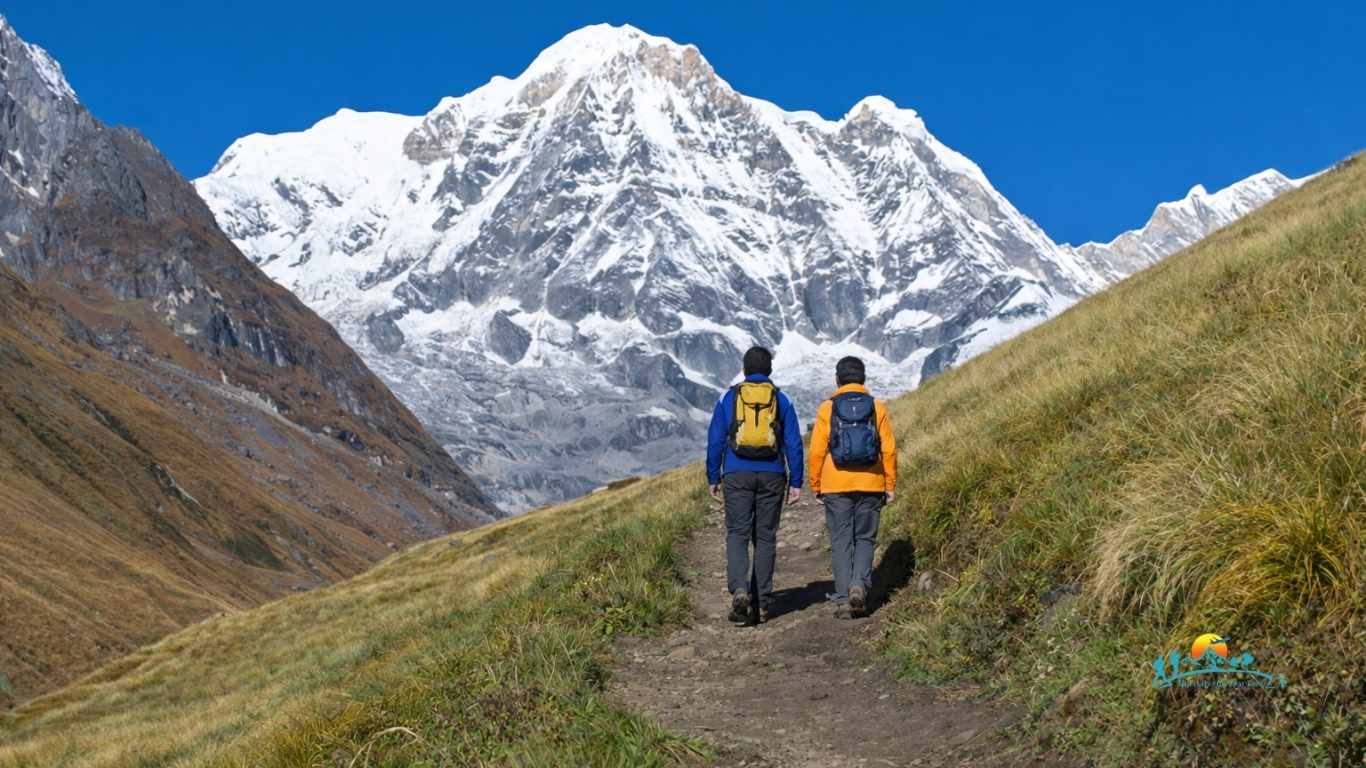
The trek rewards beginners with close views of Annapurna I, Machapuchare, Hiunchuli, and Annapurna South. Standing at 4,130 meters surrounded by snow peaks creates a strong sense of achievement. A fit beginner who trains for six weeks and chooses the right season can complete this trek safely and enjoyably.
The Annapurna Base Camp Trek for Beginners offers a realistic Himalayan adventure without extreme technical demands. It requires commitment, steady walking, and respect for altitude. With proper preparation, most healthy beginners can reach base camp and return safely.
Training before departure, choosing spring or autumn, packing correctly, and maintaining a calm pace will shape your experience. The mountains reward patience. A well-prepared beginner does not just reach Annapurna Base Camp. They return home stronger, more confident, and proud of what they achieved.
Yes, beginners with average physical fitness can successfully complete the ABC trek. The trail is well-established with manageable elevation gains. Success depends on choosing a proper itinerary, maintaining a steady pace, and ensuring adequate preparation before arriving in Nepal.
Everest Base Camp (EBC) is generally considered harder due to its significantly higher maximum altitude (5,364m) and longer duration. ABC reaches only 4,130m and features more oxygen-rich air, though it involves more steep stone steps than the Everest route.
The Ghorepani Poon Hill Trek is the easiest and most popular short trek in the region. Reaching a maximum altitude of 3,210m, it offers spectacular panoramic views with less physical strain, making it perfect for families and novice hikers.
The ABC trek is classified as moderately difficult. While it requires no technical climbing skills, you must be prepared for 5–7 hours of daily walking on varied terrain, including thousands of stone stairs. Consistent cardio training will make the experience much easier.
The best seasons are Spring (March to May) and Autumn (September to November). These months offer stable weather, clear mountain views, and moderate temperatures. Beginners should avoid the monsoon season due to slippery trails and leeches, and winter due to extreme cold.
While ABC reaches 4,130m, the risk of Acute Mountain Sickness (AMS) is lower than on the Everest trek. However, it still exists. Staying hydrated, walking slowly, and including acclimatization days in your schedule are vital safety measures for every trekker.
While experienced trekkers may go solo, beginners are highly recommended to hire a guide for safety and navigation. Porters are also beneficial as they carry your heavy gear, allowing you to hike comfortably with only a small daypack.
You need two primary permits: the Annapurna Conservation Area Project (ACAP) permit and the Trekkers’ Information Management System (TIMS) card. These are essential for legal entry into the region and are checked at various points along the trail.
Accommodation consists of “teahouses,” which are basic mountain lodges. You will typically have a twin-sharing room with common bathrooms. Facilities become more rustic as you go higher, but they provide a cozy atmosphere and essential shelter from the mountain cold.
Teahouses offer a surprising variety of meals, including the traditional Dal Bhat (lentils and rice), pasta, noodles, and eggs. Dal Bhat is the best choice for energy as it is nutritious, filling, and usually comes with free refills.
You can purchase bottled water, but to reduce plastic waste, it is better to use boiled water from teahouses or tap water treated with purification tablets or filters. Always stay hydrated by drinking at least 3–4 liters daily.
On average, you will walk between 5 to 7 hours per day. The pace is generally slow to help your body adjust to the changing altitude. Some days involve steep uphill climbs, while others follow gentler forest paths.
Yes, comprehensive travel insurance is essential for beginners. Ensure your policy specifically covers high-altitude trekking up to 5,000 meters and includes emergency helicopter evacuation. This provides peace of mind in case of illness, injury, or unexpected flight cancellations.
Most teahouses provide electricity for charging devices and Wi-Fi for a small extra fee. However, connections can be unstable at higher altitudes. It is wise to bring a portable power bank to ensure your camera and phone stay charged.
Key items include broken-in hiking boots, moisture-wicking layers, a warm down jacket, a sleeping bag, and trekking poles. Don’t forget a basic first-aid kit, sun protection, and a headlamp. Proper gear is crucial for staying comfortable in changing mountain weather.
The highest point is Annapurna Base Camp itself, situated at 4,130 meters (13,550 feet). You will also spend time at Machhapuchhre Base Camp (3,700m) before the final ascent, allowing your body a bit of time to adjust to the elevation.


