About the Upper Mustang Region
Upper Mustang lies in the northernmost part of Nepal, bordering the Tibetan Autonomous Region of China. Until 1992, the area was completely closed to foreign visitors, which allowed its culture, architecture, and way of life to remain largely untouched. The region was once the independent Kingdom of Lo and still retains strong Tibetan Buddhist identity, language, customs, and governance traditions.
The landscape is dramatically different from the rest of Nepal. Instead of green hills and forests, Upper Mustang is dominated by high-altitude desert terrain, eroded sandstone cliffs, deep gorges, and vast open valleys. Strong winds and minimal rainfall have shaped the land over centuries, creating one of the most visually striking riding environments in the Himalayas.
Nature of the Ride
This expedition is not a highway ride. It is a remote, high-altitude off-road motorcycle journey that demands focus, patience, and adaptability.
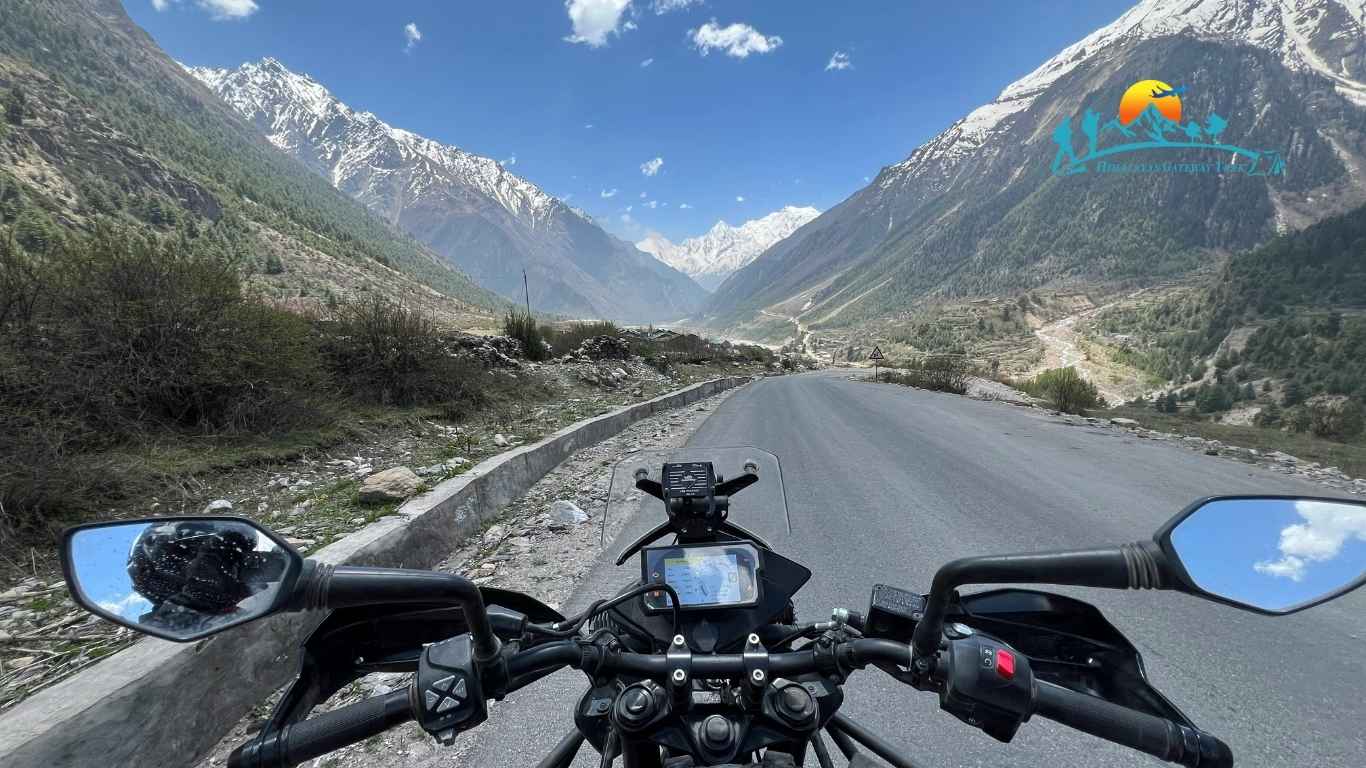
From Beni onward, road conditions steadily deteriorate. Beyond Kagbeni, the route becomes almost entirely unpaved. Riders encounter loose gravel, rocky trails, sand patches, river crossings, and narrow cliffside tracks. Some sections require careful throttle control and balance rather than speed. Afternoon winds are common and significantly affect riding stability.
Daily riding distances are kept moderate, but riding hours are long due to terrain and altitude. This is intentional to reduce fatigue and mechanical stress.
Upper Mustang Bike Tour Highlights
- Kora La Frontier: Reach the absolute edge of Nepal at 4,660m on the vast Tibetan plateau at the China border.
- The Sky Cave Mystery: Explore Shila Caves, a 2,000-year-old cliffside high-rise with over 80 interconnected rooms.
- The Last Walled City: Ride into Lo Manthang, the world’s last intact medieval capital still housing a 14th-century palace.
- Deepest Gorge Navigation: Master technical riverbed trails through the Kali Gandaki, carved between 8,000m Himalayan giants.
- The Eternal Flame: Visit Muktinath at 3,800m to witness the sacred natural gas fire burning directly on water.
- 8th-Century Heritage: Seek blessings at Ghar Gompa, the oldest active Buddhist monastery in Nepal, famous for its wish-fulfilling murals.
- Martian Landscapes: Navigate wind-sculpted red canyons and high-altitude deserts found nowhere else in the Himalayas.
- The Apple Spirit Tradition: Refresh in Marpha village with world-famous apple orchards and local distillery traditions after the dusty trail.
10 Days Upper Mustang Bike Tour Overview
10 Days Upper Mustang Bike Tour is not a sightseeing tour. This is a high-altitude motorcycle expedition into one of the last restricted regions on earth.
Ride the Royal Enfield Himalayan 450 across the Tibetan Plateau of Nepal, where the landscape turns raw, dry, and treeless, and villages still function on centuries-old Tibetan traditions. The terrain is unforgiving, the roads are broken or nonexistent, and the reward is complete immersion into a region untouched by modern tourism.
The Route
The journey begins in Kathmandu, heading west to Pokhara, riding through changing elevations and mountain highways. From Pokhara, the route follows the Annapurna Circuit corridor to Beni, where the pavement ends, and the real riding begins.
From Beni onward, the trail runs beside the Kali Gandaki River, following the ancient salt trade route between Nepal and Tibet. This section is entirely off-road, crossing loose gravel, riverbeds, wind-carved cliffs, and high desert valleys.
You ride through the Kali Gandaki Gorge, the deepest gorge in the world, flanked by Dhaulagiri and Annapurna, two eight-thousand-meter giants. The ride continues through Kagbeni, Jomsom, and into the restricted Upper Mustang region, reaching Muktinath and onward to Lo Manthang, the former walled capital of the Kingdom of Mustang.
The region is culturally Tibetan, not Nepali. Buddhist monasteries, chortens, prayer flags, cave dwellings, and traditional mud-brick homes dominate the landscape. Life here has changed little over generations.
Pokhara Rest Day
A scheduled rest day in Pokhara allows recovery and flexibility. Options include lakeside exploration, cave visits, or adventure sports such as paragliding, zip-flyer, or bungee. Evenings are spent around Phewa Lake, where food, music, and relaxed social spaces offer contrast after days in the mountains.
Motorbike | Royal Enfield Himalayan 450
All expeditions are operated on the Royal Enfield Himalayan 450, purpose-built for Himalayan terrain.
This motorcycle is engineered for high altitude, broken roads, and long off-road days. The new platform delivers stronger low-end torque, improved suspension travel, and stable handling on loose surfaces. The 21-inch front wheel and 17-inch rear wheel combination ensures control on gravel, sand, and rocky climbs. Upright ergonomics, wide handlebars, and enduro footpegs reduce fatigue on long riding days.
The Himalayan 450 is not about speed. It is about control, balance, and reliability, where failure is not an option.
Permits and Restricted Area Access | Upper Mustang Bike Tour
Upper Mustang is a restricted region. Entry is regulated by the Government of Nepal.
-
Restricted Area Permit: USD 500 for 10 days
-
Additional days: USD 50 per day
-
Permit validity is counted by days, not nights
-
Entry and exit are both through Kagbeni
-
Minimum requirement: two travellers per permit
-
Solo travellers cannot apply independently
An ACAP permit (Annapurna Conservation Area Project) is also mandatory for certain sections.
If you are a solo rider, we arrange permit access by grouping you with riders on matching dates. An original passport copy is required for permit processing.
Why This Ride Is Different
-
Real off-road riding, not paved tourist routes
-
High-altitude desert terrain with rapid weather shifts
-
Tibetan Buddhist culture, not commercialised villages
-
Restricted region access with legal permits handled in advance
-
Modern, expedition-ready motorcycles built for this terrain
-
Balanced pacing that prioritises riding quality over rushing distances
This expedition is designed for riders who want terrain, altitude, culture, and challenge, not luxury and shortcuts.
Upper Mustang Bike Tour Itinerary
Day 01: Arrival in Kathmandu
Arrive at Tribhuvan International Airport and transfer to the hotel in Kathmandu. After check-in, riders are briefed on the expedition route, riding conditions, altitude progression, and safety protocols. Original passports are collected for restricted area permit verification. The evening is relaxed to allow recovery from travel fatigue. This day is intentionally light to help riders acclimatize before entering higher elevations.
At Himalayan Gateway Trek, we are excited to begin this journey with you and ensure a memorable experience throughout your stay in Nepal.
Day 02: Kathmandu to Pokhara | Motorcycle Setup and Familiarization
Fly or drive to Pokhara depending on preference and weather conditions. Pokhara serves as the logistical base for the expedition. In the evening, riders are assigned their Royal Enfield Himalayan 450 motorcycles. A familiarisation ride is conducted around Lakeside to adjust controls, seating, and riding posture. Mechanics check luggage mounting, tire pressure, and braking response. This session ensures rider confidence before entering remote terrain.
Day 03: Pokhara – Beni – Kalopani
The ride begins early, following the Myagdi River toward Beni. Terrain gradually transitions from smooth blacktop to broken roads and gravel sections. This day introduces riders to Himalayan riding conditions such as narrow roads, shared trails, and variable surfaces. As altitude increases, temperatures drop and vegetation thins. Kalopani offers clear views of Annapurna and Dhaulagiri on clear evenings. This night marks the first real exposure to mountain climate.
Day 04: Kalopani – Muktinath – Kagbeni
The landscape changes dramatically as the ride enters the trans-Himalayan rain-shadow region. Trees disappear, replaced by dry valleys and wind-swept plateaus. The climb to Muktinath is steep and exposed, testing throttle control and balance. After visiting the sacred Muktinath Temple, the route descends to Kagbeni, a medieval village at the confluence of the Kali Gandaki and Jhong rivers. Kagbeni is the official entry checkpoint to Upper Mustang.
Day 05: Kagbeni – Lo Manthang
After permit inspection, the ride enters the restricted Upper Mustang region. Roads turn fully off-road with river crossings, loose stones, and wind-carved cliffs. Villages appear isolated, with mud-brick houses and ancient chortens. Prayer flags line high passes and ridge crossings. The day ends at Lo Manthang, the former capital of the Kingdom of Mustang, enclosed by ancient walls and deeply rooted Tibetan Buddhist culture.
Day 06: Exploration Day | Lo Manthang and Chhosar
A non-transfer day dedicated to exploration. Riders travel light to nearby villages such as Chhosar, known for its ancient sky caves carved into vertical cliffs. Visits include monasteries, royal palace grounds, and traditional homes. The slower pace allows adaptation to altitude and deeper cultural observation. This day provides insight into daily life in Upper Mustang, where trade, religion, and tradition remain central.
Day 07: Lo Manthang – Jomsom / Lete
The return ride retraces the Upper Mustang trail, often facing strong valley winds that develop after midday. Riders experience the same terrain in reverse, which feels technically different due to elevation loss and wind direction. As altitude drops, vegetation slowly returns. Jomsom and Lete provide warmer conditions and easier breathing, offering physical relief after several days above 3,500 meters.
Day 08: Jomsom / Lete – Pokhara
A long riding day through mixed terrain, including gravel, broken tarmac, and smoother highways. The Kali Gandaki River remains the main reference point. The ride ends in Pokhara, where bikes are returned and checked. Evening is free to rest, walk around Lakeside, or reflect on the expedition.
Day 09: Pokhara – Kathmandu
Return to Kathmandu. Free time for gear packing, souvenir shopping, or rest. Farewell dinner includes a detailed ride recap and certificate distribution.
Day 10: Departure
Transfer to Tribhuvan International Airport for onward journey.
What is included in Upper Mustang Bike Tour Package?
- Necessary airport transfers as per the itinerary.
- Two nights twin-sharing accommodation in a 3-star hotel in Kathmandu with breakfast.
- Two nights twin-sharing accommodation in a 3-star hotel in Pokhara with breakfast.
- Twin-sharing accommodation in the best available standard lodges and guesthouses throughout Mustang.
- Royal Enfield Himalayan 450 CC motorcycle for the entire expedition.
- All meals including breakfast, lunch, and dinner from Pokhara to Pokhara during the ride.
- Services of an experienced, government-licensed tour leader throughout the trip.
- Dedicated Royal Enfield mechanic with all meals, accommodation, and daily allowances covered.
- Motorcycle spare parts and professional tool kit carried for the entire journey.
- Full-time backup 4x4 support vehicle for luggage, spares, tools, and mechanical assistance.
- Upper Mustang Restricted Area Permit included at USD 500 per person for 10 days.
- Annapurna Conservation Area Permit (ACAP) and TIMS fees included.
- Sleeping bag and duffel bag provided during the trip and refundable after completion.
- Comprehensive medical kit carried throughout the expedition.
- All road tolls, vehicle charges, and applicable government taxes included.
What is excluded in Upper Mustang Bike Tour Package?
- Nepal entry visa fees.
- International and domestic airfare.
- Personal riding gear and equipment.
- Lunch and dinner in Kathmandu and Pokhara.
- Personal travel insurance and evacuation costs,
- Sightseeing entrance fees and optional activities.
- Personal expenses including drinks, laundry, and phone charges.
- Insurance coverage for accidents, loss of life, or loss of personal belongings.
- Motorcycle fuel for the entire expedition.
- Additional costs due to natural disasters, strikes, road closures, or unforeseen delays beyond the company’s control.
- Any service or item not specifically mentioned under Cost Includes.
10 DAYS UPPER MUSTANG MOTORBIKE TOUR MAP


Riding through Upper Mustang involves high altitude, cold mornings, strong valley winds, dust, river crossings, and long off-road days. Proper equipment is essential for safety, comfort, and riding efficiency. Riders are expected to carry personal riding gear suitable for variable mountain weather, while expedition-level support equipment is provided by the team.
- Full-face or adventure helmet with clear visor
- Armored riding jacket with thermal liner
- Armored riding pants for long off-road days
- Riding gloves suitable for cold and wind
- High-ankle riding boots with firm grip
- Thermal base layers for high-altitude riding
- Insulated jacket for cold mornings and evenings
- Waterproof and windproof outer shell
- Sunglasses, sunscreen, and lip balm for strong UV exposure
- Personal medications and basic first-aid essentials
- Reusable water bottle or hydration pack
- Headlamp or flashlight with spare batteries
- Original passport, Nepal visa, and travel insurance documents
- Cash in small denominations for remote areas
- Sleeping bag and duffel bag (provided by the company)
Best Time to go to Upper Mustang Tour
Upper Mustang lies in the Himalayan rain shadow, meaning it receives very little rainfall even during Nepal’s monsoon season. This makes it one of the few regions in the Himalayas where travel remains possible when other trekking and riding routes are affected by heavy rain.
-
Best Riding Season: April to November
During this period, Upper Mustang remains largely dry with clear visibility and stable weather at higher elevations. While the upper region stays dry, the lower Mustang sections can receive monsoon rain between June and August. During these months, riders should expect muddy roads, occasional landslides, and slower travel times in lower valleys. -
Monsoon Consideration: June to August
Although Upper Mustang itself stays dry, access routes through lower Mustang may be affected by rain. Riding during this season requires flexibility, patience, and an understanding that road conditions can change daily. -
Winter Season: December to March
Winter is not recommended for travel. Temperatures drop well below freezing, high passes may close due to snow, and most lodges shut down. Many residents migrate to Pokhara or Kathmandu during winter, leaving limited services available. -
Festival Periods: May and August
These months coincide with important local festivals, including the Tiji Festival in Lo Manthang. Travelling during festival time offers rare cultural insight into traditional rituals, masked dances, and religious ceremonies that are otherwise unseen.
Trek Permit Requirements
Upper Mustang is classified as a restricted area by the Government of Nepal, and access is strictly regulated to protect its fragile environment and preserve Tibetan culture. All foreign travellers entering Upper Mustang must obtain a Restricted Area Permit (RAP), which costs USD 500 per person for the first 10 days, with an additional USD 50 per day beyond that period. The permit validity is counted by days, not nights, and officially begins and ends at Kagbeni, the entry checkpoint to Upper Mustang. Individual travellers are not permitted to obtain this permit independently; a minimum of two travellers is mandatory as per government regulation. In addition to the restricted area permit, travellers must also obtain the Annapurna Conservation Area Permit (ACAP), and in some cases a TIMS card, depending on route requirements. All trek permits must be arranged in advance through a registered trekking or travel agency, and travellers are required to carry their original passport during the journey, as permit checks are conducted at multiple checkpoints along the route.
Accommodation
Accommodation in Upper Mustang is simple, functional, and locally operated. Comfort levels decrease significantly after Jomsom, Kagbeni, and Muktinath due to the remoteness of the region.
-
Kathmandu and Pokhara:
Comfortable 3-star hotels with private rooms, electricity, and hot showers. -
Upper Mustang Region:
Lodges and guesthouses are basic, typically offering twin-sharing rooms with beds, blankets, and shared bathrooms. Rooms generally cost USD 5 per night, and meals range between USD 3 to USD 6 per meal, excluding alcohol. -
Facilities:
Expect limited electricity, solar-powered lighting, cold water in many locations, and very limited internet or mobile connectivity. Heating is minimal, so warm sleeping gear is essential. -
Camping Option:
Tents and sleeping bags can be rented in Kathmandu or Pokhara for those who wish to camp. However, unless riders carry their own cooking equipment and are experienced with high-altitude camping, eating at local lodges and teahouses is strongly recommended. This saves energy, reduces logistical complications, and supports the local economy.
Respect and Responsible Riding
Upper Mustang is a culturally sensitive and environmentally fragile region. Responsible behaviour ensures the preservation of both local traditions and the riding route.
-
Most locals and visitors travel on foot or by pony. Reduce speed when passing people, livestock, and caravans to avoid dust and accidents.
-
Avoid unnecessary horn use. Noise travels far in open valleys and disturbs both people and animals.
-
Show respect at monasteries, chortens, and religious sites. Dismount if required, avoid loud behaviour, and follow local guidance.
-
Carry all non-biodegradable waste back with you. Waste disposal facilities are extremely limited.
-
Do not disturb ancient caves, prayer walls, or cultural structures.
-
Photography of people should always be done with consent, especially during religious ceremonies.
Travelling responsibly ensures that Upper Mustang remains open to future riders and continues to benefit the local communities who call this region home.
Altitude, Oxygen Levels, and Physical Demands
The expedition operates mostly between 2,600 meters and 3,800 meters, with repeated exposure above 3,500 meters. Oxygen levels are noticeably lower, and physical exertion feels more demanding than at lower elevations.
The itinerary is designed to manage altitude exposure responsibly. Elevation gain is gradual, and a full exploration day in Lo Manthang allows the body to adapt. Riders are encouraged to drink plenty of fluids, eat properly, avoid alcohol at altitude, and rest when needed.
Ignoring altitude symptoms is one of the most common mistakes in Mustang travel. Any signs of headache, nausea, dizziness, or fatigue are treated seriously by the support team.
Weather Patterns and Wind Behaviour
Upper Mustang experiences extreme weather contrasts. Mornings are usually calm, cold, and clear. As the day progresses, strong valley winds develop, especially between Jomsom and Lo Manthang. These winds carry fine dust and sand, reducing visibility and increasing rider fatigue.
Temperature changes can be dramatic. Daytime temperatures may be comfortable in the sun, while nights often drop close to freezing, even in peak season. Layered clothing is essential.
Although Upper Mustang itself lies in a rain shadow, lower Mustang routes may experience rainfall during monsoon months, affecting road conditions.
Road Conditions and Daily Risk Factors
Road conditions are unpredictable and can change overnight due to wind erosion, river flow changes, or landslides in lower sections. Bridges may be damaged, detours may appear, and riding plans may need adjustment.
Common risk factors include:
-
Loose stones on descents
-
Dust clouds are reducing visibility
-
Livestock and ponies share the trail
-
River crossings with changing depth
-
Mechanical strain due to altitude and dust
This is why the expedition includes a mechanic, backup vehicle, and flexible riding schedule.
Fuel Availability and Range Planning
Fuel stations are extremely limited beyond Jomsom. Fuel availability cannot be assumed, and shortages are common. Fuel planning is done in advance, and riders are briefed on fuel-saving riding techniques.
Carrying additional fuel is sometimes necessary depending on conditions. This logistical planning is one of the critical differences between a guided expedition and independent riding in Mustang.
Accommodation Reality in Upper Mustang
Accommodation standards change drastically after Kagbeni. Lodges are locally run, basic, and functional. Rooms typically include:
-
Two single beds with blankets
-
Shared or simple toilets
-
Limited or no heating
-
Solar-powered lighting
Hot showers are rare, and electricity is often limited to a few evening hours. This simplicity is part of the Upper Mustang experience, but riders must arrive with realistic expectations.
Food Availability and Diet Limitations
Meals are simple, repetitive, and locally sourced. Typical food includes rice, lentils, potatoes, noodles, eggs, vegetables, and Tibetan bread. Meat availability is limited and not always recommended at higher altitudes.
Food variety decreases as altitude increases. Riders with strict dietary needs should plan accordingly. Eating locally helps support the community and ensures fresher food.
Cultural Sensitivity and Local Conduct
Upper Mustang is deeply religious and culturally conservative. Monasteries, prayer walls, and chortens are sacred spaces, not tourist attractions.
Riders are expected to:
-
Slow down near villages
-
Avoid revving engines unnecessarily
-
Walk motorcycles near religious areas when required
-
Ask permission before photographing people
-
Respect local customs and festivals
Motorcycles are still rare in many villages, and responsible behaviour directly affects how riders are received.
Environmental Responsibility
Upper Mustang is fragile. Tire tracks last for years. Trash does not decompose easily at high altitude.
All non-biodegradable waste must be carried back. Riding off established tracks, disturbing caves, or damaging prayer walls is unacceptable and threatens access for future travellers.
Support Team and Risk Management
The expedition is supported by:
-
A government-licensed tour leader experienced in Mustang routes
-
A trained Royal Enfield mechanic
-
A dedicated 4×4 support vehicle
The team manages logistics, mechanical issues, health concerns, and route decisions. In remote areas like Mustang, experience matters more than equipment.
Frequently Asked Questions
1. What is the Upper Mustang Bike Tour?
The Upper Mustang Bike Tour is a 10-day adventure motorcycle expedition through the remote Upper Mustang region of Nepal, blending off-road riding with cultural and scenic exploration. Riders traverse desert-like valleys, ancient villages, and high passes, finishing in the walled city of Lo Manthang.
2. What type of bike is used?
The tour typically uses Royal Enfield Himalayan 450cc motorcycles, built for Himalayan terrain with good balance, suspension, and stability on gravel and rough tracks.
3. What level of riding experience is required?
You should be comfortable riding off-road and able to handle long days on gravel, loose surfaces, river crossings, and dusty tracks. Some organized operators allow moderate riders, but total beginners with zero motorbike experience are generally not recommended.