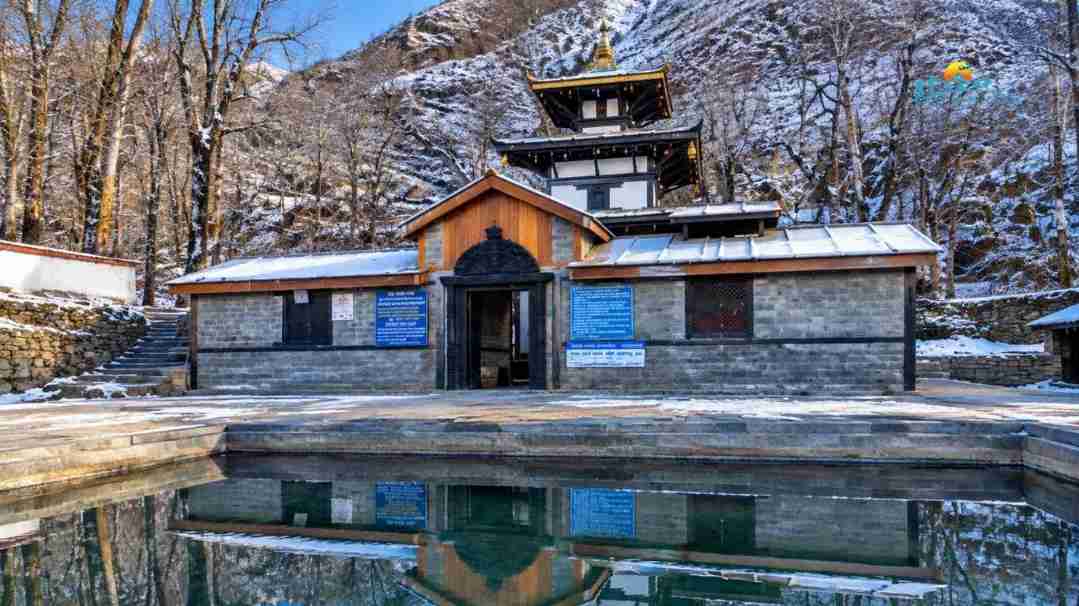
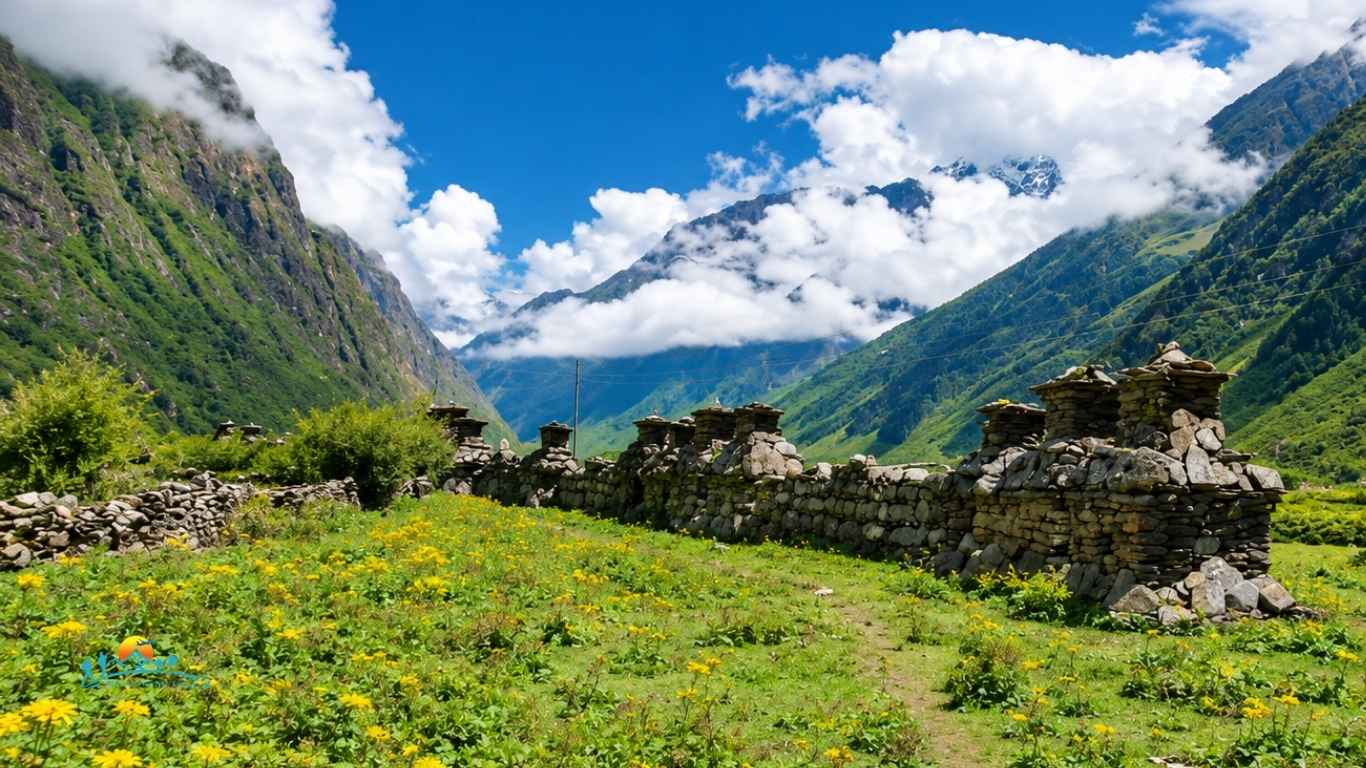
Mera Peak Climbing is one of the most exciting and accessible climbing peaks in Nepal, perfect for anyone looking for a mix of adventure climbing and Himalayan trekking. It is a 16 day trek to the top of Mera Peak (6,476 m / 21,247 ft), the highest trekking peak in Nepal, with a view of the five 8,000m giants: Mount Everest, Lhotse, Makalu, Cho Oyu and Kanchenjunga.
The route passes through the unspoiled Hinku Valley, known for its wilderness landscapes, dense forests, and traditional Sherpa villages, providing a truly immersive experience in the Everest region. The Mera Peak itinerary is designed for physically fit trekkers with a spirit of adventure. Although it does not require advanced technical climbing skills, some basic mountaineering knowledge and pre-trek preparation are recommended.
From those seeking to climb their first peak to the seasoned mountain climber looking to conquer a new Himalayan summit, this Mera Peak Climbing 16 Days package is ideal for anyone who wants to experience the majesty of the mountains, the beauty of its landscape, and the culture of the region.
At Himalayan Gateway Trek, we believe that a great journey begins with great service. Our mission is to provide you with the perfect blend of comfort, safety, and authentic Himalayan hospitality. Whether you are looking for expert local guides or well-planned itineraries, we ensure your trekking adventure is as seamless, enriching and memorable as possible.
Permits Required for Mera Peak Climbing
1. Makalu Barun National Park Entry Permit
- Required for entering the Makalu Barun National Park during the Mera Peak trek.
2. Khumbu Pasang Lhamu Rural Municipality Entry Permit
- Mandatory for trekking in the Khumbu region, including the Mera Peak area. This permit replaces the TIMS card.
3. Mera Peak Climbing Permit (Issued by Nepal Mountaineering Association – NMA)
- Required for legal Mera Peak climbing.
Mera Peak Climbing Highlights
- One of the most tempting 6000m Trekking Peaks of Nepal.
- Summit Nepal’s highest trekking peak (6,476m) with stunning views of Everest, Lhotse, Makalu, Cho Oyu, and Kanchenjunga.
- Experience a less-crowded route through the remote and scenic Hinku Valley.
- Cross the dramatic Zatrwa La Pass (4,600m) on the return journey to Lukla.
- Spend a night at Mera Peak Base Camp and High Camp before your summit push.
- Scenic and adventurous flight to Lukla, the gateway to the Khumbu region.
- Cultural immersion in traditional Sherpa villages – experience Buddhist heritage and mountain lifestyles.
Benefits with Himalayan Gateway Trek
- Free transfer from Tribhuvan International Airport to the hotel during arrival and vice-versa on departure.
- Easy booking and reservation system.
- Trek with experienced local guides who prioritize your safety and enjoyment throughout the journey.
- Enjoy customized itineraries that match your fitness level, preferences, and available time.
- Enjoy transparent, fair pricing with no hidden costs, ensuring value for your money.
- Receive quick assistance in emergencies, along with guidance to prevent altitude sickness.
- Stay in local teahouses and connect with the local people to immerse yourself in their culture.
- Himalayan Gateway Trek promotes eco-friendly and responsible trekking, working closely with local communities to ensure that tourism benefits the region while preserving the environment.
Comprehensive Mera Peak Climbing Guide
Mera Peak Climbing is an exciting trek to the highest peak in the Himalayas of Nepal (6476m), which is a 15-16 day trek in the Himalayas. Perfect for mountaineers who want to climb in high altitudes, and to explore the remote wilderness for a once in a lifetime panoramic view of 5 of the highest mountains in the world – Everest, Lhotse, Makalu, Cho Oyu and Kanchenjunga.
The journey begins with a scenic flight from Kathmandu to Lukla Airport, followed by a less-traveled route through the remote Hinku Valley, known for its unspoiled landscapes and peaceful trails. Trekkers gradually ascend through rhododendron forests, alpine meadows, and glacial terrains, allowing ample time for acclimatization. The expedition offers an immersive cultural experience as it passes through traditional Sherpa villages, where trekkers can witness the unique mountain lifestyle and Buddhist heritage.
Climbing to Mera Peak will be a simple mountaineering exercise which involves the use of basic mountaineering tools such as crampons, ice axes and fixed ropes. The ascent is physically demanding and done at altitude, but not technically challenging and should be suitable for fit trekkers with previous trekking experience. The time spent reaching Mera Peak summit is well worth it with panoramic 360-degree views of the towering snow-capped giants from this spot being one of the best in the Himalayas.
Mera Peak Climbing is best done in the spring (March-May) and autumn (September-November) seasons, when the weather is fairly stable and the days are sunny. You must have the Makalu Barun National Park Permit and the Mera Peak Climbing Permit to enter the region and climb the peak.
Mera Peak Climbing is a life-changing Himalayan expedition that offers a perfect introduction to mountaineering in Nepal. Whether you’re aiming to test your limits at high altitude or seeking a quieter, scenic adventure beyond the popular trails, Mera Peak delivers an unforgettable alpine experience. For expert-guided climbs and tailored Himalayan expeditions, stay connected with Himalayan Gateway Trek your trusted partner in high-altitude adventure.
Mera Peak Climbing Itinerary
Day 1: Arrival at Kathmandu Airport and transfer to the hotel for check-in and rest.
Upon your arrival at Tribhuvan International Airport in Kathmandu Valley, the vibrant capital of Nepal, our friendly team from Himalayan Gateway Trek will be there to greet you with a warm welcome and take you to your hotel.
Once you arrive, you’ll receive a warm welcome, with staff presenting you with traditional flower garlands. They will assist you with the check-in process and make sure you’re comfortable. Afterward, you can relax and get ready for your adventure the next day. In the evening, walk around Thamel and have dinner whenever you like.
At Himalayan Gateway Trek, we are excited to begin this journey with you and ensure a memorable experience throughout your stay in Nepal.
Day 2: Flight from Kathmandu to Lukla and Trek to Paiya
Day 3: Trek from Paiya to Pangkoma
After breakfast, we ascend a wooden bridge and continue climbing to the Kari La Pass. The trail winds through dense rhododendron and bamboo forests, offering a true wilderness experience.
As we hike along the narrow mountain ridges, you will catch your first spectacular glimpses of the Dudh Koshi river valley. We conclude the day’s trek in Pangkoma, a traditional farming village steeped in rich Sherpa heritage.
Day 4: Trek from Pangkoma to Ramailo Danda
The trail today involves a steady ascent, taking us through lush pine forests and alpine meadows. We cross the Pangkoma La Pass, which rewards us with magnificent views of the Mera Peak massif and the sweeping Hinku Valley.
We eventually arrive at Ramailo Danda, an incredible vantage point where the name literally translates to “Beautiful Hill,” offering panoramic views of the surrounding peaks.
Day 5: Trek from Ramailo Danda to Chetrakhola
This is one of the more challenging days of the approach, characterized by undulating terrain. We navigate through the Makalu Barun National Park boundary, a protected ecosystem famous for rare Himalayan flora and fauna.
The path includes steep ascents and descents through dense bamboo forests and alongside pristine streams, finally bringing us to the secluded settlement of Chetrakhola.
Day 6: Trek from Chetrakhola to Kothe
Today’s trek officially leads us deep into the Hinku Valley. The trail follows the ridge of the Hinku River, opening up dramatic landscapes as the tree line begins to thin out. We pass through summer grazing pastures and ancient alpine forests, steadily gaining altitude to aid in acclimatization.
We reach Kothe, a bustling teahouse settlement nestled on the west side of the Hinku Valley, offering close-up views of the towering peaks.
Day 7: Trek from Kothe to Thaknak
We are now trekking entirely above the tree line. The trail ascends along the boulder-strewn riverbed of the Hinku Khola in the shadow of Mera Peak. We will stop at Gondishung, a summer herder’s settlement, to visit a 200-year-old historic Gompa built beneath a massive rock.
The air perceptibly thins as we arrive at Thaknak, a summer grazing area that now serves as a critical acclimatization stop for climbers.
Day 8: Trek from Thaknak to Khare
Today presents a short but steep ascent as we break the 5,000m mark. The trail follows the lateral moraine of the Dig Glacier to Dig Kharka, offering striking views of Charquarate.
We then climb over the moraines of the Hinku Nup and Shar glaciers to reach Khare, our final staging point and base camp for the Mera Peak climb. The sheer face of Mera Peak dominates the skyline from the teahouse.
Day 9: Acclimatization Day at Khare
Proper acclimatization is mandatory for summit success. Today, your NMA-certified guides will conduct essential pre-climb training. We will hike up towards the Mera Glacier to practice fundamental mountaineering techniques, including the use of crampons, ice axes, harnesses, and fixed rope navigation.
Our guides will ensure you are comfortable with the gear and conduct comprehensive blood-oxygen checks before returning to Khare to rest.
Day 10: Trek from Khare to Mera High Camp
We leave the teahouses behind and enter the glacial zone. The challenging ascent crosses the Mera Glacier via the Mera La Pass. We navigate steady, snow-covered slopes until we reach Mera High Camp, tucked safely behind a rocky outcrop to protect against the wind.
From this spectacular vantage point, you will witness a breathtaking sunset over Everest, Makalu, and Cho Oyu. We sleep in expedition tents and rest early for the midnight summit push.
Day 11: Mera High Camp to Summit Mera Peak and Return to Khare
We begin the summit push around 2:00 AM equipped with headlamps, crampons, and ropes. The ascent is steady and non-technical but demands intense physical endurance due to the extreme altitude.
Reaching the summit of Mera Peak (6,476m) rewards you with one of the greatest panoramas in the Himalayas, featuring five of the world’s 8,000m giants: Everest, Lhotse, Makalu, Cho Oyu, and Kanchenjunga.
After celebrating at the top, we safely descend back to Khare for a well-deserved rest. (Note: 6,476m is strictly used here as it is the official NMA altitude, overwriting the 6,654m mapping error).
Day 12: Reserve Day for Contingency
High-altitude mountain weather is notoriously unpredictable. This built-in contingency day acts as a buffer in case our Day 11 summit attempt is delayed by high winds, heavy snowfall, or individual acclimatization needs.
If we successfully summited on schedule, this day will be spent resting and celebrating our achievement in Khare.
Day 13: Trek from Khare to Kothe
We begin our return journey, retracing our steps back down the Hinku Valley. The descent is much faster as we drop to lower, oxygen-rich altitudes.
We pass back through Thaknak and Gondishung, enjoying the warming temperatures and the reappearance of alpine vegetation. We spend the night in the familiar, comfortable teahouses of Kothe.
Day 14: Trek from Kothe to Thuli Kharka
Instead of returning via Pangkoma, our descent route shifts to create a complete loop. We climb out of the Hinku Valley, navigating a steep, rocky trail up through rhododendron forests toward the Zatrwa La Pass ridge.
We eventually arrive at Thuli Kharka, a high summer pasture with excellent views of the Mera Peak massif we just conquered.
Day 15: Thuli Kharka to Lukla via Zatrwa La pass
The final trekking day begins with a challenging morning climb to cross the Zatrwa La Pass (4,600m). From the pass, we catch our final glimpses of the Hinku Valley on one side and the Dudh Koshi Valley on the other.
A steep, long descent brings us back through Chutanga and finally down into the bustling town of Lukla, where we celebrate the successful expedition with our trekking crew.
Day 16: Fly from Lukla to Kathmandu
We take an early morning scenic flight from Lukla back to Kathmandu. Upon arrival, you will be transferred to your hotel. The rest of the afternoon is free for you to rest, enjoy a spa treatment, or shop for souvenirs in Thamel.
In the evening, we host a celebratory farewell dinner to share memories of the expedition and present your climbing certificates.
Day 17: Departure from Kathmandu.
Your Mera Peak expedition comes to an end today. After breakfast, a Himalayan Gateway Trek representative will transfer you to Tribhuvan International Airport approximately three hours before your scheduled departure flight.
We wish you a safe journey home and hope to see you for your next Himalayan adventure.
What is included in this trek package?
- Airport Pick up & drop by private car.
- 2 Nights hotel in kathmandu
- Domestic Flight (Kathmandu - Lukla - Kathmandu )
- Twin sharing Teahouse / Tented accomodaion during the trek /climb.
- All standard full-board (main course) meals during the trek and climb
- Snacks (cookies) and seasonal fresh fruits every day
- A government-licensed English-speaking trekking /climbing guide & Porter.
- Porter Service ( 1:2 Trekkers ), max weight is 25 Kg (12.5 Kg per trekker )
- Group Climbing Gears (Harness, Crampons,Ice axe,Ascender,Karabiners,Climbing helmet, Climbing Boots)
- Mera Peak Climbing Permit
- Sagarmatha National Park and other permits
- Food, meals, insurance, lodging, transportation, flights, and other necessary equipment.
- Sleeping bag & duffel bag to each trekkers (to be returned after the trip)
- Rescue arrangements incase of emergency (based on clients insurance poicy)
What is excluded in this trek package?
- International flight costs
- Nepal Entry Visa Fees for multiple entries on arrival at Tribhuvan International Airport- (15 days - $30, 30 days- $50 and 90 days- $125)
- All accommodations in Kathmandu, before and after the journey
- Extra night accommodation in Kathmandu due to early arrival or late departure, or early return from the trek.
Mera Peak Climbing -16 Days Route Map
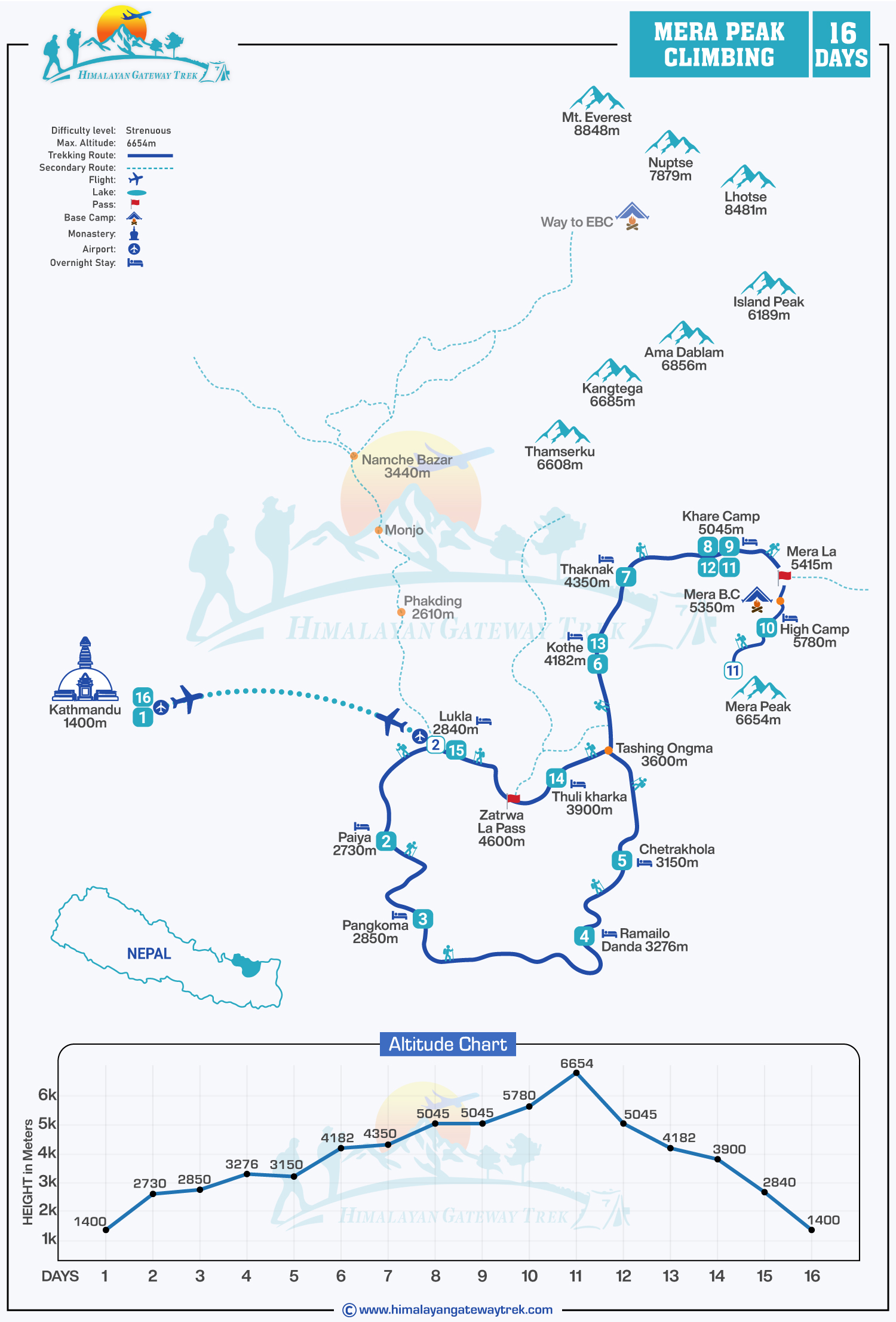


Climbing Mera Peak requires meticulous preparation, especially when it comes to gear. The right equipment ensures not only safety but also comfort and success throughout the trek. As Mera Peak is a high-altitude climb (6,476m), climbers will need both trekking and technical climbing gear to handle the varying conditions from the lush foothills to the icy summit. It’s crucial to be prepared for extreme cold, unpredictable weather, and tough technical sections that require specialized gear like crampons, ice axes, and high-altitude boots. Ensuring that you have the proper clothing and equipment is essential for your safety and for increasing your chances of summiting successfully.
For the clothing and outerwear, you will need warm thermal layers, a down jacket, a windproof and waterproof jacket, and pants. It’s important to have layers that you can adjust based on the temperature, as conditions change rapidly at high altitudes. Summit day, in particular, will require a down suit to protect you from the harsh conditions. Additionally, gloves, including insulated gloves and waterproof mittens, are essential to protect your hands from the cold and frostbite. A warm hat or beanie and a balaclava will help protect your head and face from the cold.
- Double-insulated B2/B3 boots compatible with crampons for the summit push.
- 12-point steel mountaineering crampons with anti-balling plates.
- Lightweight, straight-shaft general mountaineering ice axe (55-65cm).
- Thermal layers (top & bottoms) for wind and snow protection.
- UIAA-certified lightweight climbing helmet.
- Waterproof & windproof jacket.
- Down suit (for summit day).
- Gloves (liner, insulated, climbing).
- Warm fleece beanie, neck gaiter, and a wide-brimmed sun hat.
- Trekking boots (waterproof, comfortable).
- 100% UV protection glacier sunglasses.
- Four-season insulated sleeping bag rated to at least -30°C (-22°F).
- 40–50L daypack for daily trekking.
- 75–100L strong, waterproof duffel bag for porters.
- Adjustable trekking poles to reduce knee strain during long descents.
- Climbing harness (full-body for safety).
- Ropes and carabiners (for securing and attaching to fixed ropes).
- 4-5 pairs of heavy merino wool trekking socks.
- SPF 50+ sunscreen, SPF lip balm, personal first-aid kit, and water purification tablets.
Climbing Mera Peak is an incredible adventure that attracts trekkers and mountaineers alike, offering breathtaking views and a challenging yet accessible experience. A professional guide can greatly improve your chances of a successful ascent. The guided Mera Peak trek will have you find an experienced local guide with sound knowledge of the mountain, knowledge of the weather and the terrain, who can share his knowledge and assist you on the trek and will provide valuable information.
Guides are needed to help in navigating the high-altitude environment, particularly in the more remote parts of the Khumbu region. A guided expedition will provide a sense of security, where trained persons will be able to manage altitude sickness, know first aid, and provide technical climbing support. They will help you through difficult parts of the route, arrange logistic support for you and give you the correct acclimatization throughout the route to minimize risks from high altitudes.
Benefits of Guided Mera Peak Climbing:
-
Experienced Guidance:
- Guides know about the best routes to trek, local etiquette and have expert knowledge on climbing techniques.
-
Safety and Security:
- A guide brings you a proper acclimatization, you will be cautioned of the dangers at high altitudes and he/she will be able to assist you in the event of any emergencies and injuries.
-
Local Expertise:
- The guides are typically locals, offering a rich cultural experience as well as an education about the geography and history of the area.
-
Climbing Assistance:
- Guides provide technical assistance such as instruction in the proper use of climbing equipment (eg crampons, ice axe, rope skills as necessary) if required.
-
Logistical Support:
- They assist with managing permits, organizing meals, and making arrangements for accommodation, making the overall experience seamless and hassle-free.
-
Stress-Free Trekking:
- With a guide handling all the logistics, you can focus on the climb and enjoy the stunning views without worrying about the details of the trek.
-
Acclimatization Management:
- Guides carefully plan for rest days for acclimatization, which is essential in helping to minimize the risk of altitude sickness.
Note to Travelers :
We organize private treks for groups of at least two people and do not add anyone in your group. Contact us via Call/WhatsApp/Viber at +977 - 9861197727 or email himalayangatewaytrek@gmail.com You can also use our Free Trip Planner.
Groupe Discount Price
Terms & Policies
Thank you for choosing Himalayan Gateway Trek. Our goal is to provide a safe, enjoyable, and memorable travel experience. Please review the following terms and policies before confirming your booking.
📍Booking & Payment
- 👉 A 20% deposit is required to confirm your booking.
- 👉 The remaining balance must be paid on your arrival day in Nepal
- 👉 Your booking is confirmed once we receive your deposit and send a confirmation.
📍Cancellation & Refunds
- 👉 If you cancel your trip 45 days or more before departure, 50% of the deposit amount will be refunded.
- 👉 No refunds are available for cancellations made within 45 days of departure.
- 👉 Any non-refundable costs already incurred, including permits, flights, accommodation, transportation, or other third-party services, will be deducted from the refund amount.
Note: Eligible refunds will be processed within 14 business days of receiving the cancellation request.
📍 Travel Insurance
- 👉 Travel insurance is mandatory for all trekking and adventure trips.
- 👉 Your insurance should cover emergency medical treatment, helicopter evacuation, trip cancellation, and personal accidents.
- 👉 Himalayan Gateway Trek is not responsible for expenses arising from inadequate insurance coverage.
📍 Trip Changes
- 👉 Weather conditions, flight delays, road conditions, government regulations, or other unforeseen circumstances may require changes to the itinerary.
- 👉 Any changes will be made with the safety and well-being of our guests as the highest priority.
📍 Responsibility
- 👉 Himalayan Gateway Trek is not responsible for flight delays, cancellations, injuries, loss of personal belongings, natural disasters, political unrest, or other events beyond our control.
- 👉 By booking a trip with us, you acknowledge and accept the inherent risks associated with trekking and adventure travel.
FAQs
Is Mera Peak hard to climb?
Mera Peak is classified as a “trekking peak,” meaning it is technically straightforward (graded PD or “Peu Difficile” on the Alpine Rating System). While it does not require advanced technical rock or ice climbing skills, it is physically very demanding. The challenge lies in the high altitude (6,476m), the potential for extreme weather, and the long, steep slog across snow and ice to the summit.
How long does it take to climb Mera Peak?
A standard Mera Peak itinerary usually takes 18 to 22 days. This includes arrival/departure in Kathmandu, the flight to Lukla, and roughly 14–16 days of trekking and climbing. Most competitors emphasize a “slow and steady” approach with built-in acclimatization days to ensure a higher success rate.
Is Mera Peak Climbing harder than Kilimanjaro?
Yes. While Kilimanjaro (5,895m) is a high-altitude trek, Mera Peak (6,476m) is a mountaineering expedition. Mera Peak is higher, much colder, and requires the use of technical gear like crampons, ice axes, and ropes to traverse glaciers. The duration of the Mera Peak trip is also significantly longer, requiring more sustained endurance.
Do you need oxygen for Mera Peak Climbing?
No, supplemental oxygen is typically not used. Because the summit is below 7,000m, climbers rely on a slow ascent and proper acclimatization to allow their bodies to adjust naturally. However, guides always carry emergency oxygen and a medical kit in case of severe Altitude Sickness (AMS).
What is the best time of year for Mera Peak Climbing?
There are two primary windows:
-
Pre-monsoon (Spring): Late March to May. Offers stable weather and beautiful rhododendron blooms.
-
Post-monsoon (Autumn): September to November. Known for the clearest skies and best views of the Himalayan giants.
Do I need prior mountaineering experience?
Prior experience is not mandatory, but it is highly recommended. You should be comfortable with multi-day trekking in rugged terrain. Basic skills like using a harness, jumar, and crampons are usually taught by your guides during “pre-climb training” at Mera Peak Base Camp.
What 8,000m peaks can you see from the summit?
Mera Peak is famous for offering one of the best viewpoints in the world. From the summit, you can see five of the world’s fourteen 8,000m peaks: Mount Everest, Lhotse, Makalu, Cho Oyu, and Kanchenjunga.
How fit do I need to be?
You need to be in excellent cardiovascular shape. Competitors suggest training 4–6 months in advance with a focus on stair climbing, long-distance hiking with a weighted pack, and strength training. You should be able to walk 6–8 hours a day for several consecutive days.
What kind of accommodation is used?
During the trek to and from the mountain, you will stay in local tea houses (simple lodges). During the actual climb (Base Camp and High Camp), you will stay in tented camps managed by the expedition’s kitchen staff.
Is travel insurance mandatory?
Yes. Your insurance must specifically cover mountaineering/climbing up to 6,500m and include emergency helicopter evacuation. Standard travel insurance often excludes high-altitude trekking, so check your policy carefully.
Where will I stay during the Mera Peak expedition?
During the trek, you will stay in local teahouses offering basic amenities and meals. Once on the mountain, accommodation switches to high-quality tented camps at Base Camp and High Camp, supported by a professional kitchen staff.
What permits are necessary for Mera Peak?
You require the NMA climbing permit, the Makalu Barun National Park entry permit, and the Khumbu Pasang Lhamu local permit. These are usually managed by your expedition provider and are included in the total package cost.
What is the success rate for reaching the summit?
Success rates typically average between 70% and 80%. Failures are usually caused by unpredictable weather or symptoms of altitude sickness. Following a well-paced itinerary with adequate acclimatization days significantly increases your individual chances of success.
Is there a minimum age for climbing Mera Peak?
Most operators require climbers to be at least 18 years old. However, younger teens with significant high-altitude experience may be considered with parental consent. There is no upper age limit, provided you pass a physical fitness test.
How are medical emergencies handled on the mountain?
Our guides are trained in wilderness first aid and high-altitude medicine. We carry pulse oximeters, medical kits, and satellite phones. In severe cases, we coordinate immediate helicopter evacuation to a hospital in Kathmandu for professional treatment.
Can I charge my electronics and use Wi-Fi?
Charging facilities and Wi-Fi are available in most teahouses for a small fee. However, service becomes unreliable and expensive as you go higher. We recommend bringing a high-capacity solar power bank to keep your electronics functional.