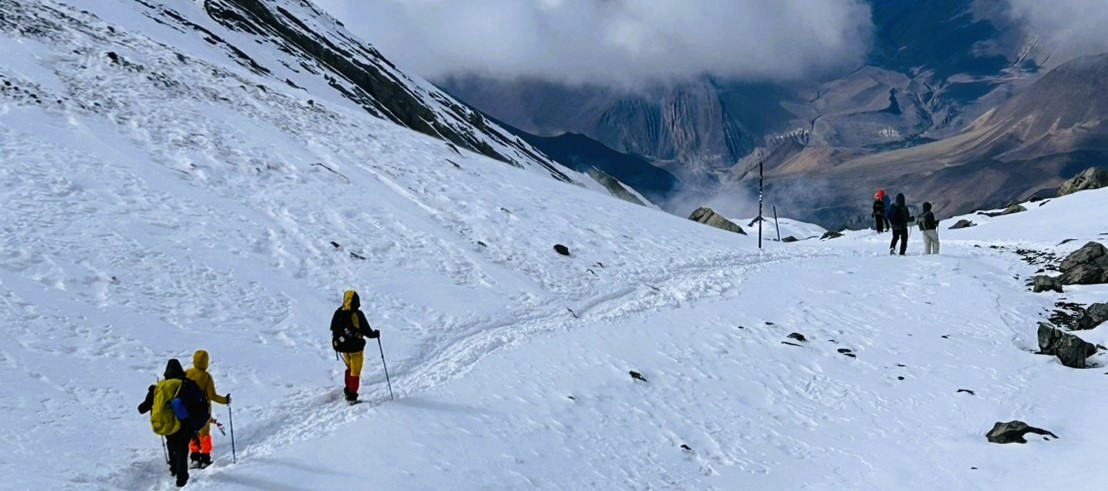
The Annapurna Circuit Trek stands as Nepal’s most legendary trekking route, offering an immersive journey that circumnavigates the entire Annapurna Massif. This trek provides a complete cross-section of the Himalayas, taking you through a remarkable transition of climates and cultures. You start your adventure in low-altitude subtropical forests and wind through terraced farmlands before eventually reaching the stark, rain-shadow landscapes of the high-altitude Manang and Mustang regions.
Trekkers consider this a moderate-to-challenging experience that demands both physical stamina and mental determination. The path follows the Marsyangdi River valley upward, offering constant views of giants like Annapurna I, Dhaulagiri, and Machhapuchhre. Beyond the scenery, the route serves as a cultural bridge where you encounter traditional Gurung and Manangi villages, ancient Buddhist monasteries, and the sacred pilgrimage site of Muktinath.
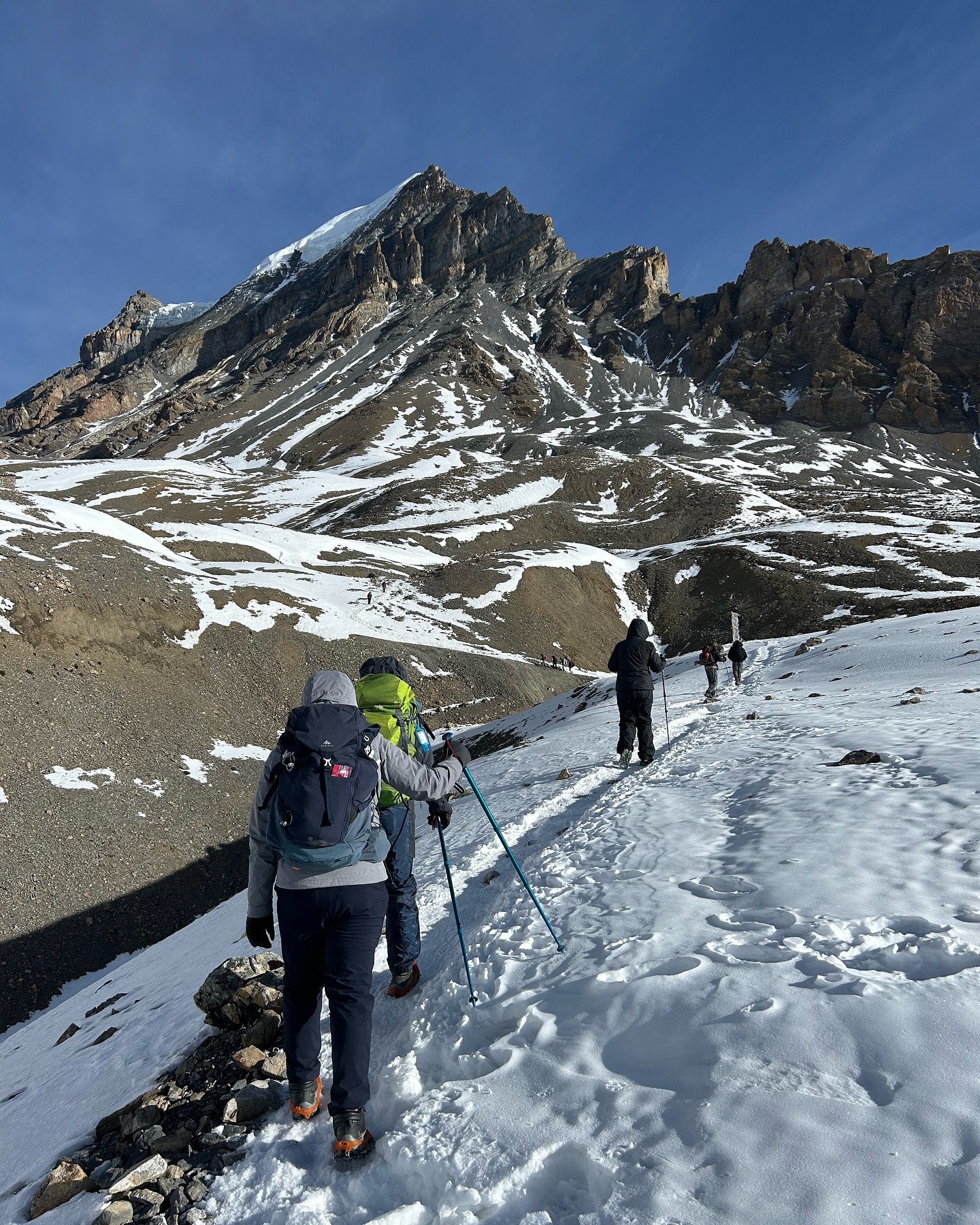
The most famous milestone of the trip is crossing the Thorong La Pass, which sits at an elevation of 5,416 meters. This high mountain pass serves as the ultimate test of your endurance and rewards you with a spectacular 360-degree view of the surrounding mountain giants. Reaching the top requires a pre-dawn start and a steady climb, but the reward is a breathtaking panoramic view of the world’s highest peaks. This section tests your fitness and highlights the importance of a well-paced itinerary.
Attention: While modernization has brought roads to parts of the Annapurna region, we prioritize your experience by carefully selecting paths away from the traffic. Our team has redesigned our itinerary to follow traditional footpaths and hidden trails whenever possible. This ensures you enjoy the peace and raw beauty of the Himalayas while avoiding the dust of the main road.
Key Planning Factors
Completing this circuit requires reasonable fitness and good stamina. You should feel comfortable hiking between 6 and 8 hours every day on steep and rocky trails. While prior hiking experience is very helpful, you do not need any technical climbing skills or special equipment to finish the route.
The biggest challenge on this trek is the altitude. Altitude Sickness (AMS) is a serious risk because the trail stays above 3,000 meters for several days. Proper acclimatization is crucial for your safety. You must follow a gradual ascent and include dedicated rest days in villages like Manang to help your body adjust to the lower oxygen levels.
To ensure a successful journey, you must focus on three primary pillars of preparation:
- Physical Fitness: You should prepare for long days of walking, often five to seven hours at a time, across varied and rocky terrain.
- Acclimatization: Altitude sickness is a significant risk at these altitudes. A good itinerary always includes rest days, typically in Manang, to allow your body to adjust to the thinning air.
- Permits and Logistics: Every trekker must carry the Annapurna Conservation Area Permit (ACAP) and the Trekkers’ Information Management System (TIMS) card. These help maintain the trails and ensure your safety through local checkpoints.
Best Time to Visit Annapurna Circuit Trek
The weather in the Himalayas changes significantly with the seasons. Most trekkers choose to visit during these two peak periods:
- Spring (March to May): You can enjoy warmer weather and see the hillsides covered in blooming wildflowers and rhododendrons.
- Autumn (September to November): This is the most popular time because the skies are clear and the weather remains stable for the best mountain views.
Timing is everything for clear mountain views. The autumn months, from September to November, offer the most stable weather and crisp, blue skies. Alternatively, the spring season from March to May brings warmer temperatures and the famous blooming of rhododendron forests, making the lower sections of the trail vibrant with colour.
By choosing the Annapurna Circuit, you are not just choosing a hike; you are stepping into a world where ancient traditions meet the raw power of nature. From the warm hospitality of local teahouses to the silent majesty of the high peaks, this trek provides a deep connection to the heart of Nepal. The Annapurna Circuit is more than just a hike. It is a deep dive into the natural beauty and rich traditions of Nepal. By preparing well and respecting the mountains, you can ensure an unforgettable trekking experience.
14 Days Annapurna Circuit Trek Highlights
- Conquer the legendary Thorong La Pass at a breathtaking 5,416 meters.
- Stand on the edge of the Kali Gandaki, the deepest gorge in the world.
- Witness the majestic summits of Annapurna I, Dhaulagiri, and Manaslu.
- Traverse two distinct regions from lush green valleys to high-altitude deserts.
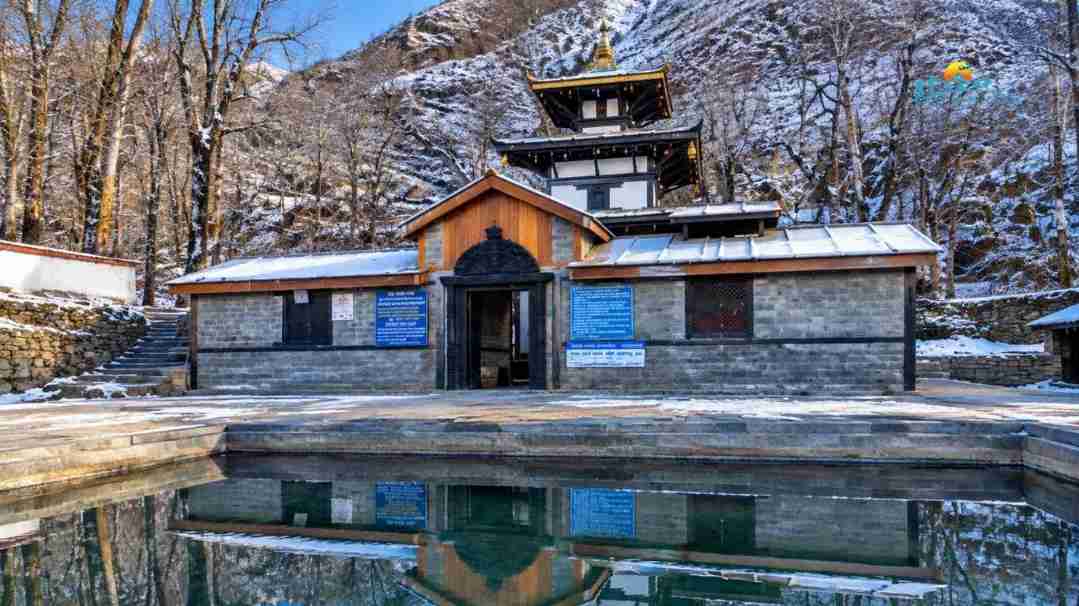
- Visit the sacred Muktinath Temple to see the 108 holy water spouts.
- Experience the authentic mountain culture and hospitality of the Manangi people.
- Watch a golden sunrise over the Himalayas from the famous Poon Hill.
- Hike to Tilicho Lake, one of the highest and most beautiful lakes on Earth.
- Soak your tired muscles in the natural riverside hot springs at Tatopani.
- Walk through the charming stone-paved streets of the apple capital Marpha.
- Savor fresh apple pie and local brandy in the orchards of the Mustang region.
- Explore ancient Buddhist monasteries decorated with colorful prayer flags.
- Enjoy the vibrant lakeside atmosphere and mountain reflections in Pokhara.
- Follow the roaring Marsyangdi River through deep forests and waterfalls.
- Spot rare Himalayan wildlife like the blue sheep and the snow leopard.
Why Choose Himalayan Gateway Trek?
- Over 10 years of professional experience in the Nepal Himalayas.
- Guided by 100 percent local experts with deep mountain knowledge.
- High success rates for reaching the Thorong La Pass safely.
- Transparent pricing with absolutely no hidden fees or extra costs.
- Both Big and Small group sizes that ensure personalized care and attention.
- Reliable 24/7 support from our dedicated Kathmandu office team.
- Flexible itineraries customized to your specific fitness and pace.
- Government licensed guides trained in high altitude first aid.
- Hassle free logistics covering all permits and transport needs.
- Proven track record with over 50,000 satisfied trekkers served.
- Deep commitment to sustainable and eco friendly trekking practices.
- Comprehensive safety protocols including oxygen and altitude monitoring.
- Competitive rates that offer the best value for your investment.
- Direct support for mountain communities through local charity work.
- Trusted reputation as a fully registered and bonded travel agency.
14 Days Annapurna Circuit Trek Overview
Discover the Magic of the Annapurna Trekking Trail
The Annapurna Circuit Trek provides an ever-changing gallery of sparkling Himalayan peaks from your first step to your last. This route covers a massive geographical area stretching from Besisahar to Pokhara, making it the perfect choice for those seeking the most authentic part of Nepal.
The trail takes you deep into the Manang Valley, where you can explore ancient Buddhist customs and impressive monasteries that have stood for centuries. After conquering the high pass, you descend into the Mustang region to visit the sacred Muktinath Temple, a site of immense spiritual importance for both Hindus and Buddhists. Your journey then follows the Kali Gandaki River through a stunning desert valley toward Jomsom.
Conquering the Legendary Thorong La Pass (5,416m)
Standing as the most famous milestone in the Annapurna region, the Thorong La Pass sits at an elevation of 5,416 meters between the Manang and Mustang districts. While the trek can technically be started from either side, more than 80 percent of trekkers begin their journey from Besisahar.
Crossing this pass is a significant achievement that typically requires a steady 7 to 8-hour climb. For the best experience and safety, we recommend starting this final push from High Camp. Please note that heavy snowfall between December and February can make the pass particularly challenging, so seasonal timing is key for a successful crossing.
A Scenic Journey Through Nepal’s Most Beautiful Villages
This trek is a visual feast that leads you through some of the most impressive mountain settlements in the world, including Jagat, Dharapani, Chame, and Upper Pisang. You will also wander through the traditional streets of Gyarue and Manang Village, where small lodges and suspension bridges add to the charm of the trail.
The landscape offers a startling contrast as you move from lush green forests and fresh watersheds into the rough, dry, desert-like terrain of the Mustang District. During the winter months, these regions transform into a frozen wonderland where even the massive waterfalls turn into pillars of ice.
Optional Adventure: The Pristine Tilicho Lake Trek
For those seeking an even deeper adventure, our 16-day itinerary combines the classic circuit with a trip to Tilicho Lake. Located at an astonishing 4,949 meters above sea level, Tilicho is recognized as one of the highest lakes in the world.
This destination is consistently ranked among the top ten adventure spots by leading travel magazines and guidebooks. If you are an enthusiast who wants to discover sparkling peaks and multi-ethnic cultures, adding Tilicho Lake to your journey creates a truly mind-blowing experience in the heart of the Himalayas.
The Unique Appeal of the Mustang District
Mustang is a favourite destination for trekkers and adventurers because it offers a rare blend of desert landscapes and rich agricultural tradition. The area is famous across Nepal for its apple production, specifically around the villages of Marpha, Shang, and Kagbeni.
Beyond its famous fruit, Mustang draws visitors to the holy Muktinath Temple and various ancient Buddhist monasteries featuring massive Rinpoche statues. It is one of the few places on Earth where you can experience such vibrant culture in a high-altitude desert setting.
Where Your Annapurna Adventure Concludes
After visiting the sacred heights of Muktinath, the trail follows the world’s deepest gorge along the Kali Gandaki River, wedged between the giants of Mt. Dhaulagiri and Mt. Annapurna. From there, you descend into the warmer climates of Tatopani village, where you can enjoy a rejuvenating soak in natural hot springs.
The journey then climbs into the lush rhododendron forests of the Ghorepani Poon Hill route. Here, you will witness a magnificent panorama of mountains during a world-famous sunrise. Your trek finally concludes with a scenic drive to Pokhara, the most popular lakeside city in Nepal and a perfect place to reflect on your unforgettable Himalayan memories.
The Ultimate Guide to the Annapurna Circuit Trek
The Annapurna Circuit Trek is widely considered the “Himalayan Highlights Reel.” This legendary 160km to 230km loop circuit the entire Annapurna Massif, taking you from lush subtropical jungles to the high-altitude Arctic deserts of the Tibetan plateau.
Unlike other treks that offer a single landscape, the Annapurna Circuit delivers a complete geographical transformation. You will witness Annapurna I (8,091m), the world’s tenth-highest peak, and stand in awe before the Kali Gandaki, the deepest gorge on Earth.
Living the Mountain Life: Accommodations & Meals
We believe that your rest is just as important as your trek. During your 13 to 15-day journey, you will stay in traditional mountain teahouses.
Where You’ll Sleep
Most of our selected lodges feature twin-sharing rooms. We prioritize your comfort by providing rooms with attached bathrooms in lower-altitude villages like Jagat, Chame, and Muktinath. As you climb higher toward Thorong Phedi, rooms become more basic but remain cozy and clean. In Pokhara, you will enjoy a standard hotel with full amenities, including hot showers and Wi-Fi.
Fueling Your Adventure
We provide a full-board meal plan (Breakfast, Lunch, and Dinner). While you can find Western options like pasta and pancakes, we highly recommend the local Dal Bhat (lentils and rice). It is the ultimate energy source for high-altitude hiking.
Expert Tip: To stay healthy and avoid stomach issues, our guides suggest sticking to vegetarian meals and avoiding alcohol or caffeine while ascending toward the pass.
Managing Your Gear: Luggage & Porter Support
To ensure you can focus on the breathtaking views, we provide professional porters to handle the heavy lifting.
-
Weight Limit: Your porter carries up to 18kg (shared between two trekkers), allowing you 9kg for your main gear.
-
Your Daypack: You only need to carry a small daypack with your essentials like water, a camera, and extra layers.
-
Storage: You can leave any extra city clothes at your hotel in Kathmandu at no extra charge.
Safety First: Health, Water, and Insurance
Your safety is our absolute priority. Trekking to 5,416 meters requires careful planning and a disciplined approach.
Safe Hydration
Hydration is key to preventing Altitude Sickness (AMS). While you can buy bottled water, we strongly encourage using refillable bottles with purification tablets or filters to protect the fragile mountain environment.
Mandatory Travel Insurance
You must have travel insurance that specifically covers emergency helicopter evacuation up to 5,000 meters. This is not just a recommendation; it is a requirement for joining our team.
Altitude & Acclimatization
Our itinerary includes mandatory rest days in Manang. This allows your red blood cells to catch up with the thinning air, significantly increasing your chances of successfully crossing the pass.
Is the Annapurna Circuit Worth It?
Absolutely. If you want a trek that combines cultural immersion with the highest mountain views on earth, this is it. It offers a deeper, more diverse experience than the Annapurna Base Camp trek because it traverses an entire mountain range rather than just heading to a single basin.
Ready to stand at the top of the world? Book Your Annapurna Circuit Adventure Now with Us.
Luggage and Porter Rules
When you trek with us, a porter is assigned to help with your heavy gear. One porter typically carries a large bag shared between two people. This means your personal weight limit is 9 kg. You should pack your items in a soft duffel bag that can hold at least 60 litres. If you have extra suitcases or city clothes that you do not need in the mountains, you can leave them at your hotel in Kathmandu for free.
Facilities and Essentials during the Annapurna Circuit Trek
Drinking Water
Staying hydrated is the best way to prevent altitude sickness. While you can find bottled water for sale, we suggest using a more eco-friendly approach. Most tea houses offer boiled water or filtered water for a small fee. We recommend you bring a reusable bottle and your own purification tools, like a portable filter or sterilization drops. If you forget these, your guide can provide purification tablets. Please do not drink from local streams or open taps.
Staying Connected
You can stay in touch with family by getting a local SIM card in Kathmandu. Nepal Telecom and Ncell are the main providers. While these work well in towns, the signal often disappears as you get closer to the high pass. Many tea houses now offer Wi-Fi for a small charge, though the speed is much slower than what you are used to at home. Your guide will carry a phone and check in with the head office every day to ensure everything is safe.
The Challenge of the Trek
The Annapurna Circuit is a test of your stamina rather than your technical skills. You do not need to be a mountain climber because the paths are well-worn and do not require ropes or climbing gear. You should be prepared to walk between 10 km and 20 km most days, which usually takes about 5 to 8 hours.
The biggest hurdle is the elevation. As you climb toward Thorong La Pass at 5,416 meters, the air becomes very thin. This is why we include rest days in villages like Manang. These breaks allow your heart and lungs to get used to the lack of oxygen so you can reach the top without getting sick. If you are in good health and have a positive attitude, you can definitely finish this trek.
14 Days Annapurna Circuit Trek Itinerary
Day 01: Arrival at Tribhuvan International Airport (TIA), Kathmandu
Upon arrival, the sensory experience of Nepal begins immediately. After navigating the visa process and luggage claim, you will be met by our representative and driven through the colourful, busy streets of Kathmandu to your hotel in Thamel. This day is dedicated to resting from your long flight and soaking in the vibrant energy of the city.
-
What to Expect: A chaotic but friendly atmosphere at the airport and a maze of narrow, bustling streets in Thamel filled with trekking shops and cafes.
-
Must-Try Food: Steamed Chicken Momos with Spicy Tomato Chutney, the most iconic snack in Kathmandu.
Day 02: Drive Kathmandu to Besishahar
The journey starts with a long drive along the Prithvi Highway, following the Trishuli and Marsyangdi rivers. You will witness the lush green hills of the middle hills region, terraced rice fields, and small highway towns where locals trade their goods. The drive offers a glimpse into rural life in Nepal outside the capital.
-
What to Expect: A long day on a bus (7-9 hours) with several stops for local tea and snacks. The air gets warmer and more humid as you descend into the river valley.
-
Must-Try Food: Highway Dal Bhat. This is the authentic, unlimited rice and lentil set served in roadside local eateries.
Day 03: Drive Besishahar to Chame
Today is a thrilling 4WD adventure. The road from Besishahar to Chame is carved directly into massive cliffs. You will pass the famous Octopus Waterfall and feel the temperature drop as you climb nearly 2,000 meters in a single day. You are now entering the Manang district, dominated by pine forests and high peaks.
-
What to Expect: A bumpy but spectacular private jeep ride. You will see dramatic drops into the river gorge and your first close-up views of the Lamjung Himal.
-
Must-Try Food: Tibetan Bread with honey. It is a slightly sweet, deep-fried flatbread that is soft and perfect for the cooler mountain air.
Day 04: Trek Chame to Pisang
The walking begins in earnest as you follow the Marsyangdi River through dense pine and fir forests. You will cross a long suspension bridge and walk beneath the Paungda Danda, a legendary 1,500-meter curved rock slab. The trail opens up into a wide U-shaped valley as you reach Pisang.
-
What to Expect: 5-6 hours of steady walking. The landscape starts shifting from lush green to the dry, rocky rain-shadow environment.
-
Must-Try Food: Apple Fritters. You are entering the Apple Capital of Nepal; these fried apple rings are a local delicacy.
Day 05: Trek Pisang to Ngawal
Taking the Upper Route today is a physical challenge but offers the best panoramic views of the entire trek. The steep climb to Ghyaru village is tough, but it places you at eye level with the Annapurna peaks. You will spend the night in Ngawal, a village that feels ancient with its stone houses and mani walls.
-
What to Expect: High-altitude panoramic views and a steep initial climb. The air starts to feel thinner, so a slow and steady pace is essential.
-
Must-Try Food: Garlic Soup. Known as the Himalayan medicine, it is believed to help the blood carry oxygen and prevent altitude sickness.
Day 06: Trek Ngawal to Manang
You descend gradually toward the valley floor, passing through the historic village of Braga. Here, you will visit one of the oldest monasteries in the region before reaching Manang. Manang is a bustling hub with bakeries, lodges, and a beautiful view of the Gangapurna Glacier.
-
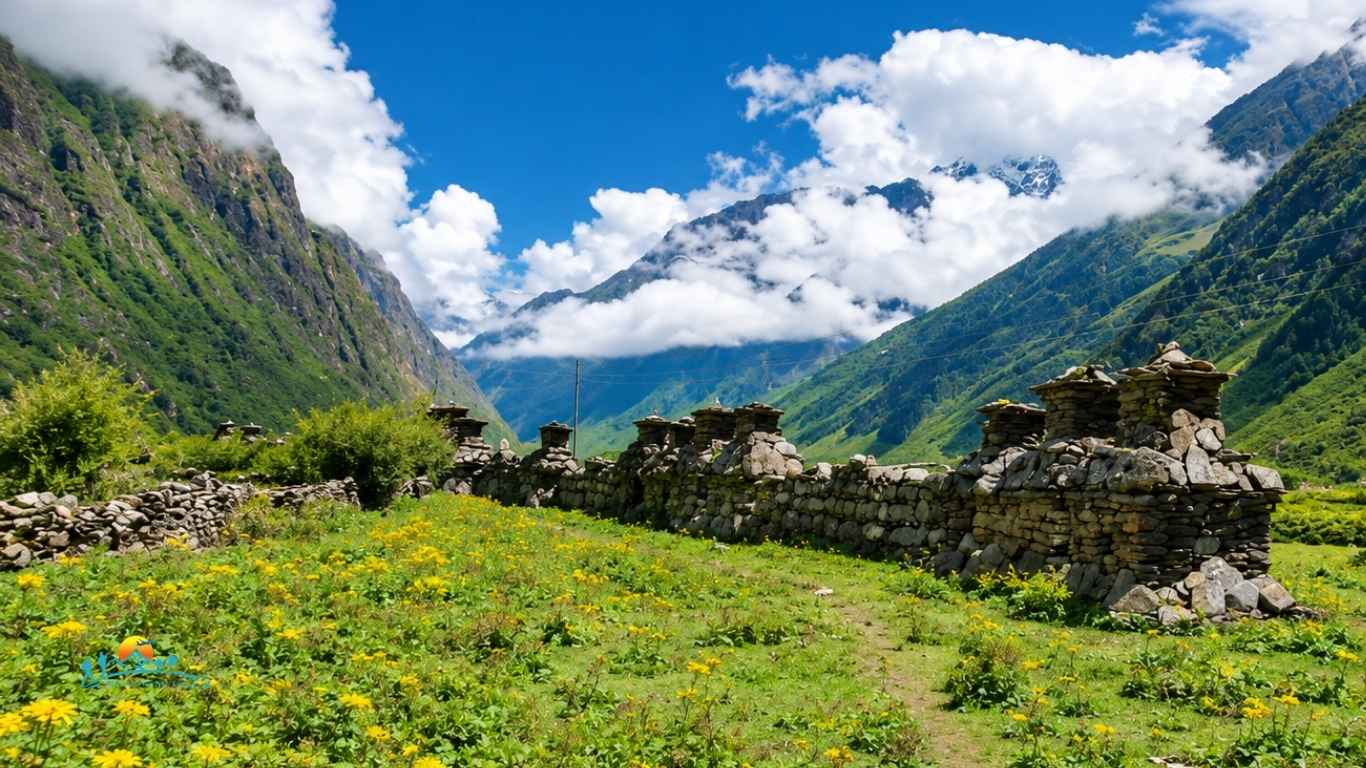
What to Expect: A shorter trekking day (4-5 hours) through a desert-like landscape. You will see many mani walls (prayer stones). Remember to always walk to the left of them.
-
Must-Try Food: Yak Cheese. Locally produced in the high pastures, it is rich, salty, and a great source of protein for trekkers.
Day 07: Rest and Acclimatization in Manang
This is the most important day for your safety. To adapt to the high altitude, you will hike to either the Ice Lake (4,600m) or the Gangapurna viewpoint. Climbing high during the day and returning to sleep at a lower altitude in Manang helps your body produce more red blood cells.
-
What to Expect: An active rest day. You might feel a slight headache due to the height, but the scenery of the turquoise glacier lake is rejuvenating.
-
Must-Try Food: Freshly Baked Apple Pie from a Manang bakery. These bakeries are famous for being among the highest in the world.
Day 08: Trek Manang to Yak Kharka
Leaving the tree line behind, the trail enters the high-altitude alpine zone. The walk is steady but slow as you cross the 4,000-meter threshold. You are now in the territory of the Blue Sheep and Yaks, often seen grazing on the steep, barren slopes.
-
What to Expect: Wide-open landscapes and a colder, windier climate. The walking duration is short (4 hours) to allow for further acclimatization.
-
Must-Try Food: Thukpa. A hearty Tibetan noodle soup with vegetables that warms your core as the temperature outside drops.
Day 09: Trek Yak Kharka to Thorong Phedi
A slow and methodical walk takes you to the base of the pass. You will cross a suspension bridge and follow a narrow path toward the small cluster of lodges at Phedi. This is the final staging area before the hardest day of the journey.
-
What to Expect: A very cold environment and thin air. You will likely go to bed very early (around 7:00 PM) to prepare for a 3:00 AM start.
-
Must-Try Food: Oatmeal/Porridge with Raisins. It is easy on the stomach and provides long-lasting energy for the summit push tomorrow.
Day 10: Thorong Phedi to Thorong La Pass (5,416m) to Muktinath (3,760m)
The ultimate challenge begins in the dark with headlamps. The 4-5 hour climb to the pass is exhausting but spiritually rewarding. Reaching the prayer flags at the top of the world’s highest trekking pass is a life-changing moment. You then descend sharply into the arid Mustang region to reach the holy Muktinath temple.
Crossing the Thorong La Pass is a momentous achievement, but for first-time visitors, it requires a mindset of discipline over speed. On this pivotal Day 10, your journey begins in the freezing darkness around 3:00 AM to ensure you summit and descend before the dangerous afternoon winds begin to howl across the pass. As you move through the thin air at 5,000m, your body will have only about 50% of the oxygen available at sea level, making every step feel significantly heavier than usual.
The key to safety is to walk “Bistari, Bistari” (slowly, slowly), maintaining a steady rhythm that doesn’t overtax your lungs.
It is vital to stay hyper-aware of your body’s signals; while a mild headache or slight breathlessness is common at this altitude, symptoms like a pounding headache that resists medication, persistent nausea, or a loss of physical coordination are serious red flags of Acute Mountain Sickness (AMS). If these occur, the only effective treatment is immediate descent; never push through severe symptoms to reach the summit. By layering your clothing properly, staying hydrated with four litres of water, and fueling with quick sugars like the legendary deep-fried Mars Bar, you can safely navigate the 8-10 hour trek from the frozen heights of the pass down to the spiritual warmth of Muktinath.
-
What to Expect: The hardest 8-10 hours of the trek. Sub-zero temperatures at the start and a long, knee-jarring descent.
-
Must-Try Food: The Mars Bar Roll. A Mars bar wrapped in dough and deep-fried, the legendary reward every trekker eats after crossing the pass.
Day 11: Visit Muktinath Temple & Drive to Jomsom
After visiting the 108 sacred water spouts of Muktinath, you will take a jeep drive through the windy Kali Gandaki valley. This area is a high-altitude desert with a lunar-like landscape. You end the day in Jomsom, the administrative hub of the Mustang region.
-
What to Expect: A cultural morning visiting temples, followed by a dusty, windy 1-hour drive through the deepest gorge in the world.
-
Must-Try Food: Marpha Apple Brandy. Distilled in the nearby village of Marpha, it’s a great way to celebrate your successful pass crossing.
Day 12: Fly or Drive to Pokhara
A spectacular 20-minute flight between the Annapurna and Dhaulagiri massifs takes you to Pokhara. Alternatively, a long drive takes you from the desert to the lush subtropics. Once in Pokhara, the thick, oxygen-rich air will make you feel incredibly energetic.
-
What to Expect: Breathtaking mountain views from the plane. In Pokhara, expect a relaxing lakeside vibe, hot showers, and your first civilized meal in weeks.
-
Must-Try Food: Fresh Grilled Fish from Phewa Lake, seasoned with local Himalayan spices.
Day 13: Travel back to Kathmandu
You will journey back to the capital city, either by a short flight or a tourist bus. This is your last chance to see the sprawling hills of Nepal from the road. The evening is spent in Kathmandu for a farewell dinner and last-minute shopping.
-
What to Expect: A transition back into the hustle and bustle of city life. Use this time to buy pashminas or singing bowls as souvenirs.
-
Must-Try Food: Newari Khaja Set. A traditional platter of beaten rice, spiced beans, and meat—an authentic final taste of Nepalese culture.
Day 14: Final Departure
Your journey concludes with a private transfer to the airport.
-
What to Expect: A smooth transfer to TIA 3 hours before your flight.
-
Must-Try Food: A final cup of Spiced Masala Tea at the airport while you look back at the distant peaks.
Cost Includes
- Airport pickups and drops in a private vehicle
- Twin sharing Accommodation in Kathmandu and Pokhara with breakfast (3* catagory) as per trip itinerary.
- Twin sharing teahouse accommodation during the trek
- Meal during a trek (3 meals with a cup of tea or coffee )
- Tourist bus from Kathmandu to Beshisahar and Pokhara to Kathmandu.
- Private jeep from besisahar to chame and Muktinath to Jomsom.
- Domestic flight from Jomsom to Pokhara.
- Daily Vitamin Boost: Fresh seasonal fruits served every evening after dinner to keep your energy levels high.
- Professional Trekking Guide: A government-licensed, English-speaking expert trained in Wilderness First Aid and High-Altitude Safety.
- Dedicated Porter Support: Professional porters (1 per 2 trekkers) to carry your heavy luggage, ensuring a lighter, more enjoyable walk for you.
- All Essential Permits: We handle all paperwork and fees for the Annapurna Conservation Area (ACAP) and the TIMS Card.
- Health & Safety Kit: A comprehensive medical chest, including an oximeter and emergency oxygen, carried by your guide at all times.
- Comprehensive Staff Welfare: All wages, insurance, food, and high-altitude gear for our guides and porters are fully covered.
- Farewell dinner at typical Nepali restaurant
- Trekking certificate
- Travel & rescue arrangement (Helicopter evacuation available if required, at clients cost based on clients insurance policy)
Cost Excludes
- International Airfare: Flights to and from your home country to Kathmandu.
- Nepal Entry Visa: Fees for your visa (approximately USD 50 for 30 days) payable upon arrival at the airport.
- City Meals: Lunch and dinner during your stays in Kathmandu and Pokhara (breakfast is included).
- Mandatory Travel Insurance: Comprehensive policy covering medical expenses and emergency helicopter evacuation up to 5,000m.
- Personal Trekking Gear: Items such as hiking boots, specialized clothing, and personal equipment not listed in the inclusions.
- Beverages & Snacks: All bottled water, soft drinks, alcoholic beverages, and extra snacks/desserts on the trail.
- Specialized Lodge Services: Fees for hot showers, battery charging, and Wi-Fi access in the mountain teahouses.
- Optional Adventure Activities: Costs for sightseeing tours, monastery entrance fees, or museum tickets not mentioned in the itinerary.
- Porterage for Personal Loads: If you require an additional personal porter beyond the shared service included.
- Customary Tips: Gratitude for your trekking guides, porters, and drivers at the end of the journey.
- Emergency Expenses: Additional costs arising from flight delays, weather cancellations, or personal health issues.
- Items of a Personal Nature: Laundry, telephone calls, and any other shopping or souvenirs.
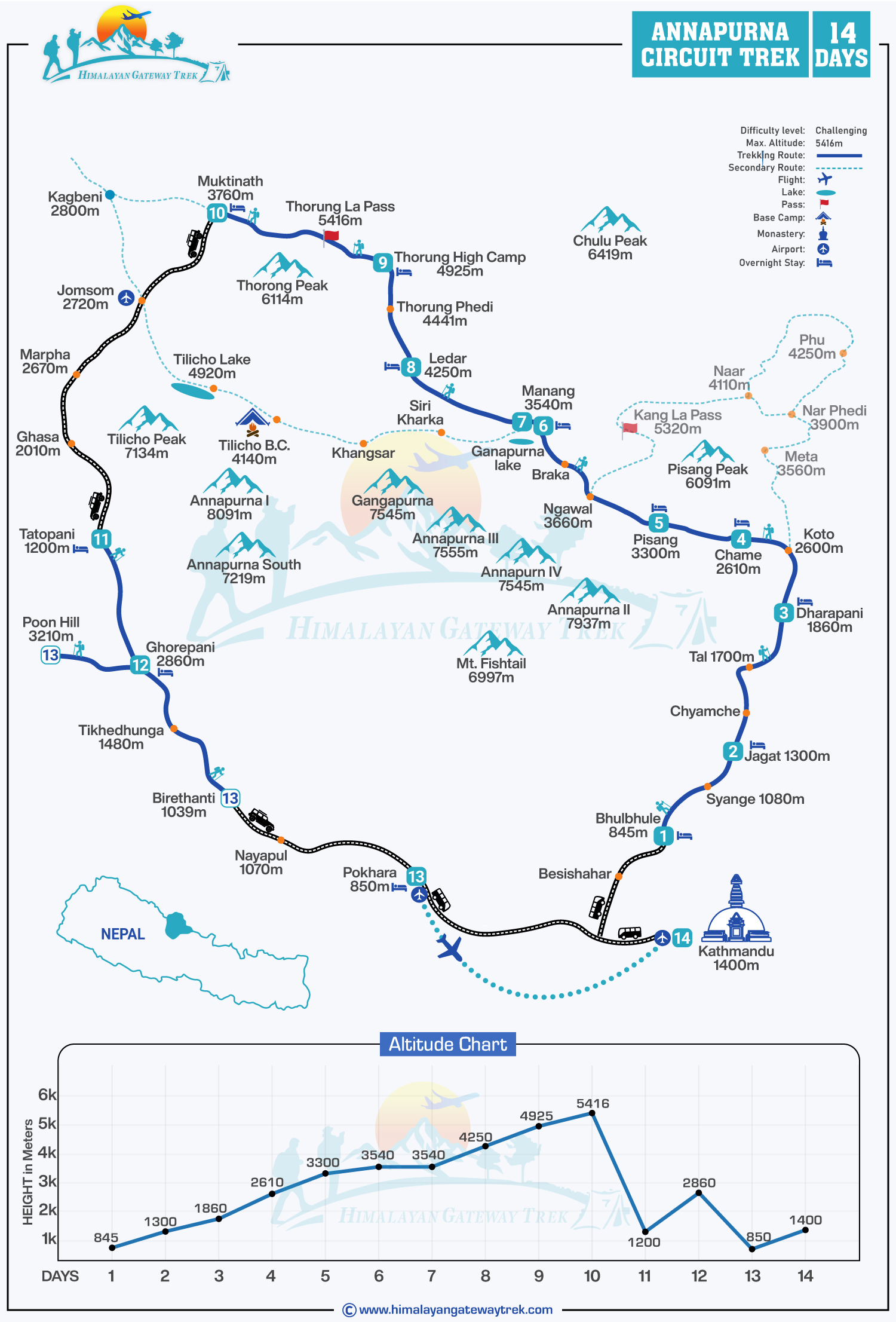
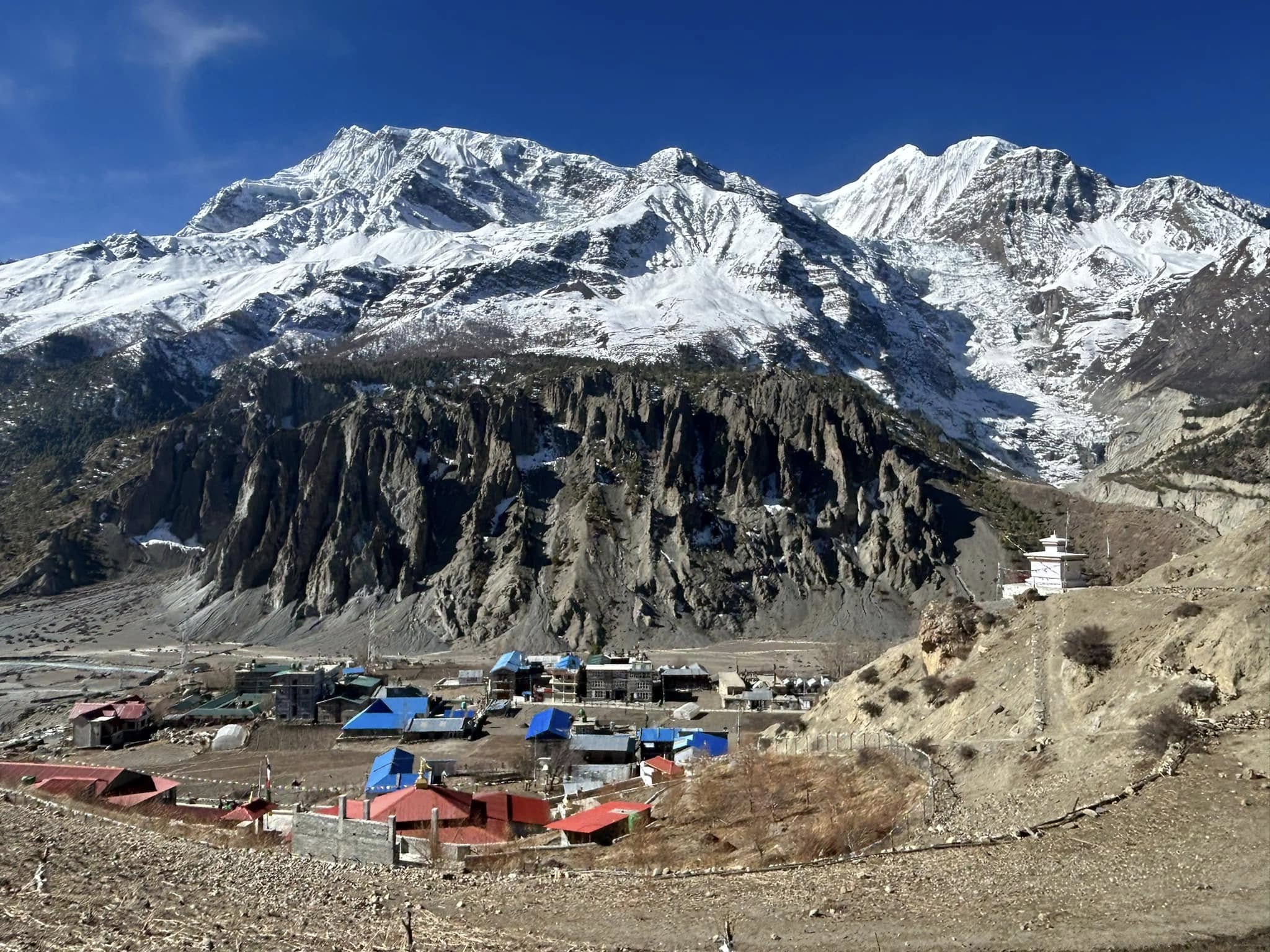
Annapurna Circuit Trek Map And Elevation


- Professional Footwear: Waterproof, ankle-support trekking boots (must be broken-in) and lightweight camp shoes for evenings.
- Insulated Outerwear: A high-fill down jacket and a four-season sleeping bag rated to at least -15°C.
- Layered Clothing: Moisture-wicking thermal base layers, a warm fleece mid-layer, and a waterproof/windproof shell jacket.
- Trekking Trousers: Lightweight, quick-dry hiking pants and a pair of warm thermal leggings for high altitudes.
- Head and Hand Protection: A warm wool beanie, a UV-protection sun hat, and a dual-layer glove system (liners plus waterproof gloves).
- Performance Socks: 4 to 5 pairs of thick woolen trekking socks and thin liner socks to prevent blisters.
- Support Gear: Adjustable trekking poles to protect your knees and a 20 to 30 liter daypack for daily essentials.
- Safety Accessories: High-quality UV-protection sunglasses and a reliable headlamp with spare batteries.
- Hydration System: Two 1-liter reusable water bottles and a purification method like tablets or a portable filter.
- Health and Hygiene: A personal first aid kit including Diamox for altitude, high SPF sunscreen, and travel-sized toiletries.
- Electronics: A high-capacity power bank and a universal travel adapter for teahouse charging.
- Essential Documents: Your original passport, four passport photos for permits, and printed travel insurance papers.
Note to Travelers :
We organize private treks for groups of at least two people and do not add anyone in your group. Contact us via Call/WhatsApp/Viber at +977 - 9861197727 or email himalayangatewaytrek@gmail.com You can also use our Free Trip Planner.
Group Special Price
Terms & Policies
Thank you for choosing Himalayan Gateway Trek. Our goal is to provide a safe, enjoyable, and memorable travel experience. Please review the following terms and policies before confirming your booking.
📍Booking & Payment
- 👉 A 20% deposit is required to confirm your booking.
- 👉 The remaining balance must be paid on your arrival day in Nepal
- 👉 Your booking is confirmed once we receive your deposit and send a confirmation.
📍Cancellation & Refunds
- 👉 If you cancel your trip 45 days or more before departure, 50% of the deposit amount will be refunded.
- 👉 No refunds are available for cancellations made within 45 days of departure.
- 👉 Any non-refundable costs already incurred, including permits, flights, accommodation, transportation, or other third-party services, will be deducted from the refund amount.
Note: Eligible refunds will be processed within 14 business days of receiving the cancellation request.
📍 Travel Insurance
- 👉 Travel insurance is mandatory for all trekking and adventure trips.
- 👉 Your insurance should cover emergency medical treatment, helicopter evacuation, trip cancellation, and personal accidents.
- 👉 Himalayan Gateway Trek is not responsible for expenses arising from inadequate insurance coverage.
📍 Trip Changes
- 👉 Weather conditions, flight delays, road conditions, government regulations, or other unforeseen circumstances may require changes to the itinerary.
- 👉 Any changes will be made with the safety and well-being of our guests as the highest priority.
📍 Responsibility
- 👉 Himalayan Gateway Trek is not responsible for flight delays, cancellations, injuries, loss of personal belongings, natural disasters, political unrest, or other events beyond our control.
- 👉 By booking a trip with us, you acknowledge and accept the inherent risks associated with trekking and adventure travel.
Frequently Asked Questions (FAQs)
Is the Annapurna Circuit Trek suitable for beginners?
Yes, beginners can absolutely complete this trek. While it is considered a moderate to challenging journey, you do not need any technical climbing skills or previous mountain experience. The key is having a good level of physical fitness and a positive mindset. We recommend starting a basic cardio routine (like walking or swimming) at least two months before your trip.
How difficult is the crossing of Thorong La Pass?
Thorong La Pass (5,416m) is the most challenging part of the trek due to the high altitude and steep ascent. On this day, you will start very early in the morning and walk for 8–10 hours. However, by following our itinerary, your body will have several days to adjust to the altitude in Manang, making the pass achievable for most healthy trekkers.
What happens if I get Altitude Sickness (AMS)?
Safety is our top priority. Our guides are trained to recognize the early signs of altitude sickness, such as persistent headaches or nausea. If you feel unwell, we will first try to manage it with rest and hydration. If symptoms continue, the most effective treatment is to descend to a lower altitude immediately. Your guide will coordinate all safety measures, including emergency evacuation if necessary.
What is the accommodation like along the trail?
You will stay in local teahouses, which are mountain lodges run by local families. The rooms are usually simple but clean, with two single beds and shared bathrooms. As you get higher, facilities become more basic. Most teahouses have a common dining area with a wood-burning stove where you can stay warm and meet other travellers.
Do I need to bring my own food and water?
No, you don’t need to carry heavy food supplies. Teahouses offer a variety of meals, including the famous Dal Bhat (lentil soup and rice), pasta, soups, and even apple pie. For water, we encourage using refillable bottles. You can buy boiled or filtered water at every lodge. To stay eco-friendly, we recommend using purification tablets or a portable filter rather than buying plastic bottles.
Will I have access to Wi-Fi and electricity?
Most villages now have Wi-Fi and electricity, though the connection can be slow and sometimes fails in bad weather. Most lodges charge a small fee (around $2–$5) to charge your phone or camera batteries and to use the Wi-Fi. We recommend carrying a power bank for the higher sections of the trek where electricity is less reliable.
Is a guide mandatory for the Annapurna Circuit?
As of 2023, the Nepal Tourism Board requires all trekkers in the Annapurna region to be accompanied by a licensed guide. This rule ensures your safety, helps support the local economy, and provides you with deep cultural insights that you wouldn’t get travelling alone.
What are the best months to do this trek?
The best times are Spring (March to May) and Autumn (September to November). During these months, the weather is stable, the skies are clear, and the views of the Annapurna massifs are spectacular. Trekking in winter is possible, but very cold, and Thorong La Pass may be closed due to heavy snow.
How do I handle money and currency on the trek?
There are no ATMs once you leave Besisahar or Jomsom, and teahouses only accept Nepalese Rupees in cash. You should withdraw enough money in Kathmandu to cover your personal expenses like bottled water, snacks, hot showers, and Wi-Fi. We recommend budgeting around $25 to $30 USD per day in local currency to be safe.
Are there hot showers available in the mountains?
Most teahouses in the lower regions offer gas-heated or solar showers for a small fee (usually $3 to $5). However, as you get higher toward Thorong Phedi, the water may only be lukewarm or unavailable due to freezing pipes. Many trekkers use wet wipes for hygiene during the first two or three days of the trek.
What kind of shoes should I wear?
You do not need heavy plastic mountaineering boots. A pair of high-quality, waterproof trekking boots with good ankle support is perfect. Make sure you break them in by wearing them on smaller hikes before you arrive in Nepal to avoid painful blisters on the trail.
Is it possible to do laundry during the trek?
You can wash small items like socks and base layers by hand in the sinks at your teahouse. However, because the air is cold and humid, clothes take a long time to dry. It is best to bring enough underwear and socks to last several days. Professional laundry services are only available once you reach Jomsom or Pokhara.
What is the Manang Haircut or movie experience?
Manang is a unique village where you can find small movie halls that play trekking documentaries or Hollywood classics. It is a great way to spend your acclimatization day. There are also local barbers if you need a trim before the final push to the pass.
Can I trek if I have a gluten-free or vegan diet?
Yes, the staple meal, Dal Bhat, is naturally gluten-free and usually vegan (lentils, rice, and vegetable curry). You can also find eggs, potatoes, and pasta in most places. However, we recommend bringing some of your own high-protein snacks like nuts or vegan protein bars, as speciality items are hard to find in remote areas.
Is the trail crowded?
The Annapurna Circuit is one of the most popular treks in the world. During the peak months of October and April, you will meet many other travellers from across the globe. If you prefer a quieter experience, we recommend trekking in late May or early September, though you should be prepared for more clouds or rain.
Do I need travel insurance?
Yes, travel insurance is mandatory. Your policy must specifically cover trekking up to 6,000 meters and include emergency helicopter evacuation. This is vital because if you get seriously ill or injured, a helicopter is often the only way to get you to a hospital in Kathmandu.