Yala Peak (5,530m) is a breathtaking trekking peak nestled in the Langtang region of Nepal, making it an excellent choice for those looking to embark on their first Himalayan mountaineering adventure. It is a popular destination among trekkers who seek to ascend higher than Tserko Ri (4,770m) and Kyanjin Ri (4,895m), offering a rewarding challenge with stunning panoramic views.
As a non-technical peak, Yala Peak is accessible to beginner climbers, serving as a perfect introduction to high-altitude climbing. It also provides an ideal training ground for those aspiring to tackle more demanding 7,000m and 8,000m peaks in the future. The journey begins with a scenic drive from Kathmandu to Syabrubesi, followed by a trek through the stunning Langtang Valley.
Along the way, trekkers pass through lush rhododendron forests, traditional Tamang villages, and dramatic glacial landscapes, immersing themselves in both natural beauty and rich cultural heritage. With its relatively straightforward ascent, breathtaking mountain vistas, and an immersive trekking experience, Yala Peak Climbing is a perfect blend of adventure, exploration, and Himalayan grandeur.
Join us at Himalayan Gateway Trek for this amazing adventure and experience the beauty of Everest without extreme difficulty!
Yala Peak climbing Highlight
- Spectacular views of the Himalayas, including Langtang Lirung, Dorje Lakpa, Lenpo Gang, Sishapangma, etc.
- Scenic drive to syabruBesi.
- Wild rivers and jungle scenery.
- Experience the untouched culture of the Tamang ethnic group.
- Insight to the mountain Buddhism and monastery.
- Snow Capped Mountains and alpine meadows.
- Stunning 360-Degree views of the high Himalayas in the Langtang region including Mount Shishapangma (8027M) in Tibet.
- Visiting Langtang village & Kyangjin Gompa
Benefits with Himalayan Gateway Trek
- Free transfer from Tribhuvan International Airport to the hotel during arrival and vice-versa on departure.
- Easy booking and reservation system.
- Online trip briefing after booking confirmation.
- Trek with experienced local guides who prioritize your safety and enjoyment throughout the journey.
- Enjoy transparent, fair pricing with no hidden costs, ensuring value for your money.
- Receive quick assistance in emergencies, along with guidance to prevent altitude sickness.
- Stay in local teahouses and connect with the local people to immerse yourself in their culture.
- Multi-channel communication (Email, WhatsApp, Facebook, WeChat, Viber, Skype, Zoom)
Comprehensive Yala Peak Climbing Trek Guide.
Yala Peak (5,530m) is one of Nepal’s most accessible trekking peaks, located in the Langtang region near the Tibetan border. It is an ideal choice for beginner climbers looking for their first Himalayan summit experience, as it is a non-technical climb requiring basic mountaineering skills. The trek to Yala Peak passes through the picturesque Langtang Valley, offering stunning landscapes, rich Tamang culture, and breathtaking views of peaks like Shishapangma (8,027m), Langtang Lirung, and Dorje Lakpa.
The best seasons for Yala Peak climbing are spring (March to May) and autumn (September to November). Spring provides stable weather, blooming rhododendrons, and clear mountain views, while autumn offers crisp skies, moderate temperatures, and excellent trekking conditions.
To climb Yala Peak, trekkers need three permits: the Langtang National Park Entry Permit, the TIMS (Trekkers’ Information Management System) Card, and the Nepal Mountaineering Association (NMA) Climbing Permit. These permits can be obtained in Kathmandu before starting the trek.
Yala Peak Climbing is an adventure filled with diverse experiences. The journey begins with a scenic drive from Kathmandu to Syabrubesi, the gateway to Langtang Valley. Along the trek, adventurers pass through Langtang National Park, home to diverse flora and fauna, while immersing themselves in the unique culture of the Tamang and Tibetan communities.
Yala Peak climbing Details Itinerary
Day 01 : Arrival at Kathmandu Airport (1,400m / 4,593ft) and transfer to the hotel for check-in and rest.
Upon your arrival at Tribhuvan International Airport in Kathmandu, the vibrant capital of Nepal, our friendly team from Himalayan Gateway Trek will be there to greet you with a warm welcome and take you to your hotel.
Once you arrive, you’ll receive a warm welcome, with staff presenting you with traditional flower garlands. They will assist you with the check-in process and make sure you’re comfortable. Afterward, you can relax and get ready for your adventure the next day. In the evening, walk around Thamel and have dinner whenever you like.
At the Himalayan Gateway Trek, we are excited to begin this journey with you and ensure a memorable experience throughout your stay in Nepal.
Day 02 : Drive from Kathmandu (1,400m / 4,593ft) to Syabrubesi (1,460m /4,790ft) by Local deluxe bus.
The drive from Kathmandu to Syabrubesi takes approximately eight to nine hours by bus, covering a distance of around 122 kilometers (76 miles). As you travel along the winding roads, you will pass through various small settlements and lush green landscapes, eventually reaching Dhunche, the administrative center of Rasuwa district.
One of the highlights of this drive is the beautiful view of the Trishuli River, which flows alongside the road for a significant portion of the journey. Upon reaching Syabrubesi (1,460m / 4,790ft), trekkers can rest and prepare for the trekking adventure ahead.
Day 03 : Trek from Syabrubesi (1,460m /4,790ft) to Lama Hotel (2560m/8,399 ft).
The trek from Syabrubesi to Lama Hotel takes 6-7 hours, covering around 11 km (6.8 miles). The trail starts with a gradual ascent, crossing the Bhote Koshi and Langtang Khola via suspension bridges. It winds through dense forests of oak, rhododendron, and bamboo, home to wildlife like red pandas and langurs.
The path has both steep and gentle sections, passing Bamboo (1,970m / 6,463ft) and Riverside (2,200m / 7,218ft) before reaching Lama Hotel. Following the Langtang River, the trail offers scenic views of waterfalls and deep gorges. Upon arrival at Lama Hotel, trekkers can rest in teahouses and prepare for the journey ahead.
Day 04 : Trek to Langtang Valley (3,400 m/11,154 ft)
The trek from Lama Hotel to Langtang Valley takes 5-6 hours, covering a distance of approximately 14 km (8.7 miles). The trail gradually ascends through dense forests before opening up to wider valleys with stunning views of Langtang Lirung (7,227m / 23,711ft). Along the way, you pass through Ghora Tabela (3,030m / 9,940ft), where trekkers must register at a checkpoint.
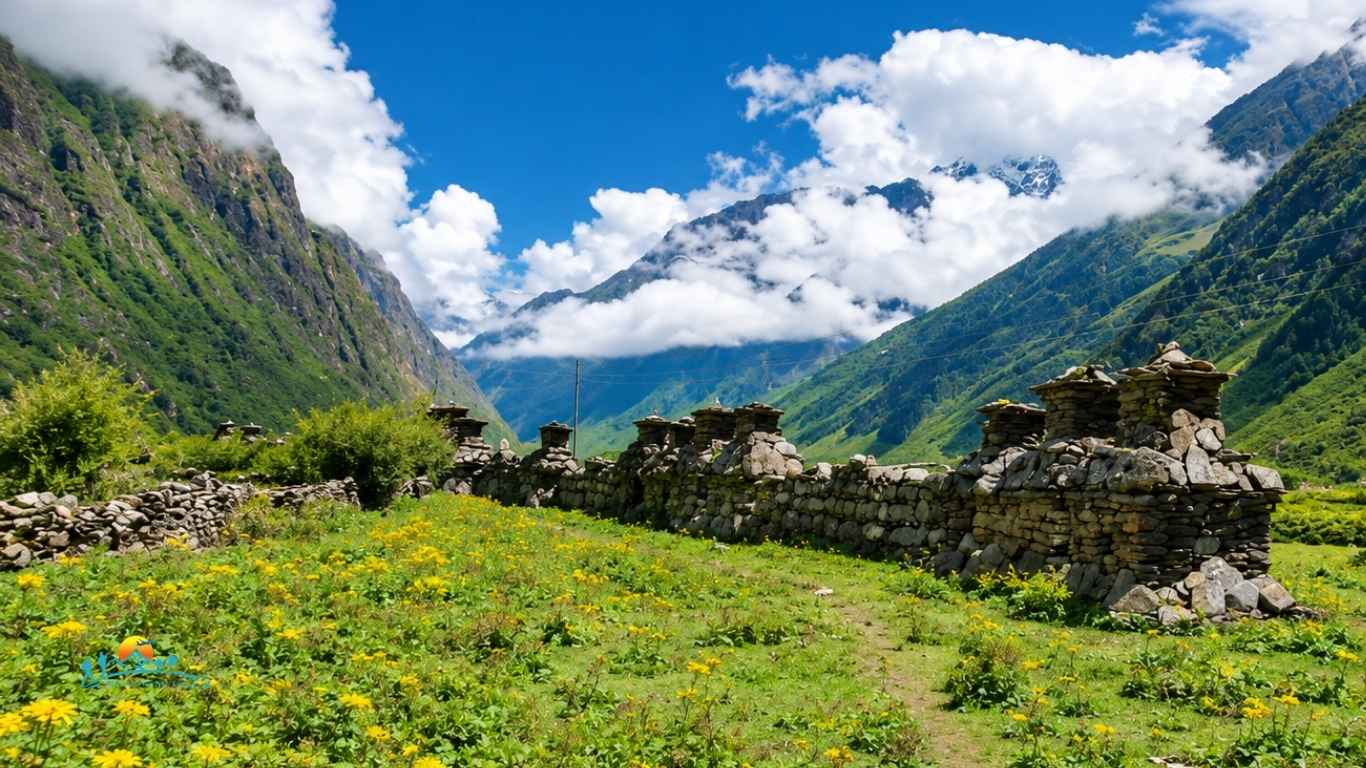
As you continue, the landscape changes to meadows and yak pastures, with glimpses of prayer flags, chortens, and traditional Tamang villages. After a final stretch through small settlements, you arrive at Langtang Valley (3,400m / 11,154ft), a picturesque village surrounded by breathtaking mountain scenery.
Day 05 : Trek to Kyanjin Gompa (3,830 m/12,565 ft).
The trek from Langtang Valley to Kyanjin Gompa takes 4-5 hours, covering a distance of around 7 km (4.3 miles). The trail gradually ascends through wide glacial valleys, yak pastures, and traditional stone-built houses, offering stunning views of Langtang Lirung, Dorje Lakpa, and Gangchenpo.
Along the way, you pass Mundu (3,540m / 11,614ft) and several small chortens and prayer wheels, reflecting the region’s deep Buddhist influence. Upon reaching Kyanjin Gompa, the spiritual and cultural center of the Langtang region, trekkers can explore the ancient monastery, a traditional cheese factory, and nearby glacial moraine while enjoying breathtaking mountain vistas.
Day 06: Kyanjin Gompa (3,830 m/12,565 ft) exploration day.
This is a crucial acclimatization day to adjust to the altitude before heading higher. Trekkers can explore the Kyanjin Gompa Monastery, known for its spiritual significance, and visit the famous cheese factory, where local yak cheese is produced.
For breathtaking views, a short hike to Kyanjin Ri (4,850m / 15,912ft) or Tserko Ri (4,985m / 16,355ft) is highly recommended. These viewpoints offer panoramic sights of Langtang Lirung, Yala Peak, Dorje Lakpa, and the surrounding Himalayan range. The day also provides an opportunity to rest, interact with locals, and enjoy the peaceful mountain atmosphere before continuing the climb.
Day 07 : Trek from Kyanjin Gompa (3,830 m/12,565 ft) to Yala Base Camp (4,600m / 15,092ft).
The trek to Yala Base Camp takes approximately 5-6 hours, covering a distance of around 6 km (3.7 miles). As you approach Yala Base Camp (4,500m / 14,763ft), you will be able to see Ganchenpo, Tserko Ri, Naya Kanga, and, of course, Yala Peak, offering one of the best vistas in the region.
Trekkers may feel the effects of high altitude, so a slow and steady pace is essential. Upon reaching Yala Base Camp (4,600m / 15,092ft), climbers will set up camp, undergo final preparations, and rest before the summit attempt the next day.
Day 08 : Summit Yala Peak (5,500m / 18,044ft) then return to Kyanjin Gompa (3,830 m/12,565 ft)
On this day, you will make your summit attempt of Yala Peak (5,500m / 18,044ft). The ascent is challenging but non-technical, offering an excellent opportunity for climbers looking to experience a Himalayan summit without requiring advanced mountaineering skills.
Upon reaching the summit, you’ll be rewarded with breathtaking panoramic views of the Langtang range, including peaks like Langtang Lirung, Dorje Lakpa, Ganchenpo, and Shishapangma in Tibet. After taking in the stunning scenery and celebrating your achievement, you’ll descend back to Kyanjin Gompa (3,830m / 12,565ft) for the night.
Day 09 : Trek down to Lama Hotel (2560m/8,399 ft).
Today you will begin your descent from Kyanjin Gompa (3,830m / 12,565ft) to Lama Hotel (2,560m / 8,399ft). The route follows the same path as your ascent, passing through Mundu, Riverside, and Bamboo. The descent is easier, offering a different perspective of the landscape as you move through lush forests and alongside the Langtang River.
As you reach Lama Hotel, you’ll find a peaceful resting spot. You can relax at a local teahouse, enjoy a hot meal, and reflect on your trek before continuing your journey the following day.
Day 10 : Trek back to Syabrubesi (1,460m /4,790ft) .
Today is the last night in the mountain before heading to Kathmandu. You will trek back from Lama Hotel (2,560m / 8,399ft) to Syabrubesi (1,460m / 4,790ft). The trail follows the same route you took on your ascent, descending through lush forests and alongside the Langtang River.
As you make your way back, you’ll pass through Riverside and Bamboo, enjoying the peaceful atmosphere and the changing landscape. Once you reach Syabrubesi, you can rest and reflect on your trek, enjoying a well-deserved break before heading back to Kathmandu the following day.
Day 11 : Drive from Syabrubesi (1,460m /4,790ft) to Kathmandu (1,400m / 4,593ft) .
On the final day of your trek, you will drive back from Syabrubesi (1,460m / 4,790ft) to Kathmandu (1,400m / 4,593ft). Upon arrival in Kathmandu, you’ll have time to relax.
In the evening, we’ll take you to a Nepalese restaurant for a farewell dinner, where you can indulge in traditional Nepalese cuisine while enjoying a cultural dance performance. It’s a wonderful way to end your trekking adventure and celebrate the memories of your journey.
Day 12 :Departure From Kathmandu.
On the final day of your journey, you will be transferred to Kathmandu’s Tribhuvan International Airport for your departure. Depending on your flight schedule, you may have some free time to do some last-minute shopping or explore the city.
As you leave Nepal, you’ll take with you unforgettable memories of your incredible trek through the Yala Peak climb.
What is included in this trek package?
- Airport pickup and drop by private vehicle.
- Two Night Accommodation in Kathmandu with B/B.
- Langtang National park permit and Peak permit.
- A bus ride to Syabru Beshi from Kathmandu and Back.
- Group medical supplies (First Aid medical kit will be available).
- Three meals a day (Breakfast, Lunch, and Dinner) during the trek.
- An experienced English-speaking trekking guide and necessary porters to carry luggage. Note: (1 porter can carry two people's luggage up to 30 kilograms).
- Free Company's Duffel Bag.
- Two nights tent accommodation above Kynjin Gompa. Hygienic meals( Breakfast ,Lunch Dinner) with tea and coffee, seasonal fruit or cane fruits.
- Government taxes and official expenses.
What is excluded in this trek package?
- Flights to and from Nepal are not included in the trekking package.
- Extra night accommodation in Kathmandu due to early arrival or late departure, early return from the trek.
- All meals in Kathmandu, before and after the journey.
- Personal expenses such as laundry, bar bills, battery recharge, extra porters bottled or boiled water, shower, heater and phone calls etc.
- Travel Insurance (including medical evacuation, trekking, and emergency rescue) is not included.
- Personal trekking gear like trekking boots, jackets, gloves, hats, sunglasses, and a backpack are usually not included. These items must be purchased or rented separately.
- All the alcoholic and non-alcoholic drinks.
- Additional trips or tours in Kathmandu.
- Entrance fees while visiting UNESCO world heritage sites during sightseeing in Kathmandu.
- Tips for support crew’s after the trip.
Preparing for a trek to Yala Peak climbing is an exciting adventure, but having the right gear is essential for a comfortable and successful journey.
The following personal equipment list will help you ensure that you are well-equipped for the varying conditions you’ll encounter along the trek.
- Fleece beanie
- Sun glasses
- Chap stick / Sunscreen
- Face mask or Scarf
- Hand towel
- Wind stopper / waterproof top and bottom
- Cold weather down jacket below waist
- Fleece jacket and trouser
- Trekking trouser
- T-Shirts(short or long sleeves) dry fit is better
- Polypropylene thermal tops and bottom, at least 2pairs,
- Wind stopper and fleece gloves
- Socks and under wears
- Trekking boot
- Snow Gaiter (optional)
- Runners / Snickers for camps
- Head torch
- Personal medical kit
- Water Bottle/Camel Pak
- Trekking / Ski pole (optional. Handy for anyone with knee problem)
- Spare batteries for Camera andflash light. Check charging facility along your journey
- Day pack Minimum25L with side pocket for water bottle
Best Season:
The ideal time for the Yala Peak Climbing Trek is during spring (March to May) and autumn (September to November). In spring, the landscape is adorned with blooming rhododendrons, and the weather is generally mild, providing comfortable trekking conditions.
Trekking Duration & Difficulty:
The Yala Peak Climbing Trek spans 10-12 days, with an ascent to Yala Peak (5,500m / 18,044ft). The trek is considered moderate, ideal for those with some trekking experience and in good physical condition. The trek provides incredible views of the Langtang range, including Langtang Lirung, Yala Peak, and other towering mountains.
Transportation:
The trek begins with a scenic 6-7 hour drive from Kathmandu to Syabrubesi, where the adventure officially begins. After completing the trek, you will return to Kathmandu by the same route. The drive offers beautiful views of the Trishuli River, terraced fields, and the surrounding hills, with glimpses of the snow-capped peaks as you approach the Langtang region.
Typical Daily Schedule:
Each day on the trek starts with breakfast around 7:00 AM, followed by 5-7 hours of trekking, depending on the terrain and altitude gain. You’ll stop for lunch at a local teahouse or settlement along the way. After reaching the day’s destination, there will be time for relaxation, acclimatization, and exploration. Evenings are spent in the comfort of teahouses, where you’ll enjoy dinner, chat with fellow trekkers, and prepare for the next day’s trek.
Accommodation & Meals:
Throughout the trek, you’ll stay in teahouses or local lodges, which offer simple but comfortable accommodations. Meals are provided, including breakfast, lunch, and dinner, with a mix of Nepali, Tibetan, and international dishes. Hot drinks like tea and coffee are available, ensuring you’re kept warm and energized during the trek. As the altitude increases, the meals become more basic but are always hearty and nutritious to fuel your body for the climb.
Permits & Entry Fees:
For the Yala Peak Climbing Trek, trekkers require the following permits:
-
Langtang National Park Entry Permit (to access the protected Langtang region)
-
TIMS (Trekkers’ Information Management System) Permit (to maintain trekker safety and local infrastructure)
-
Climbing Permit for Yala Peak (arranged with the assistance of the guide/agency)
Trekking Support & Safety:
The package includes an experienced, licensed, English-speaking trekking guide who ensures safe navigation, explains the culture, and provides vital information about the environment. Porters are also provided (one for every two trekkers) to carry your gear, typically up to 15 kg per person. For your safety, first aid kits, pulse oximeters, and emergency support are available throughout the trek.
Note to Travelers :
We organize private treks for groups of at least two people and do not add anyone in your group. Contact us via Call/WhatsApp/Viber at +977 - 9861197727 or email himalayangatewaytrek@gmail.com You can also use our Free Trip Planner.
Group Discount Price
Terms & Policies
Thank you for choosing Himalayan Gateway Trek. Our goal is to provide a safe, enjoyable, and memorable travel experience. Please review the following terms and policies before confirming your booking.
📍Booking & Payment
- 👉 A 20% deposit is required to confirm your booking.
- 👉 The remaining balance must be paid on your arrival day in Nepal
- 👉 Your booking is confirmed once we receive your deposit and send a confirmation.
📍Cancellation & Refunds
- 👉 If you cancel your trip 45 days or more before departure, 50% of the deposit amount will be refunded.
- 👉 No refunds are available for cancellations made within 45 days of departure.
- 👉 Any non-refundable costs already incurred, including permits, flights, accommodation, transportation, or other third-party services, will be deducted from the refund amount.
Note: Eligible refunds will be processed within 14 business days of receiving the cancellation request.
📍 Travel Insurance
- 👉 Travel insurance is mandatory for all trekking and adventure trips.
- 👉 Your insurance should cover emergency medical treatment, helicopter evacuation, trip cancellation, and personal accidents.
- 👉 Himalayan Gateway Trek is not responsible for expenses arising from inadequate insurance coverage.
📍 Trip Changes
- 👉 Weather conditions, flight delays, road conditions, government regulations, or other unforeseen circumstances may require changes to the itinerary.
- 👉 Any changes will be made with the safety and well-being of our guests as the highest priority.
📍 Responsibility
- 👉 Himalayan Gateway Trek is not responsible for flight delays, cancellations, injuries, loss of personal belongings, natural disasters, political unrest, or other events beyond our control.
- 👉 By booking a trip with us, you acknowledge and accept the inherent risks associated with trekking and adventure travel.
FAQs
What is the summit height of Yala Peak?
Yala Peak stands at an elevation of 5,732 meters (18,790 feet) in the Langtang region of Nepal. It is considered one of the lower trekking peaks, offering breathtaking views of Langtang Lirung and Shishapangma.
How difficult is the Yala Peak climb?
The climb is graded as easy to moderate (Alpine Grade F). While it is non-technical and involves mostly rocky scrambling and snow walking, the high altitude and long summit day require good stamina and determination.
Do I need previous mountaineering experience for Yala Peak Climbing?
No professional mountaineering experience is required. It is an ideal peak for beginners. However, previous high-altitude trekking experience is highly recommended to ensure your body can handle the thin air and demanding physical conditions.
What is the success rate for Yala Peak Climbing?
Yala Peak boasts a high success rate of approximately 95%. Its non-technical nature and gradual approach through the Langtang Valley allow for excellent acclimatization, making it one of the most achievable summits for novice climbers.
Is a climbing permit required for Yala Peak?
Currently, Yala Peak is often categorized by the NMA as a peak requiring a permit, with fees around $350 in spring. However, regulations occasionally shift for peaks below 5,800m, so always confirm current government requirements.
Is a guide mandatory for the Yala peak climbing?
Yes, hiring a licensed guide is mandatory under current Nepali regulations for safety and accountability. Guides provide essential navigation, manage logistics, ensure proper acclimatization, and offer basic technical training before the final summit push.
Can I climb Yala Peak solo?
Solo climbing is generally prohibited in Nepal’s national parks and for trekking peaks. For safety reasons and to comply with government mandates, all foreign climbers must be accompanied by a licensed guide or porter.
How does Yala Peak compare to Mount Kilimanjaro?
While both are non-technical, Yala Peak involves more rugged terrain, including snow slopes and rocky moraines. Unlike Kilimanjaro, you will need basic gear like crampons and an ice axe for the final steep icy sections.
When is the best time to climb Yala Peak?
The optimal seasons are Spring (March to May) and Autumn (September to November). These months offer stable weather, clear skies, and moderate temperatures, providing the best visibility of the surrounding Himalayan giants and safer trail conditions.
How long does the Yala Peak trip take?
The standard itinerary typically ranges from 13 to 14 days. This includes travel from Kathmandu, trekking through the Langtang Valley, dedicated acclimatization days in Kyanjin Gompa, the summit climb, and the return journey back.
What kind of physical fitness is required for Yala peak climbing ?
Climbers need good cardiovascular fitness and leg strength. You should be capable of walking 5–7 hours daily on steep, uneven terrain with a light daypack. Regular hiking or cardio training weeks before arrival is recommended.
What kind of equipment is required for Yala Peak Climbing?
Essential equipment includes mountaineering boots, crampons, an ice axe, a harness, and a helmet. While the route is non-technical, these tools are necessary for safety on the final snow slopes. Most agencies provide or rent these.
Is travel insurance required for Yala Peak Climbing?
Yes, comprehensive travel insurance is mandatory. It must specifically cover mountaineering activities and emergency helicopter evacuation at altitudes up to 6,000 meters. Standard policies often exclude these, so check your specific coverage details carefully.
What training is provided for Yala Peak Climbing?
Sherpa guides typically provide a basic mountaineering clinic at base camp. This covers the essential use of ropes, crampons, and ice axes, ensuring that even beginners feel confident and safe during the final ascent to the summit.
Is altitude sickness a concern during Yala Peak Climbing?
Yes, altitude sickness is a significant concern since Yala Peak reaches 5,732 meters. To prevent AMS, follow a slow ascent, stay hydrated, and include acclimatization days at Kyanjin Gompa. Always monitor for symptoms like headaches or nausea during your expedition.
What are the symptoms of Altitude Sickness (AMS)?
Common symptoms include persistent headaches, nausea, dizziness, fatigue, and loss of appetite. More severe signs involve confusion or shortness of breath at rest. It is crucial to inform your guide immediately if you feel unwell.
Is there communication (Wi-Fi/Network) during Yala peak climbing?
Teahouses up to Kyanjin Gompa offer paid Wi-Fi, though connectivity is often slow. Ncell and NTC provide intermittent cellular service in the lower valley, but expect total disconnection at Yala Base Camp and during the summit climb.